Herbal & Flower Teas
Sophora Flower, Chrysanthemum and Green Tea Blend
Traditionally used to support healthy blood lipids and blood pressure, clear liver heat, and calm the mind
Why people make this tea
Modern urban life — high stress, long working hours, and a diet that has shifted toward more meat and fewer vegetables — has made elevated blood lipids increasingly common. Bro Niu turns to this three-ingredient tea as one of the simplest, most accessible daily habits for people managing this pattern. Each ingredient brings something distinct to the blend. Chrysanthemum is probably familiar to most people as a cooling, soothing tea that eases headaches and red, tired eyes. Sophora flower is less well known outside East Asia but has been used for centuries to cool blood heat, calm the liver, and address dizziness. Green tea contributes catechins and a gentle stimulating effect that rounds out the blend. Together, they make a tea that is mildly bitter, floral, and refreshing — and worth considering as part of a broader diet-first approach to cardiovascular wellness.
Who it suits / who should be cautious
- Well suited to adults with high blood lipids, elevated blood pressure, or a tendency toward dizziness, flushed face, or irritability from liver heat
- Also helpful for people with headaches, red eyes, or a tendency toward heavy heat in the body
- Pregnant women should avoid this tea — both sophora and chrysanthemum may stimulate uterine contraction; please see a doctor if you have concerns
- Those with a very cold constitution or loose stools should use in moderation, as both sophora and chrysanthemum have a cooling nature
Why these ingredients (the food-therapy logic)
- Sophora flower (huai hua, Sophora japonica): Slightly bitter in taste. In traditional Chinese food-therapy, it is associated with clearing heat from the blood, cooling liver fire, stopping bleeding, and addressing dizziness and vertigo. Distinct from osmanthus (gui hua), which is fragrant and warming — the two are different plants with different effects.
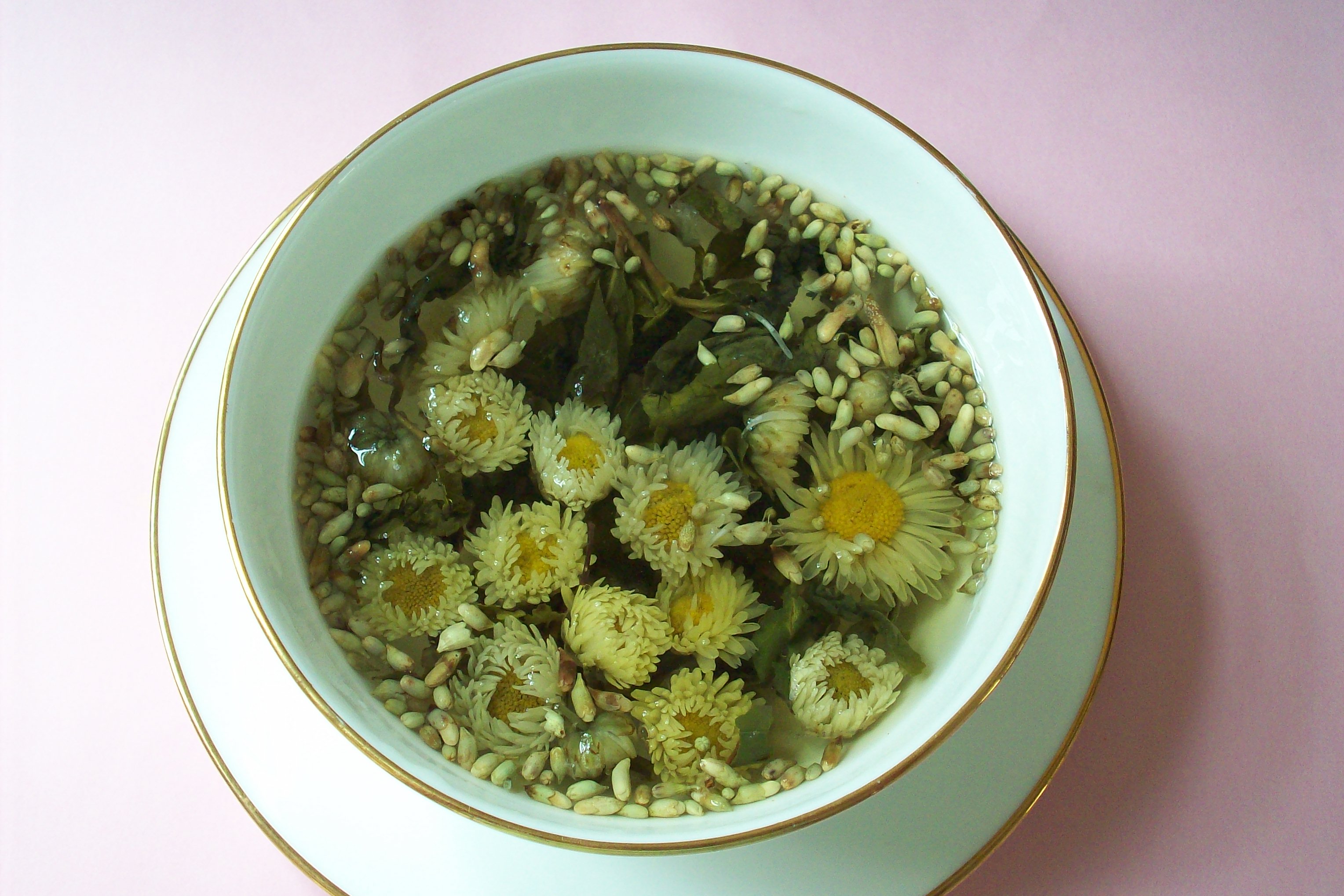
- Chrysanthemum (ju hua): One of the most widely used herbs for wind-heat headaches, red or irritated eyes, liver heat, and elevated blood pressure. Available in several varieties — tai ju wang (as pictured), hang ju, and gong ju are all suitable.
- Green tea (lu cha): Any unfermented green tea works here. Green tea contains catechins and polyphenols that have been studied extensively for their associations with healthy cholesterol levels and cardiovascular function. Adds a gentle, lightly astringent note to the blend.
Ingredients (1 to 2 cups)
| Ingredient | Amount | Notes |
|---|---|---|
| Sophora flower (huai hua) | 1 teaspoon | Available from Chinese herbal shops |
| Chrysanthemum flower (ju hua) | 1 teaspoon | Tai ju, hang ju, or gong ju varieties all work |
| Green tea leaves | 1 teaspoon | Any unfermented green tea |
| Boiling water | enough to fill a small teapot | — |
Method
- Place the sophora flower, chrysanthemum, and green tea in a small teapot or infuser.
- Pour a small amount of boiling water over the ingredients and quickly discard this rinse to clean them.
- Pour in fresh boiling water and steep for about 5 minutes.
- Pour and drink. The blend can be re-steeped two or three times until the flavour fades.
Bro Niu’s tips
The chrysanthemum in the photograph is tai ju wang — you can substitute with hang ju or gong ju, all of which are available from Chinese herbal shops. Sophora flower and chrysanthemum are both available in Chinese herb shops; any unflavoured green tea leaf works for the third ingredient.
Community questions answered (selected)
- Q (Connie): Is “huai hua” the same as “gui hua” (osmanthus)? Bro Niu: They are different plants. Sophora flower (huai hua) has a slightly bitter taste and is associated with cooling blood and stopping bleeding. Osmanthus (gui hua) has a sweet, fragrant aroma and is associated with warming the spleen and resolving phlegm. Very different effects.
Published February 27, 2010 · Adapted and translated for Nourilo from a traditional home-kitchen recipe. Approx. 3 min read.