Soups
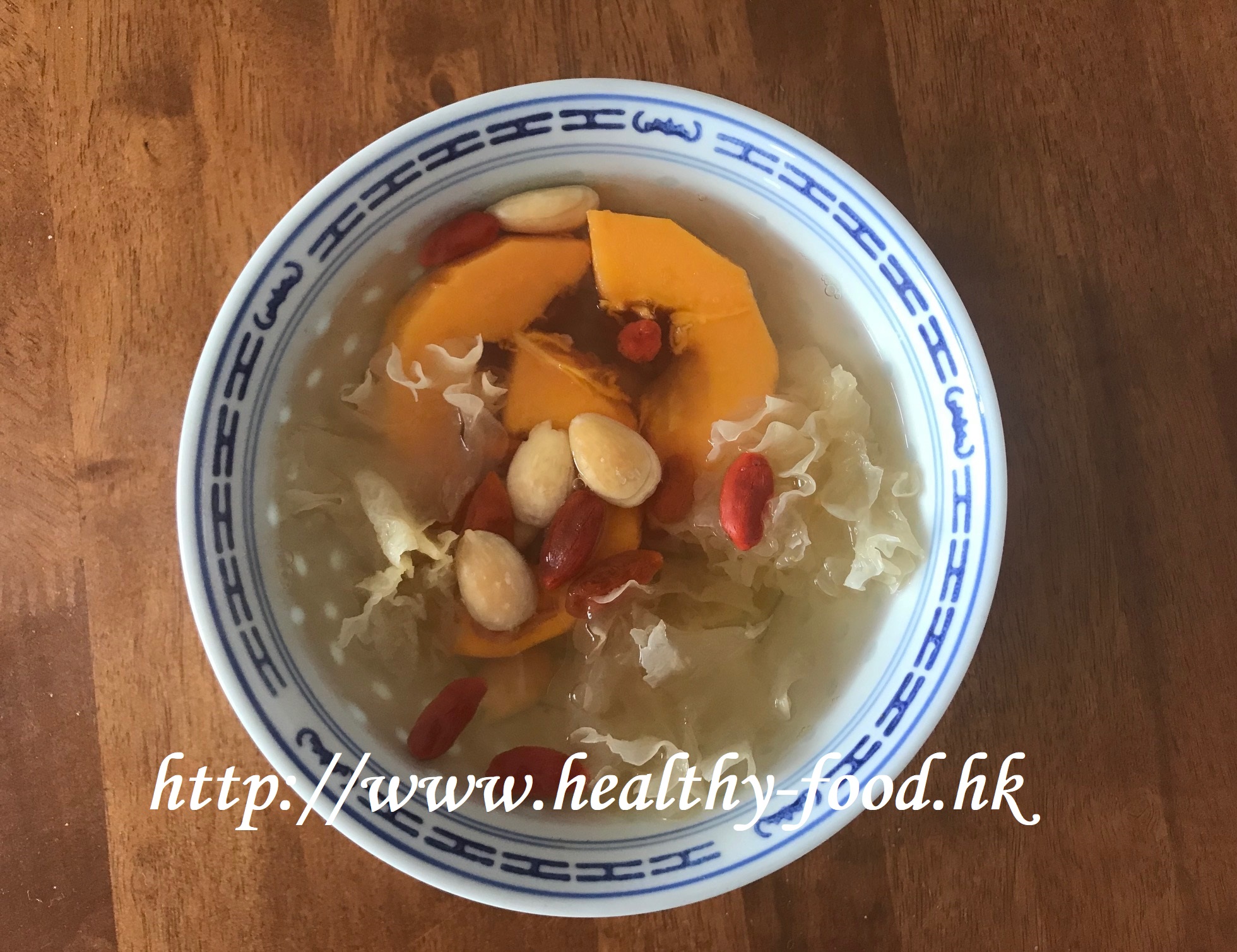
Snow Fungus, Papaya and Lily Bulb Sweet Soup
traditionally associated with nourishing the lungs, supporting skin moisture, and clearing mild heat
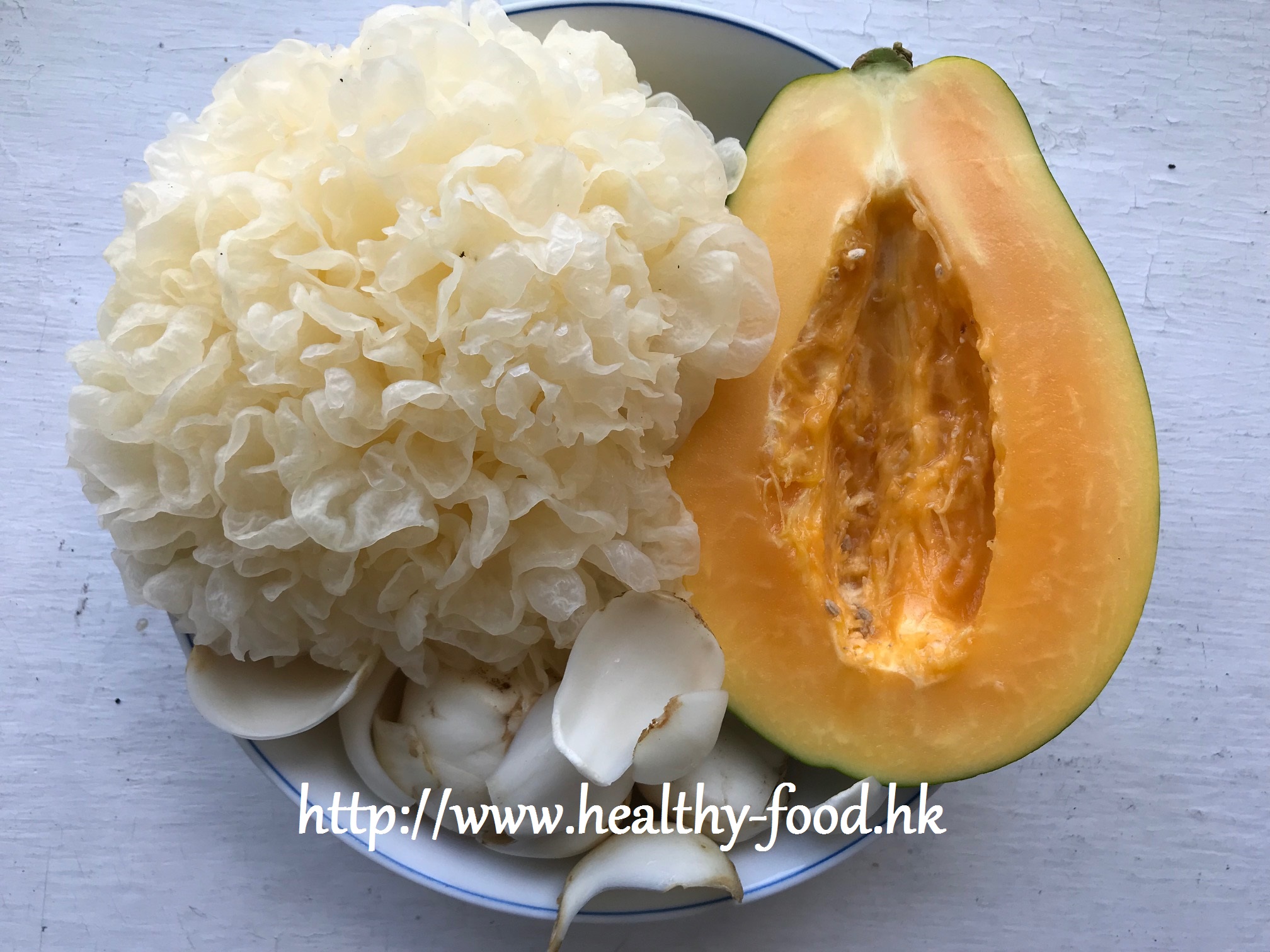
Why people make this sweet soup
In Chinese food-therapy tradition, autumn is the season most associated with dryness, and this classic Cantonese sweet soup is a popular seasonal remedy for that feeling of parched throat, dry skin, and mild irritability that can creep in as the weather cools. Snow fungus, papaya, and lily bulb are each treasured for their ability to support moisture in the body — combined, they make a silky, fragrant dessert that feels genuinely nourishing rather than just sweet.
Who it suits / who should be cautious
- Well suited to most adults, especially during dry autumn and winter months.
- Those with sensitive skin or a tendency to photosensitivity reactions should use dried snow fungus rather than fresh.
- People with cold or weak digestive constitutions should use dried snow fungus and may reduce the portion of lily bulb.
Why these ingredients (the food-therapy logic)
- Snow fungus (xue er): One of the most prized ingredients in Chinese food therapy, traditionally associated with nourishing the lungs and skin, supporting yin (body moisture), and helping clear mild heat. Rich in plant-based polysaccharides.
- Papaya: Gentle on the stomach, traditionally used to ease digestion and nourish the skin. Its natural sweetness blends beautifully with the mild fungus.
- Fresh lily bulb (xian bai he): Traditionally associated with calming mild restlessness, supporting the lungs, and moistening dryness. Its clean, faintly floral flavour lifts the soup.
- Rock sugar (bing tang): Preferred over refined white sugar in Chinese dessert soups — considered gentler on the stomach and throat.
Ingredients (3–4 bowls)
| Ingredient | Amount | Notes |
|---|---|---|
| Dried snow fungus (xue er) | 3 qian (~11 g) | Soak in cold water 30 min; or use half a fresh cluster |
| Papaya | 1 medium | Peeled, seeded, cut into chunks |
| Fresh lily bulb (xian bai he) | 75 g (~2.5 oz) | Separate and rinse petals; or use 30 g dried |
| Rock sugar (bing tang) | To taste | Add near the end |
Method
- Soak and rinse dried snow fungus; trim away the tough base and tear into small bite-sized pieces. (If using fresh, rinse well and tear apart similarly.)
- Peel and seed the papaya; cut into chunks.
- Rinse fresh lily bulb petals gently.
- Combine snow fungus, papaya, and lily bulb in a pot with 6 bowls of water.
- Bring to a boil, then simmer for 30 minutes.
- Add rock sugar and stir until dissolved. Serve warm, eating the solid ingredients as well as the soup.
Bro Niu’s tips
If you enjoy a firmer, crisper texture in your snow fungus, look for the small, tightly curled dried variety — it holds its shape better. The larger dried clusters cook softer and are easier to prepare. Both have similar nutritional value. This soup is best enjoyed during the dry autumn season. Note that fresh snow fungus contains porphyrin compounds that can cause mild sun-sensitivity skin reactions in some people — Bro Niu recommends always using the dried version for regular cooking.
Community questions answered (selected)
-
Q (Yan): My 4-year-old recently had a fever and has been coughing for a few days. What would you recommend to help nourish their lungs? Bro Niu: You can use 1 liang fresh dragon-tongue leaf (long li ye), 1 golden monk fruit (luo han guo), 1 liang each of south and north apricot kernels (nan bei xing), and 1 pear or apple. Simmer together; the whole family can drink it. Add lean pork and cook for 1 hour for a more substantial soup — it helps clear heat and nourish the lungs.
-
Q (Lo): My teenager (16) has very poor sleep quality — takes nearly an hour to fall asleep and keeps turning over. What food therapy would help? Bro Niu: For a teenager, try sour date seed (suan zao ren) 3 qian, cypress seed (bai zi ren) 3 qian, longan flesh (yuan rou) 5 qian, poria with pine root (fu shen) 5 qian, lily bulb (bai he) 1 liang, simmered in 5 bowls of water down to 2 bowls. Take 3 consecutive doses and see if sleep improves.
-
Q (Jelly): I’m in my 30s and my immunity has dropped — I keep catching colds that drag on for weeks. What can I take conveniently given my long working hours? Bro Niu: Buy some pre-sliced astragalus root (bei qi / huang qi) — just 1 tablespoon per serve — and steep it with a few goji berries (gou qi zi) and red date slices as a daily tea. Three doses a week can help support immune function over time.
Published September 28, 2019 · Adapted and translated for Nourilo from a traditional home-kitchen recipe. Approx. 4 min read.