Herbal & Flower Teas
Safflower, Goji Berry and Longan Flesh Tea
traditionally nourishes blood, supports skin clarity and promotes healthy circulation
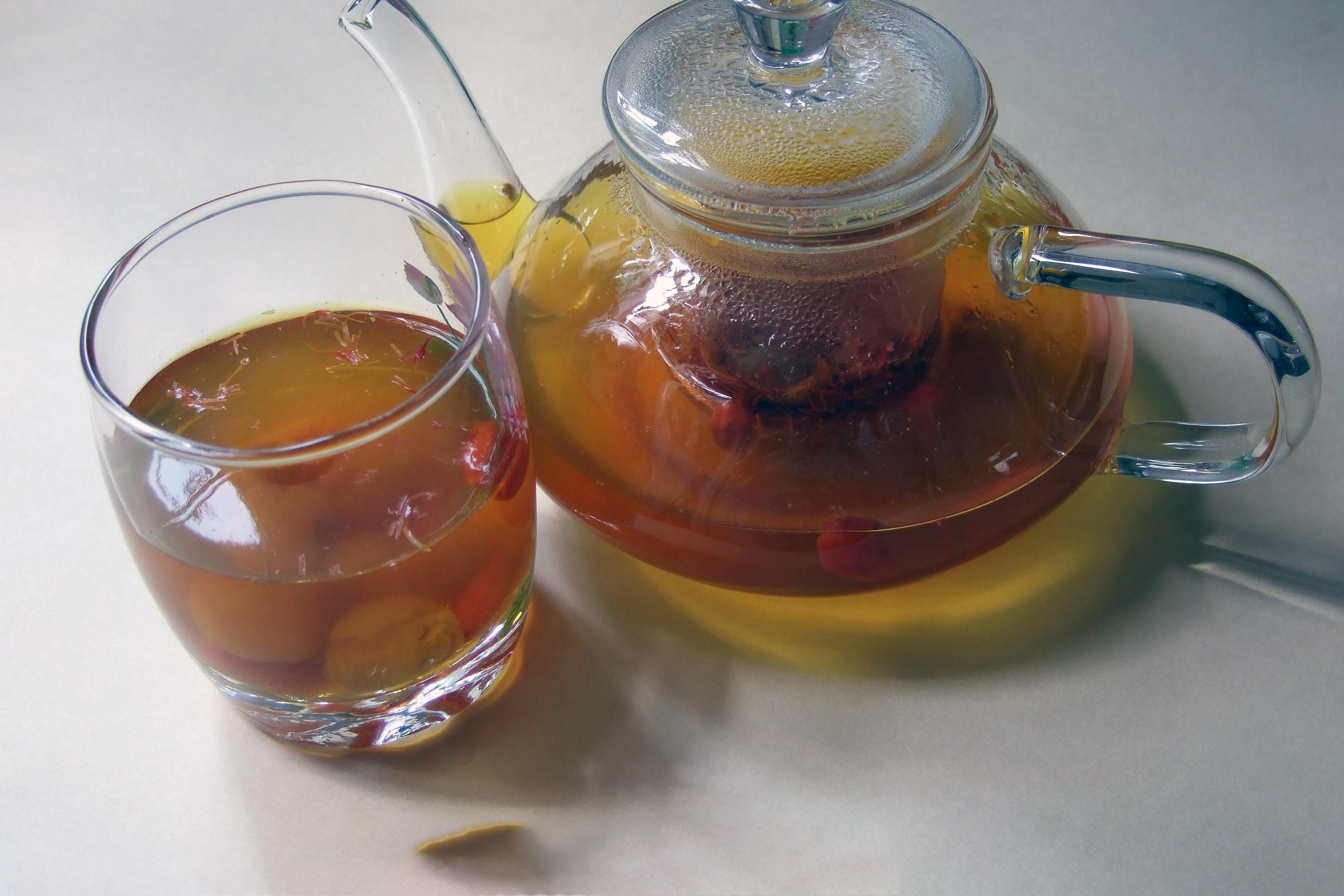
Why people make this tea
Safflower (hong hua) is a well-known ingredient in Chinese herbal medicine, prized for its traditionally blood-moving and circulation-supporting properties. There is a saying that Bro Niu often shares: “used in large amounts, safflower breaks stagnation; used in small amounts, it nourishes the blood.” So this recipe uses just one spoonful — enough to encourage gentle circulation without over-stimulating. Paired with the sweetly nourishing goji berries and longan flesh, the result is a pleasantly sweet and fragrant tea that people drink to support skin clarity, easier sleep and healthy circulation. The taste is mild and easy to enjoy.
Who it suits / who should be cautious
- Traditionally suited to women with scanty periods, delayed cycles or mild post-menstrual discomfort; also used by those looking to support skin tone and restful sleep
- Those with coronary heart concerns have traditionally used safflower teas under guidance
- NOT suitable during pregnancy (safflower strongly stimulates the uterus — please see a doctor)
- NOT suitable for those with heavy menstrual bleeding, prolonged periods, ulcers, or any bleeding disorder
- Best taken in the week before menstruation (2–3 times) rather than continuously every day
- If in doubt about your constitution or medical history, consult a qualified practitioner before use
Why these ingredients (the food-therapy logic)
- Safflower (hong hua): A potent blood-moving herb used in traditional Chinese medicine; modern research has explored its potential effects on circulation, blood pressure and cholesterol — though clinical evidence is still developing. In food therapy, it is used in very small amounts to gently move stagnant blood rather than as a medicinal dose
- Goji berries (gou qi zi): Widely recognized as rich in antioxidants (zeaxanthin, polysaccharides); traditionally associated with nourishing the liver and kidneys, supporting eyesight and calming the mind
- Longan flesh (gui yuan rou): Sweet and warming; traditionally used to nourish the blood, calm the mind and support restful sleep
Ingredients (1–2 cups)
| Ingredient | Amount | Notes |
|---|---|---|
| Safflower (hong hua) | 1 tablespoon | From a Chinese herbal shop; use Carthamus safflower, not the far more expensive saffron (番红花) |
| Goji berries | 1 tablespoon | Rinsed |
| Dried longan flesh | 1 tablespoon | |
| Boiling water | Sufficient to steep |
Method
- Place all three ingredients into a teapot or heatproof cup.
- Rinse briefly with a small amount of boiling water; discard the rinse water.
- Add fresh boiling water and steep, covered, for about 7 minutes.
- Pour and enjoy. You may refill with hot water once or twice more.
Bro Niu’s tips
Use the regular Carthamus safflower (川红花) from a Chinese herb shop — it costs only a few dollars per liang and has a pleasant, slightly unusual scent that mellows nicely in the tea. The more famous saffron (番红花 — used in Spanish paella) is extremely expensive and not needed here. If you use Tibetan saffron, half a teaspoon is sufficient. Take this tea for 2–3 days in the week before your period, not as a daily year-round drink.
Community questions answered (selected)
-
Q (Ling): Safflower comes in two types — if I use Tibetan saffron, how much should I use? Bro Niu: Tibetan saffron is very pricey. Half a teaspoon is quite enough.
-
Q (meow): Should this tea be drunk long-term, or only before menstruation? Bro Niu: Take it in the week before your period — 2 to 3 servings is the right amount.
-
Q (糖糖): Which type of safflower should I use? Bro Niu: Use Carthamus safflower (川红花) — the regular kind from a Chinese herb shop. True saffron is far too expensive for this purpose.
Published March 18, 2010 · Adapted and translated for Nourilo from a traditional home-kitchen recipe. Approx. 3 min read.