Soups
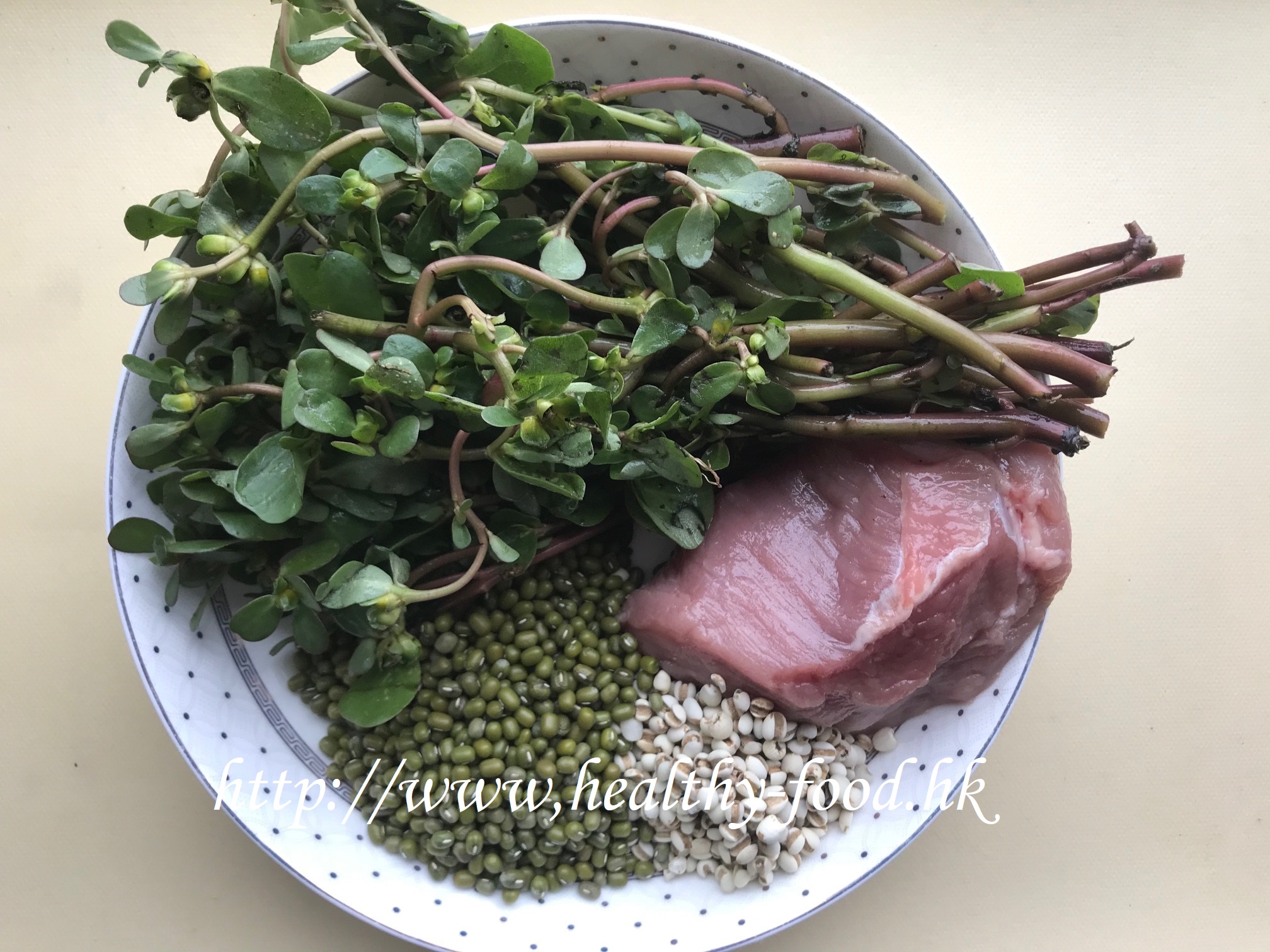
Purslane, Mung Bean, Pearl Barley and Lean Pork Soup
traditionally used to clear heat-toxins, support recovery from shingles, and reduce the risk of post-herpetic neuralgia
Why people make this soup
Shingles (herpes zoster) is caused by the reactivation of the chickenpox virus, which can lie dormant in nerve tissue for decades. The illness typically begins with a painful rash on one side of the body, and the most feared complication is post-herpetic neuralgia — a burning, stabbing nerve pain that can persist for months after the rash has healed. The sooner treatment begins, the lower the risk of this lasting pain.
In Chinese food therapy, fresh purslane (ma chi xian) is one of the most highly regarded natural “clearing” herbs — sometimes described as having properties analogous to an antibiotic, in that it is traditionally associated with clearing bacterial and viral heat-toxins from the body. Mung beans and raw pearl barley add further clearing and cooling action. This soup is Bro Niu’s own experience: he developed mild shingles after his second vaccination and prepared this soup for himself during recovery — sharing it here as a practical resource for others.
Who it suits / who should be cautious
- Supportive during and after a shingles episode, in conjunction with prescribed medical treatment.
- Also traditionally considered helpful for urinary tract infections, various skin conditions, and general internal heat.
- Pregnant women must not consume this soup — purslane is strongly contraindicated in pregnancy as it is traditionally believed to stimulate uterine contractions.
- Can be prepared without meat for those who prefer a lighter version.
Why these ingredients (the food-therapy logic)
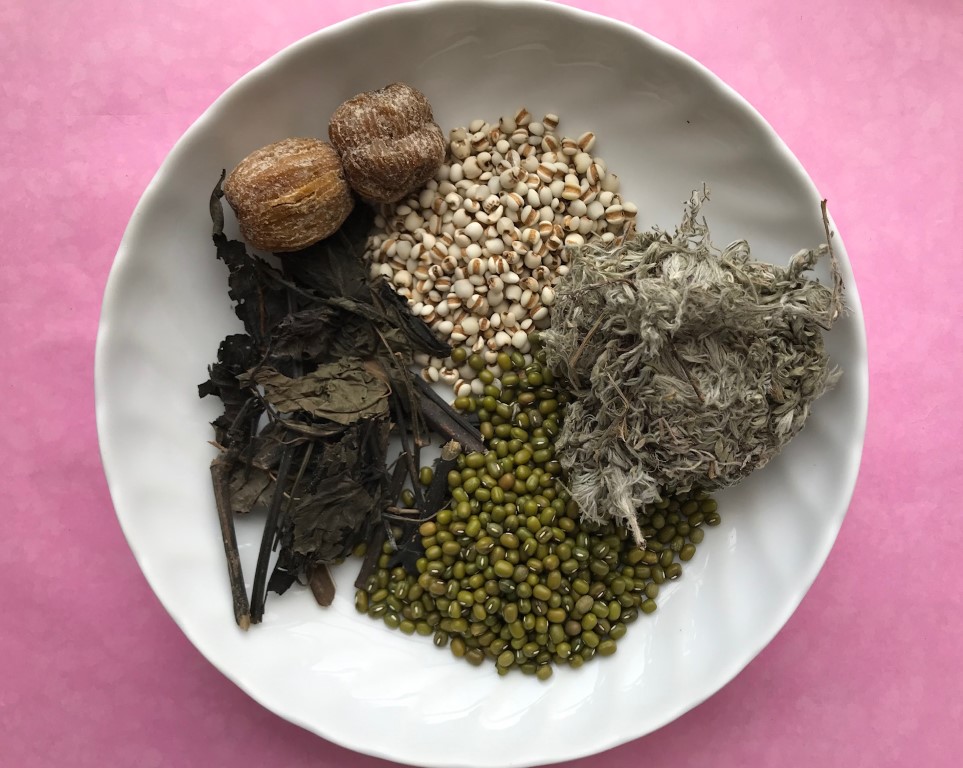
- Fresh purslane (ma chi xian): One of the most widely used medicinal plants in Chinese tradition; associated with clearing heat-toxins, reducing inflammation, dispersing blood stagnation, promoting diuresis, and inhibiting bacteria and viruses. Fresh is more potent; dried (1 liang) can be substituted if fresh is unavailable.
- Mung beans (lu dou): A classic cooling, detoxifying ingredient; associated with clearing internal heat and supporting the skin.
- Raw pearl barley (sheng yi mi): Clearing, anti-damp, and supportive of skin conditions; traditionally used to reduce inflammation and support recovery from skin disorders.
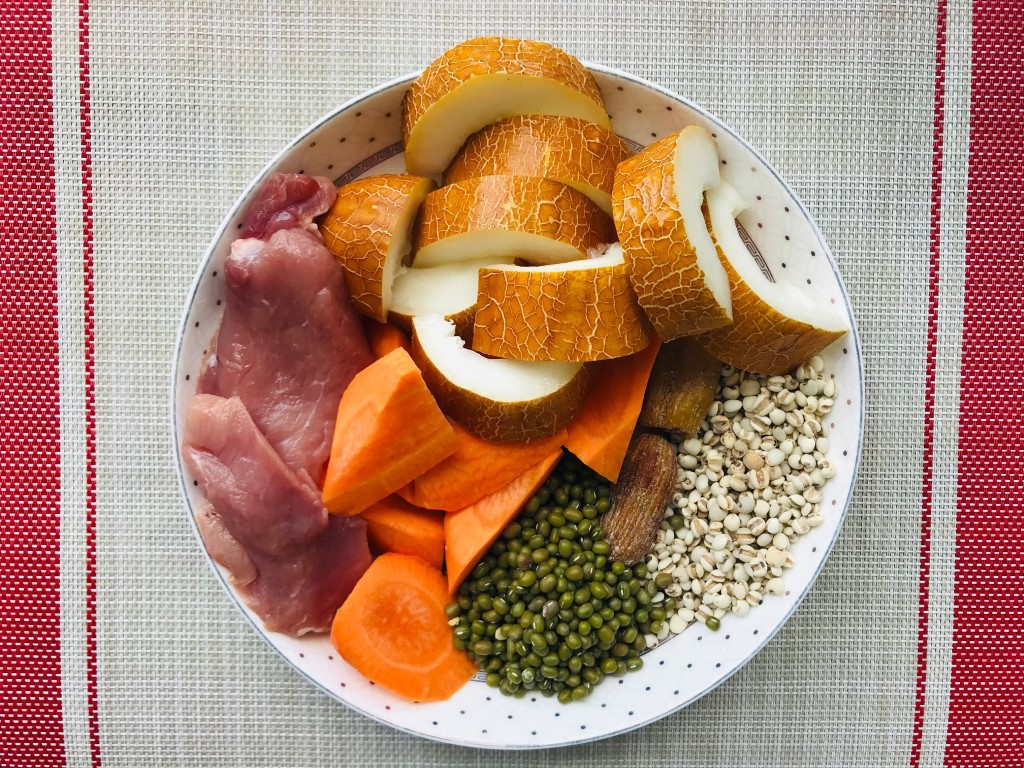
- Lean pork: Provides protein and balances the cooling nature of the other ingredients.
Ingredients (3–4 bowls)
| Ingredient | Amount | Notes |
|---|---|---|
| Fresh purslane | 112 g | Roots removed; washed; cut into sections; add partway through cooking |
| Mung beans | 37 g | Soaked and rinsed |
| Raw pearl barley | 37 g | Soaked and rinsed |
| Lean pork | 150 g | Sliced; blanched in boiling water |
Method
- Remove the roots from the purslane, wash thoroughly, and cut into sections. Set aside — it will be added partway through cooking.
- Soak and rinse the mung beans and raw pearl barley.
- Slice the pork and blanch in boiling water for 1–2 minutes; drain and rinse.
- Place the mung beans, pearl barley, and pork in a pot with 7 bowls of water (about 1.75 litres). Bring to a boil, then reduce to a simmer and cook for 30 minutes.
- Add the purslane sections and continue cooking for another 30 minutes.
- Serve warm, eating the solid ingredients along with the broth.
Bro Niu’s tips
This soup has a clean, mildly cooling flavour — pleasant and not overly medicinal. It is also traditionally considered useful for preventing urinary tract infections and a range of skin conditions. The key ingredient is fresh purslane, which is the most potent form; it can be found at Chinese or Asian grocers, herbal stalls, or online. Dried purslane (1 liang) is an acceptable substitute if fresh is not available. Keep the diet light and avoid “trigger” foods (fa wu) such as shellfish, goose, bamboo shoots, and mango while recovering from shingles, as these are traditionally thought to aggravate inflammation.
Community questions answered (selected)
-
Q (angel): I have active shingles from my front chest to my back and neck — the burning pain is severe even after taking antiviral medication. Can this soup help with the pain? Bro Niu: If shingles has spread widely, the virus has likely already reached the nerve pathways, and the pain may persist for some time. I would recommend seeing a Chinese medicine practitioner for proper treatment. Meanwhile, you can try a topical application: grind di yu (sanguisorba root) and zi cao (gromwell root) — 1 liang each — into a powder, mix with petroleum jelly, spread on a gauze pad, and apply to the affected area daily. This has a traditional analgesic effect. Continue drinking the mung bean and barley soup; fresh purslane adds significant benefit if you can find it.
-
Q (amy): My father had shingles last week — the blisters have now dried up, but he has started experiencing pain that the doctor says is nerve damage. Can he still drink this soup? Bro Niu: Yes, he can try 3–4 servings of this soup and see if the pain lessens. If there is no improvement, a Chinese medicine consultation would be the next step.
-
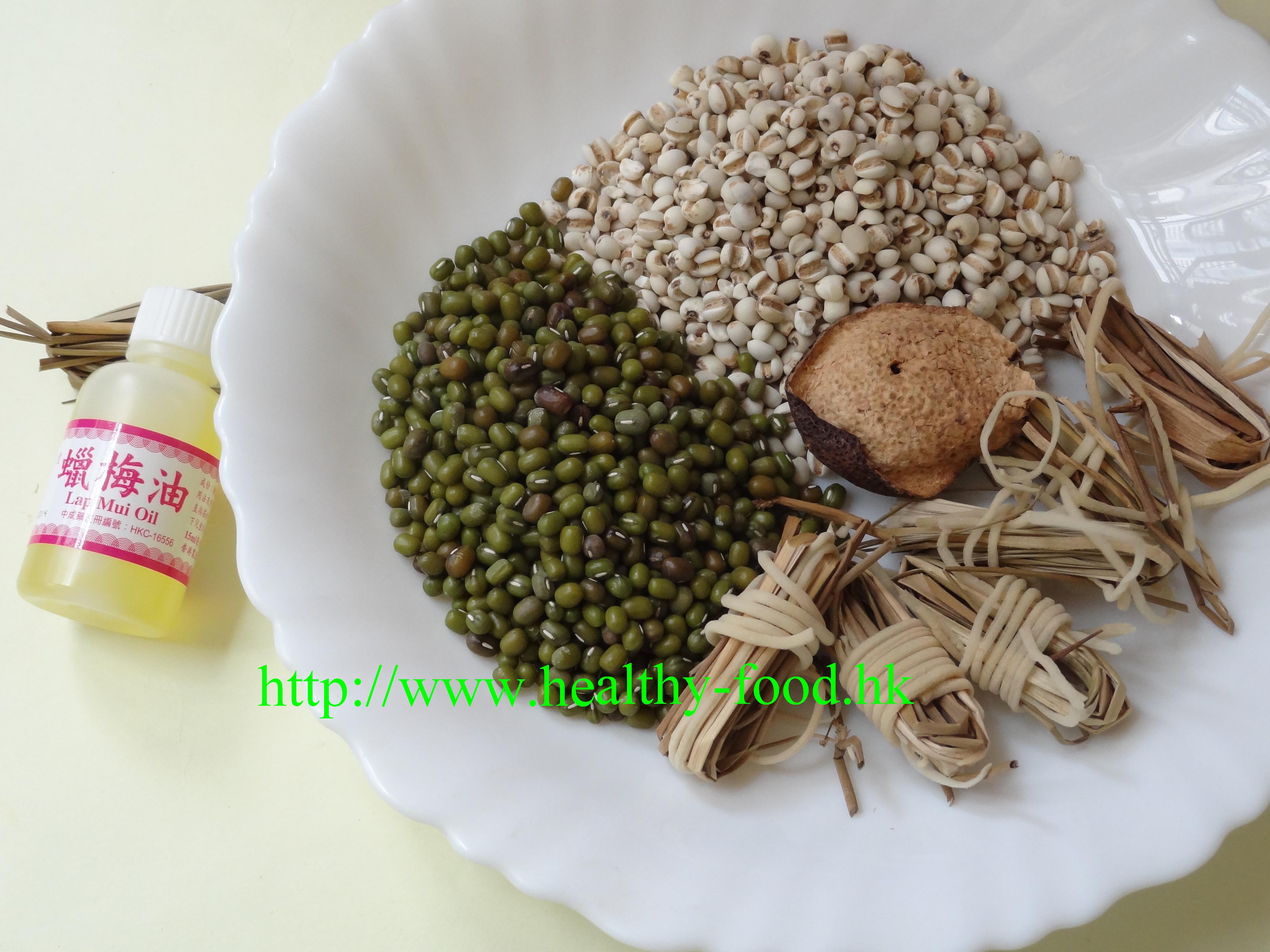
Q (戴太): If I cannot find purslane, is simple mung bean and barley water sufficient after vaccination? Bro Niu: Yes, that works well — the main purpose is to clear lung heat and internal organ heat, which reduces post-vaccination discomfort.
Published May 3, 2021 · Adapted and translated for Nourilo from a traditional home-kitchen recipe. Approx. 4 min read.