Soups
Prickly Amaranth Root, Corn and Lean Pork Soup
Traditionally associated with clearing damp-heat, supporting urinary health, and helping maintain healthy blood sugar
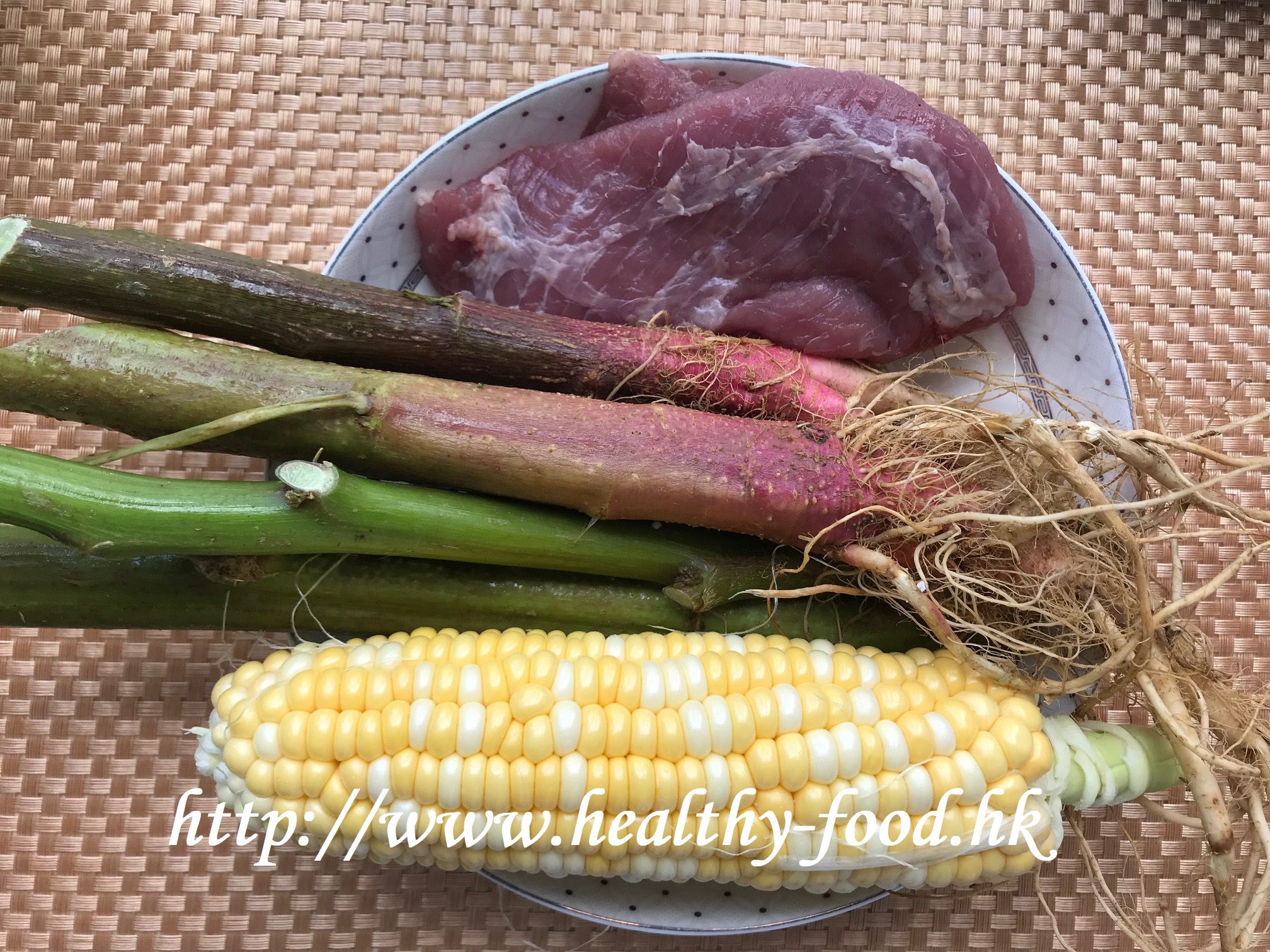
Why people make this soup
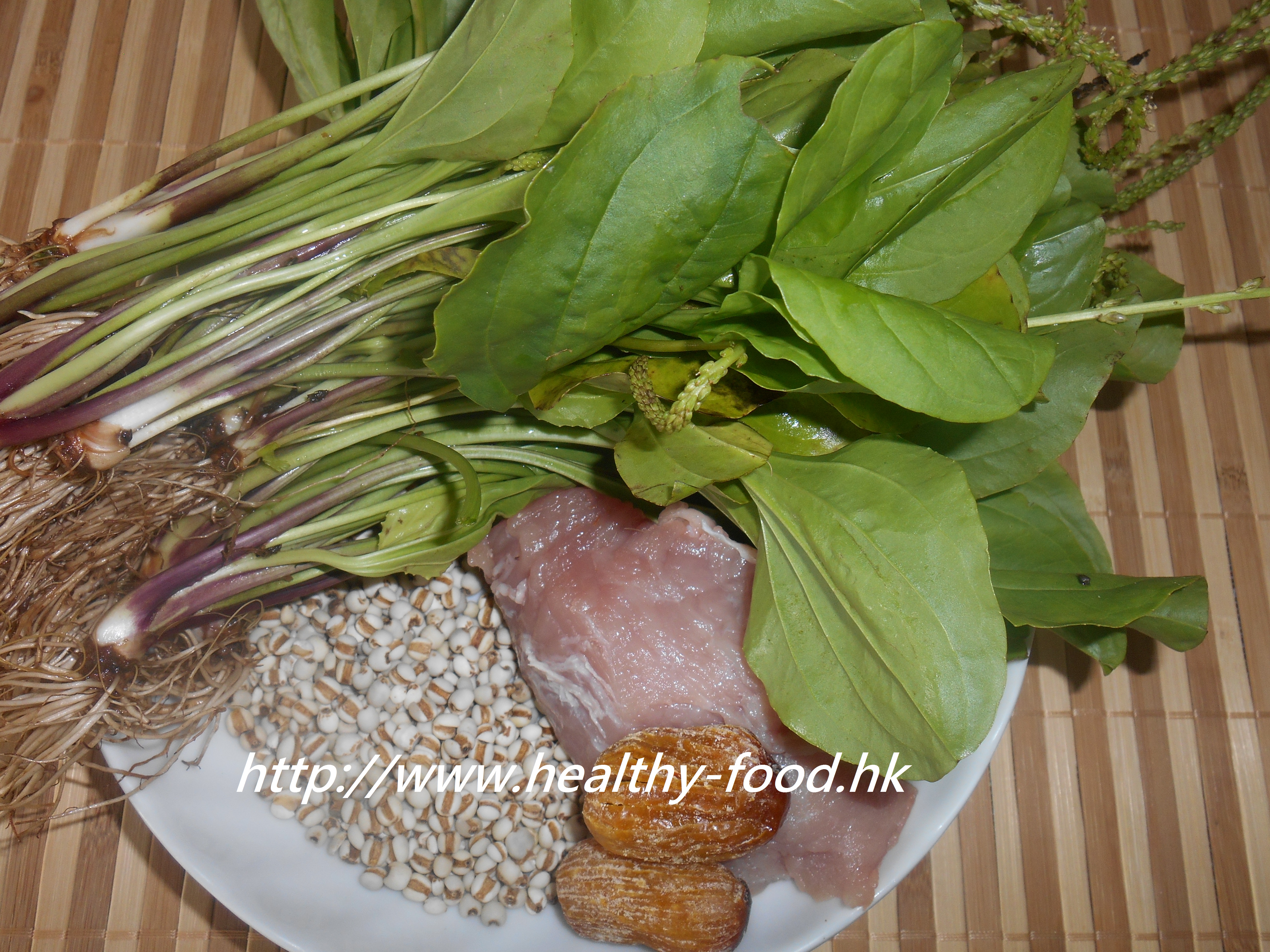
Prickly amaranth (le xian cai) is a wild plant with a large, thick root that is the prized section for culinary use. Its flavor once cooked is surprisingly mild and pleasant, making a clear, naturally sweet broth. In traditional food therapy, this root is associated with cooling blood heat and clearing what is described as “damp-heat” from the digestive and urinary systems — the kind of heat that shows up as burning sensations when urinating, blood in the stool, hemorrhoid flare-ups, swollen gums, or a sore throat with inflammation. Corn contributes a gentle sweetness and its silk (if kept) is associated with supporting urinary flow. This is a simple, accessible soup, particularly well-suited to people who feel persistently warm and damp internally, or who want dietary support for blood sugar management.
Who it suits / who should be cautious
- Suited to most people who experience damp-heat symptoms: difficult, burning, or scanty urination; gastrointestinal heat with constipation; hemorrhoid inflammation; gum swelling; sore throat with heat signs
- Particularly useful for people managing diabetes, as the prickly amaranth is associated with supporting blood sugar balance
- Good for children and the elderly — the soup is naturally sweet and mild
- Pregnant women must not consume this soup — prickly amaranth is contraindicated during pregnancy
Why these ingredients (the food-therapy logic)
- Prickly amaranth root (le xian cai gen): Classified as sweet and cold in nature; traditionally associated with cooling blood and stopping bleeding (for hemorrhoids, blood in stool, or stomach bleeding from heat), clearing damp-heat from the gut and urinary tract, and supporting throat health; also associated with blood sugar regulation, making it particularly useful for people with diabetes
- Corn (yu mi): Naturally sweet and neutral; the corn silk (if included) is particularly associated with supporting kidney function and healthy urine flow; a mild and widely suitable ingredient
- Lean pork: Provides savory depth and protein; the lean variety adds body without excessive fat
Ingredients (4 bowls)
| Ingredient | Amount | Notes |
|---|---|---|
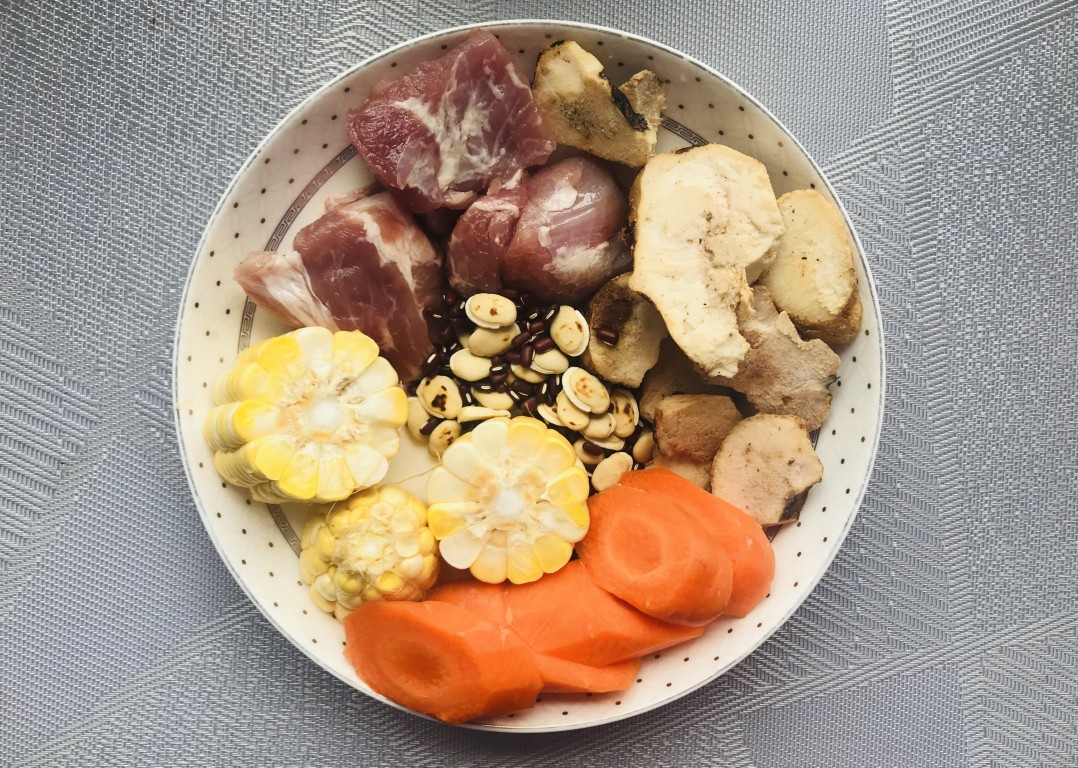
| Prickly amaranth root (le xian cai gen) | 2 stalks | Remove fine rootlets; rinse and cut into sections |
| Corn on the cob | 2 ears | Remove husks; cut into sections |
| Lean pork | 300 g | Slice thick; blanch before use |
| Water | 7–8 bowls (approx. 1.5 L) | Simmered down to about 4 bowls |
Method
- Trim the fine rootlets from the prickly amaranth root stalks. Rinse thoroughly and cut into sections.
- Husk the corn and cut each ear into 3–4 sections.
- Slice the lean pork into thick pieces. Blanch in boiling water for 2 minutes; drain and rinse.
- Place the pork and corn in a pot with about 7–8 bowls of water. Bring to a rolling boil.
- Add the prickly amaranth root. Lower heat and simmer for about 1.5 hours until liquid reduces to approximately 4 bowls.
- Serve warm; drink the soup and eat the solids.
Bro Niu’s tips
Prickly amaranth root is available at Chinese or Asian grocers, or online; it may appear seasonally so it is worth asking. Two good-sized stalks are plenty for a pot of soup.
When cooking for four people, around 150 g (4 liang) of root material is appropriate. The root varies considerably in thickness — adjust by weight, not by count of pieces.
This soup is clear, mildly sweet, and refreshing — the whole family can enjoy it, not just those with specific health concerns.
Community questions answered (selected)
-
Q (御膳尚宫): The prickly amaranth roots at my garden vary a lot in thickness — how much should I use for a family? Bro Niu: For four people, about 4 liang (roughly 150 g) of root is enough regardless of whether the pieces are thick or thin.
-
Q (hrzly): I have rheumatoid arthritis and Sjogren’s syndrome. What soups are good for dryness symptoms? Bro Niu: Focus on moistening ingredients: snow fungus (xue er), glehnia root (sha shen), Solomon’s seal (yu zhu), ophiopogon (mai dong), almonds, lily bulb (bai he), dried figs, snow pear, apple, and mulberries. Use these regularly in soups or teas — they are well-suited to Sjogren’s-related dryness.
Published August 12, 2021 · Adapted and translated for Nourilo from a traditional home-kitchen recipe. Approx. 3 min read.