Herbal & Flower Teas
Toasted Black Bean and Black Mulberry Tea
traditionally used to nourish liver and kidney, support natural hair pigmentation, and ease nervous exhaustion
Why people make this tea
A few grey hairs at 40 is normal biology. Finding a cluster of them in your twenties or thirties is another matter — and an increasingly common one among people who carry heavy academic, professional, or emotional burdens. Traditional Chinese medicine has long connected hair colour and vitality to the health of the liver and kidney: these organ systems store the blood and essence from which healthy, pigmented hair is nourished. When stress, overwork, or chronic worry depletes these reserves, the hair loses its colour before its time.
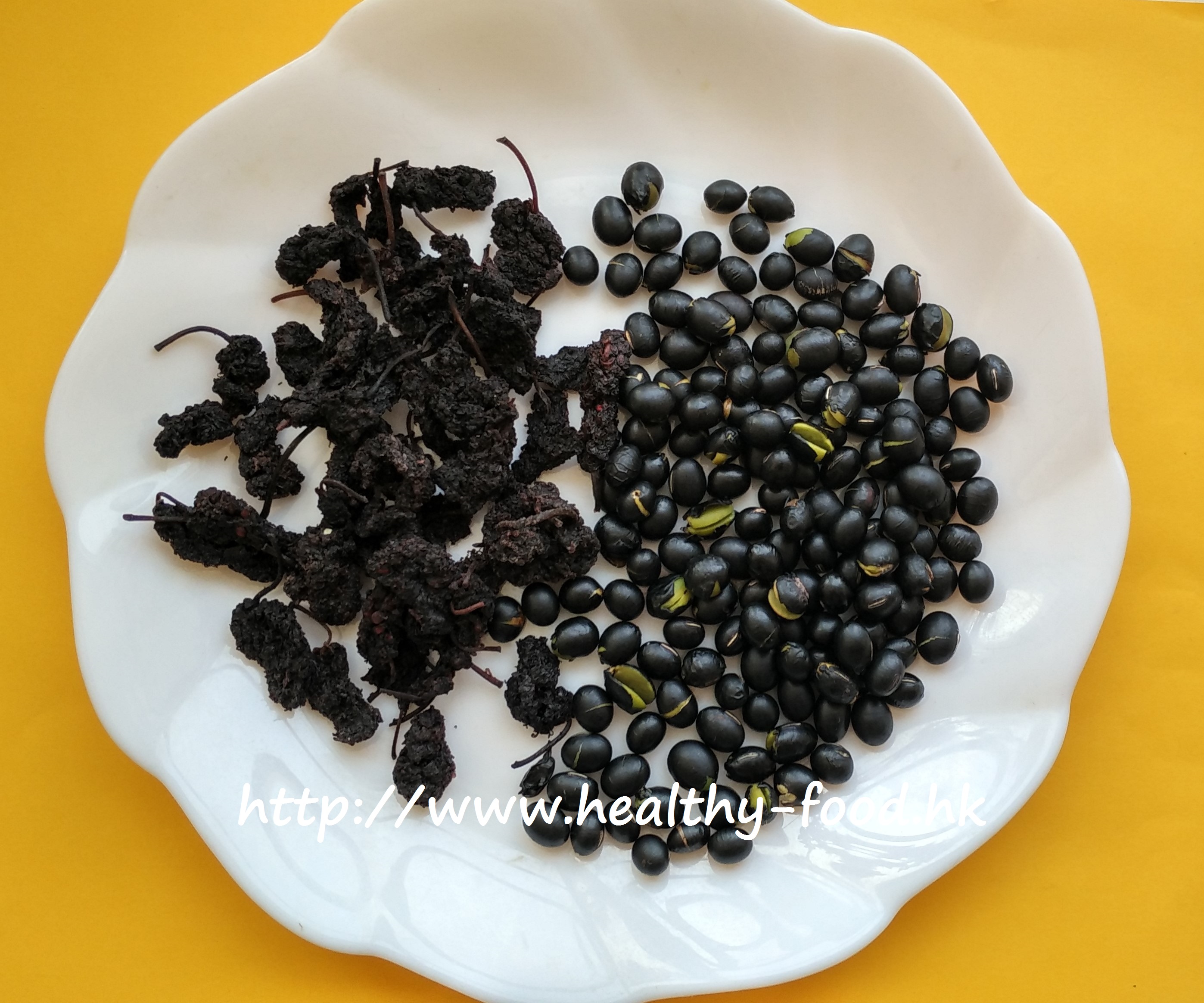
This two-ingredient tea is Bro Niu’s go-to recommendation for this pattern. Both ingredients are dark, almost black — and in Chinese food culture, dark foods have traditionally been associated with kidney support. Black mulberries are now recognised to be among the richest natural sources of anthocyanins, the pigment compounds that also play a role in antioxidant protection. Black soy beans with green kernel (not to be confused with ordinary black beans) are similarly rich in anthocyanins and plant protein. Together, they make a tea that is naturally pleasant — slightly nutty from the roasted beans, mildly fruity-sweet from the mulberries — and easy to keep up as a daily ritual.
Bro Niu also notes that this tea has a calming effect on the nervous system, making it suitable for those whose greying is driven by chronic stress and poor sleep.
Who it suits / who should be cautious
- Suitable for: those with premature grey hair, especially where stress, overwork, or anxiety is a contributing factor; also for nervous exhaustion and mild insomnia
- Pregnant women: safe — black soy beans are actually said to have a mild calming and even foetus-stabilising effect in traditional practice
- Frequency: every other day is ideal (about 3–4 times per week); daily is fine but cycling is better for any single food-herb
- Those with a very heat-prone constitution (easily gets hot, mouth sores): the toasting of the beans does make them slightly warmer in nature; the mulberries are slightly cooling and largely balance this out — most people will be fine; if concerned, switch to untoasted black soy beans simmered in water
Why these ingredients (the food-therapy logic)
- Toasted black soy beans with green kernel (chao qing ren hei dou): Must be the green-kernel variety for this purpose; toasted in a dry pan for at least 11–12 minutes until fully cooked (raw beans must never be used as they contain antinutrients); nourish liver and kidney, replenish blood, support vision, and clear dampness; the anthocyanins give them their characteristic jet-black skin
- Dried black mulberries (hei sang shen zi): The black variety is preferred as it contains the highest concentration of anthocyanins; nourish liver and kidney yin, darken hair, sharpen hearing and sight; mildly cooling
Ingredients (1 pot)
| Ingredient | Amount | Notes |
|---|---|---|
| Black soy beans with green kernel | 2 tablespoons | Must be toasted first in a dry pan over low heat for 12 minutes until fully cooked |
| Dried black mulberries | 1 tablespoon | |
| Hot water | enough to fill a teapot or large mug | Boiling water |
Method
- Toast the black soy beans in a dry pan (no oil) over low heat for 12 minutes, stirring regularly, until they are fully cooked through. Some may pop slightly — that is fine. Allow to cool.
- Place the toasted beans and dried mulberries into a teapot or large insulated mug.
- Pour once with boiling water to rinse; discard this first rinse.
- Pour fresh boiling water over the ingredients; steep for 15 minutes.
- Drink the tea, then re-brew with fresh hot water until the flavour is fully spent.
Bro Niu’s tips
The green-kernel black soy bean must be toasted before use — do not use it raw. Beans must be cooked to deactivate their natural enzyme inhibitors; for this tea that means at least 11–12 minutes of slow toasting in a dry pan over low-medium heat. Rinse the raw beans and let them drain dry before toasting. For the mulberries, the black variety is best as it contains the most anthocyanins. If black mulberries are hard to find overseas, any colour of mulberry will do; alternatively, pair the black beans with a few goji berries as a substitute. For those who run very warm and are concerned about the warming effect of toasted beans, simply boil untoasted black soy beans with the mulberries for 20–30 minutes instead of steeping.
Community questions answered (selected)
-
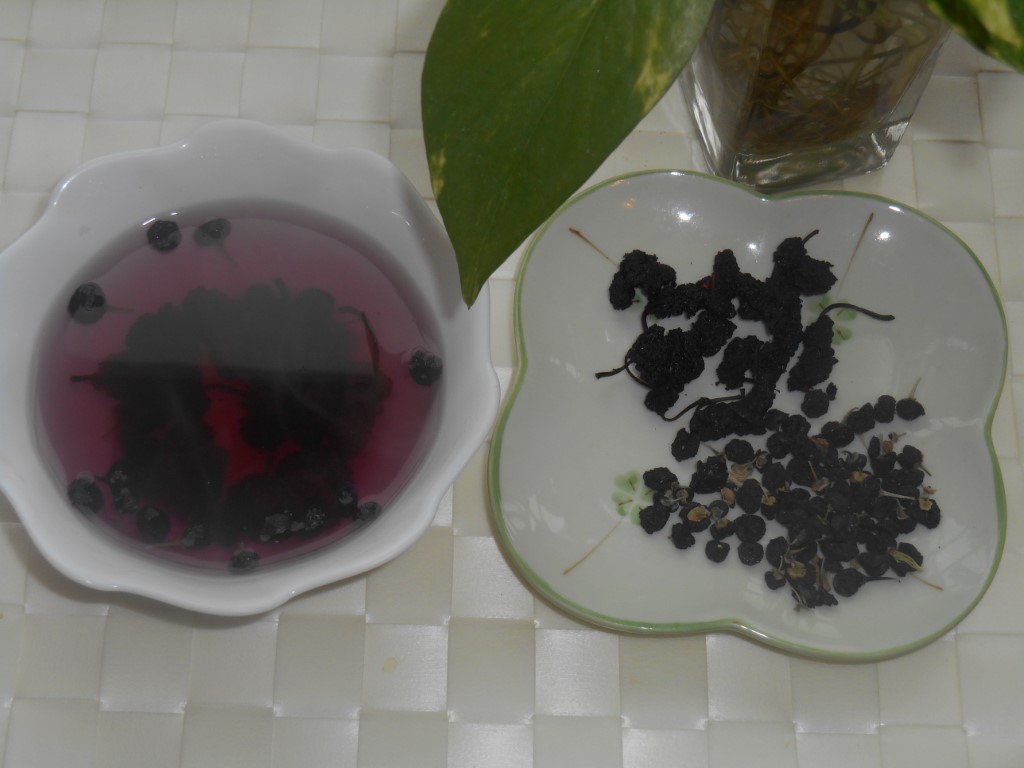
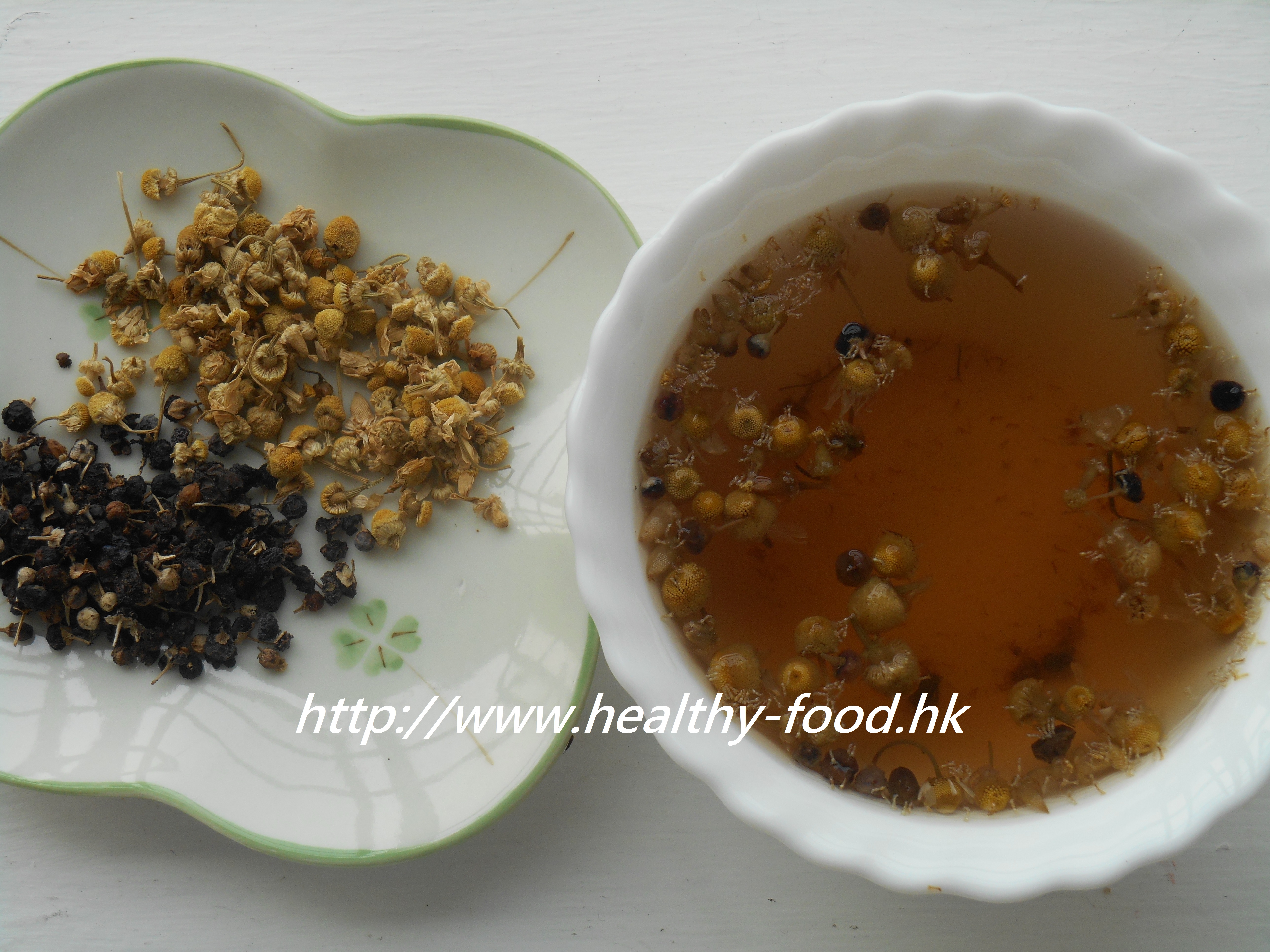
Q (Cin, who has had loud tinnitus for 20 years and runs yin-deficient and heat-prone): Can I use this tea? I am worried the toasted beans will be too warming. Bro Niu: For your constitution, use black goji berries and black mulberries together as a tea instead — steep both in hot water. This will not be warming and is supportive for kidney-deficient tinnitus.
-
Q (Jan): Can I add southern dates (nan zao) to this tea? Is it suitable for yin-deficient heat-prone types? Bro Niu: Yes — add 3 southern dates. Southern dates support spleen and kidney, and steeping them all together is fine for those with yin-deficient heat-prone constitution.
-
Q (小伦子, based overseas where mulberries are hard to find): What can I substitute if I cannot find black mulberries? Can I just steep the black beans alone? Bro Niu: Mulberries should be available overseas as well — any colour will work. If you truly cannot find them, black beans with goji berries is also beneficial. Steeping the black beans alone is also fine.
Published January 22, 2019 · Adapted and translated for Nourilo from a traditional home-kitchen recipe. Approx. 4 min read.