Soups
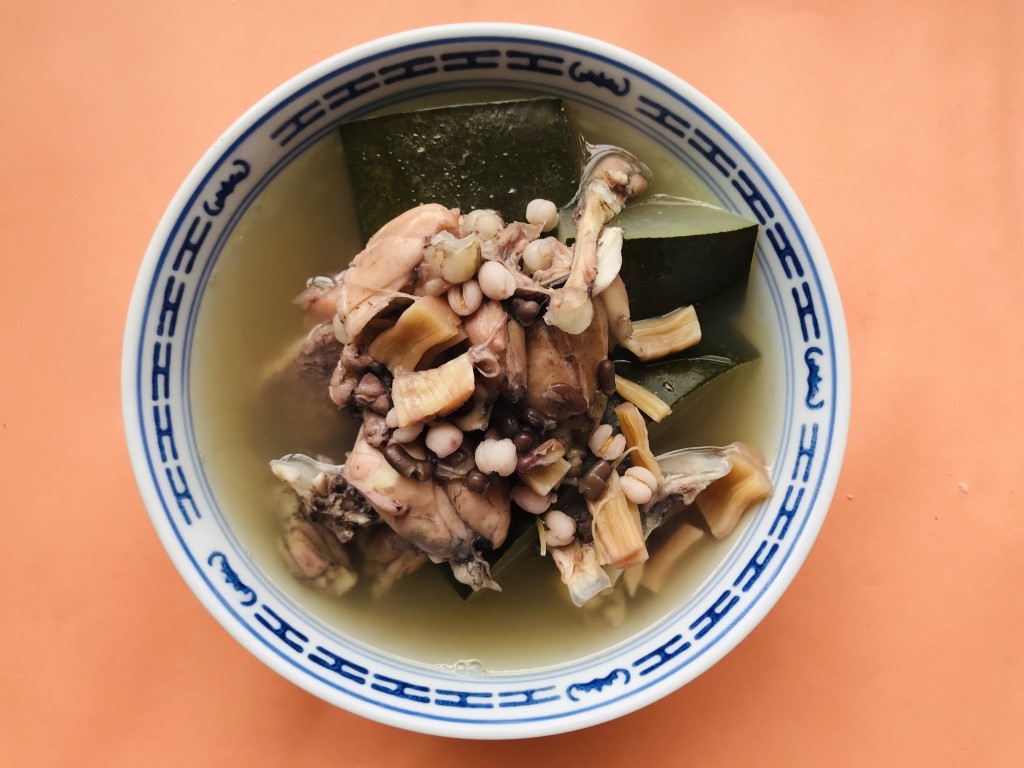
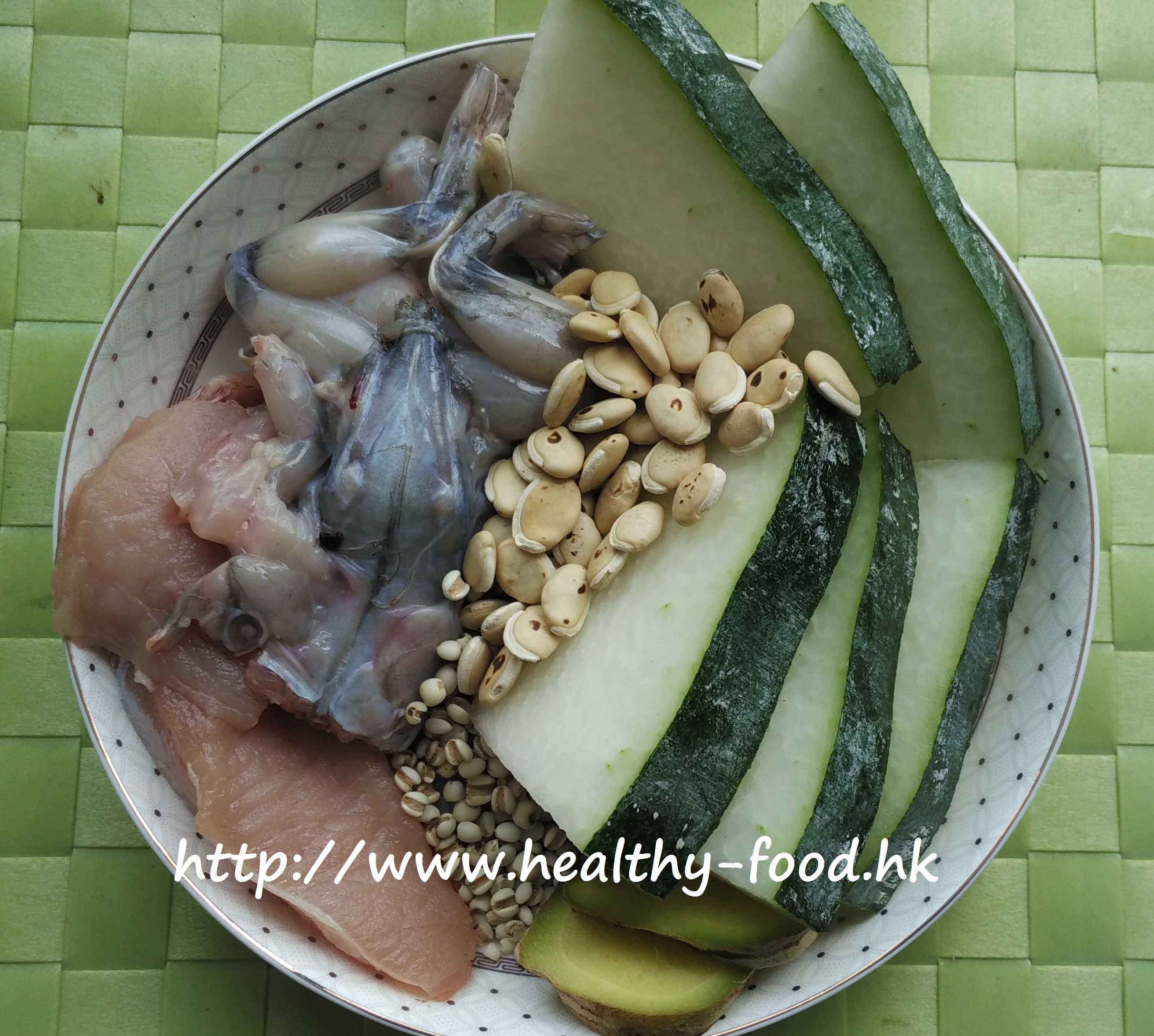
Winter Melon, Hyacinth Bean, Job's Tears and Frog Soup
traditionally supports postpartum water retention and dampness clearance
Why people make this soup
During the later stages of pregnancy, the growing baby can press on the lower abdomen and slow venous blood flow, leading to swelling in the legs and feet. For most women, this eases naturally after delivery with rest and attention to diet. But when swelling continues after birth, traditional Chinese food therapy points to two key steps: increase easily absorbed protein to help pull fluid back into circulation, and reduce sodium intake. In warm weather, cooling and damp-clearing foods become especially important, and this soup — built around winter melon, hyacinth bean, and Job’s tears — has long been a trusted choice in Cantonese households for exactly this situation.
Who it suits / who should be cautious
- Well suited to postpartum women with lingering leg or body swelling, as well as anyone dealing with summer heat and dampness.
- Good for children with heat-related low-grade fever that won’t break.
- If you are still pregnant, replace Job’s tears with adzuki beans (chi xiao dou), as Job’s tears are not recommended during pregnancy.
- If recovering from a caesarean section in the first week, replace frogs with lean pork, as frog cells are very active and may interfere with wound healing.
- This soup is not suitable for those who need to avoid cooling foods due to a very cold constitution.
Why these ingredients (the food-therapy logic)
- Winter melon with skin (dong gua): The skin is especially valued for promoting urination and reducing fluid retention. Traditionally considered cool in nature and used in summer to clear heat and support comfortable weight.
- Hyacinth bean (bian dou): Neutral and warming, traditionally used to strengthen the spleen and stomach and help the digestive system manage excess dampness effectively.
- Job’s tears / coix seed (sheng yi mi, Coix lacryma-jobi): One of the most widely used dampness-clearing grains in Cantonese food therapy. Traditionally supports the spleen, promotes urination, and is associated with reduced puffiness.
- Field frog (tian ji): A traditional ingredient valued for its gentle warming-and-nourishing qualities, rich in protein with very little fat. Traditionally associated with supporting qi, nourishing yin, and assisting the body’s fluid metabolism.
- Fresh ginger (sheng jiang): Warms the middle, counterbalances the cooling nature of the other ingredients, and adds flavour.
Ingredients (4–5 bowls)
| Ingredient | Amount | Notes |
|---|---|---|
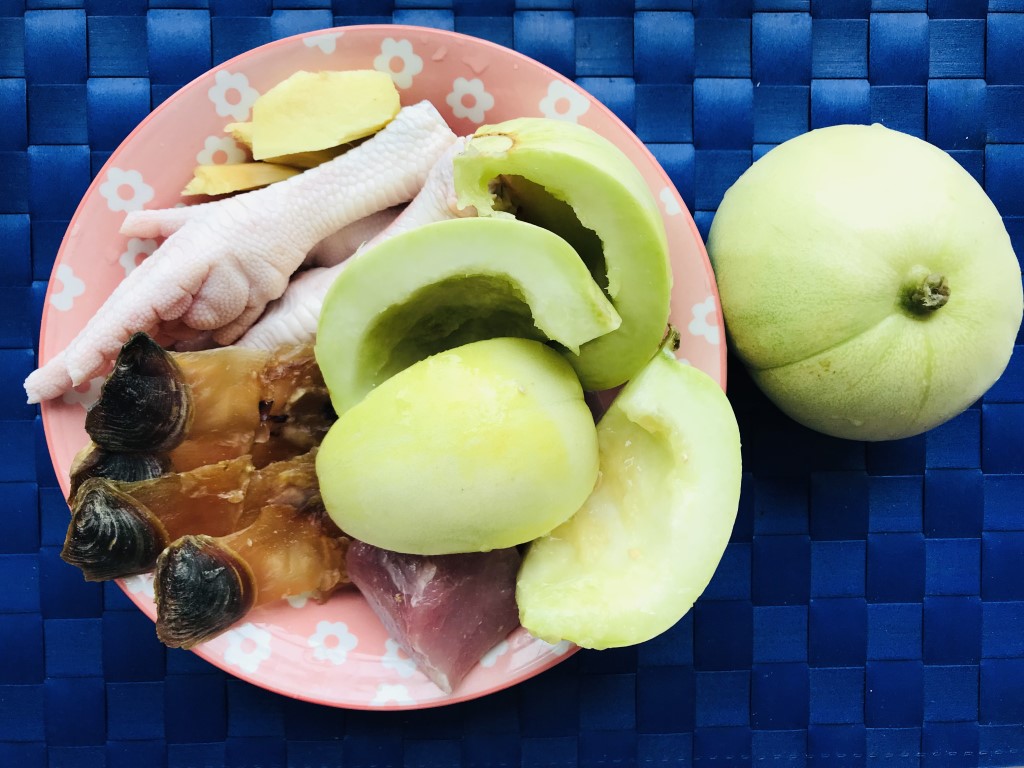
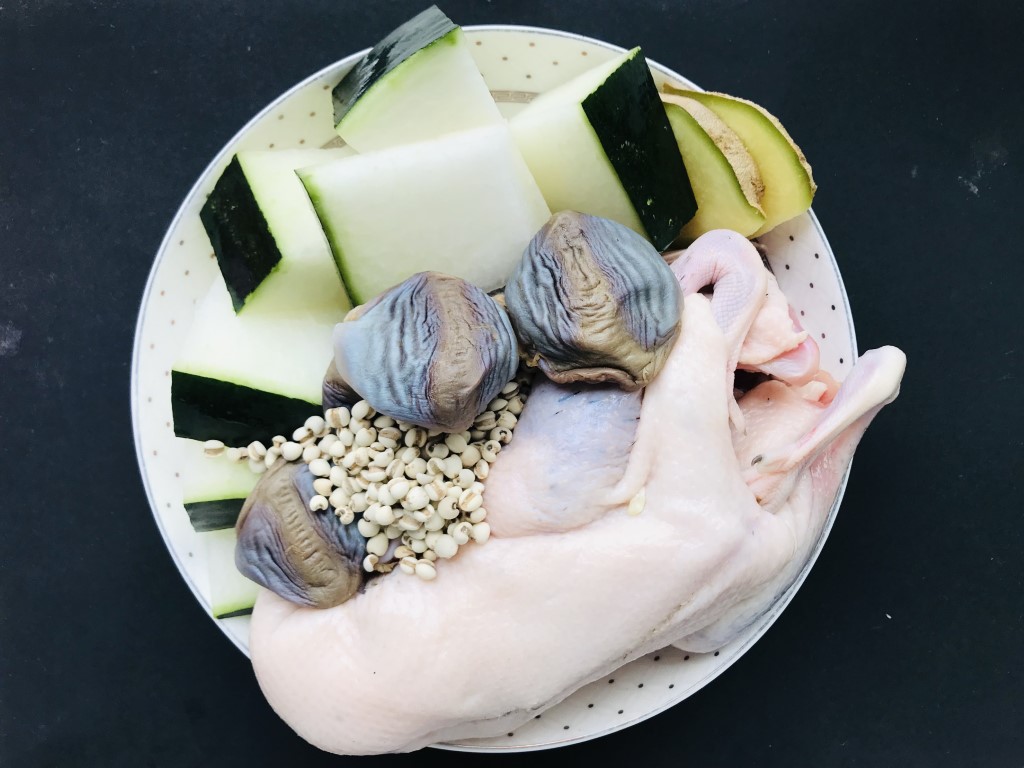
| Winter melon with skin (dong gua) | 600 g | Scrub the skin clean; keep the skin on for full benefit |
| Hyacinth bean / flat bean (bian dou) | 38 g | Soak 30 min before cooking |
| Raw Job’s tears / coix seed (sheng yi mi) | 38 g | Soak 30 min; replace with adzuki beans if pregnant |
| Fresh ginger, sliced | 3 slices | Keep the skin on |
| Field frog (tian ji) | 2–3 whole | Ask your fishmonger to clean; blanch before adding |
| Lean pork | 300 g | Sliced thin; blanch before adding |
| Water | 8 bowls (~1.5 L) |
Method
- Scrub the winter melon well, leaving the skin on. Cut into large chunks.
- Soak the hyacinth beans and Job’s tears in cold water for at least 30 minutes, then drain.
- Bring a pot of water to the boil. Blanch the cleaned frogs and pork slices briefly, then remove and rinse.
- Place all ingredients — winter melon, hyacinth beans, Job’s tears, ginger, frogs, and pork — into a large pot with 8 bowls of fresh water.
- Bring to a boil over high heat, then reduce to a medium-low simmer. Cook for 2 hours.
- Season lightly with salt if desired. Serve hot, eating the soup along with the solid ingredients.
Bro Niu’s tips
This is a clear, slightly sweet soup that works well in summer for the whole family — including children with heat-related low-grade fever. Keeping the winter melon skin on maximises the diuretic effect. If you are pregnant and want the same fluid-clearing benefits, simply swap the Job’s tears for adzuki beans and proceed with the same method.
Community questions answered (selected)
-
Q (reader): I’m 38 weeks pregnant — can I make this soup but can’t find adzuki beans here overseas? Bro Niu: You can substitute with kidney beans, red beans, or cannellini-style beans. The effect will be similar.
-
Q (Amon): I gave birth by caesarean section 7 days ago. My feet have been very swollen since day 4. Can I drink this? Bro Niu: Because frog cells are very active, I’d rather you hold off on frog while the wound is still healing. Replace the frog with lean pork and add 1 oz of adzuki beans — that version is fine for post-caesarean swelling. Have 3 servings in a row.
-
Q (reader): Is this soup too cooling to have after birth? Bro Niu: It is suitable for postpartum use, as long as you cook it for the full 2 hours — that mellows any cooling quality.
Published May 20, 2018 · Adapted and translated for Nourilo from a traditional home-kitchen recipe. Approx. 4 min read.