Soups
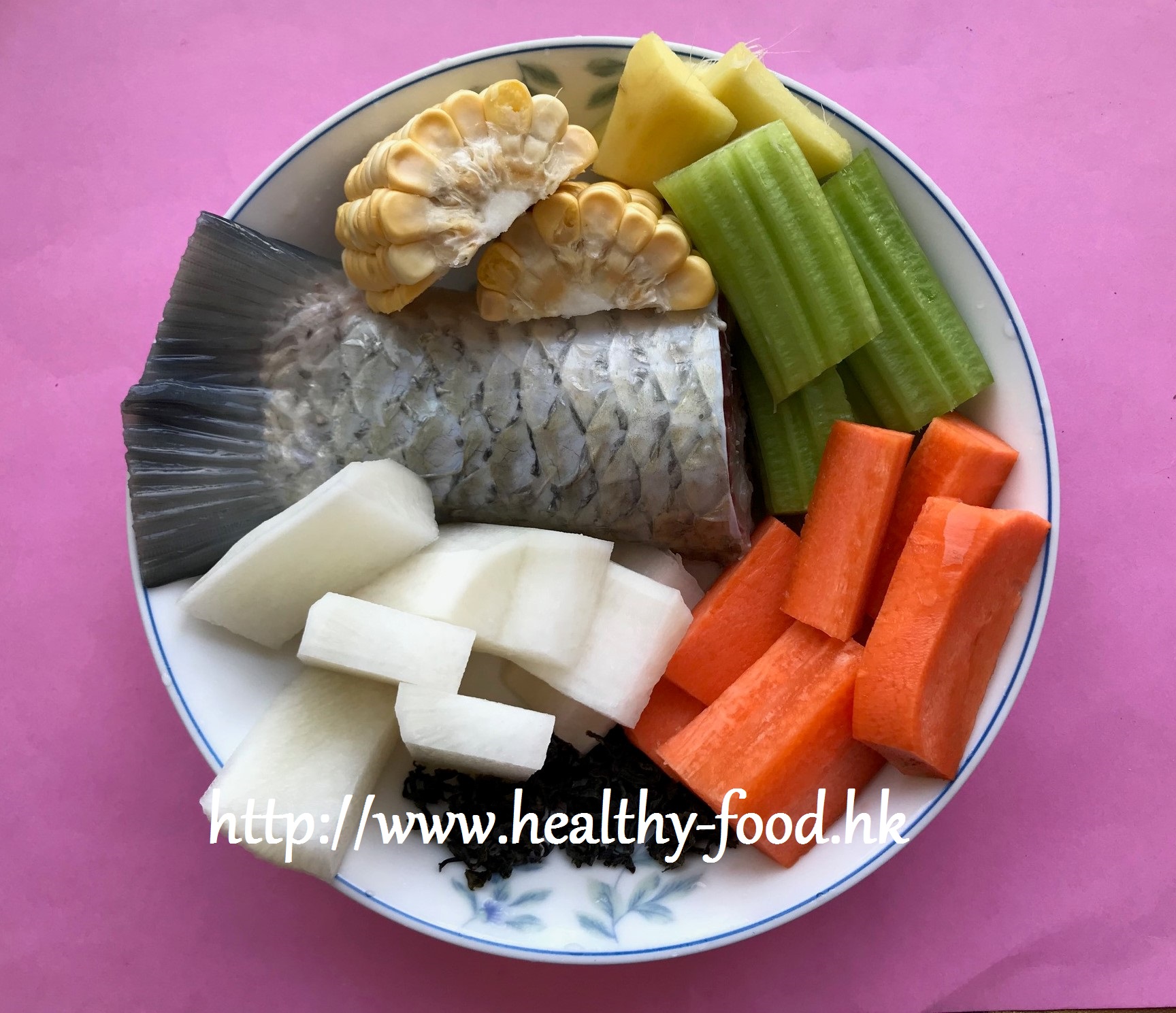
Radish, Corn, Celery, Seaweed and Grass Carp Tail Soup
traditionally used to support digestion, reduce bloating, and help the body process rich or fatty foods
Why people make this soup
After a stretch of festive meals — roasted meats, fatty braised dishes, rich sauces — many people find themselves feeling heavy, slow, and bloated. This is Bro Niu’s go-to reset soup: a naturally sweet, clear broth that uses every ingredient for a purpose. White radish is a staple of Cantonese cleansing soups, valued for its ability to support digestion and help clear accumulated heat in the stomach. Carrot adds a gentle sweetness and supports circulation. Celery brings liver-calming and blood pressure-supporting qualities to the pot. Dried seaweed (sargassum, the loose, dark-green variety sold at Chinese supermarkets) contributes its traditional role in dispersing fat and fluid retention. The grass carp tail provides a light, clean protein base without making the broth heavy.
Who it suits / who should be cautious
- Well suited to anyone who has been eating too much rich, fried, or heavily seasoned food, and who notices a dull appetite, mild bloating, or a feeling of heat in the face or nasal area.
- Also a useful general family soup for those watching their cholesterol, blood sugar, or blood pressure, as a complement to medical management.
- Generally suitable for most adults and children.
Why these ingredients (the food-therapy logic)
- White radish (daikon): Considered cooling and digestive in Chinese food therapy. Traditionally associated with promoting urination, aiding digestion, and clearing stomach and lung heat.
- Carrot: Considered neutral to slightly warming. Traditionally associated with supporting liver function, clearing the blood, and mildly lowering blood sugar.
- Celery (qin cai): Considered cooling and associated with calming the liver, clearing heat, and supporting healthy blood pressure.
- Seaweed (hai zao / Sargassum): Used in traditional Chinese medicine to dissolve phlegm, support water metabolism, and help disperse fat accumulation. Found in large Chinese supermarkets and some herbal shops.
- Grass carp tail: Strengthens the spleen and stomach; makes the broth sweet and nourishing without being rich.
Ingredients (about 4 bowls, 3–4 servings)
| Ingredient | Amount | Notes |
|---|---|---|
| White radish (daikon) | half to 1 whole | Peel and cut into chunks |
| Carrot | 1, medium | Peel and cut into chunks |
| Celery | 2 liang (~75 g) | Rinse and cut into pieces |
| Corn on the cob | 1 ear | Remove husk, cut into sections |
| Dried seaweed (hai zao) | 1 tablespoon | Rinse briefly |
| Fresh ginger | 3 slices | |
| Grass carp tail | 1 tail | Clean and pan-fry in a little oil until lightly golden |
Method
- Peel the white radish and carrot, cut into bite-sized chunks. Rinse the celery and cut into sections.
- Remove the husk from the corn and cut into 4–5 sections.
- Rinse the dried seaweed briefly.
- Clean the grass carp tail. Heat a little oil in the pot and pan-fry the fish tail until lightly golden on both sides — this removes the fishy smell and adds flavour to the broth.
- Add all ingredients to the pot with 7 bowls of water (about 1.6 litres).
- Bring to a boil over high heat, then reduce to a medium-low simmer and cook for 1 hour.
- Serve the soup with the vegetables and fish tail together.
Bro Niu’s tips
This soup is clear, sweet, and easy to drink. It works well when you have over-indulged in meat or fried foods and notice a sluggish appetite, a dull or bloated feeling, or mild heat signs (warm face, dry nose). Seaweed (hai zao) is available at larger Chinese supermarkets; some herbal shops also stock it. Note that this ingredient is Sargassum-type seaweed — a loose, strand-style dried seaweed — not the flat nori sheets used in Japanese cooking.
Published February 10, 2019 · Adapted and translated for Nourilo from a traditional home-kitchen recipe. Approx. 3 min read.