Soups
Fresh Dendrobium, Chinese Yam and Conch Soup
Traditionally used to strengthen the spleen, support liver health and protect eyesight
Why people make this soup
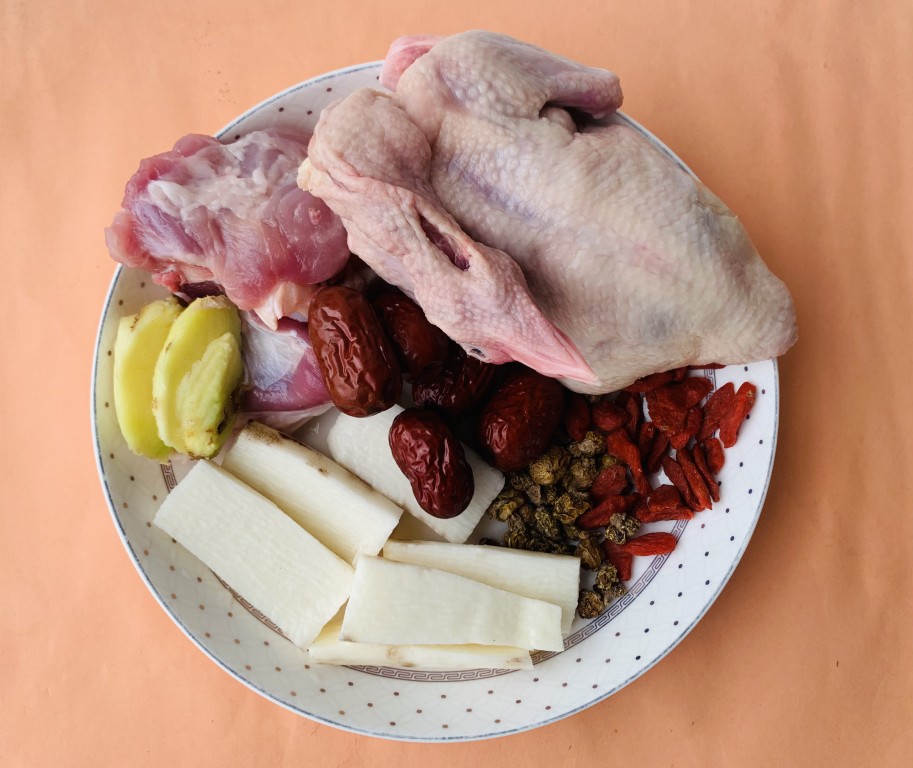
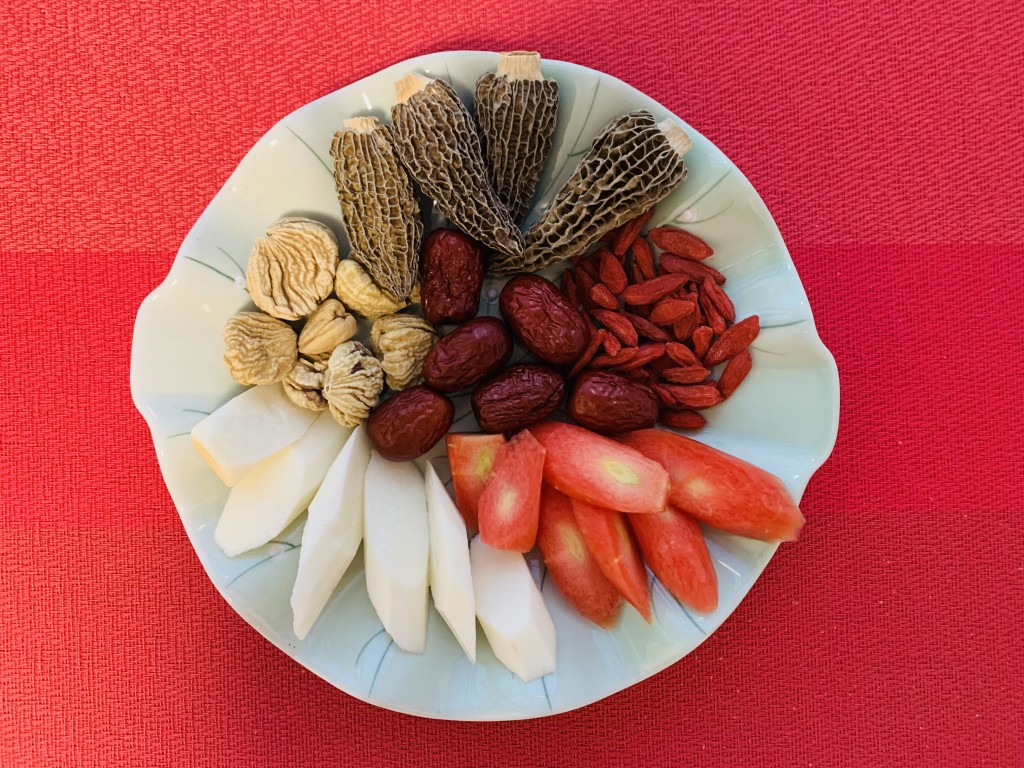
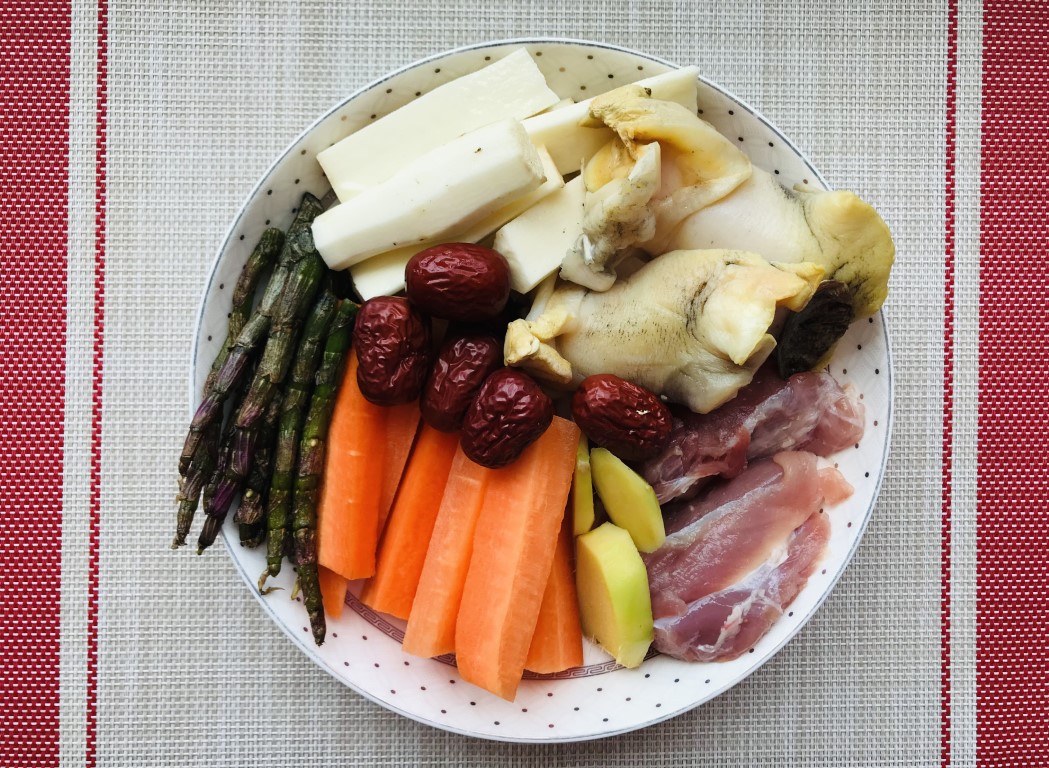
Bro Niu picked up some particularly robust fresh dendrobium stems at a Chinese herbal shop in Sai Ying Pun — short, chunky, and mostly purple-skinned, the kind that cooks describe as having the most nourishing quality. Fresh dendrobium (shi hu) is one of the more celebrated tonic herbs in Cantonese food therapy: it is traditionally associated with nourishing the stomach’s “yin” (its moisture), supporting liver and gallbladder function, and bolstering immune resilience. Paired here with Chinese yam for the spleen, carrot and red dates for sweetness and colour, and meaty whole conch for depth of flavour, the result is a soup that is both delicious and unusually approachable — suitable even for those who normally struggle to tolerate richer tonics.
Who it suits / who should be cautious
- Suitable for the whole family, including elderly members and those who are generally too weak to handle strong tonics
- Particularly helpful for people who spend long hours in front of a screen, or those with yin-deficiency (chronic low-grade heat, dry mouth, easy fatigue)
- Generally safe and gentle; no strong contraindications for typical use
Why these ingredients (the food-therapy logic)
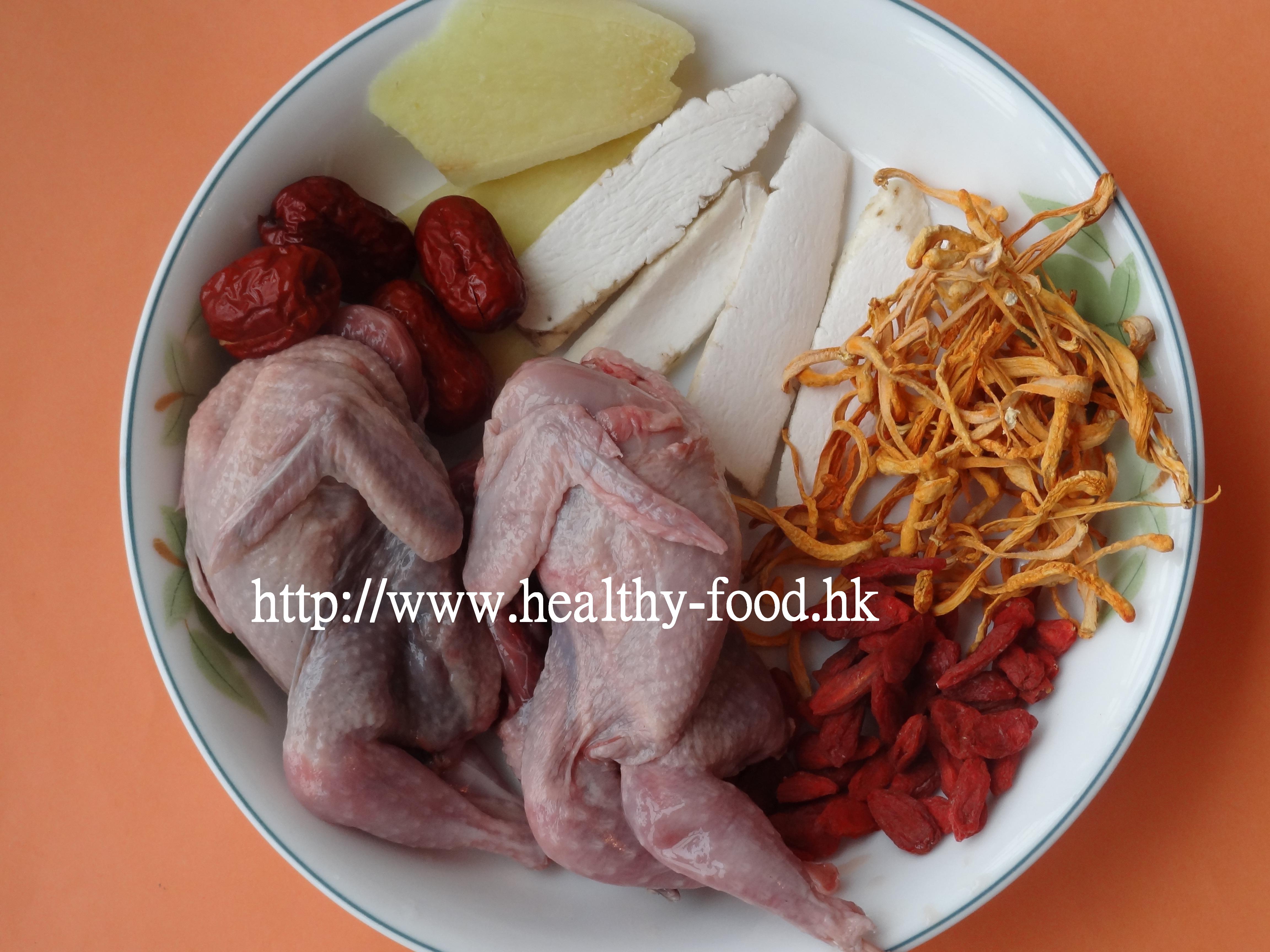
- Fresh dendrobium (xian shi hu): Nourishes stomach yin and is traditionally associated with protecting liver and gallbladder function, brightening vision, and enhancing immunity
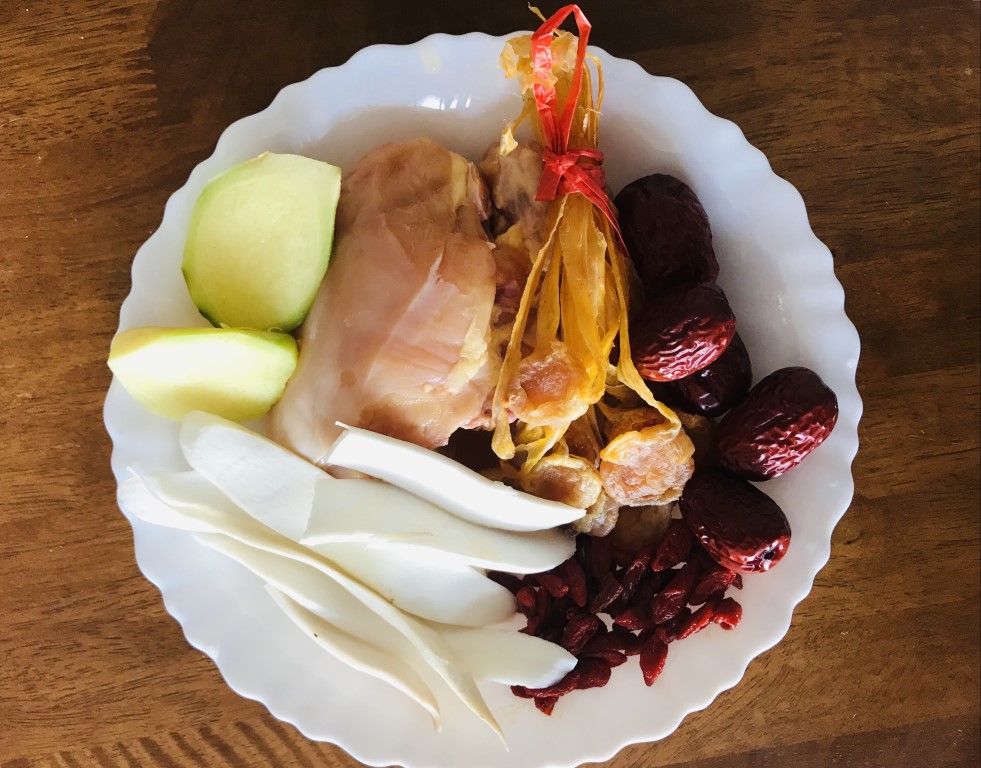
- Fresh Chinese yam (xian huai shan): Strengthens the spleen and stomach; supports digestion and helps regulate qi
- Carrot (hong luo bo): Rich in beta-carotene, which the body converts to vitamin A; traditionally supports eye health
- Red dates (hong zao): Gently tonify qi and blood; add natural sweetness to balance the broth
- Fresh conch (xiang luo): Provides savoury depth; traditionally used in Cantonese cooking for its cooling, nourishing properties
- Pork shank (zhu zhan): Adds body and richness without making the soup heavy
Ingredients (4 bowls)
| Ingredient | Amount | Notes |
|---|---|---|
| Fresh dendrobium | 75 g | Rinse well |
| Fresh Chinese yam | 150 g | Peel and cut into chunks |
| Carrot | 1 medium | Peel and cut into chunks |
| Fresh ginger | 3 slices | |
| Red dates (pitted) | 6 pieces | Remove stones |
| Fresh whole conch | 2 pieces | Clean well |
| Pork shank | ~400 g | Blanch briefly to remove impurities |
Method
- Rinse the fresh dendrobium and set aside.
- Peel the Chinese yam and carrot; cut both into large chunks.
- Remove stones from the red dates.
- Blanch the pork shank in boiling water for 2–3 minutes; rinse and drain.
- Place all ingredients into a pot with 9 bowls (approximately 2.1 litres) of water.
- Bring to a boil, then reduce to a medium-low simmer for about 2 hours until reduced to 4 bowls.
- Serve with the soup ingredients — the yam and conch are particularly enjoyable to eat.
Bro Niu’s tips
This soup is naturally sweet and pleasant. One of its strengths is that it is suitable even for people who normally find tonic soups too “補” (tonifying) — that is, people with yin deficiency whose bodies do not absorb strong tonics well. Regular consumption is associated with improved stamina, reduced fatigue, and better visual comfort. If you cannot find fresh conch, dried conch is also excellent and arguably gives the broth an even richer, more complex flavour; look for whole dried conch with the “cap” (operculum) still attached — this is the mark of quality product rather than the cheaper scrap pieces.
Community questions answered (selected)
-
Q (Susanna): My family member just received a vaccination. Can they drink this soup? Bro Niu: Yes, this soup is fine after vaccination.
-
Q (april): Are the golden-coloured agaricus mushrooms treated with sulphur? I read online that the golden colour is from processing and that this is harmful. Bro Niu: Most dried goods at Chinese herbal shops are sulphur-fumigated to prevent mould and preserve colour. Fortunately, sulphur dissolves in water, so just soak the mushrooms for half an hour, discard the water, and then use them. As long as the dried goods are not excessively sour-smelling, they are generally fine to use; if the smell is sharp and pungent, skip them.
-
Q (Susanna): Which is better — fresh or dried conch? Bro Niu: In my view, dried conch gives the soup a richer, more fragrant flavour, and it is especially good for those with excess dampness. Fresh (frozen) conch lets you choose the size you want, but for dried conch, look for the whole conch with the operculum attached — that is the best quality. Loose conch heads and meat pieces are less desirable.
Published May 21, 2022 · Adapted and translated for Nourilo from a traditional home-kitchen recipe. Approx. 4 min read.