Soups
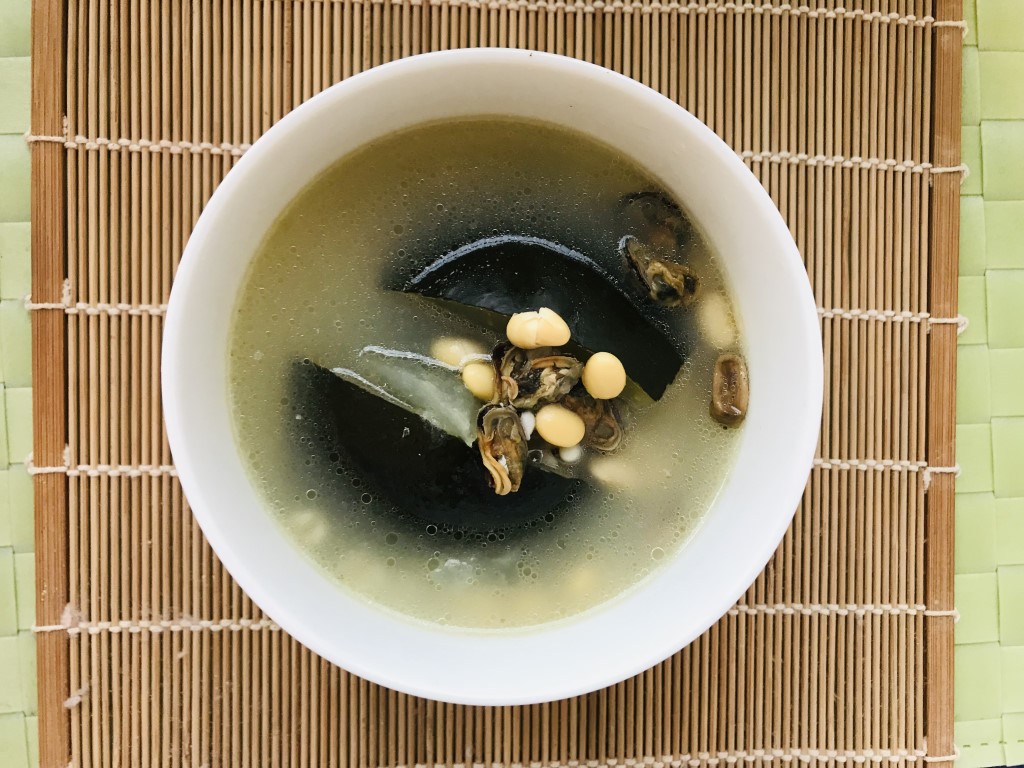
Winter Melon, Dried Mussel and Soybean Soup
Traditionally used to clear residual heat and restore nourishment after illness
Why people make this soup
After a cold or fever passes, the body often still feels a little drained — appetite is low, energy hasn’t fully returned, and the internal environment still has some residual heat. This is the moment for a light but nourishing soup rather than something heavy or fatty. In Cantonese food-therapy tradition, winter melon with skin on is a classic post-illness ingredient: cooling, lightly diuretic, and rich in water content. Dried mussels (sometimes called dried sea mussels or “dan cai”) add a deep, savoury richness and are traditionally associated with tonifying the liver and kidneys, replenishing essence and blood, and easing fatigue. Soybeans bring plant protein and, together with the broth, are thought to support heart and vascular health. This is the kind of soup that feels restorative without being taxing on a recovering digestive system.
Who it suits / who should be cautious
- Suitable for most adults and children recovering from a cold or fever; a gentle everyday soup for hot seasons
- Traditionally associated with dizziness, night sweats, and general fatigue
- Those with active skin conditions should avoid this soup
- Gout patients should avoid or limit this soup (dried mussels are relatively high in purines)
- Please see a doctor if fever returns or if recovery is not progressing
Why these ingredients (the food-therapy logic)
- Winter melon with skin (dong gua): The skin is where much of the diuretic and clearing effect is concentrated; cooling in nature, traditionally used to clear summer heat and reduce internal damp
- Dried mussels (dan cai): Traditionally used to tonify the liver and kidneys, replenish essence and blood, and support thyroid health; also associated with easing dizziness and night sweats
- Soybeans (huang dou): Plant protein source; traditionally thought to nourish the spleen and protect heart and blood vessels
- Dried tangerine peel (chen pi): Aids digestion, reduces the “fishy” edge of the dried mussels, and helps the stomach assimilate the richer ingredients
Ingredients (4 bowls)
| Ingredient | Amount | Notes |
|---|---|---|
| Winter melon (dong gua) | 600 g | Skin on, seeds removed, cut into chunks |
| Dried mussels (dan cai) | 75 g | Soak at least 30 min, drain and rinse |
| Soybeans (huang dou) | 38 g | Soak at least 30 min, drain |
| Dried tangerine peel (chen pi) | 1 piece | Soak until soft |
Method
- Rinse the dried mussels and soak them in cold water for at least 30 minutes, then drain. Discard the soaking water.
- Soak the soybeans for at least 30 minutes, drain.
- Scrub the winter melon skin well, remove the seeds and fibres inside, and cut into large chunks — leave the skin on.
- Soak the tangerine peel until soft.
- Place all ingredients in a pot with 8 bowls (about 1.6 litres) of water.
- Bring to a boil, then reduce to a medium simmer for 1.5 hours until the liquid reduces to about 4 bowls.
- Serve the soup and ingredients together.
Bro Niu’s tips
This soup is nourishing and flavourful — it suits the whole family, young and old. Dried mussels and soybeans should each be soaked for at least 30 minutes and the soaking water discarded before adding to the pot. Those with skin conditions or gout should not take this soup frequently.
Community questions answered (selected)
-
Q (Chen Jie): How long should the soybeans and dried mussels be soaked? Bro Niu: Soak both for at least 30 minutes, then discard the soaking water before cooking.
-
Q (Tang Tang): My 3-year-old grandson recently recovered from COVID — he has no appetite. What can I give him? Bro Niu: Millet porridge is excellent for the spleen and stomach, but since it can be thin, add a little white rice or lotus root starch to thicken it. Millet porridge cooked with ingredients the child enjoys, taken for 4–5 days consecutively, will help.
Published August 9, 2022 · Adapted and translated for Nourilo from a traditional home-kitchen recipe. Approx. 3 min read.