Home-Style Dishes
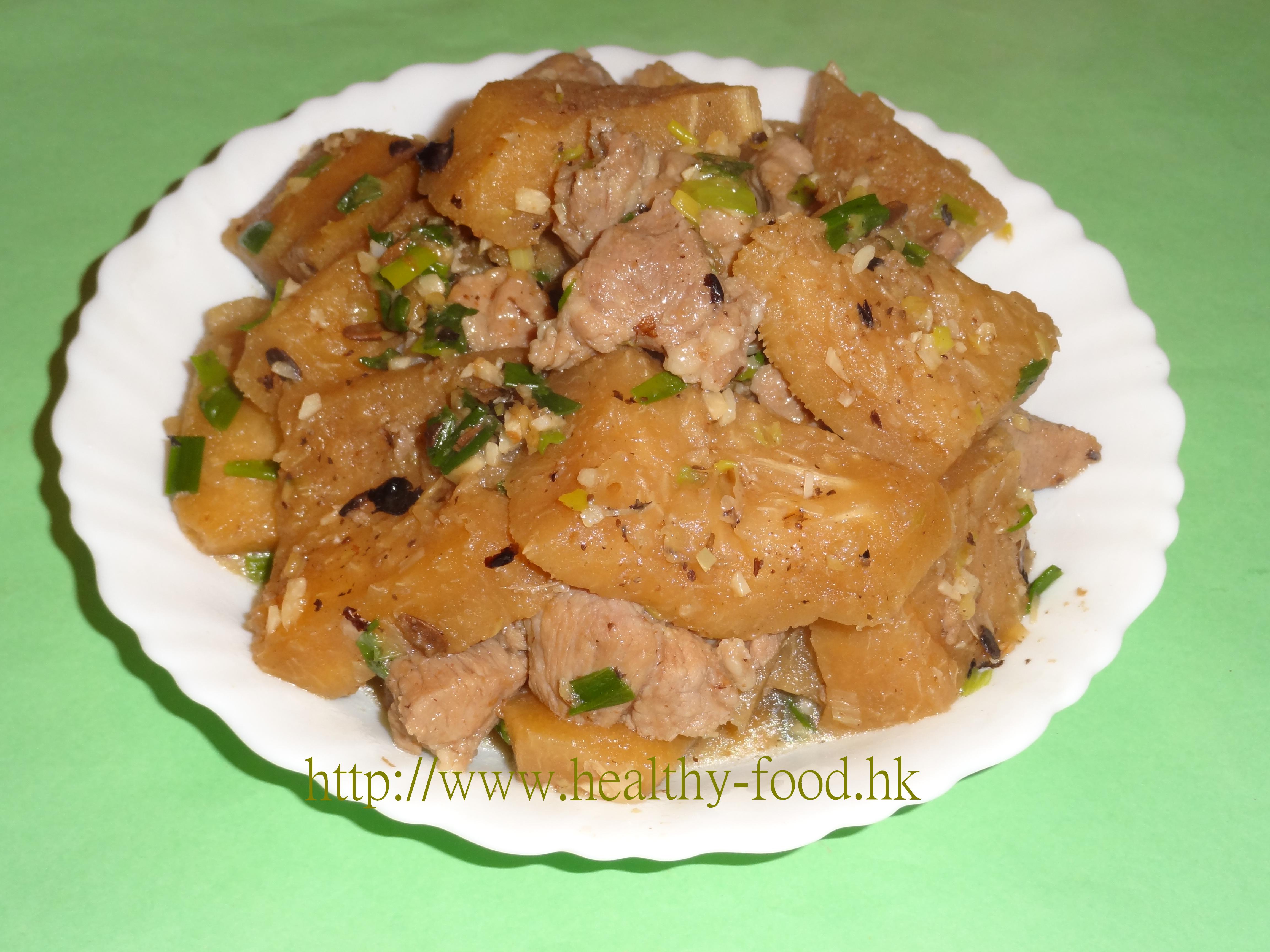
Pomelo Peel Braised Pork Ribs
traditionally associated with supporting digestion, moving qi, and dissolving phlegm
Why people make this dish
Pomelos have wonderfully sweet flesh and a thick rind that most people discard — but the peel is actually the most therapeutically interesting part of the fruit. The approach here is to use the whole pomelo: the flesh eaten fresh, and the peel — scraped of its bitter yellow outer layer and soaked for two days — becoming the star of this braised dish. Pomelo as a whole fruit is traditionally considered good for the stomach and intestines; its peel, in particular, has a stronger qi-moving quality that makes it especially useful for anyone who feels bloated, sluggish after meals, or has low appetite. The fermented black beans and ginger add warmth and depth, making this a satisfying savory dish that doubles as gentle digestive support.
Who it suits / who should be cautious
- Well suited for those experiencing poor appetite, bloating, indigestion, or a sense of heaviness after eating
- Pregnant women should avoid this dish — pomelo peel moves and disperses qi, which is not appropriate during pregnancy
- Those with qi deficiency (chronic fatigue, weak digestion) should also be cautious or avoid
Why these ingredients (the food-therapy logic)
- Pomelo peel (you pi): Traditionally used to move qi, dissolve phlegm, support digestion, and relieve bloating; shares some properties with tangerine peel (chen pi) but stronger in its dispersing action
- Pork spare ribs (pai gu): Provide protein and richness; help the peel absorb the braising flavours; traditionally nourishing to qi and blood
- Fermented black beans (dou chi): Warm and pungent; a classic Cantonese seasoning that also has traditional digestive-supporting properties
- Ginger (jiang): Warms the stomach, aids digestion, and complements the dispersing quality of the pomelo peel
Ingredients (2–3 servings)
| Ingredient | Amount | Notes |
|---|---|---|
| Pomelo peel | From 1 pomelo | Scrape off yellow outer skin; soak in water for 2 days, changing water daily |
| Pork spare ribs | ~300 g (half jin) | Washed and marinated |
| Minced ginger | To taste | |
| Minced garlic | To taste | |
| Fermented black beans (dou chi) | To taste | |
| Spring onion | A few stalks, chopped | |
| Stock | ~half a bowl | Or water with a little soy sauce |
| Marinade | Egg white, cornstarch, white pepper, salt | Marinate ribs for at least 15 minutes |
Method
- Peel the pomelo: remove and discard the thin yellow outer skin (the green or yellow zest layer). Keep only the thick white pith.
- Soak the white pomelo peel in cold water for 2 days, changing the water once or twice a day to remove bitterness.
- After soaking, cut the peel into small pieces, blanch in boiling water, then squeeze out as much water as possible.
- Marinate the pork ribs with egg white, cornstarch, white pepper, and a pinch of salt for at least 15 minutes.
- Heat oil in a wok. Stir-fry the minced ginger, garlic, and fermented black beans until fragrant.
- Add the marinated pork ribs and stir-fry until lightly browned and fragrant.
- Add the pomelo peel pieces and stir briefly to combine.
- Pour in the stock and your choice of seasoning. Braise over medium heat for approximately 12 minutes, until the sauce has reduced and the ribs are cooked through.
- Scatter with spring onion and serve over rice.
Bro Niu’s tips
The pomelo is truly a whole-fruit food: the flesh supports the spleen and lungs, stops coughing, and is traditionally used to help clear the effects of alcohol. The peel moves phlegm, regulates qi, and eases coughing and pain. The seeds are traditionally used for inguinal hernia pain. However, the peel’s qi-moving nature means pregnant women and those with qi deficiency should skip this one.
Community questions answered (selected)
-
Q (玥儿妈妈): I have had a persistent cough for over a month. Can I eat pomelo fruit flesh to help with the cough? Does it matter if it is a cold-type or hot-type cough? Bro Niu: Pomelo flesh is better suited for heat-type coughs. If you have a cold-type cough, you can still eat the flesh — but warm it gently first by adding rice wine and honey and stewing it before eating.
-
Q (Becky): What is the difference between raw and cooked tian qi (notoginseng)? What are they each used for? Bro Niu: Raw tian qi activates blood circulation, unblocks channels, stops bleeding, and relieves pain; it is also associated with supporting healthy blood pressure and cholesterol. Cooked tian qi tonifies and replenishes qi and blood while also moving stagnant blood.
Published December 19, 2012 · Adapted and translated for Nourilo from a traditional home-kitchen recipe. Approx. 4 min read.