Soups
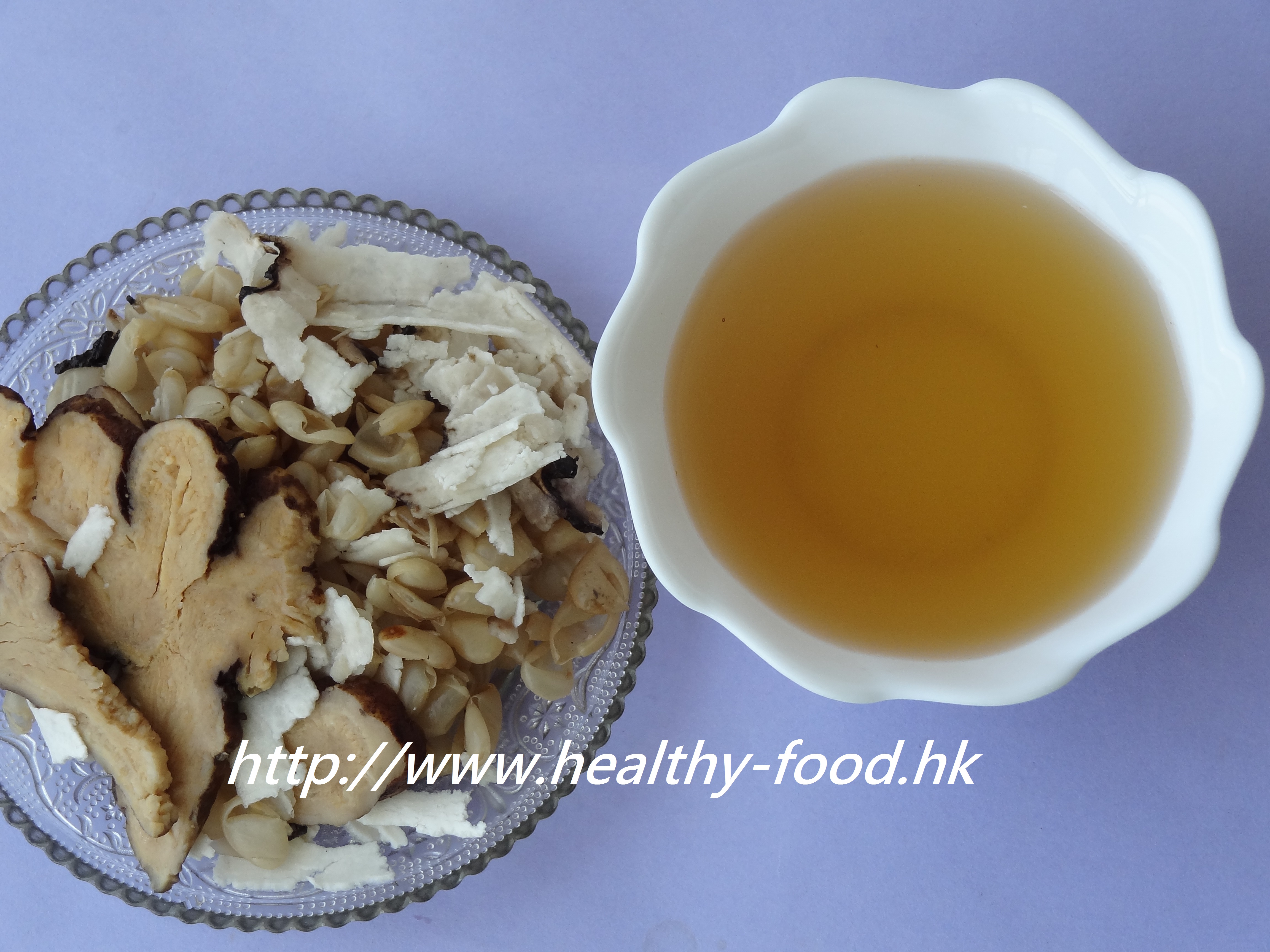
Phlegm-Damp Clearing Herbal Soup (Qu Shi Tang)
traditionally used to support spleen function and help clear dampness from the body
Why people make this soup
In Chinese medicine thinking, a “phlegm-damp” constitution describes people who tend to feel heavy and sluggish, accumulate excess weight easily, sleep a lot, snore, and experience a sticky sensation in the mouth or digestive tract. Rather than a single dramatic cause, this constitution is understood to reflect the spleen and stomach working below their best — failing to fully transform and move fluids, leading to a gradual build-up of what practitioners call “damp.” Soups like this one, combining classic damp-clearing herbs with adzuki beans and Job’s tears, have been part of southern Chinese household cooking for generations as a practical way to support the digestion and help the body feel lighter.
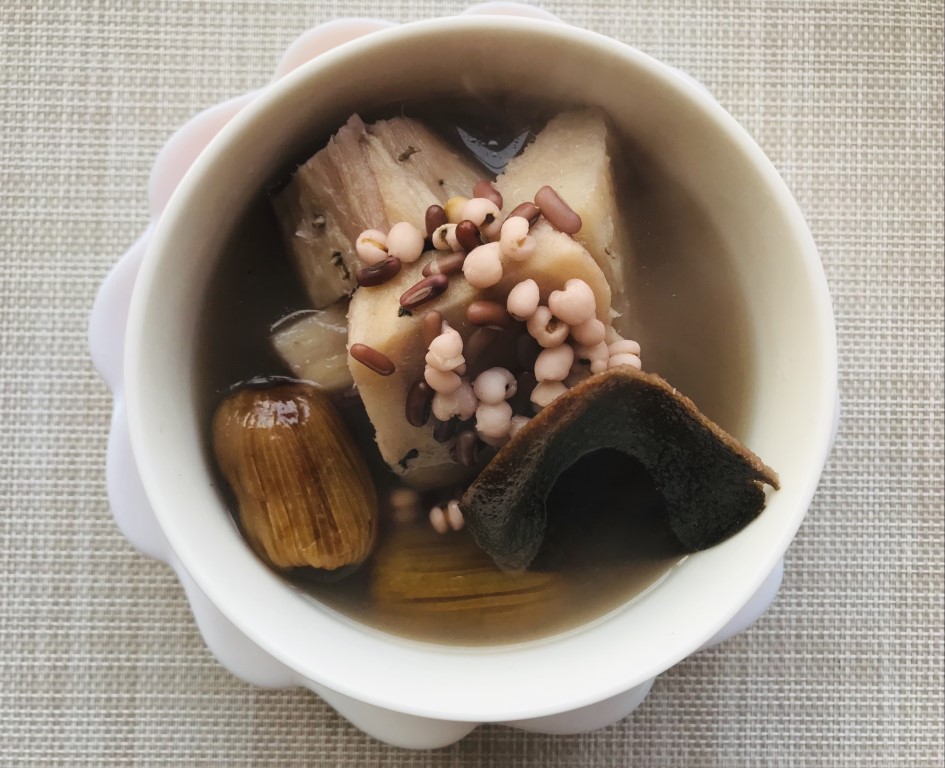
You can often find ready-made “qu shi” (dampness-clearing) herb packets at Chinese herbal medicine shops, sold cheaply. Bro Niu recommends boosting these packets with a handful of adzuki beans and two types of Job’s tears for better results.
Who it suits / who should be cautious
- Suitable for the whole family year-round, including children
- Especially helpful for those with a phlegm-damp pattern: feeling heavy-headed, easily tired, loose or sticky stools, a thick white coating on the tongue, weight that is hard to shift
- Also useful after recovering from a cold, when you want a gentle supportive soup before moving to richer tonic broths
- Those with a cold constitution can add a few slices of fresh ginger and an extra piece of tangerine peel when cooking to warm the soup a little
- Job’s tears (yi mi) is cooling by nature — if you find the soup too cooling, replace raw Job’s tears with adzuki beans or add ginger as above
Why these ingredients (the food-therapy logic)
- Poria / cloud fungus (yun fu ling): A very widely used herb in Chinese medicine that is considered to gently strengthen the spleen and leach out dampness; it is mild and suitable for most people
- White atractylodes (bai zhu): Paired with poria, it is a classic combination for warming and supporting the spleen
- Hyacinth bean skin (bian dou yi): Lighter and less drying than the whole bean; traditionally used to clear damp and support digestion without being too warming
- Water plantain root (ze xie): Helps to move water and damp through the body via the urinary system in traditional understanding
- Adzuki beans (chi xiao dou): A familiar Asian ingredient known to be warming-neutral and traditionally used alongside Job’s tears to help the body release excess fluid retention
- Job’s tears (yi mi): Both raw (cooling) and parched (more neutral) versions are used together here; traditionally associated with clearing damp and supporting the spleen
- Tangerine peel (chen pi): Warms the middle, aids digestion, and balances any cooling tendency in the formula
Ingredients (3–4 bowls)
| Ingredient | Amount | Notes |
|---|---|---|
| Dampness-clearing herb packet (qu shi tang bao) | 1 packet | Available at Chinese herbal medicine shops |
| Adzuki beans (chi xiao dou) | ~38 g (1 liang) | Soak 30 minutes before cooking |
| Raw Job’s tears (sheng yi mi) | ~38 g (1 liang) | Soak 30 minutes before cooking |
| Cooked / parched Job’s tears (shu yi mi) | ~38 g (1 liang) | Soak 30 minutes before cooking |
| Dried tangerine peel (chen pi) | 1 piece | Soak briefly, scrape off pith if desired |
Method
- Soak the herb packet, adzuki beans, and both types of Job’s tears in water for about 30 minutes; drain.
- Place all ingredients into a pot and add 6 to 7 bowls of water.
- Bring to a boil, then reduce to a medium-low simmer.
- Cook for about 1 hour, until the liquid reduces to around 3 to 4 bowls.
- Serve and drink the broth; the beans and Job’s tears can also be eaten.
Bro Niu’s tips
This soup is gentle and appropriate for all ages, all year round. It is particularly well suited to those with a phlegm-damp constitution, or anyone who has just recovered from a cold and wants a light supportive soup before drinking richer tonic broths. People with a phlegm-damp tendency should avoid overeating, and steer clear of rich, greasy, or sweet foods and sugary drinks, as these are considered to worsen damp accumulation in the body. If you would like to make your own herb mixture instead of using a packet, the core herbs to look for are poria (yun fu ling), white atractylodes (bai zhu), hyacinth bean skin (bian dou yi), water plantain root (ze xie), and corn silk or corn core (su mi xin). You can also add a little Chinese yam (huai shan) and lotus seeds (lian zi) to further support the spleen.
Community questions answered (selected)
-
Q (KH): Can this formula also be used to clear phlegm-damp specifically, or is there a different one? Bro Niu: This soup with 2 extra pieces of tangerine peel added during cooking works well to clear both dampness and phlegm.
-
Q (Apple): Poria comes in several forms at the shop — whole rolls, rolls with bark, and small cubes. Which is best? Bro Niu: The bark of poria (fu ling pi) has the strongest dampness-clearing effect. The rolls and cubes are similar in effectiveness and work well to strengthen the spleen and drain dampness. The small cubes cut from the centre of poria have a calming, mind-settling quality.
-
Q (Hang): I notice your other dampness soups include Chinese yam, but this one does not. Is Chinese yam less suitable for a phlegm-damp constitution? Bro Niu: Chinese yam (huai shan) strengthens the spleen and stomach and is fine to add to this soup.
Published January 2, 2016 · Adapted and translated for Nourilo from a traditional home-kitchen recipe. Approx. 4 min read.