Herbal & Flower Teas
Osmanthus and Jasmine Flower Tea
traditionally associated with supporting qi circulation and blood pressure balance in yang-deficient individuals
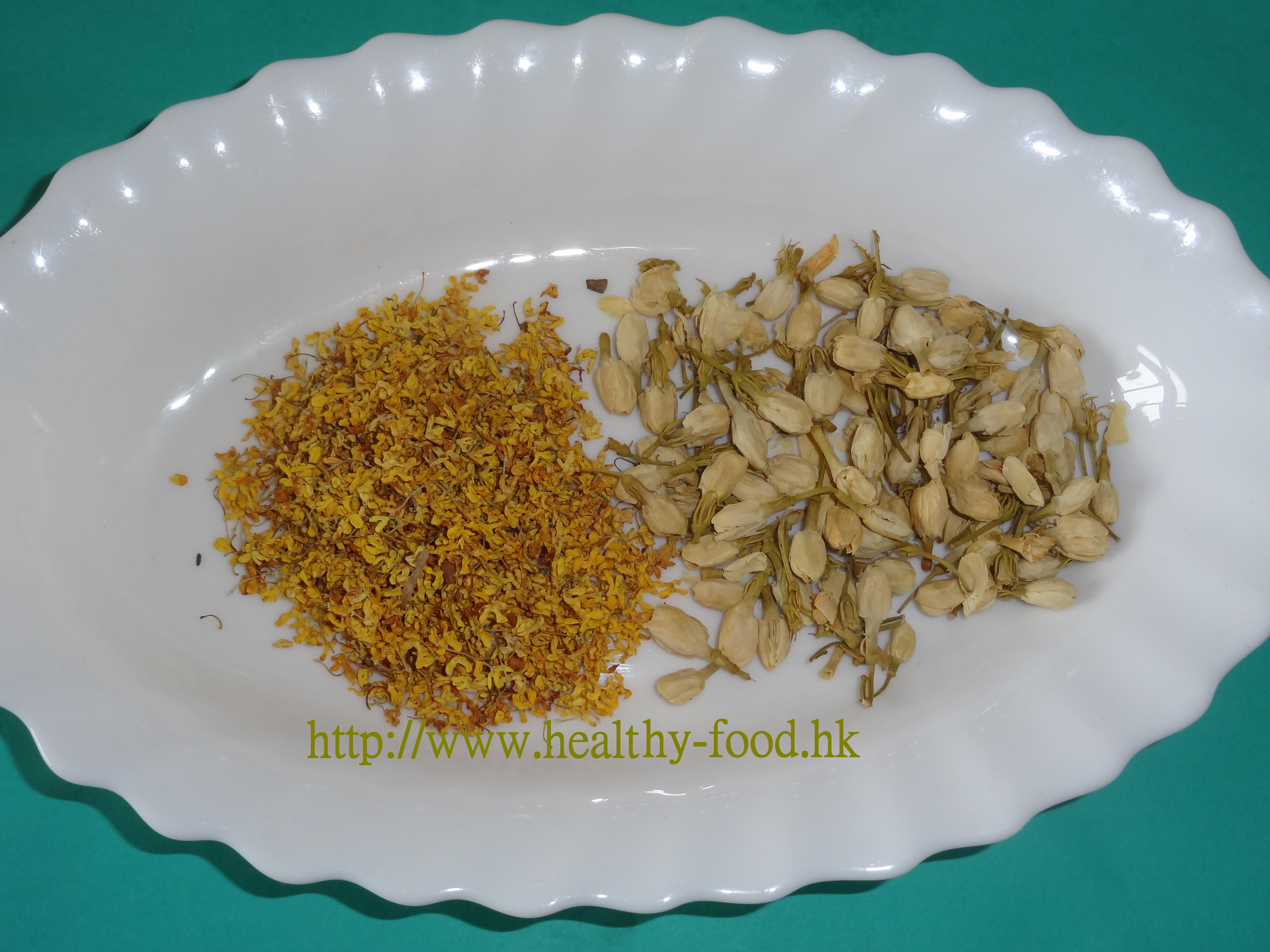
Why people make this tea
Bro Niu raises an important nuance that many Western readers may not have considered: not all cases of high blood pressure look the same. Some elderly people, after being told they have hypertension, become so restrictive in their diet — low calorie, very little fat, almost no meat — that they swing into nutritional deficiency and a “yang-deficient” pattern. Their blood pressure may remain elevated, but now they also experience dizziness, achy lower back, cold limbs, loose stools and clear, frequent urination. For this profile — yang-deficient hypertension — a warming, qi-moving tea like this gentle osmanthus-jasmine blend is traditionally considered more helpful than the cooling teas typically recommended for hypertension.
Osmanthus has a light, sweet fragrance and is associated in traditional terms with strengthening the spleen, resolving phlegm, dispersing stagnation and calming the liver. Jasmine is slightly warm, sweet and pungent — associated with regulating qi, opening emotional stagnation and harmonising the digestive system. Together they make one of the most pleasant-smelling herbal teas possible.
Who it suits / who should be cautious
- Yang-deficient individuals with mild hypertension who also feel cold, dizzy, tired and have lost appetite from over-dieting
- Generally suitable for all constitutions: Bro Niu notes that this tea is fine for everyone
- For hypertension with excess heat or a hot constitution, other teas (such as hawthorn tea or celery juice) would be more appropriate
- Pregnant women should avoid this and all herbal flower teas
- If blood pressure is persistently above normal, see a doctor — this tea is supportive, not a treatment
Why these ingredients (the food-therapy logic)
- Osmanthus (gui hua): Mild, sweet and warm. In Chinese food therapy, it is associated with warming and supporting the spleen, resolving phlegm and damp, dispersing qi stagnation, and calming the liver. Its fragrance is said to have a gentle uplifting effect.
- Jasmine (mo li hua): Slightly warm, sweet and pungent. Associated with regulating qi, lifting emotional stagnation and harmonising the stomach. In Cantonese tradition, jasmine is also used in combination with osmanthus and magnolia bud (xin yi hua) to address nasal congestion draining down the throat.
Ingredients (1–2 cups)
| Ingredient | Amount | Notes |
|---|---|---|
| Dried osmanthus flowers (gui hua) | 6 g | |
| Dried jasmine flowers (mo li hua) | 6 g |
Method
- Place both flowers in a teapot or large cup.
- Pour in boiling water.
- Steep for 3 minutes.
- Pour and drink. The same flowers can be re-steeped a few more times.
- When taking for nasal post-nasal drip in addition to mild hypertension, Bro Niu suggests adding 6 magnolia buds (xin yi hua), lightly crushed, and steeping together; store in a thermos and drink throughout the day.
Bro Niu’s tips
- For mild hypertension in general, Bro Niu also recommends hawthorn tea (shan zha cha) as a regular daily drink — easy, affordable and widely studied for cardiovascular support.
- If blood pressure suddenly spikes: juicing celery or bitter melon and drinking a glass can temporarily lower pressure by around 20 points — this is a useful household first step while waiting to see a doctor.
- Osmanthus and jasmine flowers are available at tea shops, flower tea boutiques and some department store tea counters (Sogo, Wing On etc.).
- Magnolia bud (xin yi hua) is available at Chinese herbal medicine shops.
- This tea can be kept in a thermos for the day and re-steeped multiple times.
Community questions answered (selected)
-
Q (Zhou Tai): My husband has mild high blood pressure and has recently been experiencing post-nasal drip and constantly clearing his throat. What tea can help? Bro Niu: Use osmanthus and jasmine flowers together with 6 magnolia buds (xin yi hua), lightly crushed. Steep in a thermos and drink throughout the day. This can help with both the mild blood pressure and the nasal drip. If blood pressure keeps rising consistently over a week, see a doctor. Also, a regular light diet and regular blood pressure monitoring are important.
-
Q (Ada): My father is 67 and has had high blood pressure for a few years. Recently it spiked to 180 with dizziness and headache. Can food therapy help? Is it better to see a Western or Chinese doctor? Bro Niu: For a sudden spike to 180, the quickest approach is to juice celery or bitter melon immediately — this can bring pressure down by about 20 points. Both Western and Chinese medicine can manage hypertension. Western medicine adjusts medication quickly and is the safe, reliable choice once pressure is high. Chinese medicine takes longer but addresses the whole body and, with patience, some people can reduce medication over time. For a consistent high reading, see a doctor.
-
Q (mavis): Can children drink the “brain health flower tea” you mentioned as a regular wellness drink? Bro Niu: Yes, children can drink those brain-nourishing flower teas as a general wellness habit.
Published June 6, 2013 · Adapted and translated for Nourilo from a traditional home-kitchen recipe. Approx. 4 min read.