Herbal & Flower Teas
Malt, Licorice & Tangerine Peel Tea
Traditionally used to ease bloating and sluggish digestion after heavy eating
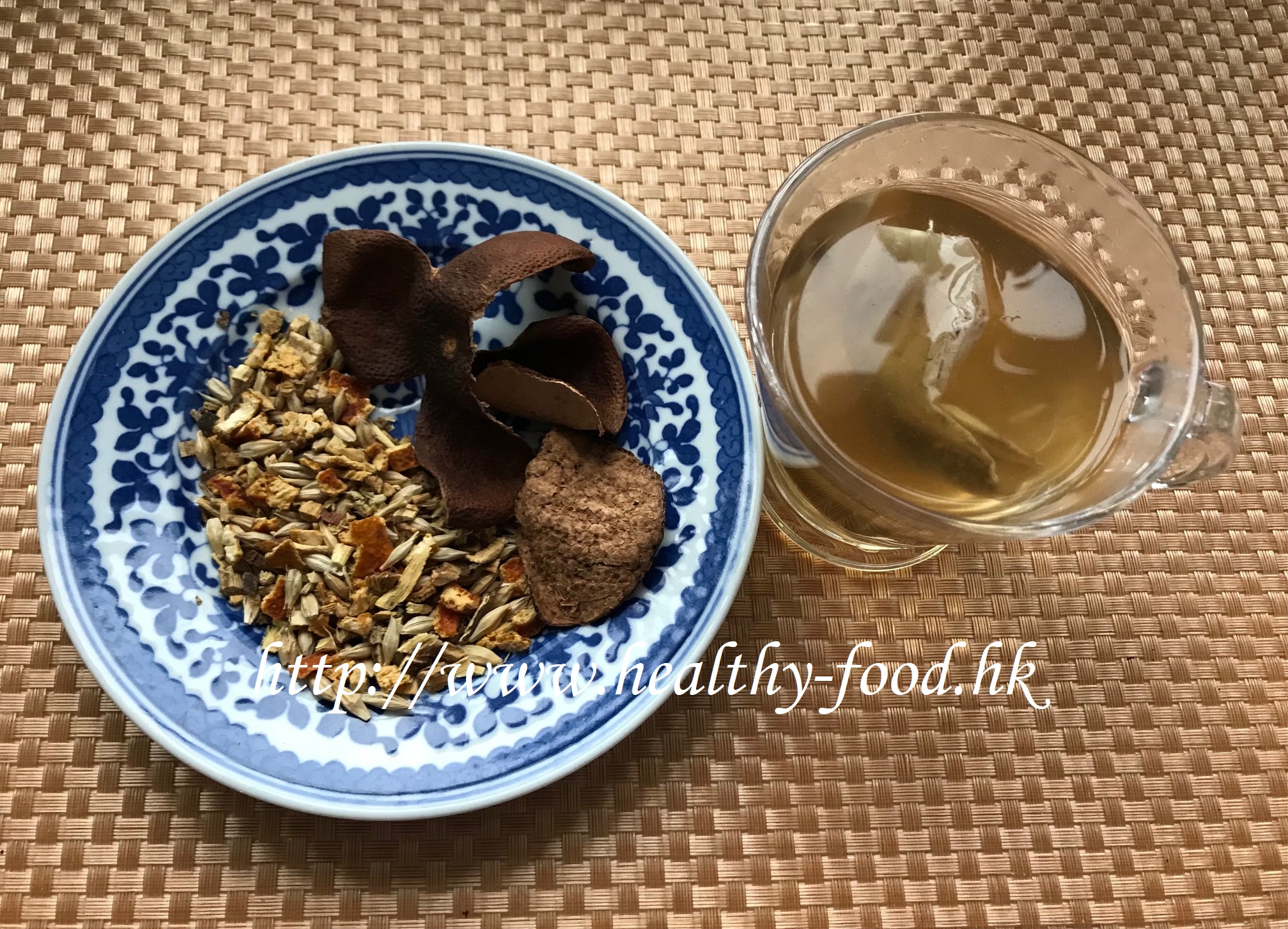
Why people make this tea
During Chinese New Year, even the most careful eaters find themselves reaching for one more piece of roast pork or braised pig’s trotter. The result is a familiar heaviness — bloated, sluggish, not hungry but not comfortable either. This is what Chinese food therapy calls “ji zhi” (积滞, accumulated food stagnation). Bro Niu’s remedy is beautifully simple: three common ingredients, pre-cut and packed into a reusable tea bag, ready to steep whenever the stomach protests.
Toasted barley malt has long been used in Chinese herbal medicine to stimulate digestive enzyme activity and relieve food stagnation — particularly after rich, fatty, or floury meals. Dried tangerine peel (chen pi) moves stagnant qi in the digestive system, making it easier for the gut to process and move food along. Licorice root (gan cao) rounds the blend out by tonifying the middle and harmonising the other two herbs. Together, they make a mildly fragrant, pleasant tea that most people find surprisingly easy to drink.
Who it suits / who should be cautious
- Suitable for all ages after a heavy or fatty meal — children and elderly can drink it too
- Breastfeeding mothers should avoid this tea: barley malt is traditionally known to dry up breast milk
- People with long-term digestive weakness (chronic loose stools, always feeling cold in the abdomen) should use occasionally rather than daily
Why these ingredients (the food-therapy logic)
- Toasted barley malt (chao mai ya): Toasting activates the malt’s digestive properties; traditionally used to break down starchy and fatty food accumulation in the stomach; also mildly helps with abdominal distension and poor appetite
- Dried tangerine peel (chen pi): A cornerstone of Cantonese cooking and herbal medicine; warms and moves qi in the middle burner (stomach and intestines), helping relieve gas, bloating, and nausea
- Licorice root (gan cao): A harmonising herb; tonifies the spleen-stomach, eases spasms, and mellows the taste of the other herbs
Ingredients (1 cup / 1 tea-bag serving)
| Ingredient | Amount | Notes |
|---|---|---|
| Toasted barley malt (chao mai ya) | 1 tablespoon | Toast in a dry pan first if using raw malt |
| Dried tangerine peel (chen pi) | 1 piece | Snip or crumble into small pieces before packing |
| Licorice root slices (gan cao) | 4–5 slices | Available at Chinese herb shops |
Method
- Prepare your ingredients in advance: snip the dried tangerine peel into small pieces. Toast the barley malt in a dry pan over low-medium heat until golden and fragrant (5–7 minutes). Licorice root slices are ready as-is.
- Pack one serving’s worth of all three ingredients into a reusable mesh tea bag or muslin infuser bag.
- To brew: place the tea bag in a mug, pour over freshly boiled water, steep for 5 minutes, and sip while warm.
- You can make a batch of tea bags in advance and store them in an airtight container — perfect for family members to grab whenever needed.
Bro Niu’s tips
This is one of Bro Niu’s favourite “batch-prep” remedies. Before the holiday season, he suggests cutting and toasting all three ingredients in bulk, then packing them into individual tea bags and storing in a tin. That way, when anyone in the household overeats at the festive table, a soothing cup is just a kettle-boil away. The tea has a pleasant fragrance — light, slightly sweet from the licorice, with the warm citrus note of the tangerine peel. Most people enjoy it without any sweetener.
Community questions answered (selected)
-
Q (Aying): Bro Niu, what quantities should I use when making the tangerine peel, licorice, and malt tea bags? Bro Niu: Use 1 dried tangerine peel (snipped open), 4–5 licorice root slices, and 1 tablespoon of toasted barley malt — all packed together in one tea bag. Then you can steep it anytime you need it.
-
Q (Anonymous): Can a piece of tangerine peel that has gone mouldy be used after cleaning? Bro Niu: Absolutely not. Any dried ingredient that has developed mould cannot be used safely, even after washing and re-drying. The mould’s mycelium penetrates deep into the food, making it harmful and prone to moulding again quickly.
Published January 29, 2022 · Adapted and translated for Nourilo from a traditional home-kitchen recipe. Approx. 3 min read.