Herbal & Flower Teas
Lychee Seed and Longan Seed Decoction
traditionally used to move stagnant qi and warm the lower abdomen, associated with relieving hernia-related discomfort
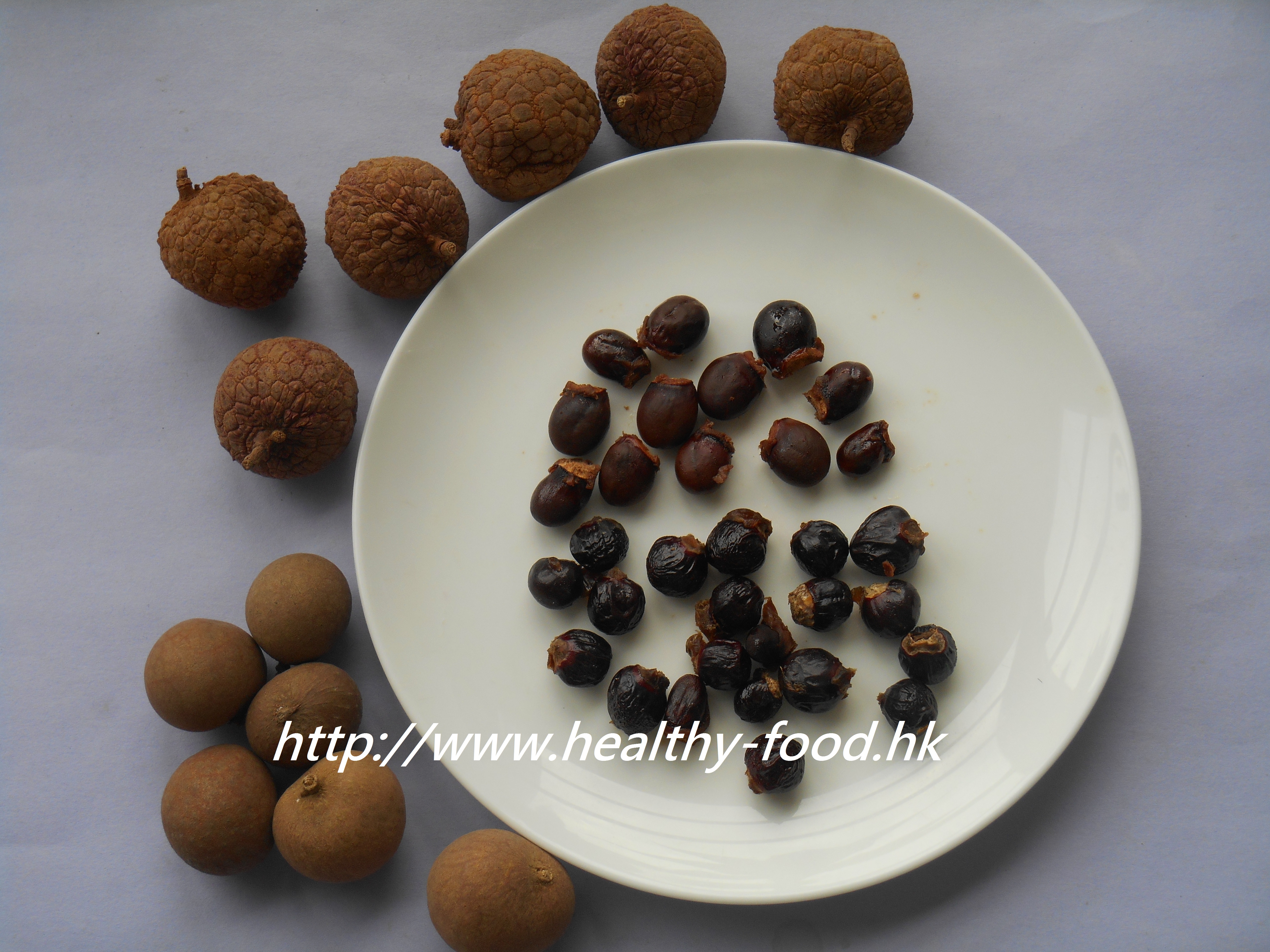
Why people make this decoction
In Chinese folk medicine, the hard seeds of lychee and longan fruit have long been considered useful for conditions involving stagnant qi in the lower abdomen — including the type of discomfort that accompanies an inguinal (small-intestine) hernia. Multiple traditional food-therapy texts reference lychee seed in particular for its ability to “move stagnant qi and disperse cold,” qualities that practitioners associate with the pulling sensation or dull pain that a hernia can produce.
The seeds are the part you usually discard when eating the fruit. Many families collect and dry them during the summer when lychees and longans are in season, so they have a supply on hand year-round.
Method — Boiled decoction (simpler)
- If you do not have a blender to grind the seeds to powder, use the back of a heavy knife or a mallet to crack each seed open. Place seeds in a zip-lock bag first so they do not scatter.
- Rinse the cracked seeds and place in a saucepan with 1.2 L of water.
- Bring to a boil, then reduce to a gentle simmer for about 45 minutes.
- Strain and drink the liquid warm. Take once daily.
Method — Powder blend (for ongoing use, three-ingredient version)
- Dry-toast equal portions of lychee seeds, longan seeds, and fennel seeds in a dry wok (no oil) until fragrant.
- Grind to a fine powder using a blender or food processor.
- Each time, take half a teaspoon of the blended powder with warm water. Use three times per week.
Nourilo’s Tips
- Some Chinese herbal medicine shops stock dried lychee and longan seeds ready to use. Fresh seeds (from fruit just eaten) are even better — just dry them in the sun or a low oven before using.
- If longan is out of season, pomelo seeds (you zi he) can substitute: use 15 g of pomelo seeds, crack them open, and simmer in 900 ml of water down to 600 ml. Drink morning and evening, three times a week.
- After hernia surgery, Nourilo recommends first drinking plain white radish with tangerine peel water to help clear residual anaesthetic. After a few days, switch to the small fennel seed congee (xiao hui xiang congee) to promote qi movement and ease residual pain: simmer 19 g of fennel seeds in 1.5 L of water for 20 minutes, use the resulting liquid to cook a simple rice congee, 3 to 4 times a week.
- For post-surgery recovery soup, Nourilo suggests astragalus (bei qi, 19 g), glehnia root (sha shen) and Solomon’s seal (yu zhu, 11 g each), red dates (hong zao, 6 pieces), and tangerine peel (chen pi) with lean pork; after 3 to 4 days, switch to grouper fish or sea bass soup to promote deeper wound healing.

Comments
Join the conversation — sign in or create a free account to comment.
Continue with GoogleLoading comments…