Soups
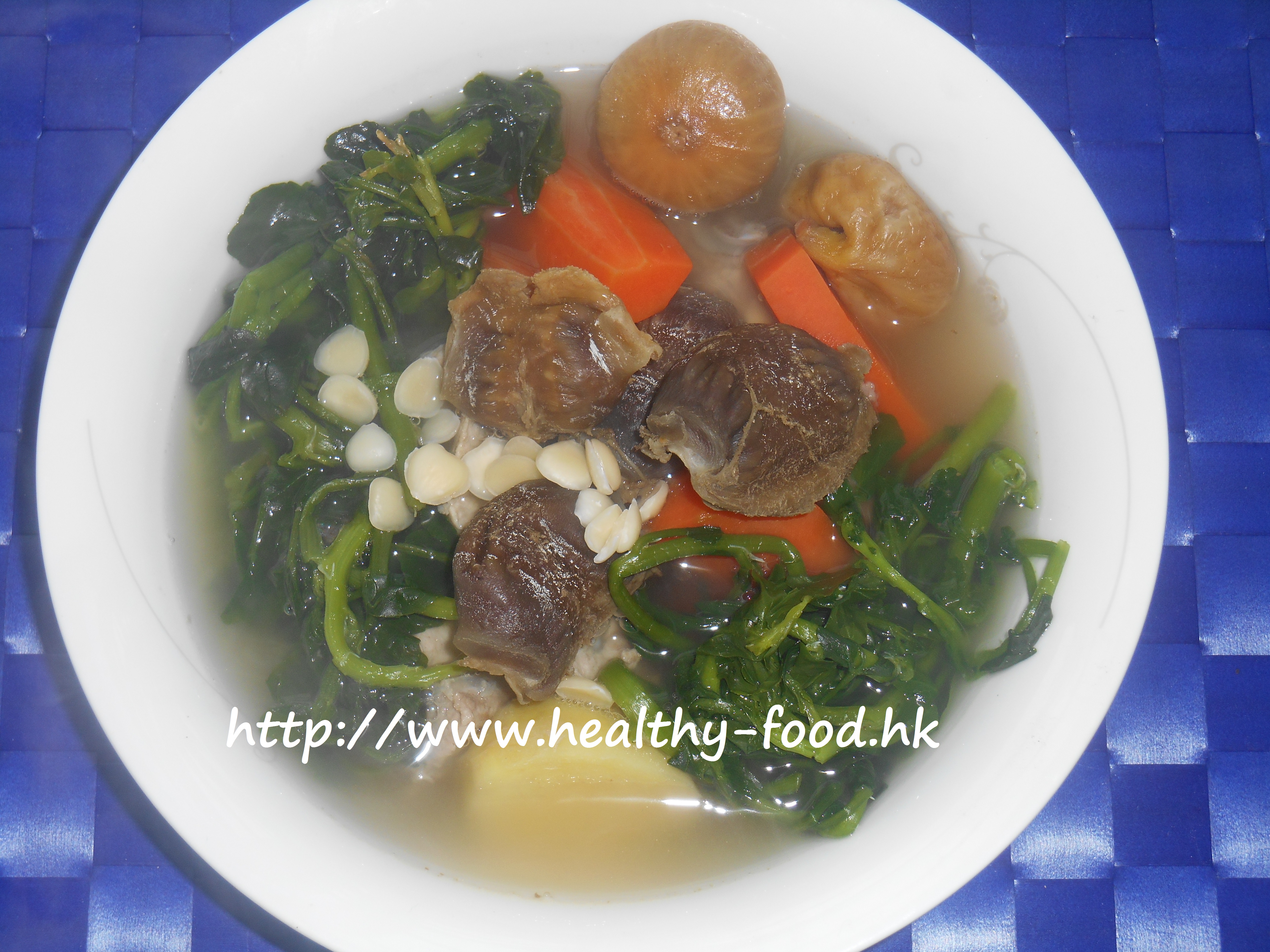
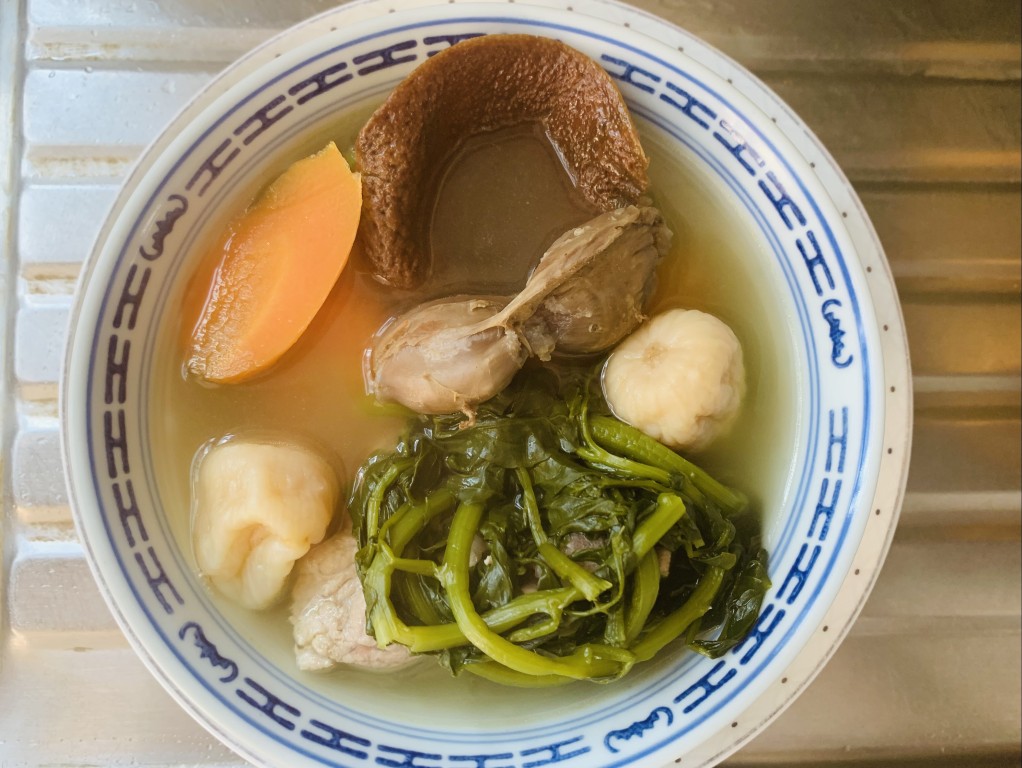
Dried Cabbage, Carrot, Fig and Pig Lung Pork Rib Soup
Traditionally used to moisten the lungs, ease post-cold cough and support skin hydration
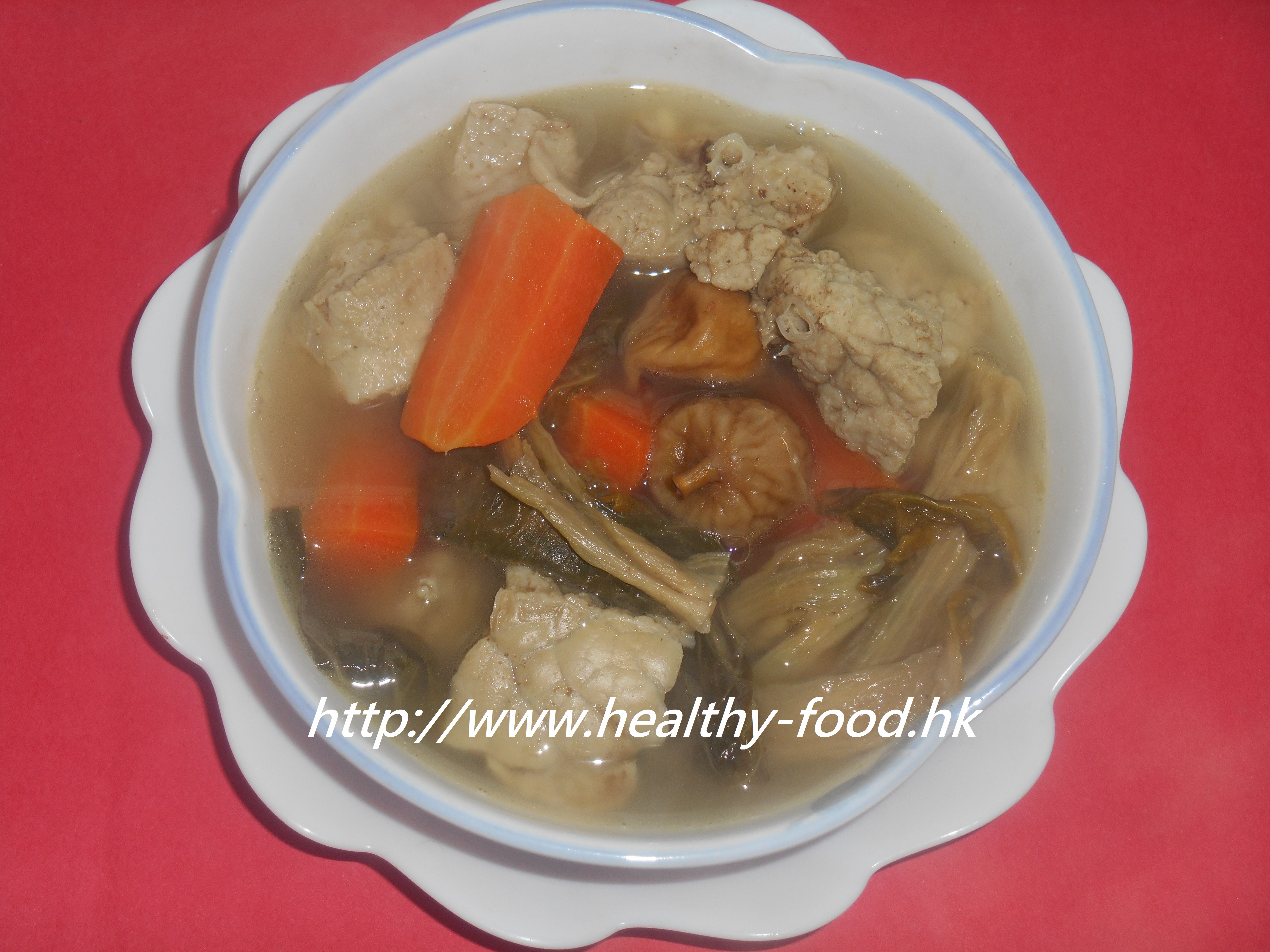
Why people make this soup
When the weather turns cool and damp, and a cold that seemed to be resolving leaves behind a stubborn cough and a rough throat, this is the soup Bro Niu reaches for. Dried cabbage (cai gan) is a staple of Cantonese slow-cooked soups, imparting a deep, slightly savoury sweetness that works beautifully with the mild bitterness of apricot kernels and the gentle sweetness of figs. Pig lung, used in traditional cooking across South China and Southeast Asia, follows the classical Chinese principle of “like nourishing like” — where an animal organ is used to support the corresponding organ in the person eating it. Whether or not you find that logic compelling, pig lung does produce a remarkable depth of flavour in long-cooked soups, and the finished broth is genuinely soothing to drink on a cold evening.
Who it suits / who should be cautious
- Suitable for all ages, four seasons; particularly well suited to autumn and winter when the air is dry and coughs are common
- Helpful during or after a cold with residual cough, dry or irritated throat, or dry skin
- If pig lung is unavailable or you prefer to skip it, pork ribs alone with the remaining ingredients still produce a good, nourishing broth
- For a cold-type cough (with clear phlegm and chills), add 3–4 slices of fresh ginger to the soup; for a heat-type cough (yellow phlegm, fever), omit the ginger
Why these ingredients (the food-therapy logic)
- Dried salted cabbage (cai gan): A fermented dried vegetable with a mellow, complex flavour; traditionally considered to clear heat from the lungs and ease throat irritation
- Carrot (hong luo bo): Rich in beta-carotene; considered in Chinese food therapy to benefit the lungs and skin
- Dried fig (wu hua guo / Ficus carica): Moistening and mildly tonifying; traditionally associated with soothing the throat and supporting the lungs
- Sweet and bitter apricot kernels (nan bei xing / Prunus armeniaca var.): A classic combination used in Cantonese soup-making; the sweet kernels (nan xing) are lung-moistening, while the bitter kernels (bei xing) are more specifically used to ease coughing; used together in modest amounts, they are very safe
- Dried tangerine peel (chen pi): Regulates qi and transforms phlegm; a standard addition that improves the flavour and function of respiratory soups
- Pig lung (zhu fei): Following the “like nourishes like” principle; the organ itself also adds a silky, mineral-rich quality to the broth
Ingredients (3–4 bowls)
| Ingredient | Amount | Notes |
|---|---|---|
| Dried salted cabbage | ~75 g | Soak, rinse well, cut into sections |
| Carrot | 1 medium | Peel and cut into chunks |
| Dried figs | 4 pieces | Rinse |
| Sweet and bitter apricot kernels | ~37 g | Rinse |
| Dried tangerine peel | 1 piece | Soak and rinse |
| Pig lung | 1 whole | Rinse thoroughly, cut into small pieces, blanch, then pan-fry briefly with a little oil |
| Pork ribs | ~300 g | Blanch first |
| Water | 10–12 bowls | About 2.5–3 litres |
Method
- Soak the dried cabbage in warm water for 20–30 minutes, rinse thoroughly, and cut into sections.
- Peel and chop the carrot into chunks.
- Rinse the figs, apricot kernels and tangerine peel.
- Prepare the pig lung: rinse very thoroughly inside and out under running water. Cut into small pieces, blanch in boiling water, drain, then pan-fry with a little oil until lightly browned to remove any gamey smell.
- Blanch the pork ribs in boiling water, then rinse.
- Place all ingredients in a large pot. Add 10–12 bowls of water and bring to a boil over high heat.
- Reduce to a medium-low simmer, cover, and cook for 2 hours.
- Serve warm, drinking the soup and eating the solid ingredients.
Bro Niu’s tips
Cleaning pig lung takes a little patience, but it is worth it. If your butcher has already rinsed it clean, so much the better. The brief pan-fry step after blanching is important — it removes the remaining gamey odour and gives the lung pieces a pleasant colour. If pig lung is truly unavailable, you can make a very satisfying version with just the pork ribs; add a few extra figs and apricot kernels to compensate. For coughs associated with a cold, the soup is equally welcome whether the cold is still active or has recently passed. If you have a hot-type cough with thick yellow phlegm, omit the ginger; if your cough feels worse in cold weather and your phlegm is clear, add the ginger and you will feel the difference.
Community questions answered (selected)
-
Q (May, reader): Can I use pork ribs only, without pig lung? And is this soup suitable for both hot-type and cold-type coughs? Bro Niu: Yes, you can leave out the pig lung and use more pork ribs instead. For a cold-type cough, add a few slices of ginger; for a hot-type cough, skip the ginger.
-
Q (YanYan, reader): I have a very heavy cough with lots of phlegm and mucus. Is this soup right for me? What about the sand-ginseng and jade bamboo soup? Bro Niu: For an active, heavy upper-respiratory infection, a short medicinal brew of chrysanthemum, ophiopogon root, platycodon and quarter of a luo han guo in 4 bowls of water for 15 minutes is more immediately helpful. Wait until the cough has eased a little before switching to the nourishing pig lung soup or the sand-ginseng soup.
-
Q (阿乐, reader): I have gout — can I still drink the dried cabbage soup? Bro Niu: Yes, gout patients can drink the dried cabbage soup. Ideally swap the pig lung (an organ meat) for pork shin — a better fit for those watching purines.
Published December 21, 2015 · Adapted and translated for Nourilo from a traditional home-kitchen recipe. Approx. 4 min read.