Soups
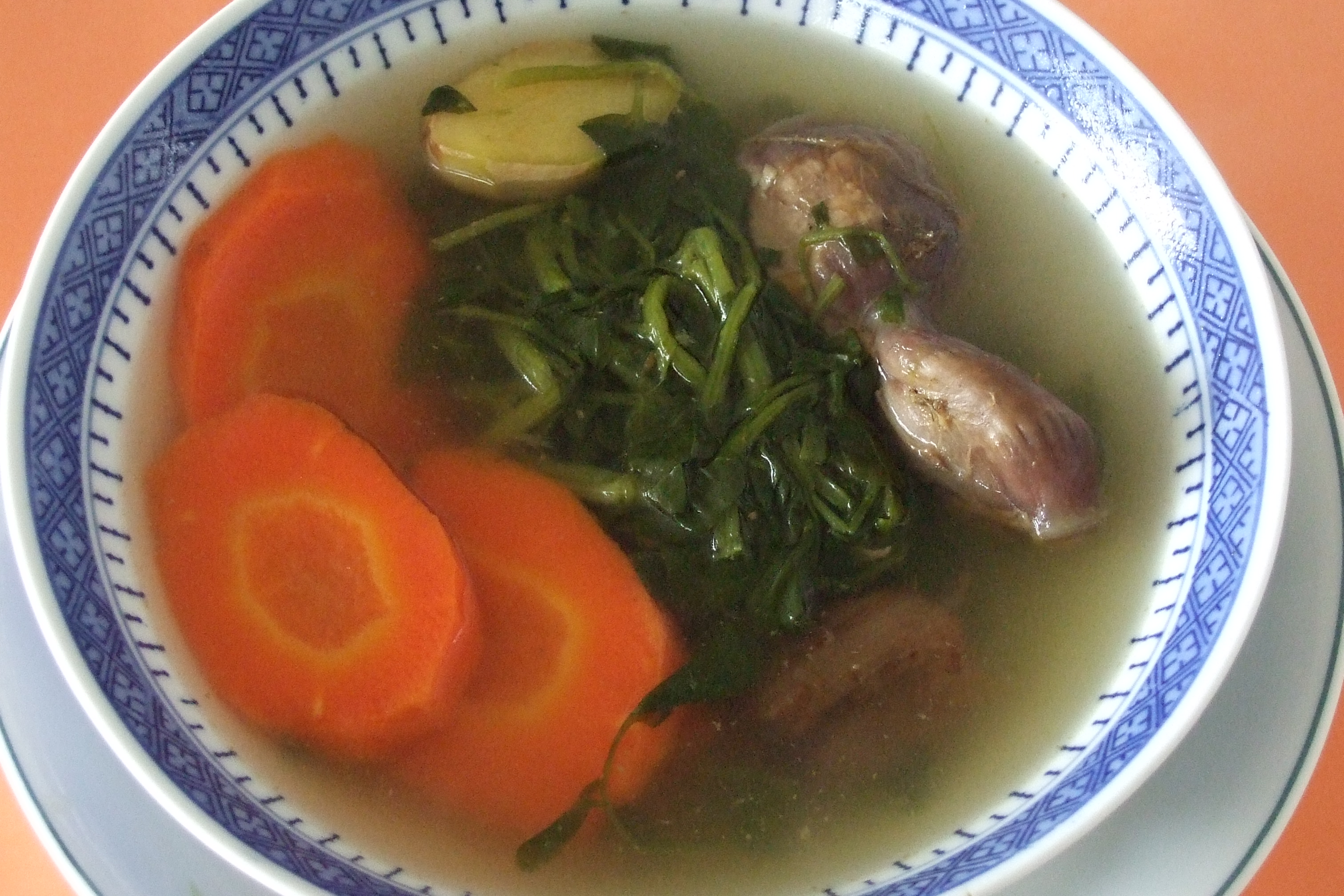
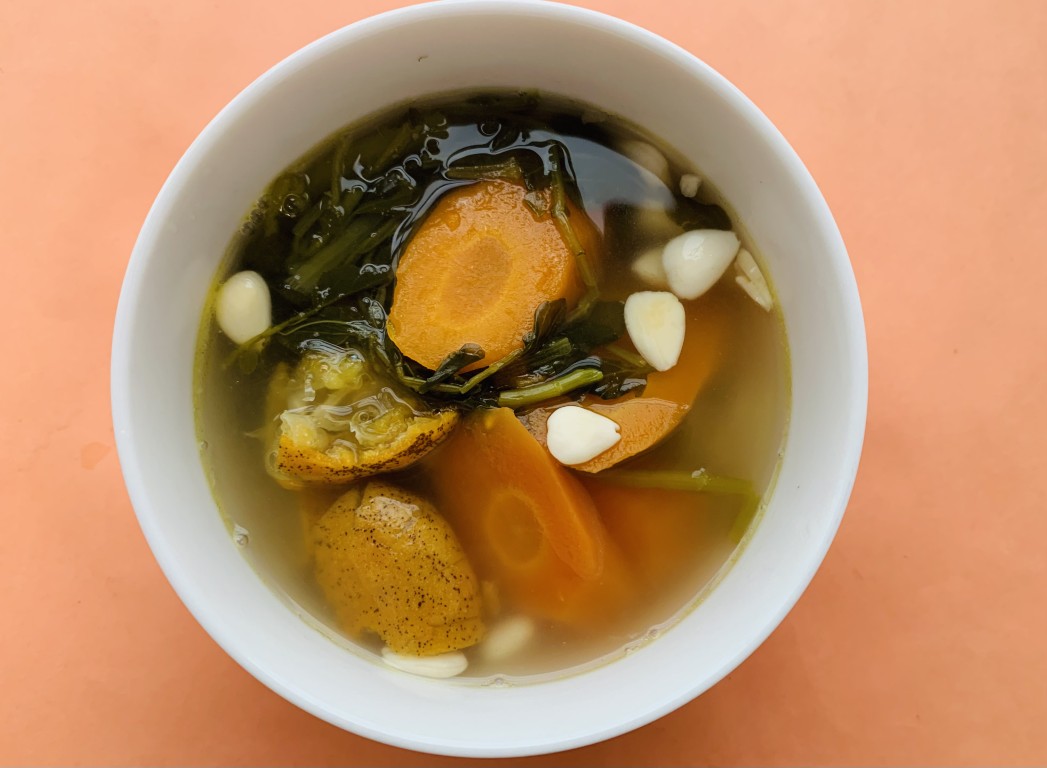
Dragon Tongue Leaf, Stone Huangpi and Carrot Soup
traditionally used to help clear heat, dissolve phlegm, and support relief from persistent coughing
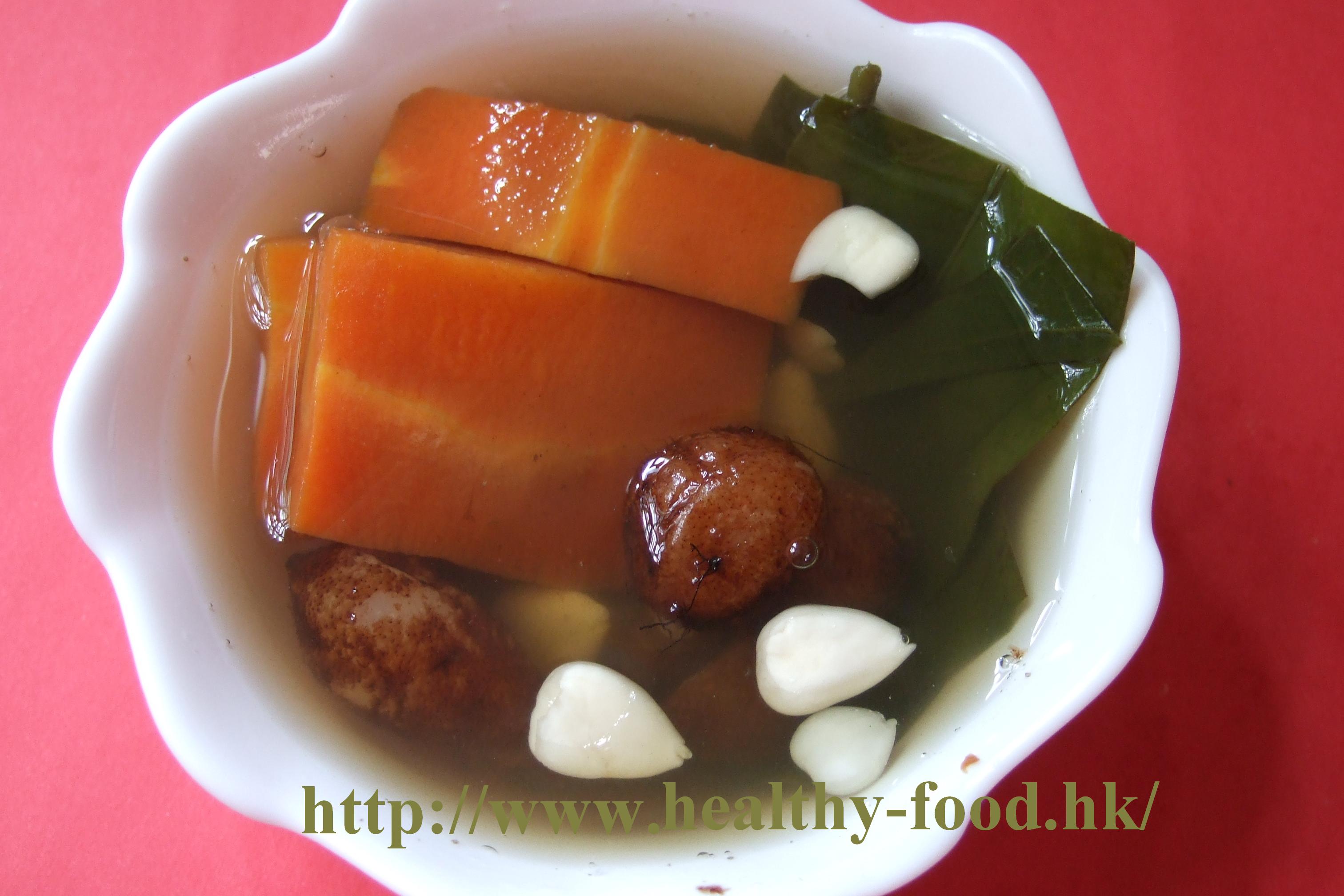
Why people make this soup
After a cold or a bout of throat inflammation, the cough and phlegm that linger can feel harder to shake than the illness itself. Bro Niu put together this soup as a gentle, food-based way to support the body through that recovery phase. The combination of fresh dragon tongue leaf and stone huangpi works to clear accumulated heat in the lungs, while the apricot kernels and honey dates round out the flavour and help soothe the airways. Because the overall nature of this soup is mild rather than strongly cold, it is one of the few respiratory soups that both adults and children can drink comfortably.
Who it suits / who should be cautious
- People with a lingering cough and phlegm following a cold or throat infection, particularly where phlegm is yellow or sticky (indicating heat)
- Both adults and children may drink this soup
- Those with a wind-cold cough (pale or watery phlegm, cough worse at night, chills) should avoid this soup or add a piece of apple and 2 slices of fresh ginger to moderate its cooling nature
- If phlegm is green, seek medical advice first — green phlegm suggests active infection that needs proper treatment
- People with diabetes should omit or reduce the honey dates and avoid adding honey or rock sugar; consider substituting a small piece of monk fruit (luo han guo) for sweetness
Why these ingredients (the food-therapy logic)
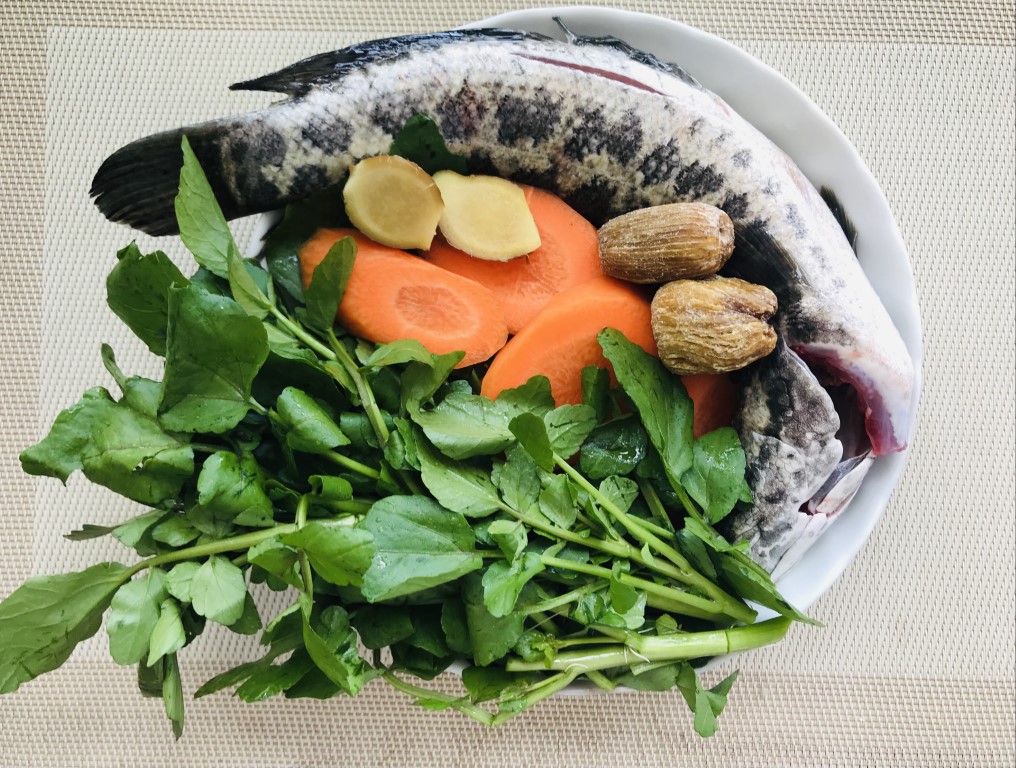
- Dragon tongue leaf (long li ye): Fresh dragon tongue leaf is a traditional Cantonese mountain herb valued for its ability to clear lung heat and stop coughing. It is considered mild in nature, which is why it is often chosen for children.
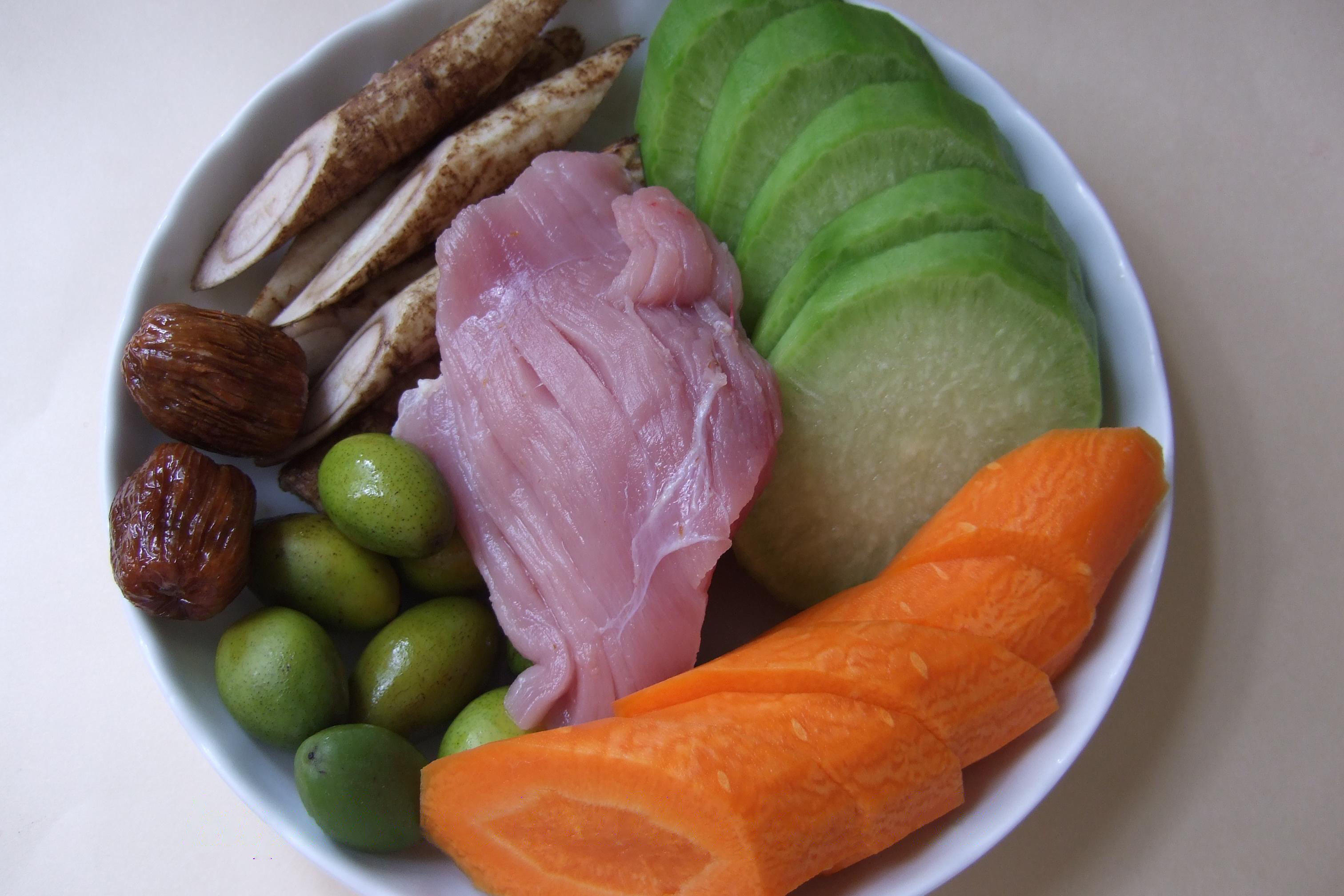
- Stone huangpi (shi huang pi): A wild relative of the common huangpi fruit, used in traditional southern Chinese herbalism to clear heat, resolve toxins, and help quiet a cough. When buying, look for this at fresh herb stalls alongside dragon tongue leaf.
- Apricot kernels (nan bei xing): The classic pairing of southern and northern bitter apricot kernels is a cornerstone of Cantonese cough soups. Traditionally associated with moistening the lungs and easing downward movement of lung qi to stop coughing.
- Carrot (gan sun): Adds natural sweetness to balance the slight bitterness of the herbs, and contributes its own mild lung-nourishing qualities in traditional food therapy.
- Honey dates (mi zao): Gently sweetens the broth and is traditionally associated with harmonising the formula and soothing the throat.
Ingredients (2–3 bowls)
| Ingredient | Amount | Notes |
|---|---|---|
| Fresh dragon tongue leaf | 1 liang (~37 g) | Rinse well; available at fresh herb stalls |
| Stone huangpi | 2 liang (~75 g) | Rinse and lightly smash with the flat of a knife to release flavour |
| Southern and northern apricot kernels (mixed) | 1 liang (~37 g) | Rinse before use |
| Carrot | 1 medium | Peel and cut into chunks |
| Honey dates | 2 pieces |
Method
- Rinse the dragon tongue leaf and stone huangpi thoroughly. Use the flat of a knife to lightly crush the stone huangpi — this helps the flavour infuse into the soup.
- Peel the carrot and cut into large chunks.
- Place all ingredients into a pot with 5 bowls of water.
- Bring to a boil, then reduce to a gentle simmer and cook for about 1 hour until the liquid has reduced to approximately 2–3 bowls.
- Strain and drink warm.
Bro Niu’s tips
For a more rounded everyday wellness version of this soup, you can add a pear, an apple, or a portion of lean pork when cooking. This makes the flavour more gentle and adds substance. Note that this soup leans toward the cooler side, so it is not recommended as a regular daily wellness drink — save it for when coughing and phlegm are actually present.
Community questions answered (selected)
-
Q (Elaine Suen): My husband has not recovered from his cold, he has a lot of phlegm and is coughing. He already saw a Western doctor three times. Would this soup work, and do we need to add anything else? We’re not sure if it is a hot or cold cough. Bro Niu: This soup is better suited to a heat-type cough. If it is a cold-type cough, you can add one apple and two slices of fresh ginger to the pot when cooking. In general, a heat cough produces yellow, sticky phlegm and may come with a sore throat; a cold cough produces pale, watery phlegm and tends to be worse at night.
-
Q (juliana): Hello, I had a cold last week and took four doses of Chinese medicine but still haven’t recovered. I still have a sore throat, lots of clear nasal discharge with a little yellow, a blocked nose, difficulty sleeping at night, a slightly itchy throat, some coughing, and phlegm. Which soup would suit me? Bro Niu: You can use this dragon tongue leaf, stone huangpi and carrot soup for your recovery. It helps clear heat, dissolve phlegm, and stop coughing. You can also add 4 figs (wu hua guo) when cooking to help soothe and benefit the throat.
-
Q (winglee): I cannot find stone huangpi. Can I substitute green olives? Is the effect the same? Can this soup be made in a stainless steel pot? Bro Niu: Green olives benefit the throat, promote fluid and help resolve toxins; stone huangpi clears heat, resolves toxins, and stops coughing. The effects are different — if throat discomfort is your main concern, green olives work well; if you have a wind-heat cough, stone huangpi is better. A stainless steel pot is fine, but do not let the soup steep in it for too long after cooking, as green olives have a slightly tart and astringent taste that can intensify.
Published September 1, 2011 · Adapted and translated for Nourilo from a traditional home-kitchen recipe. Approx. 5 min read.