Soups
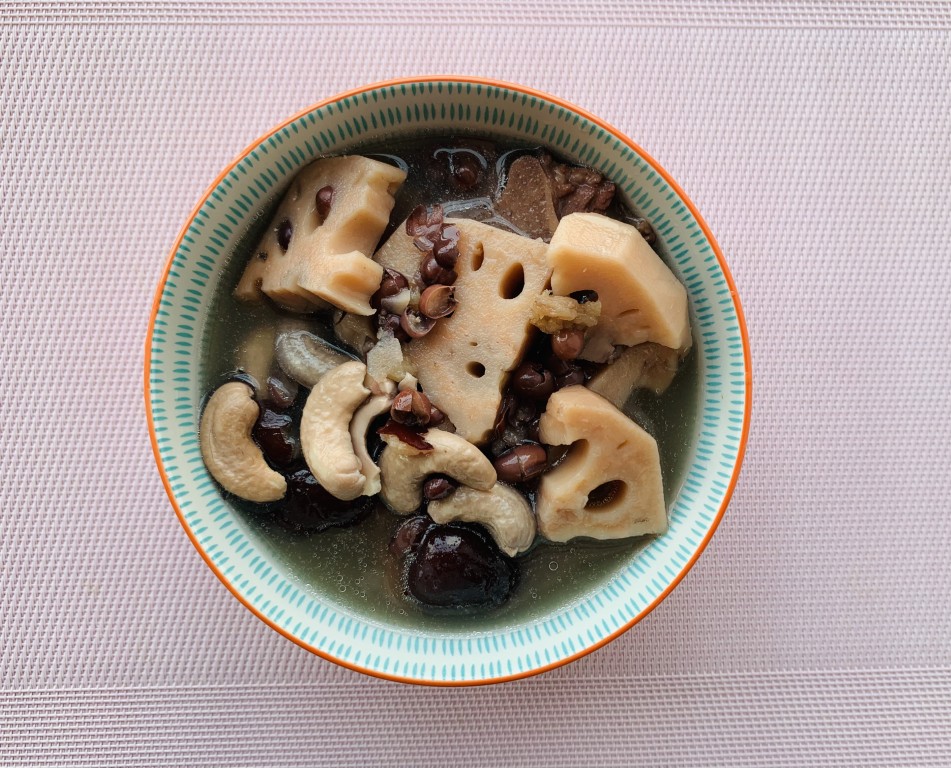
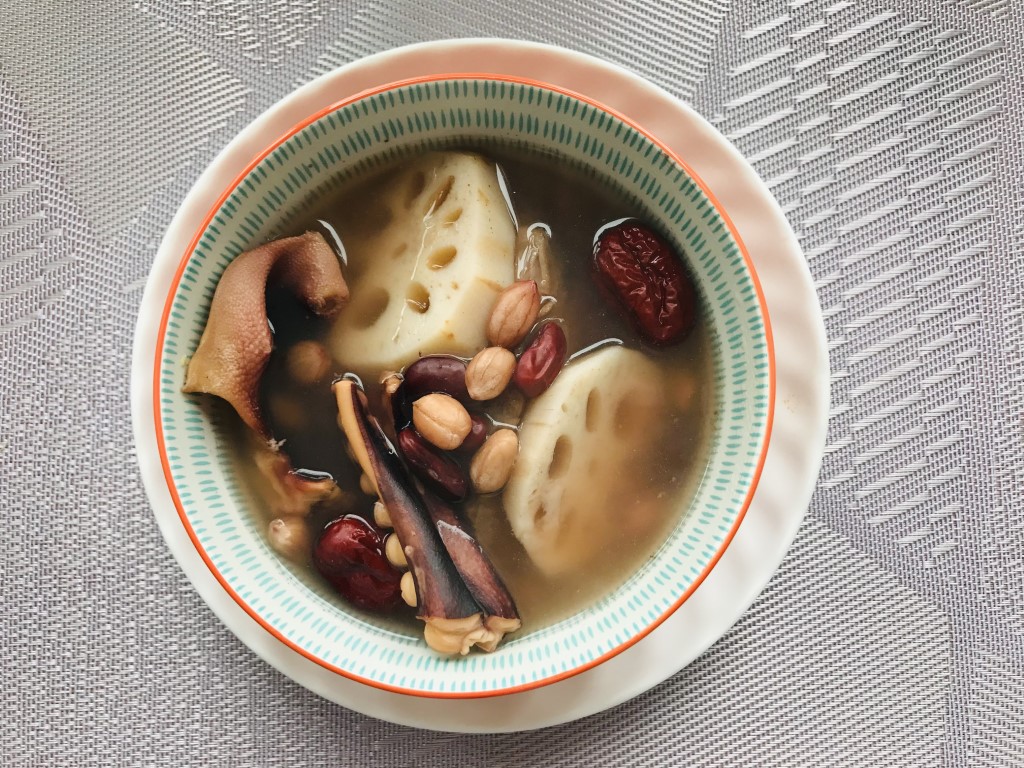
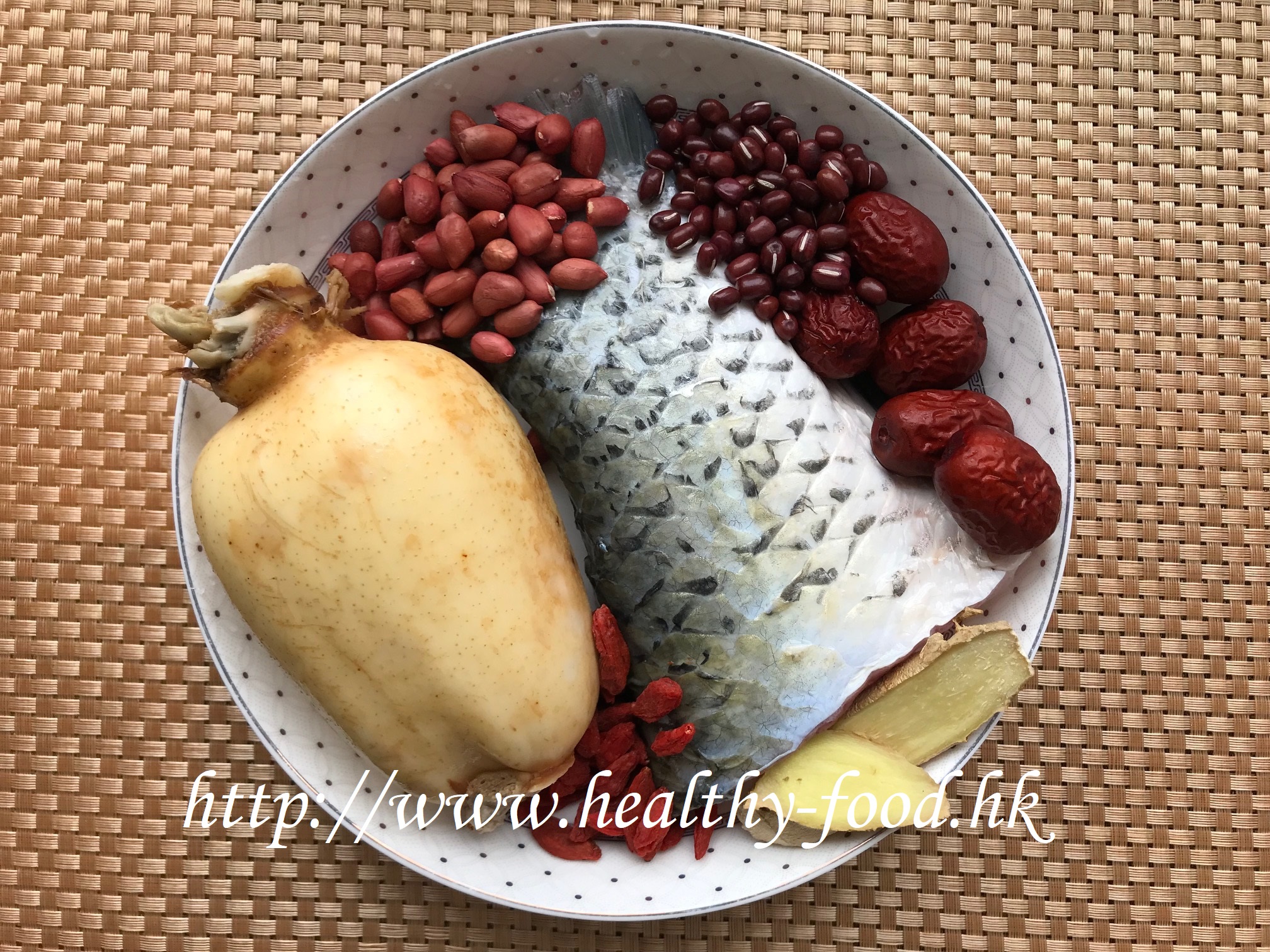
Lotus Root, Grass Carp Tail and Four-Red Soup
Traditionally associated with nourishing blood and brightening complexion
Why people make this soup
Chronic mild anemia often goes unnoticed — the symptoms are easy to attribute to just being busy or tired: persistent fatigue, occasional dizziness, slight breathlessness, a complexion that has lost its color. But when the pattern becomes familiar, traditional food therapy offers a practical, nourishing response: the “four red” combination. The redness of adzuki beans, red-skin peanuts, red dates, and goji berries is not just visual — in Cantonese food traditions, these four ingredients are grouped together because they are each associated, in different ways, with supporting blood production and circulation. Lotus root brings a useful iron and calcium contribution from the vegetable kingdom, while grass carp tail adds the kind of rich, savory protein that makes the broth genuinely restorative. This is a soup people return to regularly, not just as a remedy but as a warming, substantial meal.
Who it suits / who should be cautious
- Well-suited to women, people with anemia or blood deficiency, those who feel chronically fatigued or dizzy, and those recovering from illness
- Also considered supportive for cancer patients during chemotherapy or radiotherapy who experience fatigue and low vitality
- Generally safe for most adults; the soup is not particularly heating or cooling in nature
- No strong contraindications, though people with gout should limit the peanuts and adzuki beans
Why these ingredients (the food-therapy logic)
- Lotus root (lian ou): Contains iron, calcium, and multiple trace minerals; traditionally associated with nourishing the blood, building tissue, and supporting qi and blood production
- Grass carp (wan yu): A nutrient-dense freshwater fish; the copper it contains is considered beneficial for blood, nerve tissue, hair, and skin in traditional nutritional reasoning
- Adzuki beans (hong dou): Associated in food therapy with nourishing blood and supporting kidney and spleen function
- Red-skin peanuts (hong yi hua sheng): The red papery skin is key — it is associated with stopping bleeding and nourishing blood; remove it and much of this quality is lost
- Red dates (hong zao): A cornerstone of blood-nourishing food therapy; pitting them before cooking reduces their warming, drying quality
- Goji berries (gou qi zi): Associated with nourishing the liver and kidneys, and brightening the complexion
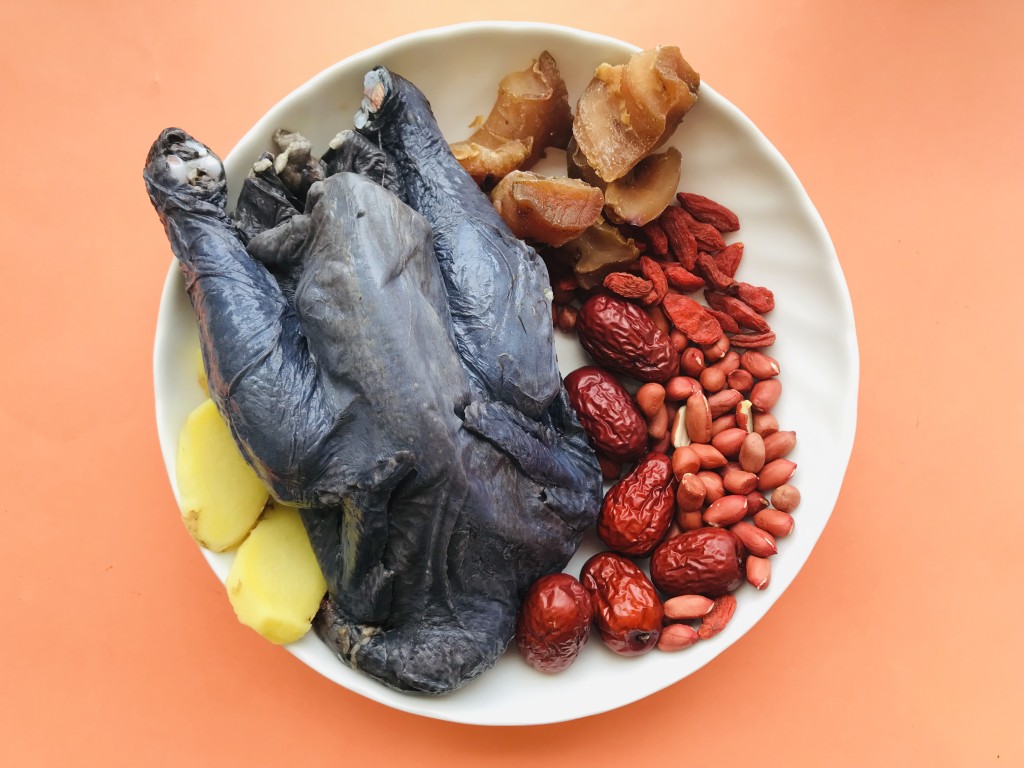
Ingredients (4 bowls)
| Ingredient | Amount | Notes |
|---|---|---|
| Lotus root | 600 g | Peel and cut into chunks |
| Grass carp tail | 1 tail | Clean, pan-fry briefly in a little oil before adding to soup |
| Fresh ginger | 3 slices | |
| Adzuki beans (hong dou) | 37 g | Soak and rinse |
| Red-skin peanuts (hong yi hua sheng) | 37 g | Keep the red skin on; soak and rinse |
| Red dates (hong zao) | 5 pieces | Pit before use |
| Goji berries (gou qi zi) | 1 tablespoon | Rinse briefly |
| Water | 8 bowls (approx. 1.6 L) | Simmered down to about 4 bowls |
Method
- Peel lotus root and cut into chunks.
- Clean and rinse the grass carp tail. Heat a little oil in a pan and lightly pan-fry the fish tail until golden on both sides. This step helps prevent the soup from turning murky and adds flavor.
- Soak and rinse adzuki beans and red-skin peanuts separately. Pit the red dates. Rinse goji berries.
- Place all ingredients in a pot with about 8 bowls of water. Bring to a boil.
- Lower heat and simmer for 1.5 hours until liquid reduces to approximately 4 bowls.
- Serve warm; eat both the soup and the solids.
Bro Niu’s tips
This soup is fragrant, clear, and pleasant to drink — suitable for the whole family, not just those who are unwell. The solids are worth eating: the lotus root and beans in particular contribute much of the nourishment.
Families supporting a member going through chemotherapy or radiotherapy may find this soup a useful, gentle addition to daily meals. The ingredients are all foods rather than strong herbs, so they complement rather than interfere with treatment. That said, always check with the treating physician if in doubt.
Community questions answered (selected)
-
Q (Ka): My sister is undergoing chemotherapy for blood cancer. Is this soup suitable for her? Do you have other recommendations? Bro Niu: Yes, this soup is suitable. You can also try a simpler version with just adzuki beans, red-skin peanuts, red dates, and goji berries. Gynostemma tea (jiao gu lan) can be brewed and drunk regularly — it is associated with supporting immune function and has anti-cancer properties in traditional use.
-
Q (Ka, follow-up): Does eating red dates cause internal heat? Bro Niu: Red dates that have been pitted before cooking are not particularly warming. If someone tends to run hot, substitute southern dates (nan zao) instead.
-
Q (anonymous): Lotus root makes me bleed from the nose easily. What can I substitute? Also, my family member going through chemo has multiple mouth ulcers from the treatment. Bro Niu: Replace the lotus root with carrot. For mouth ulcers, try a daily drink of half a luo han guo (monk fruit), 3 dried figs, and 1 pear (or dried pear slices) simmered in water. Moderate amounts of bitter melon tea (xia ku cao / xia sang ju) are fine, but excessive consumption may reduce immune function.
Published July 20, 2021 · Adapted and translated for Nourilo from a traditional home-kitchen recipe. Approx. 4 min read.