Soups
Lotus Leaf, Winter Melon & Clam Soup
traditionally used to clear heat, reduce dampness, and support healthy weight
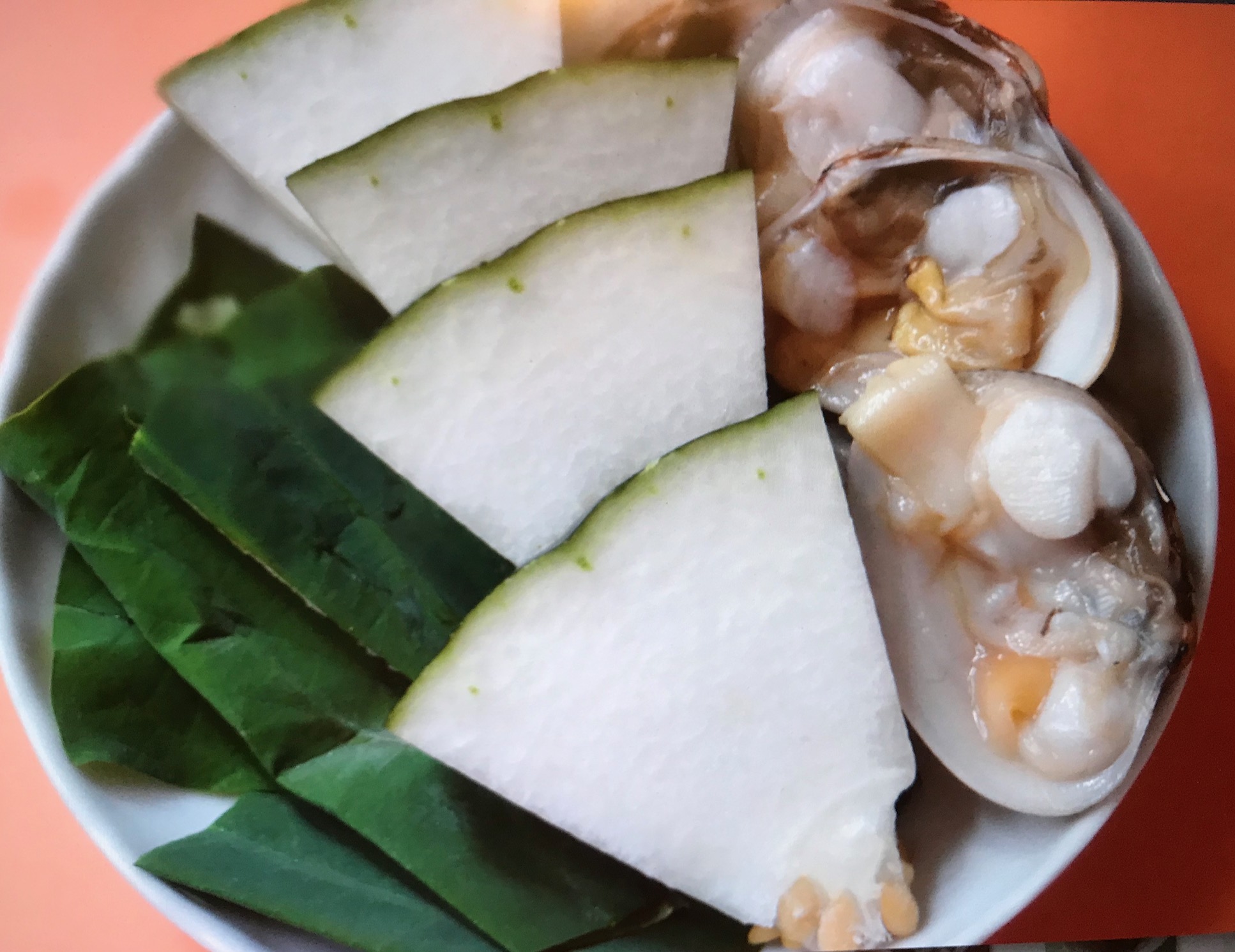
Why people make this soup
When summer heat is relentless and even a short trip outside leaves you drenched, Cantonese cooks reach for winter melon and lotus leaf — two ingredients that have been paired in soup pots for generations. These two complement each other beautifully: winter melon clears heat and disperses dampness while lotus leaf — whose alkaloids are thought to limit fat absorption — reinforces those same effects. Bro Niu’s Chinese medicine instructor once dropped a fresh lotus leaf into oily boiling water; the oil on the surface was visibly absorbed by the leaf within moments, a vivid demonstration of its fat-clearing reputation. Combined with the naturally sweet clam meat, this soup is a refreshing, nourishing bowl for hot-weather days.
Who it suits / who should be cautious
- Suits most people on hot summer days; good for the whole family including children
- Those with cold or weak digestion (prone to loose stools or feeling chilly) should add 3–4 slices of fresh ginger when cooking
- Consume in moderation if you have known shellfish allergies
Why these ingredients (the food-therapy logic)
- Lotus leaf (he ye): Traditionally associated with clearing summer heat, reducing water retention, and supporting the body’s fat metabolism; the alkaloids it contains are thought to help limit fat absorption
- Winter melon (dong gua): Long regarded as a cooling, diuretic vegetable that helps dispel heat and reduce swelling; using the skin adds extra benefit
- Fresh clams (bang / he li): Mild in flavour, valued for their nourishing, yin-tonifying quality — they add sweetness to the broth without heaviness
Ingredients (4–5 bowls)
| Ingredient | Amount | Notes |
|---|---|---|
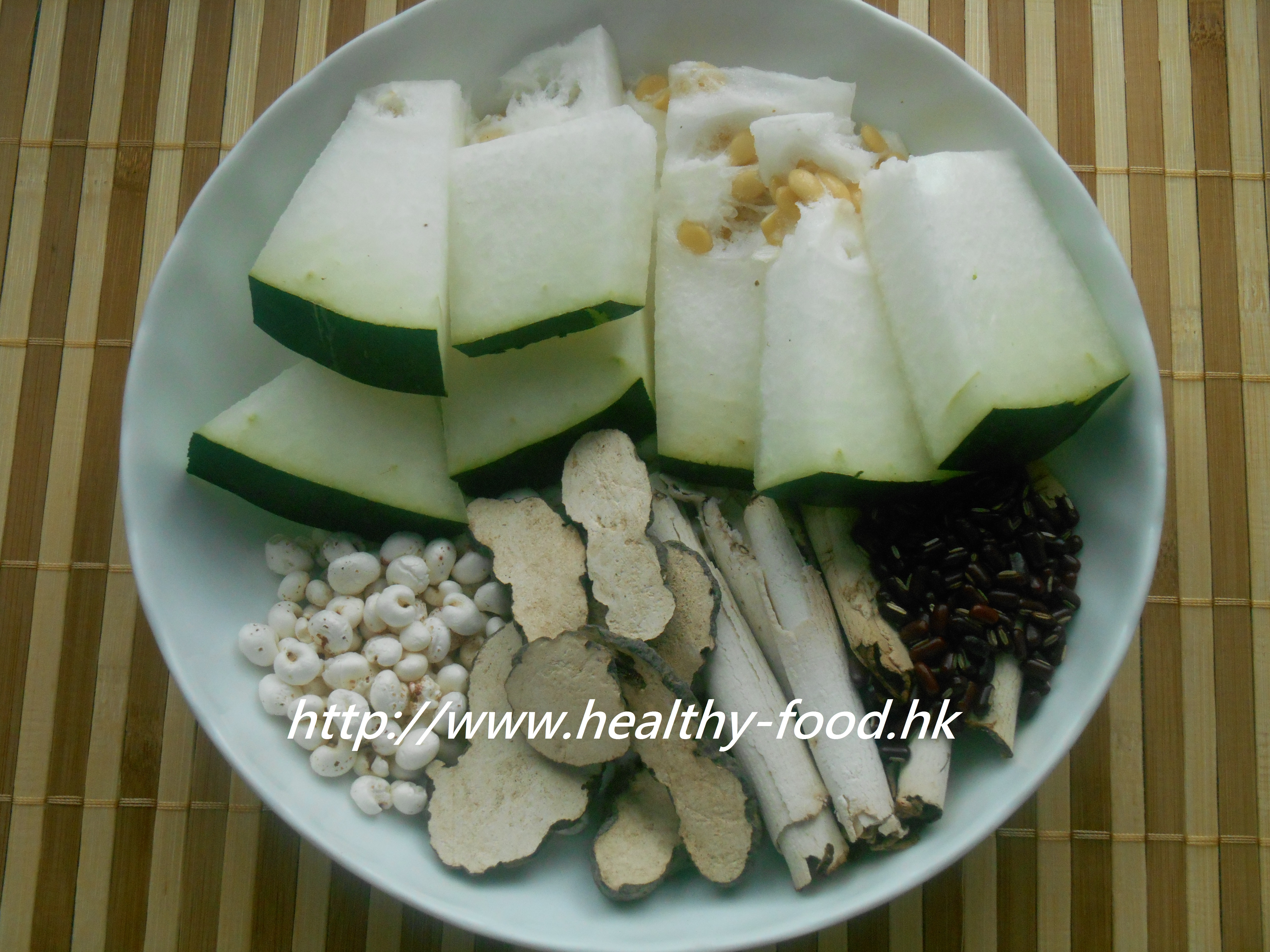
| Fresh lotus leaf | 1/2 large leaf | Rinse well, cut into pieces |
| Winter melon, skin on | ~600 g | Cut into chunks; skin is kept for extra benefit |
| Fresh clams | ~600 g | Purge sand in warm water first (see tips) |
Method
- Rinse the lotus leaf under running water and cut into smaller pieces.
- Scrub the winter melon, then cut into large chunks — leave the skin on.
- Place the clams in a bowl of water warmed to approximately 50 °C (122 °F). Let them sit for 15–20 minutes; live clams will expel sand during this time. Drain and rinse.
- Put the winter melon and purged clams in a pot with 6–7 bowls (1.5–1.75 litres) of water. Bring to a boil, then reduce to a medium simmer for 45 minutes.
- Add the lotus leaf pieces and continue simmering for a further 15 minutes.
- Serve as a soup — drink the broth and enjoy the clam meat and winter melon.
Bro Niu’s tips
The warm-water purging trick for clams — soaking them in 50 °C water for 15–20 minutes — is an effective Japanese home-cook method that draws out sand quickly without killing the clams’ fresh flavour. If you can’t find fresh lotus leaf, dried lotus leaf (about 1/4 leaf) can substitute, though the flavour will be slightly earthier. If your digestion runs cold, don’t skip the ginger.
Community questions answered (selected)
-
Q (YY): My mother is 80 and recovering from cancer with occasional bleeding. She likes vegetarian food — what can she safely eat to support her blood without risk of further bleeding? Bro Niu: Fresh cogon grass root (xian mao gen) and fresh lotus root nodes (xian lian ou jie) are traditional remedies for all kinds of bleeding and are easy to find. Try simmering a bundle of cogon grass root with 3 lotus root nodes in 5 bowls of water down to 2 bowls, and give her 2–3 servings over consecutive days. Golden needles (jin zhen) and cloud ear fungus (yun er) cooked with vegetables like loofah or chayote are also beneficial. Avoid strongly warming herbs like raw ginger and ginseng for now.
-
Q (YY, follow-up): Can I add rock sugar or honey dates to the cogon grass and lotus root decoction? Does the lotus root node need to be peeled? Bro Niu: You can add 2 honey dates for sweetness, but go easy on sugar — cancer cells thrive on it. Better yet, use 3–4 medjool dates (coconut dates) which are naturally sweet but lower-glycaemic. No need to peel the lotus root nodes; just rinse off the mud. The dark fibrous bits are fine. Take 3 servings per week until symptoms improve, then 1–2 per week for maintenance.
Published July 29, 2020 · Adapted and translated for Nourilo from a traditional home-kitchen recipe. Approx. 3 min read.