Soups
Winter Melon Dampness-Clearing Soup
traditionally used to strengthen the spleen, resolve dampness, clear summer heat, and support urinary health
Why people make this soup
Hong Kong summers are relentlessly humid. The combination of heat and moisture that hangs in the air from May onward is exactly the environment in which, according to Chinese medical tradition, the body accumulates what practitioners call “dampness” — a pattern associated with sluggishness, poor appetite, excessive sweating, skin breakouts, and a general feeling of heaviness. The traditional answer has always been a good dampness-clearing soup, and this one is among the most satisfying.
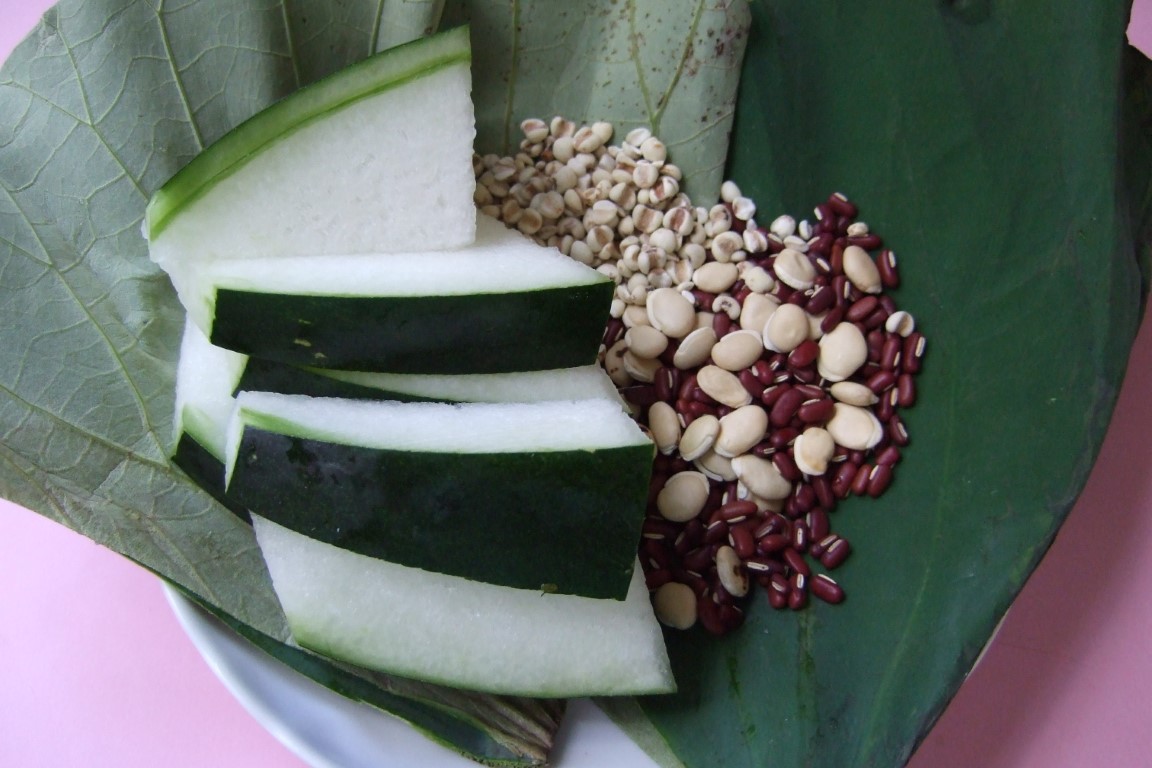
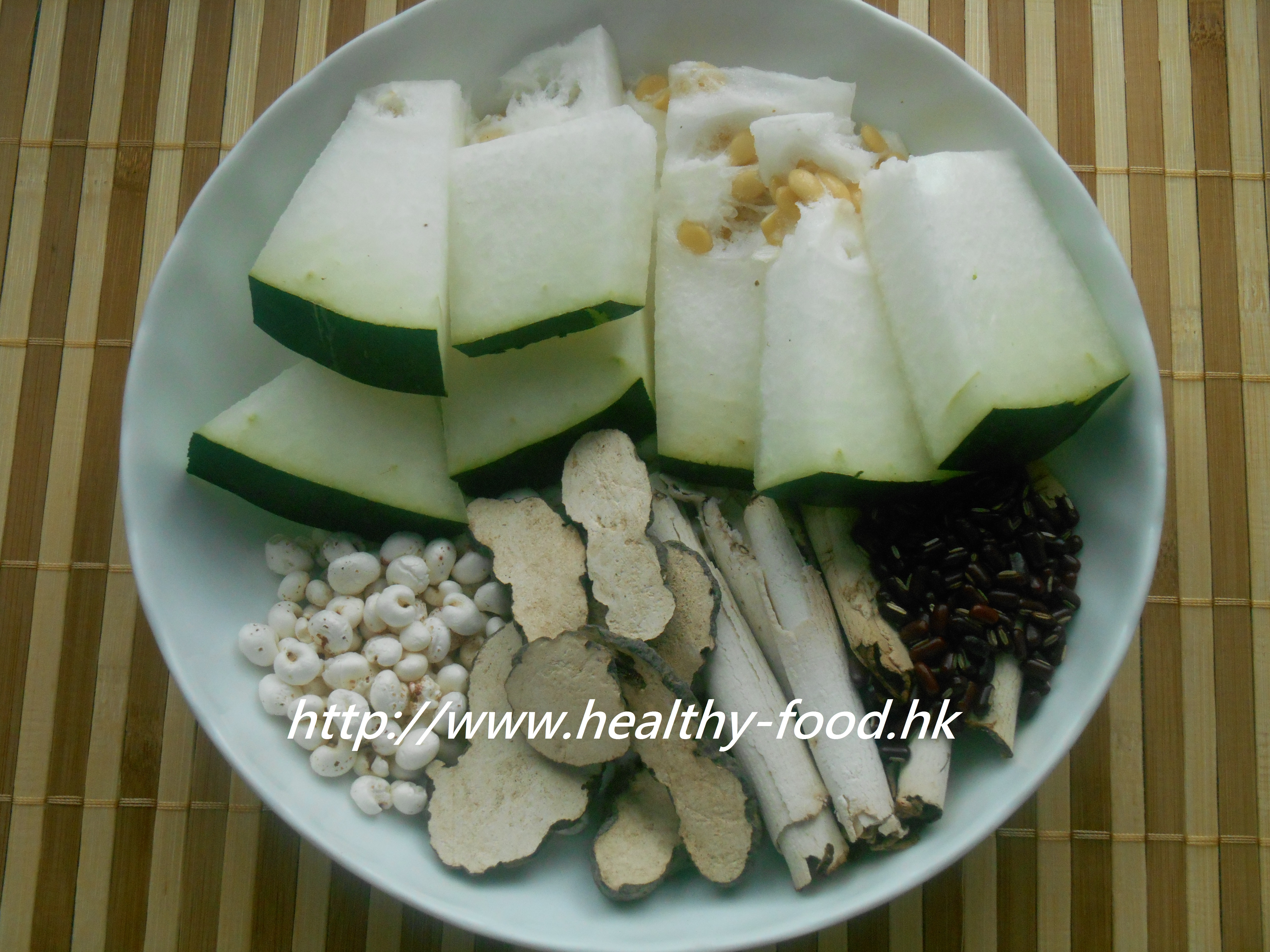
Bro Niu came across polyporus mushroom (zhu ling) in a herb shop and was struck by its potency as a dampness-clearing ingredient — a step up in strength from the more common poria. Together with adzuki beans, cooked Job’s tears, and a generous portion of winter melon (skin and seeds included), this soup creates a clear, lightly flavoured broth that supports the digestive system, encourages gentle fluid elimination, and is associated in Chinese food therapy with cleaner skin and a more comfortable urinary system.
Who it suits / who should be cautious
- Suitable for the whole family during warm, humid months
- Particularly helpful for those experiencing sluggishness, heavy limbs, poor appetite, or skin dampness conditions such as eczema or acne
- Can be taken during menstruation
- Good general support for those managing urinary tract health
- Suitable for those in warm, dry climates too — winter melon clears heat even when the weather is not wet
Why these ingredients (the food-therapy logic)
- Adzuki beans (chi xiao dou): Traditionally associated with draining dampness, supporting urinary function, and clearing heat from the lower body.
- Cooked Job’s tears barley (shu yi mi / yi yi ren): Strengthens the spleen and digestive function while also supporting fluid elimination. The cooked form (shu yi mi) emphasises the spleen-strengthening aspect; raw (sheng yi mi) is stronger at draining dampness — both can be used together for a balanced effect.
- Polyporus mushroom (zhu ling, Polyporus umbellatus): A particularly effective dampness-draining and urinary-supporting herb in the Chinese pharmacopoeia. Traditionally associated with anti-tumour and liver-protective properties as well.
- Poria mushroom (fu ling, Wolfiporia extensa): A gentle, well-rounded tonic that strengthens the spleen, calms the mind, and supports dampness elimination. One of the most widely used herbs in Cantonese tonics.
- Winter melon (dong gua): A cooling, diuretic vegetable that supports heat and fluid clearance. Cook with the skin and seeds — the skin and seeds both carry useful properties.
Ingredients (4–5 bowls)
| Ingredient | Amount | Notes |
|---|---|---|
| Adzuki beans (chi xiao dou) | 1 liang (~38 g) | Rinse and soak briefly |
| Cooked Job’s tears barley (shu yi mi) | 1 liang (~38 g) | Raw (sheng yi mi) works too; or combine both for balance |
| Polyporus mushroom (zhu ling) | 5 qian (~19 g) | From a Chinese herb shop; can substitute with ze xie 5 qian if unavailable |
| Poria mushroom (fu ling) | 5 qian (~19 g) | Common in Chinese herb shops; also sold in supermarkets |
| Winter melon (dong gua) | 1 jin (~600 g) | Wash well; keep the skin and seeds |
| Water | 8 bowls (~2 L) |
Method
- Rinse all dried ingredients — adzuki beans, Job’s tears, polyporus, and poria — and soak briefly in cold water.
- Wash the winter melon thoroughly. Do not peel — keep both the green skin and the seeds, as these carry their own medicinal qualities. Cut into large chunks.
- Place all ingredients in a pot with 8 bowls of water. Bring to a boil, then reduce to a gentle simmer.
- Cook for about 1 hour 30 minutes until reduced to 4–5 bowls. The broth will be naturally clear and lightly sweet.
- Serve hot, drinking the broth. The beans and Job’s tears can be eaten; the winter melon can also be eaten if you prefer.
Bro Niu’s tips
If you cannot find polyporus mushroom (zhu ling), substitute with 5 qian (19 g) of ze xie (Alisma orientale). Adding two fresh corn cobs alongside the other ingredients is also a lovely option — it makes the broth sweeter and more palatable, especially for children. Adding green beans (lv dou) is fine too if you want extra dampness-clearing strength; use them alongside the adzuki beans.
This soup is cooling in nature and suited to hot or humid weather, but is also a good drink during summer in dry climates, as winter melon clears heat regardless of humidity.
Community questions answered (selected)
-
Q (Cheri): Does this soup work in a hot, dry, sunny climate like Northern California in summer? Bro Niu: Yes, this winter melon soup is suitable in those conditions. Winter melon clears heat and summer heat regardless of whether the air is humid or dry. It is a good cooling soup for any hot summer.
-
Q (qiqi): What is the difference between raw and cooked Job’s tears barley? Can I use raw? Bro Niu: You can use raw Job’s tears (sheng yi mi) — I simply used the cooked form because I had run out of raw. Raw Job’s tears has a stronger dampness-draining effect; cooked Job’s tears is better at strengthening the spleen. Using both together is ideal for a balanced result.
-
Q (Bobby): Can I use old cucumber instead of winter melon? And can I add ze xie and corn at the same time? Bro Niu: Old cucumber works as a substitute — remove the seeds, but you can save the scraped flesh and juice and use it as a skin toner (it has a gentle brightening and firming effect on skin). You can add ze xie and corn at the same time without any problem.
Published May 19, 2015 · Adapted and translated for Nourilo from a traditional home-kitchen recipe. Approx. 4 min read.