Soups
Chicken Bone Grass and Wormwood Pork Rib Soup
Traditionally used to support liver and gallbladder health and clear damp-heat
Why people make this soup
In traditional Chinese wellness thinking, the liver and gallbladder do their most important cleansing work between 11 pm and 3 am — which is one reason staying up very late night after night is considered hard on those organs. Chicken bone grass (ji gu cao) and wormwood (mian yin chen) are two herbs long used in Cantonese cooking to support the liver and gallbladder, ease damp-heat, and help with the kind of dull rib-side discomfort or fatigue people associate with sluggish digestion. Modern studies have also shown both herbs to have notable liver-protective properties. Bro Niu pairs them with pork ribs and honey dates to round out the flavour and make the soup approachable for the whole family.
Who it suits / who should be cautious
- Suitable for adults and children who stay up late regularly, feel eye fatigue or dryness, or experience mild rib-side or stomach discomfort
- Also said to support those with early signs of jaundice (seek medical advice first) or general damp-heat patterns
- Pregnant women should avoid this soup
- Those with a cold or weak spleen-stomach constitution (chronically loose stools, easily chilled) should also avoid it
- If you have diagnosed liver or gallbladder disease, please see a doctor
Why these ingredients (the food-therapy logic)
- Chicken bone grass (ji gu cao): Traditionally regarded as cooling and bitter, associated with clearing liver-gallbladder heat, soothing pain, and supporting bile secretion
- Wormwood (mian yin chen): A classic herb for damp-heat conditions; traditionally used to support bile flow and ease jaundice; modern research suggests hepatoprotective activity
- Honey dates (mi zao): Naturally sweet, used to balance the bitter herbal flavour and support the spleen
- Soybeans (huang dou): Provide plant protein; traditionally thought to nourish the spleen and calm the stomach
- Pork ribs: Give the broth body and savouriness while adding collagen and minerals
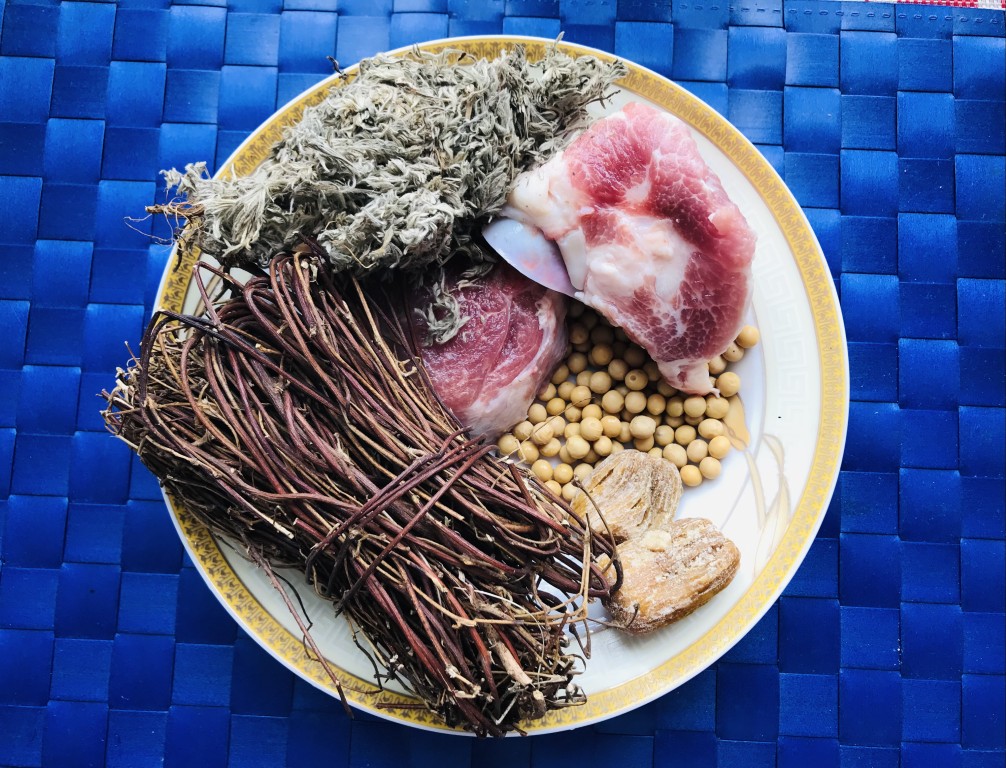
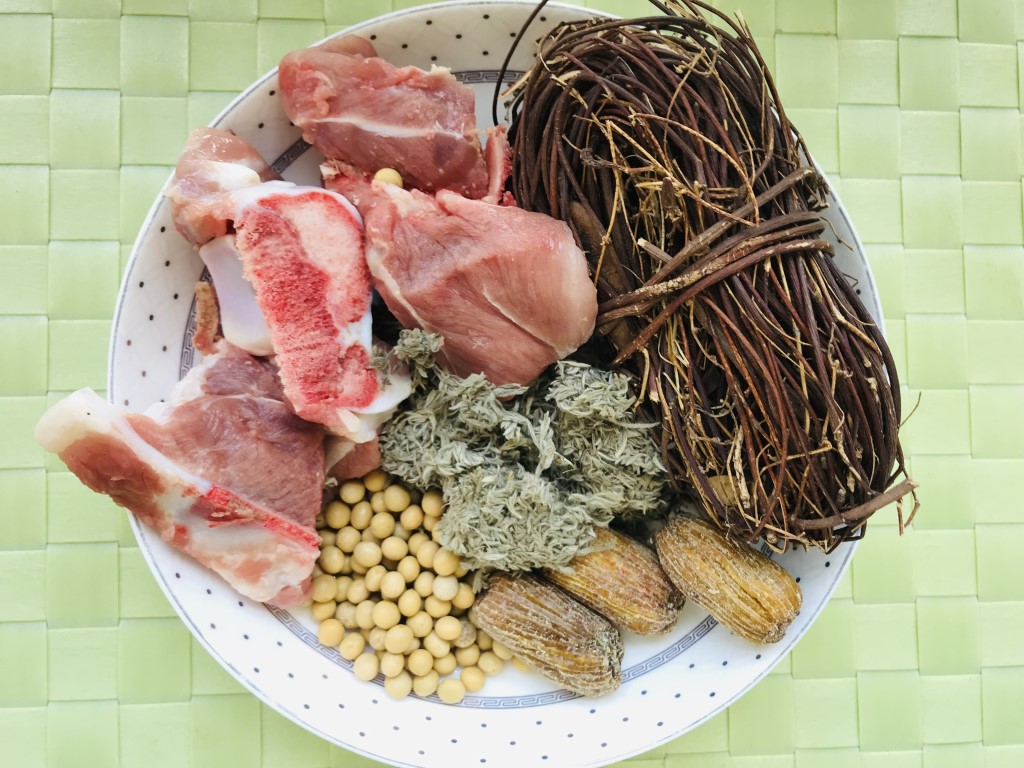
Ingredients (4–5 bowls)
| Ingredient | Amount | Notes |
|---|---|---|
| Chicken bone grass (ji gu cao) | 75 g | Rinse and soak before use |
| Wormwood herb (mian yin chen) | ~19 g | Rinse and soak before use |
| Honey dates (mi zao) | 3 pieces | Whole |
| Soybeans (huang dou) | 38 g | Soak 30 min, drain |
| Pork ribs | 300 g | Blanched to remove impurities |
Method
- Rinse and soak the chicken bone grass and wormwood in cold water for 20 minutes, then drain.
- Soak the soybeans for at least 30 minutes and drain.
- Blanch the pork ribs in boiling water for 2–3 minutes, drain, and rinse.
- Place all ingredients in a pot with 9–10 bowls (about 1.8–2 litres) of water.
- Bring to a boil over high heat, then reduce to a medium-low simmer for 2 hours until the liquid reduces to 4–5 bowls.
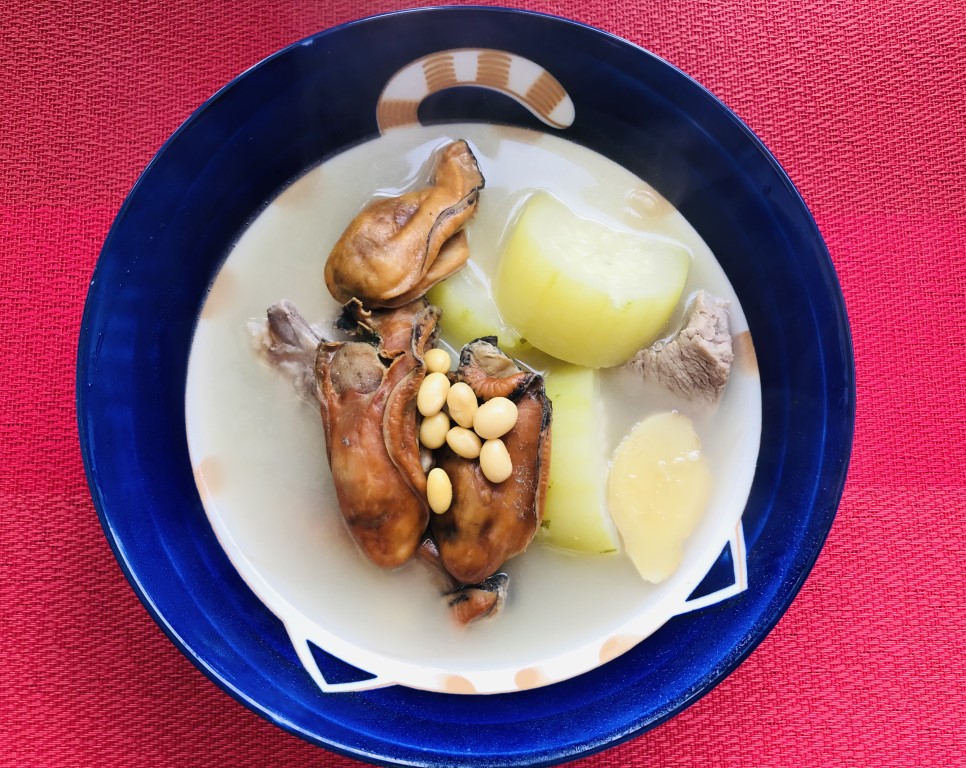
- Serve the soup and ingredients together.
Bro Niu’s tips
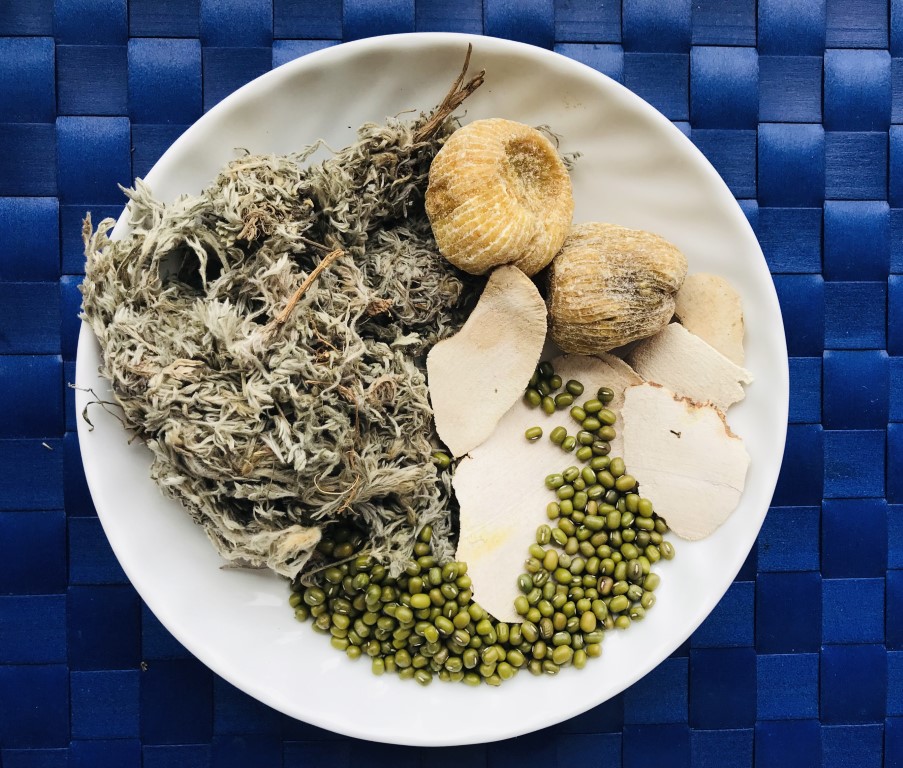
This soup has a light, pleasant herbal fragrance without a heavy medicinal taste — even children can enjoy it. It is also traditionally considered helpful for people with breast inflammation or general stomach discomfort. If wormwood (mian yin chen) is unavailable, you can substitute half a luo han guo (monk fruit) and omit the honey dates.
Community questions answered (selected)
-
Q (SK): Can a 5-year-old drink chicken bone grass soup? And if I can’t find wormwood, what can I add instead? Bro Niu: Children can drink this soup. If you can’t find wormwood, add about 3 qian (~11 g) of goji berries (gou qi zi) in its place.
-
Q (Chancarol): I have high uric acid — can I drink this soup? And if I leave out the meat, what else can I add? Bro Niu: If you have high uric acid, swap the soybeans for red adzuki beans (chi xiao dou), which are diuretic and help control uric acid. Other beans are high in purines and are not suitable.
-
Q (small king): If I don’t have wormwood, can I leave it out or substitute something? Bro Niu: You can use half a luo han guo (monk fruit) as a substitute, and in that case leave out the honey dates.
Published August 2, 2022 · Adapted and translated for Nourilo from a traditional home-kitchen recipe. Approx. 3 min read.