Herbal & Flower Teas
Fresh Dendrobium Orchid and American Ginseng Tea (Xian Shi Hu Hua Qi Shen Cha)
traditionally used to clear heat, generate fluids, relieve dry throat, and support the voice
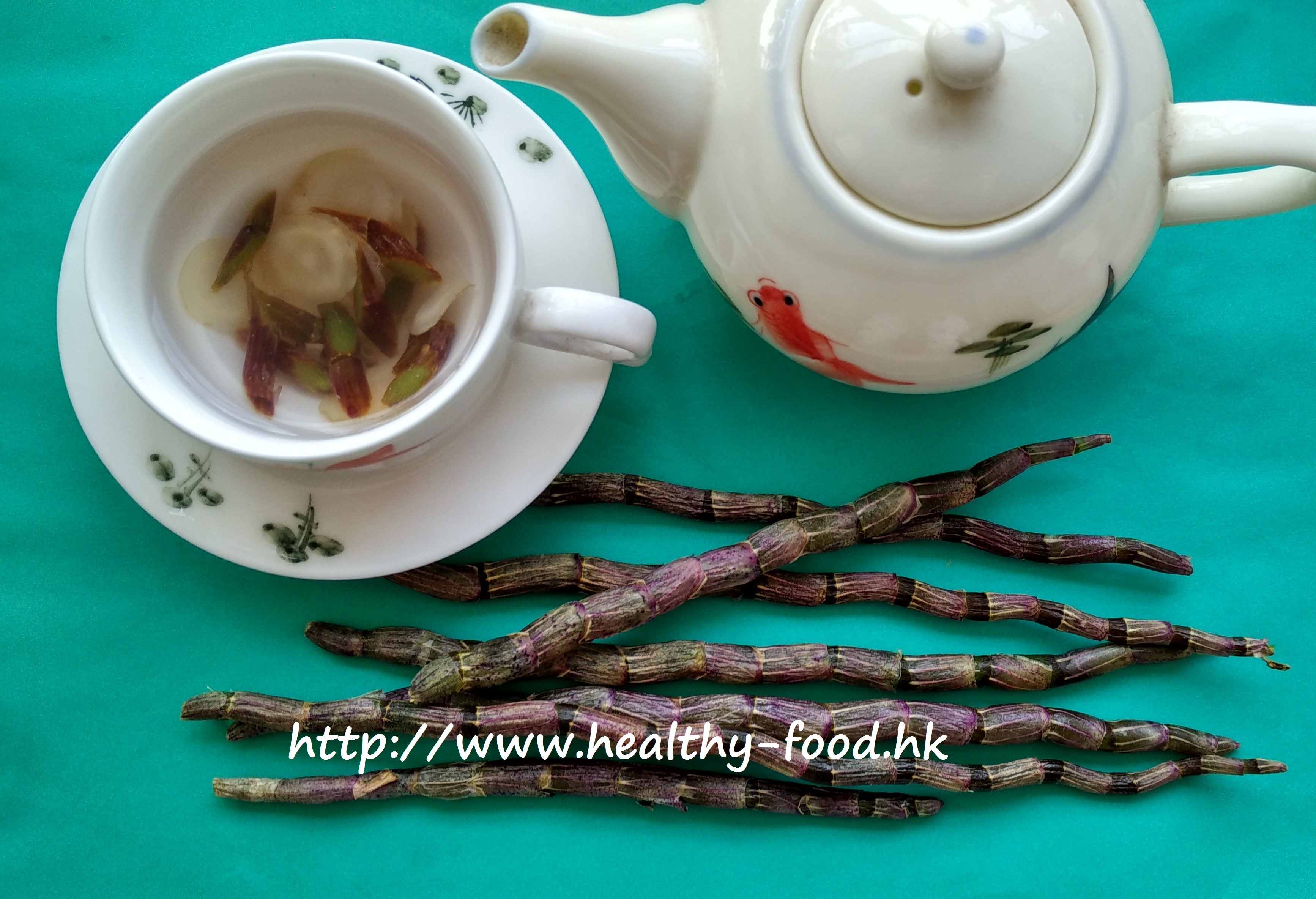
Why people make this tea
Dendrobium (shi hu) is one of the nine “immortal herbs” listed in a Tang dynasty Taoist text — a list that also includes ginseng, reishi, and caterpillar fungus. This gives you a sense of how highly it has been regarded in Chinese herbal tradition. Its reputation rests primarily on its ability to nourish yin: to replenish the body’s fluids when dryness, heat, or prolonged illness has depleted them.
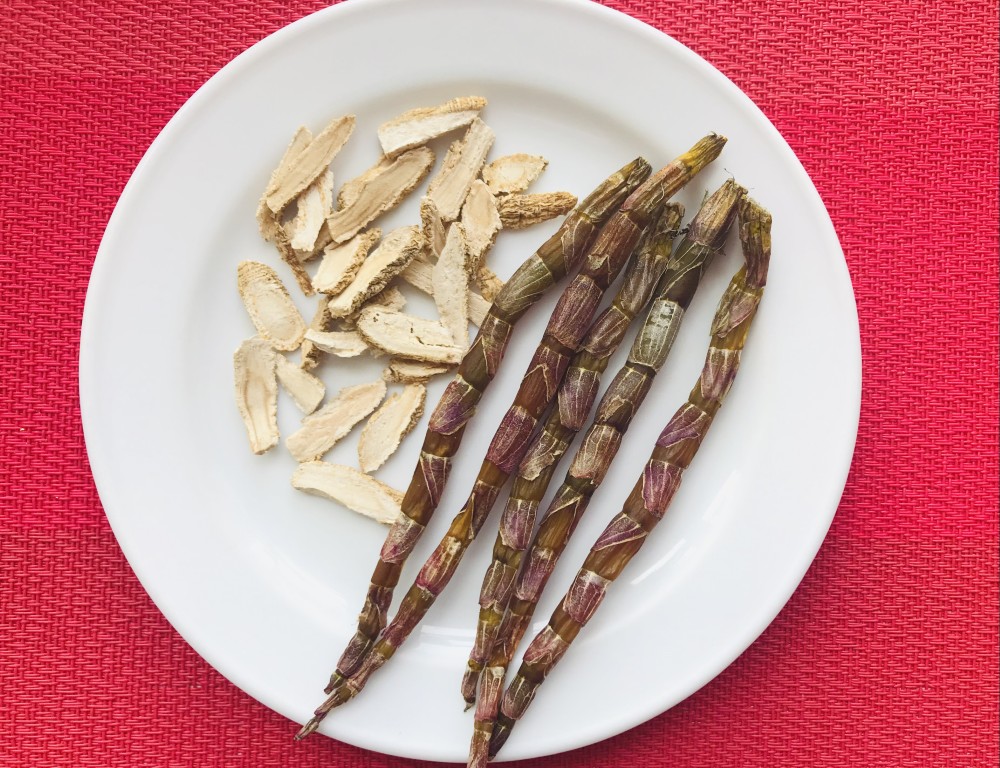
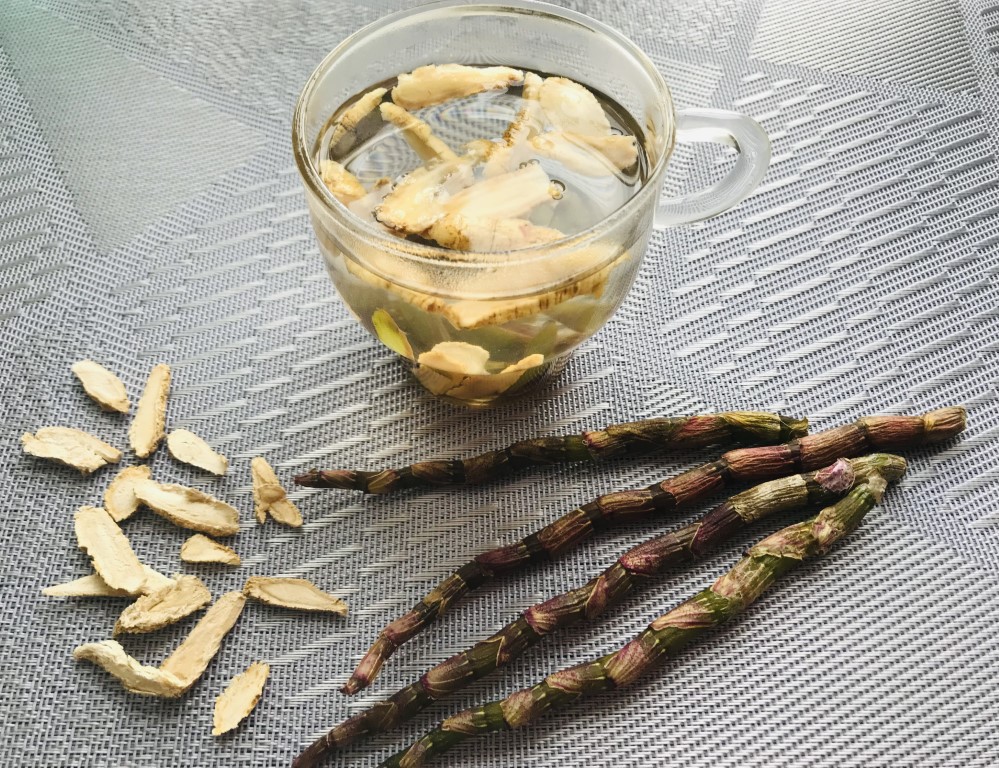
Fresh dendrobium is available at Chinese herb shops and Asian grocers, or online. It looks like a small succulent plant or a cluster of smooth green-grey stems. The best quality has purple or iron-green colouring; yellowish-green stems are of lower quality but still useful. Combined with American ginseng (which cools and generates fluids without overheating the system the way Asian red ginseng might), this tea is gentle, refreshing, and particularly suited to anyone whose throat, voice, or overall yin has been taxed.
Who it suits / who should be cautious
- Particularly suited for anyone with a dry, hoarse voice, persistent dry throat, or residual heat after illness
- Beneficial for people with diabetes experiencing thirst and dryness — this tea is associated with supporting fluid balance and easing the thirst-and-frequent-urination pattern
- Excellent for singers, teachers, broadcast professionals, and anyone who uses their voice heavily
- Suitable for people with yin deficiency (always dry, slightly hot sensation, especially at night)
- Young children: Bro Niu recommends using Pseudostellaria root (tai zi shen) instead of American ginseng for children, as tai zi shen supports qi without belonging to the ginseng family; dried dendrobium is fine for children but needs at least 20 minutes of simmering to release its properties
- Not ideal for those with excess cold-dampness patterns; those always cold and damp should use in moderation
- Can be refrigerated and drunk cold — keeps up to 2 days
Why these ingredients (the food-therapy logic)
- Fresh dendrobium (xian shi hu): Nourishes stomach and kidney yin; generates fluids and relieves thirst; clears mild internal heat without causing coldness; associated in modern research with immune support, blood sugar regulation, and digestive promotion; the iron-green or purple-stemmed varieties (especially Huoshan tie pi shi hu from Anhui province) are considered most potent
- American ginseng (hua qi shen / xi yang shen): Cools and tonifies qi and yin simultaneously; does not overheat the system the way Asian red ginseng can; generates fluids, clears irritability and residual heat; pairs very well with dendrobium
Ingredients (2–3 cups)
| Ingredient | Amount | Notes |
|---|---|---|
| Fresh dendrobium orchid stem | 2–3 stalks (~10–15 g) | Choose iron-green or purple-stemmed for best quality; rinse and chop roughly |
| American ginseng slices | 2 teaspoons (~6–8 g) | Add toward the end of cooking or steep separately to preserve volatile compounds |
| Water | 3 bowls (~600 ml) |
Method
- Rinse the fresh dendrobium stems and chop roughly into small pieces to help release their properties.
- Place the chopped dendrobium in a small pot with 3 bowls of water.
- Bring to a boil, then simmer for 10 minutes.
- Add the American ginseng slices and simmer for a further 2–3 minutes, or simply turn off the heat, add the ginseng, and steep for 5 minutes. (American ginseng loses some of its volatile compounds if boiled too vigorously — gentle heating or final-stage steeping is preferable.)
- Strain and serve warm. Can also be cooled and served chilled — keeps in the refrigerator for up to 2 days.
Bro Niu’s tips
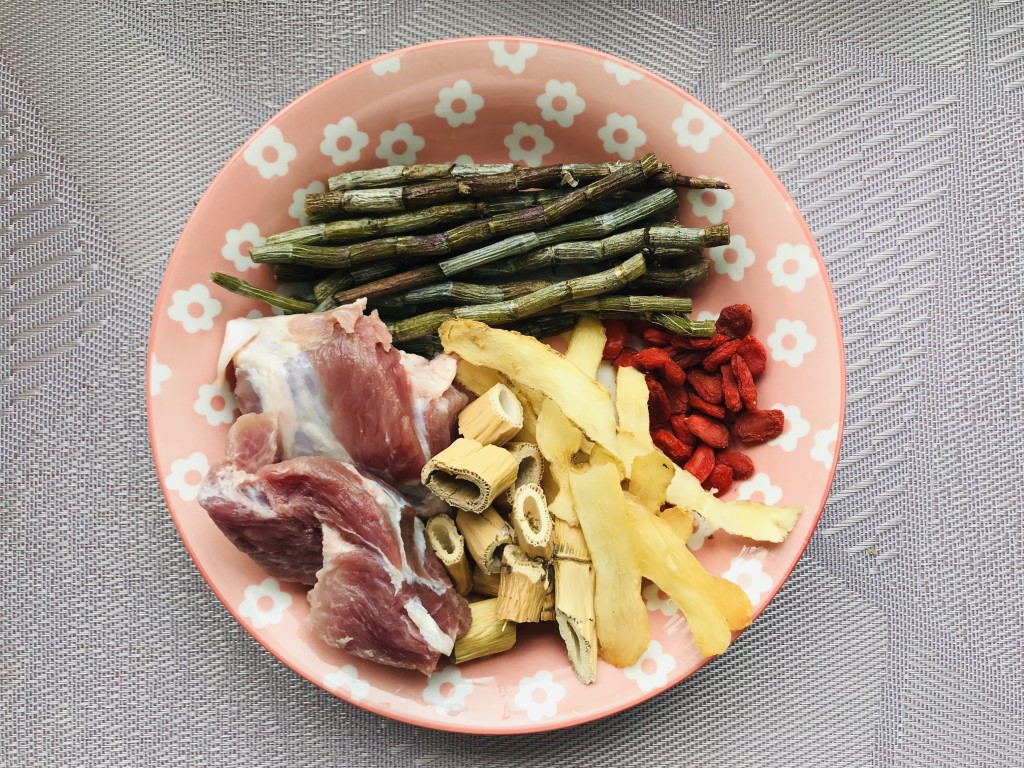
When choosing fresh dendrobium, look for sturdy, thick stems with iron-green or purple colouring — these are of the highest quality. Thin, yellowish-green stems are weaker but still usable. As for dried dendrobium: if you cannot find the fresh variety, use about 3 qian (~12 g) of dried dendrobium. Dried pieces should be crushed or broken before using, as this helps them release their properties. If left whole, you’ll need to simmer them for at least 45 minutes.
This tea is especially good for singers and anyone who taxes their voice regularly. It is also associated with supporting vision clarity and eye health.
If you have a preference for powder: reputable dendrobium powder (particularly Huoshan iron-skin dendrobium) can be stirred into warm water. Genuine high-quality dendrobium powder has a slightly sticky texture — it will cling to the spoon. If it is completely non-sticky, it may not be genuine.
Community questions answered (selected)
-
Q (Amy): How do I use dried dendrobium, and how long does it need to cook? Bro Niu: For dried dendrobium, use about 3 qian (~12 g). Crush or break the pieces to help them release their properties. If steeping, simmer for at least 45 minutes. Crushed pieces in a tea infusion can steep for 20 minutes at minimum.
-
Q (reader — 仪): Does dendrobium powder specifically lower blood sugar, or does it just ease the symptoms of diabetes? Bro Niu: Dendrobium is not specifically a blood sugar medication. What it does is nourish yin and generate fluids — this helps with the characteristic thirst, excessive drinking, and frequent urination that many people with diabetes experience. It also promotes digestive secretion and supports metabolism. It’s best understood as a nourishing support, not a treatment.
-
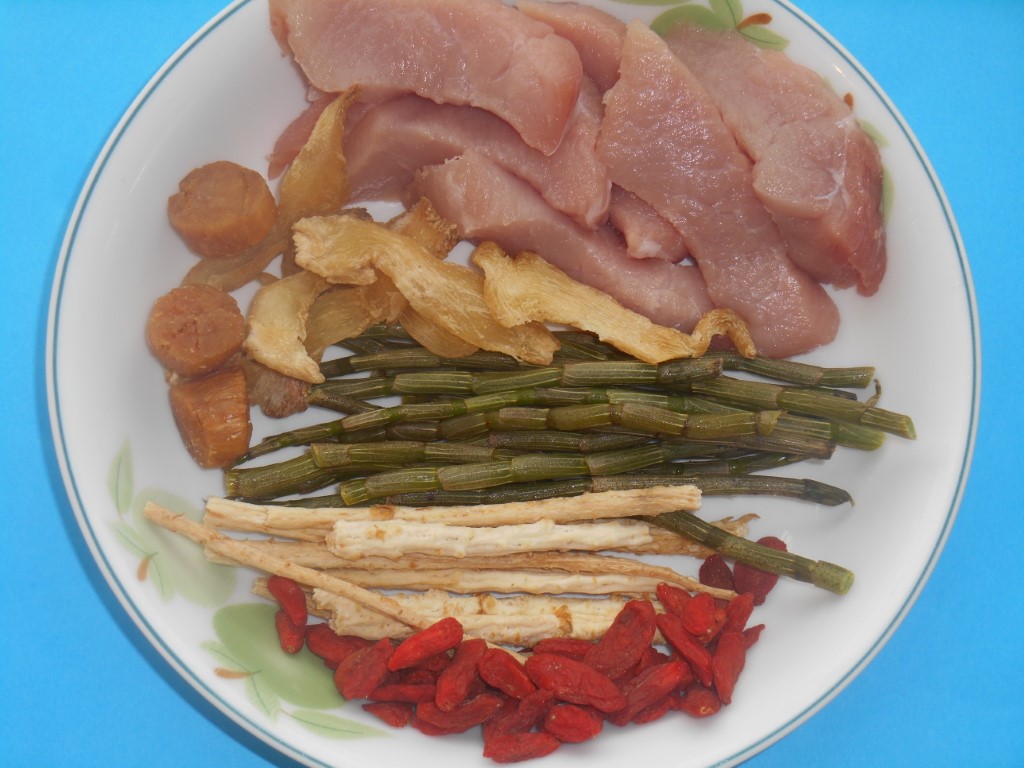
Q (Carol): I am a breast cancer patient who has completed surgery and chemotherapy and am now doing radiotherapy. Can I add cordyceps to this tea? Bro Niu: Yes, for a breast cancer patient, you can use 6 cordyceps (dong chong xia cao), dried dendrobium 1 tablespoon, and American ginseng slices half a tablespoon.
Published December 28, 2017 · Adapted and translated for Nourilo from a traditional home-kitchen recipe. Approx. 4 min read.