Home-Style Dishes
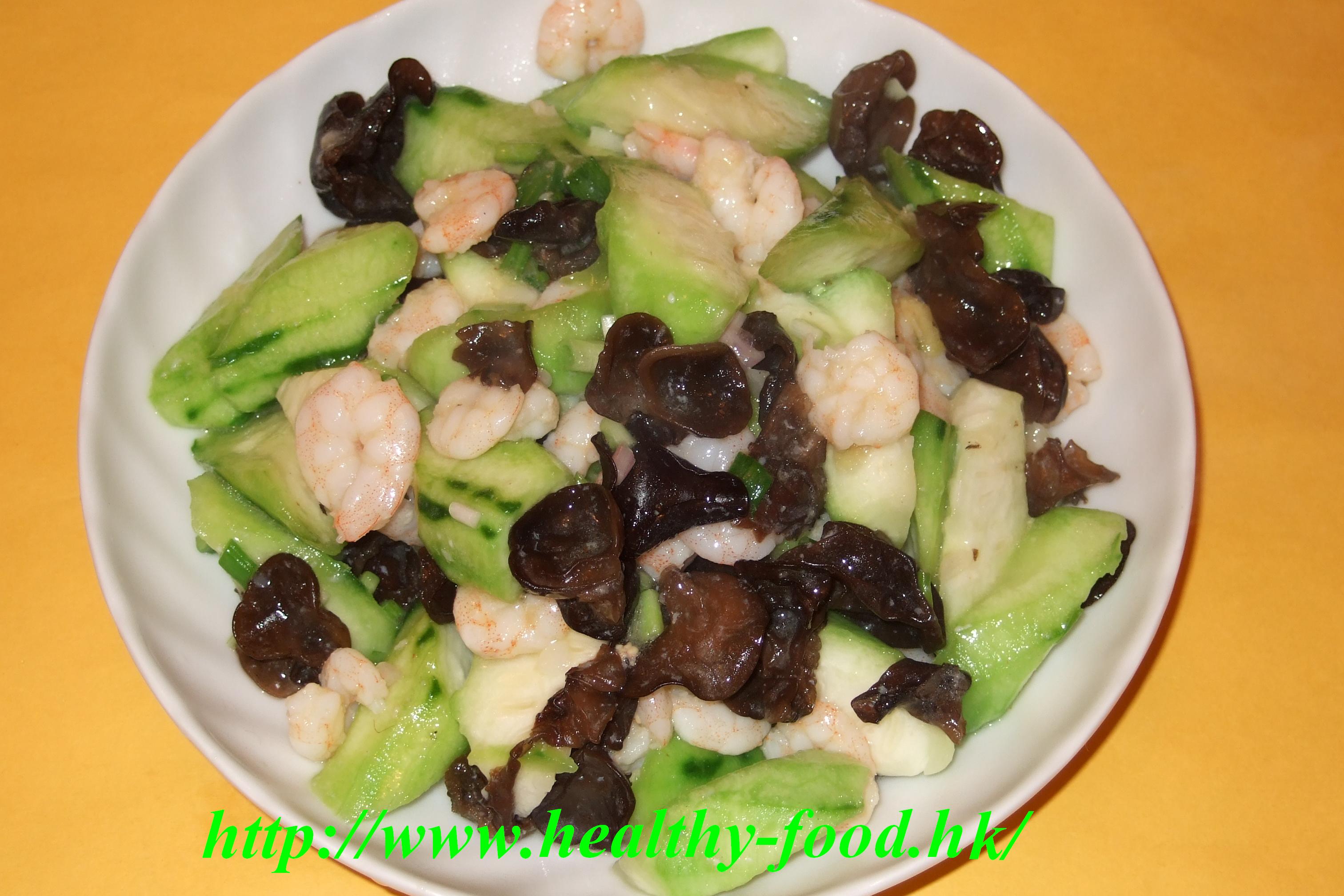
Rock Ear Fungus, Ridge Gourd and Stir-Fried Shrimp
traditionally associated with reducing blood lipids, softening blood vessels, and nourishing yin
Why people make this dish
Bro Niu’s younger sister brought back some beautiful mountain specialties from a trip to Wuyi Mountain — among them rock ear fungus (yan er), wild red mushrooms (hong gu), and wild-grown tea tree mushrooms. Rock ear fungus is a rare find in Hong Kong; it resembles cloud ear fungus but is smaller and has a wonderfully crisp, snappy texture when cooked. In traditional Chinese food therapy, it shares the blood-nourishing, lung-supporting properties of the wider black wood ear family, but is additionally associated with nourishing yin, clearing heat, and — crucially for cardiovascular wellness — reducing blood lipids, lowering cholesterol, and supporting vascular elasticity.
Paired with ridge gourd (also called angled loofah) and fresh shrimp, this stir-fry is a satisfying, flavour-forward dish that earns its place as a heart-health food-therapy recipe.
Who it suits / who should be cautious
- Suitable for adults concerned about cardiovascular health, high cholesterol, or blood pressure
- Those who have had or are awaiting stent procedures (通波仔) should note that black wood ear fungus has mild blood-thinning properties — discuss with your doctor before consuming large amounts around surgery
- If rock ear fungus is unavailable, cloud ear (yun er) or black wood ear are good substitutes
Why these ingredients (the food-therapy logic)
- Rock ear fungus (yan er): A mountain-grown variety of black wood ear; especially prized in folk medicine for cooling the blood, nourishing the lungs, and reducing blood lipids and cholesterol; black wood ear in general is sometimes called the “blood vessel sweeper” in traditional Chinese food culture
- Ridge gourd / angled loofah (sheng gua): Cooling and light; supports clearing heat and unblocking the channels; pairs well with the fungus to make the dish easier on digestion
- Fresh shrimp (xian xia ren): Provides lean, clean protein; in food therapy shrimp is considered warming and strengthening, providing a balance to the cooler fungus and gourd
Ingredients (2 servings)
| Ingredient | Amount | Notes |
|---|---|---|
| Rock ear fungus (yan er) | 11 g (3 qian) | Soak in cold water until rehydrated; rinse well |
| Ridge gourd / angled loofah | 1 piece | Peel and cut into chunks |
| Fresh prawn meat / shrimp | 112 g (3 liang) | Marinate lightly with salt and cornstarch |
| Ginger, minced | a small amount | |
| Spring onion, chopped | a small amount | |
| Cooking wine (Shaoxing rice wine) | a splash | |
| Salt and seasoning | to taste |
Method
- Soak the rock ear fungus in cold water for about 20–30 minutes until fully rehydrated; rinse thoroughly and trim any tough base if present.
- Peel the ridge gourd and cut into bite-sized chunks.
- Lightly marinate the shrimp with a pinch of salt and a little cornstarch for 10 minutes.
- Heat a wok with a small amount of oil. Stir-fry the minced ginger until fragrant.
- Add the shrimp and stir-fry until they just turn pink.
- Add the ridge gourd and rock ear fungus; toss together over high heat.
- Splash in a little cooking wine, add seasoning to taste, and stir-fry for another minute.
- Scatter in the chopped spring onion, toss briefly, and transfer to a plate immediately.
Bro Niu’s tips
If rock ear fungus is not available, cloud ear (yun er) makes a perfect substitute — both belong to the black wood ear family and share similar food-therapy properties. For an extra nutritious variation, Bro Niu also notes that rock ear (or cloud ear) cooked in a soup with dried lily buds (jin zhen) and lean pork makes a calming, blood-nourishing dish. Black wood ear has a mild blood-thinning quality, so those scheduled for surgery should check with their doctor before eating significant quantities.
Community questions answered (selected)
-
Q (CC): Is ordinary cloud ear fungus (yun er) similar to rock ear in its effect? My father had a stent procedure done — can he eat cloud ear regularly? Bro Niu: Cloud ear and rock ear both belong to the black wood ear family and share similar properties — cooling the blood, nourishing the lungs, and supporting vascular health. Black wood ear is sometimes called the “blood vessel sweeper.” For someone who has had a stent procedure, eating cloud ear or black wood ear regularly is beneficial. Do eat the fungus itself, not just the broth.
-
Q (何伯): My blood vessel is partially blocked and I am waiting for a stent procedure. I often feel episodes of chest tightness. Can I eat the white-backed wood ear, red dates, apple, tangerine peel, and lean pork soup a friend suggested? Bro Niu: Yes, that soup is suitable for you — it is neither cooling nor warming in nature. Just remember to eat the wood ear. For regular meals, try a congee of kudzu root (fen ge) and coix seeds (yi mi) — kudzu is associated with supporting coronary blood flow, and coix seeds help relax muscle spasm and reduce limb numbness. Keep meals light, avoid overeating, and eat smaller portions more frequently.
-
Q (李太): My husband is about to have a stent procedure. What soups are suitable after the operation? Bro Niu: After the procedure, a radish and tangerine peel water helps clear anaesthetic residue. Then make a congee of astragalus (bei qi) slices with dried scallop and tangerine peel. The purple laver, egg drop, and pork soup is also suitable to drink.
Published March 21, 2010 · Adapted and translated for Nourilo from a traditional home-kitchen recipe. Approx. 4 min read.