Soups
Coco de Mer, Snow Fungus, and Lily Bulb Soup (Hai Di Ye Xue Er Bai He Tang)
traditionally used to moisten the lungs, reduce phlegm, and support respiratory wellness
Why people make this soup
Air pollution, long-term smoking, and chronic respiratory inflammation all take a gradual toll on the lungs. Traditional food therapy suggests that supporting the lungs should be an ongoing daily habit rather than something reserved for when you are already ill. This soup — with its combination of authentic coco de mer, snow fungus, and lily bulb — is Bro Niu’s go-to recipe for keeping the respiratory system nourished and resilient. It is associated in traditional practice with dissolving phlegm, soothing cough, and supporting smooth, comfortable breathing. The soup is naturally sweet and pleasant, making it easy to drink regularly.
Who it suits / who should be cautious
- Suitable for the whole family, including young children (even babies from 10–14 months, in small amounts), and particularly beneficial for those with a history of respiratory issues, chronic cough, or phlegm
- People recovering from cough or respiratory illness (after fever has cleared) will find this especially supportive
- Do NOT drink during an active cold or flu with fever — wait until the fever has fully resolved
- Those who cannot source genuine African coco de mer (see tips below) can substitute additional snow fungus, lily bulb, and apricot kernels with equally good results
- Vegetarians: the lean pork can be omitted entirely without affecting the therapeutic properties of the herbs
Why these ingredients (the food-therapy logic)
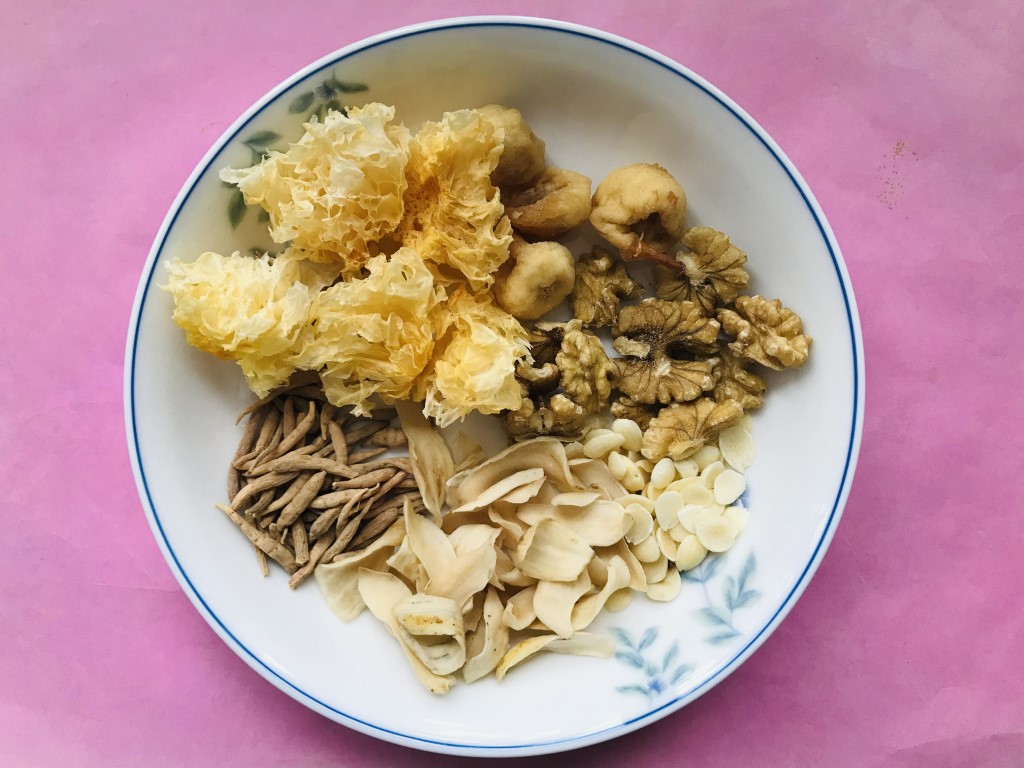
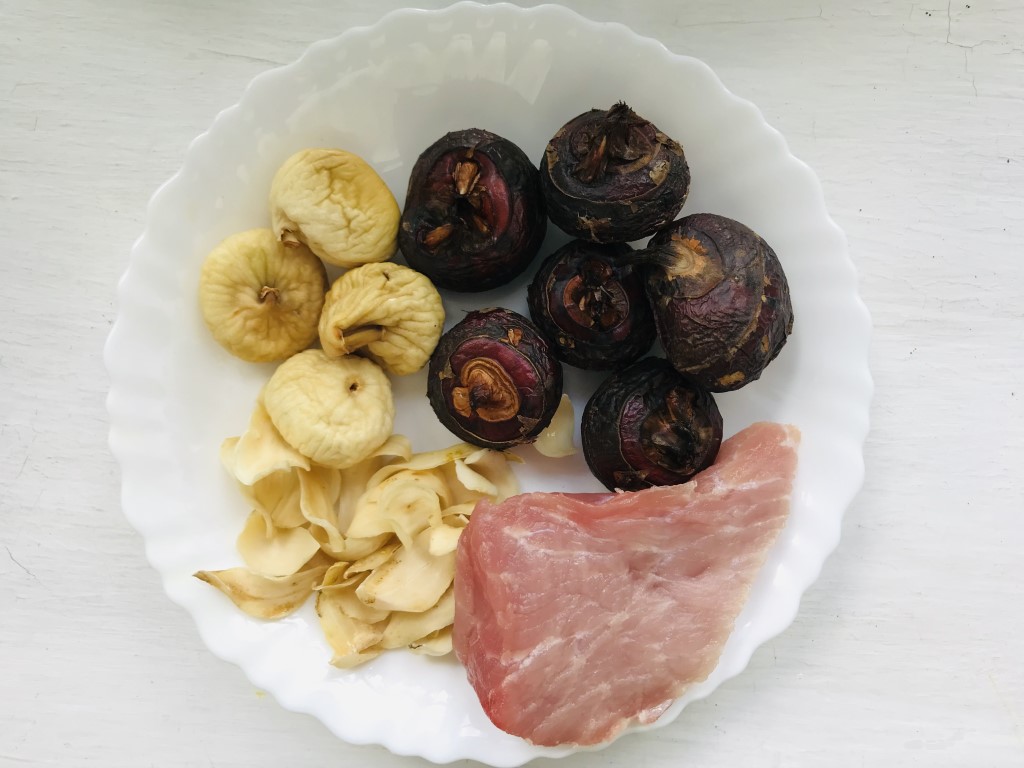
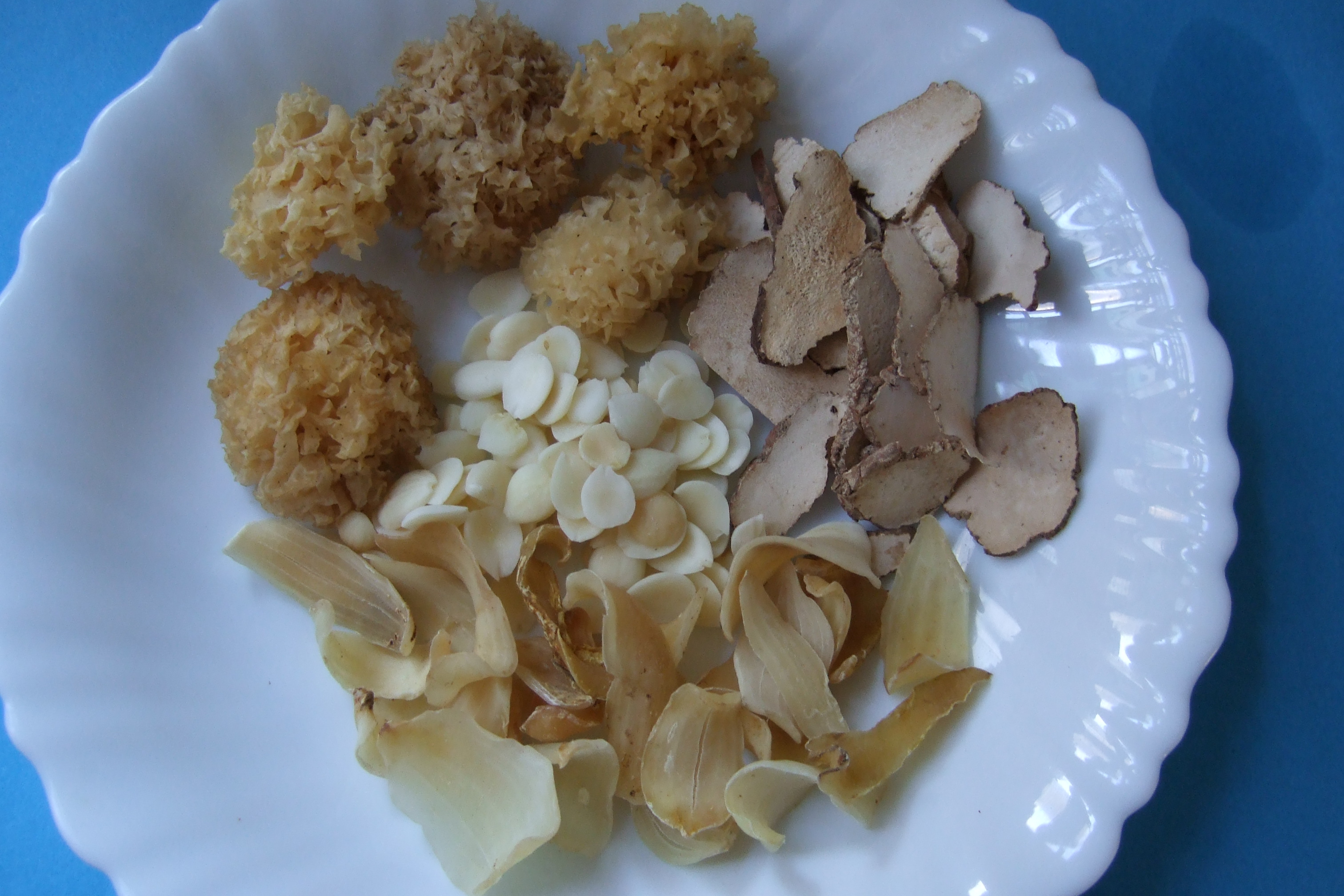
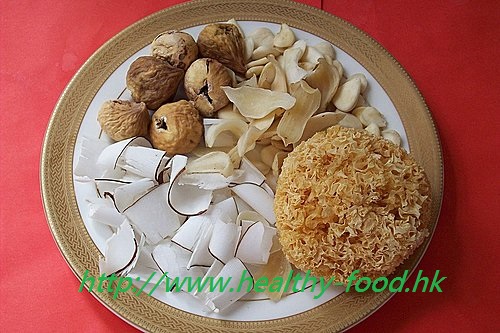
- Coco de mer (hai di ye, Lodoicea maldivica — authentic African sea coconut): One of the rarest and most prized food-therapy ingredients. True coco de mer comes exclusively from the Seychelles islands in Africa, where the enormous double-coconut fruits are considered a national treasure. The dried flesh has a sweet, neutral character and is traditionally associated with clearing phlegm, soothing the airways, and regulating the movement of qi in the lungs. Beware: many products sold as “sea coconut” in herbal shops are actually dried palm fruits from Southeast Asia with no therapeutic equivalence. Genuine coco de mer should have jagged, tooth-like edges and visible flesh grain on the slices.
- Snow fungus / silver ear fungus (xue er / yin er, Tremella fuciformis): A gelatinous mushroom prized for its nourishing, moistening properties. Traditionally associated with supporting lung yin, enriching body fluids, and providing a natural, plant-based source of polysaccharides. It softens and expands dramatically when soaked, giving the soup a silky texture.
- Dried lily bulb (bai he): Traditionally associated with calming the nervous system, moistening the lungs, and soothing a dry or irritable cough. Often used for people who feel emotionally unsettled alongside their respiratory symptoms.
- Sweet and bitter apricot kernels (nan bei xing): A traditional pairing. Sweet apricot kernels (nan xing) are gentle and moistening; bitter kernels (bei xing) are the active component for dissolving phlegm and stopping cough, but contain trace amounts of amygdalin and are used in small amounts only (traditionally 1 part bitter to 5 parts sweet). This ratio is standard in Cantonese soup-making and is safe for the whole family.
- Dried figs (wu hua guo): Traditionally associated with lubricating the intestines, clearing lung heat, and adding natural sweetness to the broth.
Ingredients (3–4 bowls)
| Ingredient | Amount | Notes |
|---|---|---|
| Authentic coco de mer (hai di ye) | 10 g (3 qian) | must be genuine African variety; see tips |
| Snow fungus (xue er / yin er) | 1 small piece | soak until fully expanded, remove stem |
| Dried lily bulb (bai he) | 15 g (5 qian) | |
| Sweet apricot kernels (nan xing) | ~32 g | |
| Bitter apricot kernels (bei xing) | ~5 g | 5:1 ratio with sweet kernels |
| Dried figs | 4 pieces | |
| Lean pork | 225 g (6 liang) | washed and sliced |
| Water | ~8 bowls | to make ~3–4 bowls |
Method
- Soak the snow fungus in cold water for 20–30 minutes until fully expanded and softened. Remove and discard the tough yellow stem. Tear or cut into smaller pieces.
- Rinse the lily bulb, apricot kernels, and dried figs in cold water and drain.
- Wash and slice the lean pork. Blanch briefly in boiling water to remove impurities; drain.
- Place all ingredients into a large pot or clay pot. Add approximately 8 bowls of water.
- Bring to a boil over high heat, then reduce to a low simmer. Cover and cook for about 2 hours.
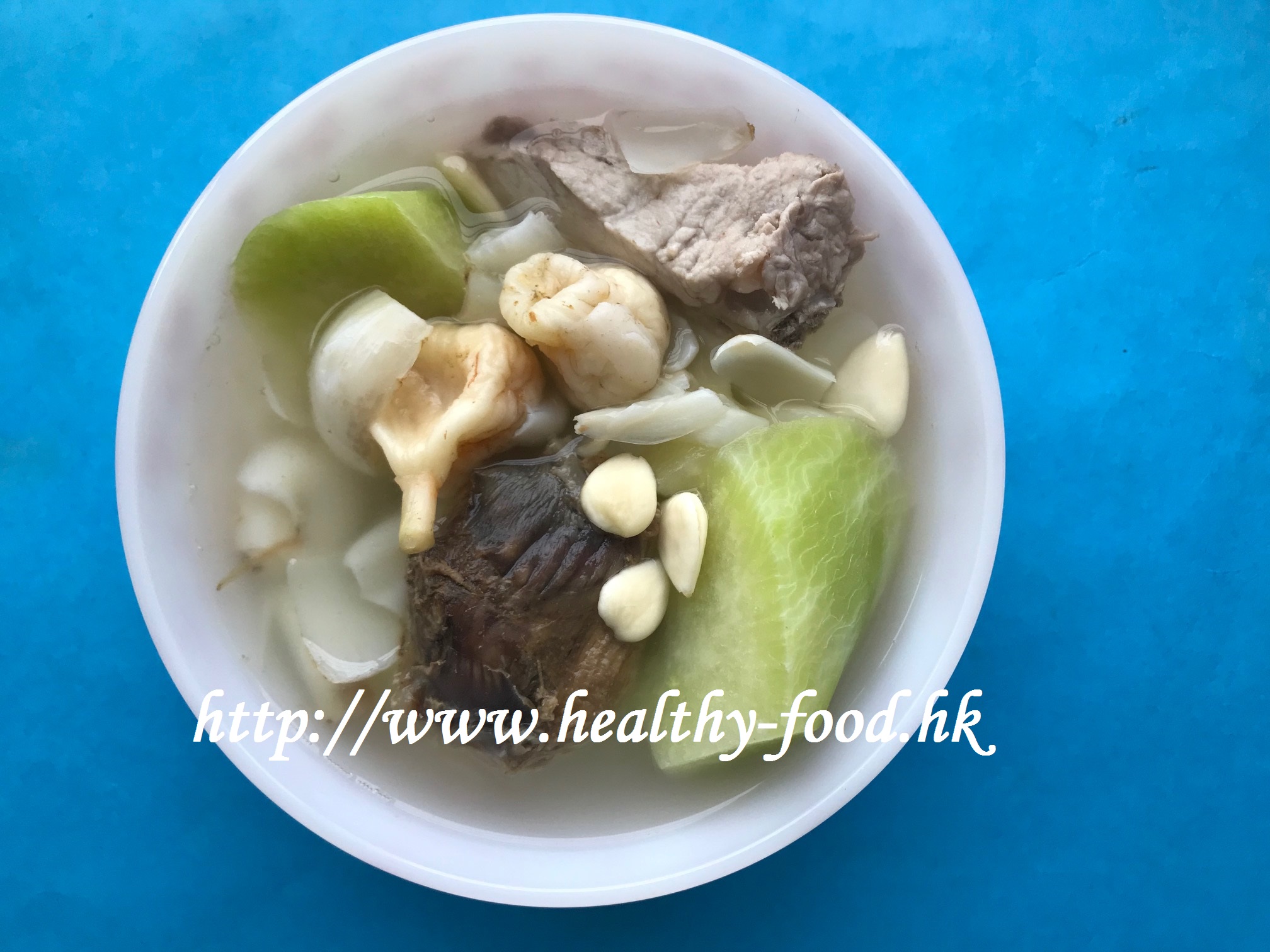
- Taste and season lightly with a pinch of salt if desired. Serve warm; drink the broth and eat some of the snow fungus, lily bulb, and other soup ingredients.
Bro Niu’s tips
- The most important thing about this recipe is sourcing genuine coco de mer. Most products labelled “sea coconut” in shops are not the authentic African variety (Lodoicea maldivica from the Seychelles) — they are dried palm fruit from Southeast Asia, which has a completely different profile and little traditional therapeutic value. Genuine coco de mer slices should have a distinctive jagged, tooth-like edge and visible fibre grain in the flesh. If you cannot find the genuine article, simply increase the amounts of snow fungus, lily bulb, and apricot kernels — you will get a very effective soup without it.
- This soup is not cold in nature (not cooling) and not drying either — it is balanced and pleasant. Suitable year-round; Bro Niu confirms: “not cold, not drying.”
- Vegetarians can omit the pork completely — the herbs carry the therapeutic value.
- Red dates can substitute for figs if figs are unavailable.
Community questions answered (selected)
-
Q (陈太, mother of a 7-year-old): My daughter just recovered from bronchitis. She still has a couple of coughs in the morning and some pale yellow phlegm. She has a slight cold — is this soup suitable? Bro Niu: Yes, your daughter can drink this soup while she still has a little cough. Take it for 3 consecutive servings.
-
Q (Fornia): I heard that apricot kernels are toxic — can babies drink this soup? Bro Niu: It is true that bitter apricot kernels (bei xing) are used as medicine and have a small amount of mild toxicity at high doses. In this soup, the traditional ratio is 5 parts sweet (nan xing) to 1 part bitter (bei xing). This proportion is safe for the whole family. If you want to be extra cautious with very young babies, simply use sweet apricot kernels only.
-
Q (reader, via Q&A): I am vegetarian. If I omit the pork, does the soup still have the same effect? Bro Niu: Yes — the therapeutic properties come from the herbs. The soup is equally effective without the meat.
Published January 22, 2014 · Adapted and translated for Nourilo from a traditional home-kitchen recipe. Approx. 5 min read.