Soups
Water Chestnut, Dried Fig and Lily Bulb Pork Soup
Traditionally used to moisten and clear the lungs, soothe the throat, and ease dry coughs
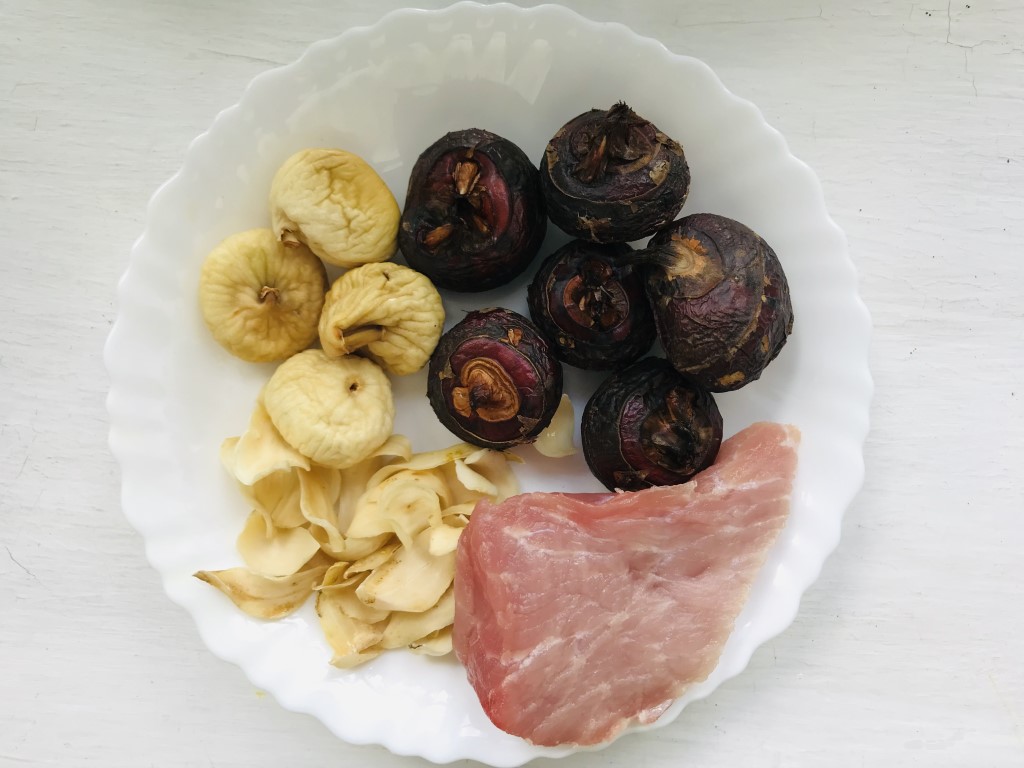
Why people make this soup
Autumn dryness shows up in familiar ways: a persistent tickle at the back of the throat, a dry cough where the phlegm feels sticky and hard to shift, skin that feels tighter than usual. In years when respiratory illness is circulating, these symptoms can feel more pressing. Cantonese food-therapy has a reliable toolkit for this season, and this soup — water chestnuts, dried figs, lily bulb — is a classic combination. Water chestnuts contain a compound called puchiin (荸荠素) that research has shown to have inhibitory activity against certain bacteria, including Staphylococcus aureus and Pseudomonas. Dried figs soothe and moisten the throat with their natural sweetness and gel-like compounds. Lily bulb is one of the most frequently used herbs for calming a dry, heat-type cough and settling an unsettled mind. Together they make a soup that is both delicious and genuinely suited to the season.
Who it suits / who should be cautious
- Suitable for those with heat-type coughs: dry, persistent, with sticky or yellow phlegm
- Also suited to those with mild throat discomfort from seasonal dryness or air-conditioning
- Those with a cold or weak spleen-stomach constitution should avoid this soup
- Those with cold-type coughs (clear, watery phlegm; cough that worsens in cold air) should avoid this soup
- Please see a doctor if symptoms are severe or include fever
Why these ingredients (the food-therapy logic)
- Water chestnuts (ma ti): Traditionally used to clear heat, generate fluids, and dissolve phlegm; the compound puchiin is associated with activity against respiratory bacteria; also gently anti-inflammatory
- Dried figs (wu hua guo): Traditionally used to moisten the lungs, soothe the throat, and support the spleen and stomach; their natural sweetness and mucilaginous quality coats and soothes irritated mucous membranes
- Dried lily bulb (bai he): Classic herb for lung support; traditionally used to moisten the lungs, calm the cough, and settle the heart-mind; also said to be helpful for those recovering from illness who still feel restless or find sleep difficult
- Lean pork: Provides a mild savoury base without overwhelming the delicate flavours of the other ingredients
Ingredients (4 bowls)
| Ingredient | Amount | Notes |
|---|---|---|
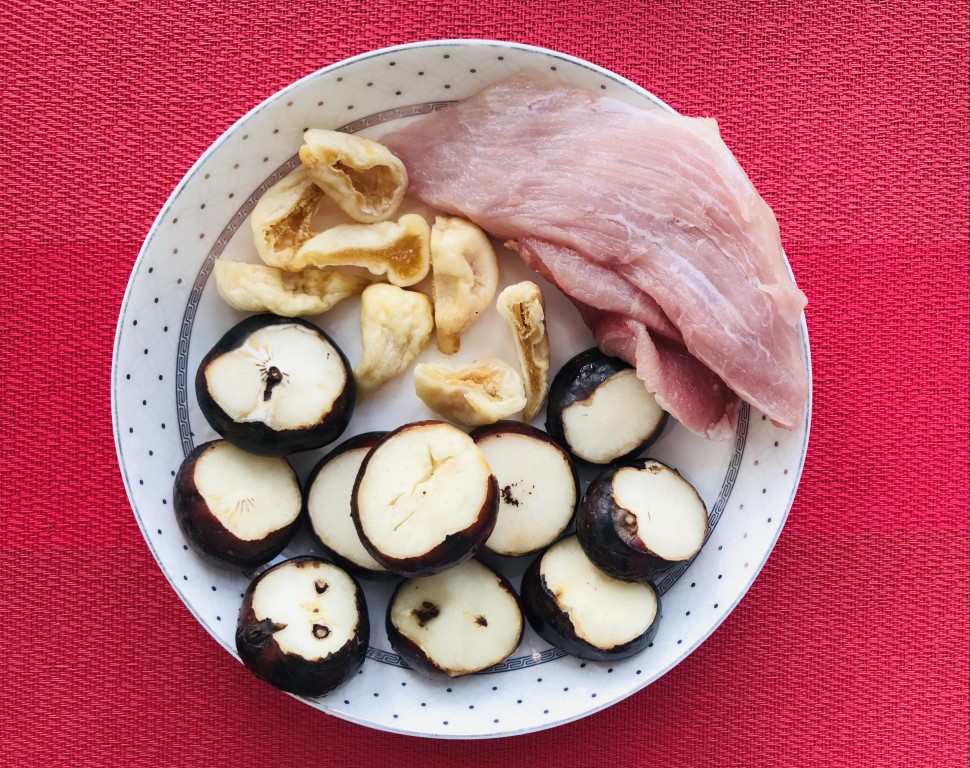
| Water chestnuts (ma ti) | 6 pieces | Peeled, rinsed |
| Dried figs (wu hua guo) | 4 pieces | Rinsed, halved |
| Dried lily bulb (bai he) | 38 g | Soaked 30 min in cold water, drained |
| Lean pork (shou rou) | 300 g | Cut into thick slices, blanched |
Method
- Soak the dried lily bulb in cold water for 30 minutes, then drain and discard the soaking water.
- Peel and rinse the water chestnuts.
- Rinse the dried figs and cut each in half.
- Blanch the lean pork slices in boiling water for 2 minutes, drain, and rinse.
- Place all ingredients in a pot with 8 bowls (about 1.6 litres) of water.
- Bring to a boil, then reduce to a medium-low simmer for 1 hour until the liquid reduces to about 4 bowls.
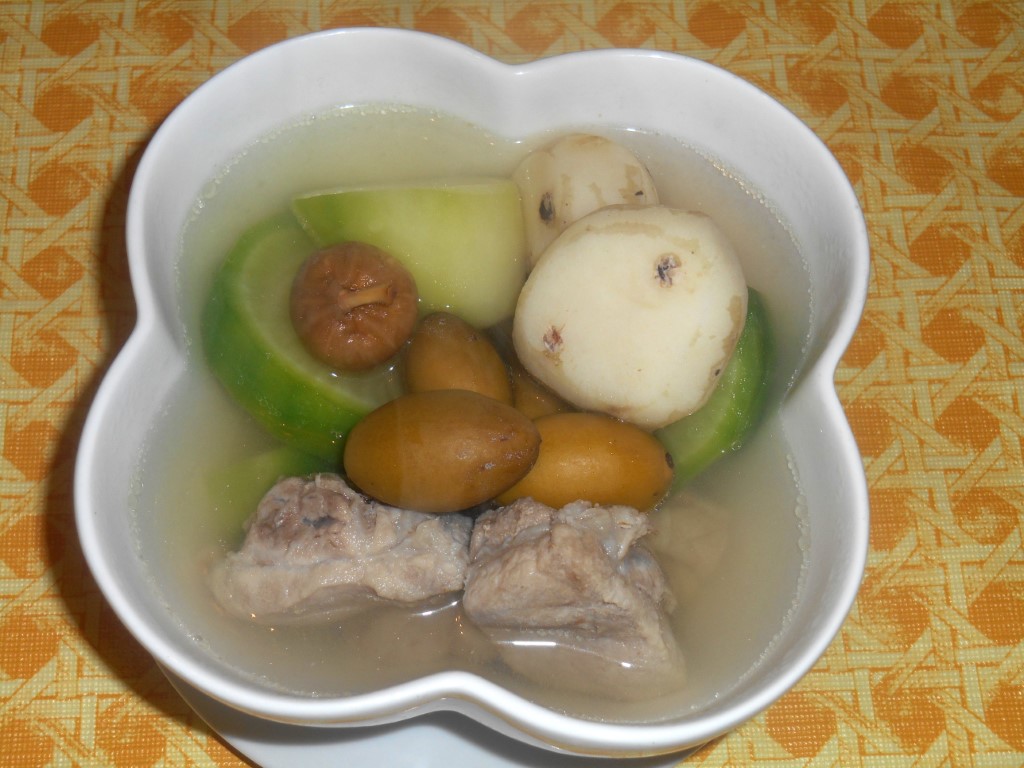
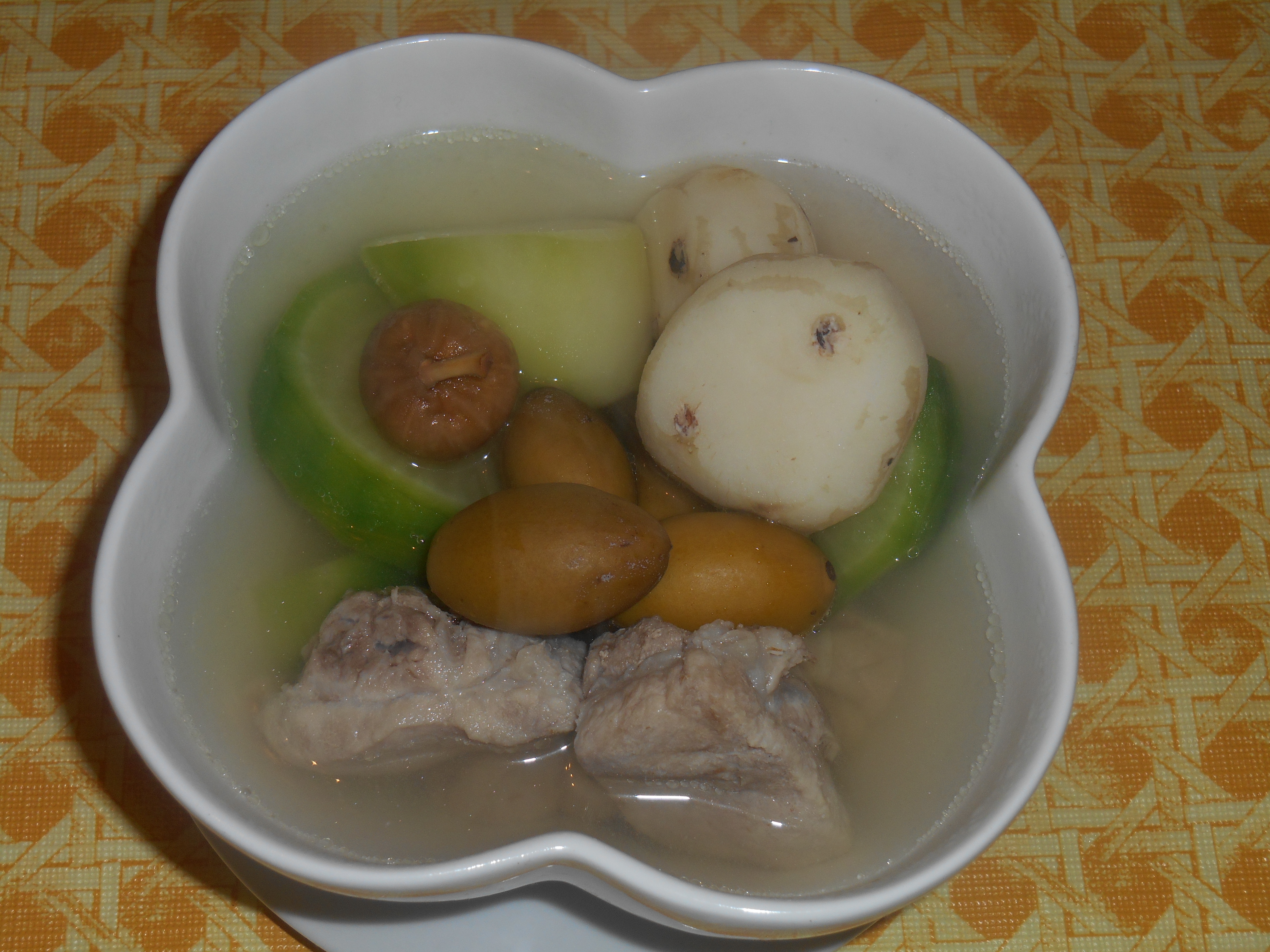
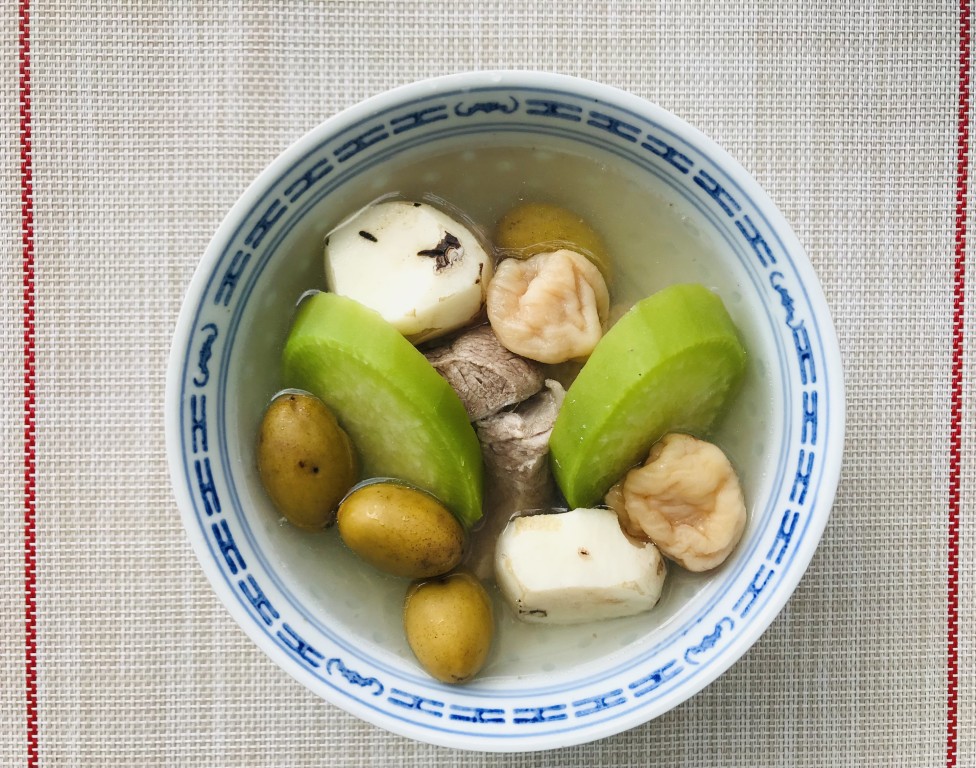
- Serve the soup and ingredients together.
Bro Niu’s tips
This soup is naturally sweet and pleasant — the whole family can enjoy it. It is most suitable for heat-type phlegm coughs (sticky, yellow or scant phlegm; dry throat; feeling of heat). Those with cold-type coughs producing clear watery phlegm, or those whose cough worsens in the cold, should not use this soup. If dried lily bulb has a sulfur smell, soak it in cold water for at least an hour, discard the soaking water, and only then add it to the pot.
Community questions answered (selected)
- Q (Ming): I wake up feeling very tired, have shoulder and neck aches, heavy eyelids, occasional dizziness, swollen gums, a pale white tongue with scalloped edges, and I run hot at the top but cold at the bottom. My Chinese medicine doctor says I have blood deficiency with wind and deficiency fire. Any food therapy suggestions? Bro Niu: For shoulder and neck pain, try making a soup with kudzu root (fen ge, 1 jin) along with red adzuki beans, flat beans, raw job’s tears (1 liang each), poria mushroom (fu ling, 5 qian), honey dates (2 pieces), and pork ribs — cook in 10 bowls of water for 2 hours down to 5 bowls. Take 2 bowls a day, 3 times a week. Once symptoms improve, switch to a soup with astragalus (bei qi), codonopsis (dang shen, 5 qian each), angelica (dang gui, 3 qian), red dates (5 pieces), and ginger with lean pork, to help with blood deficiency and the hot-top cold-bottom pattern.
Published August 21, 2022 · Adapted and translated for Nourilo from a traditional home-kitchen recipe. Approx. 4 min read.