Soups
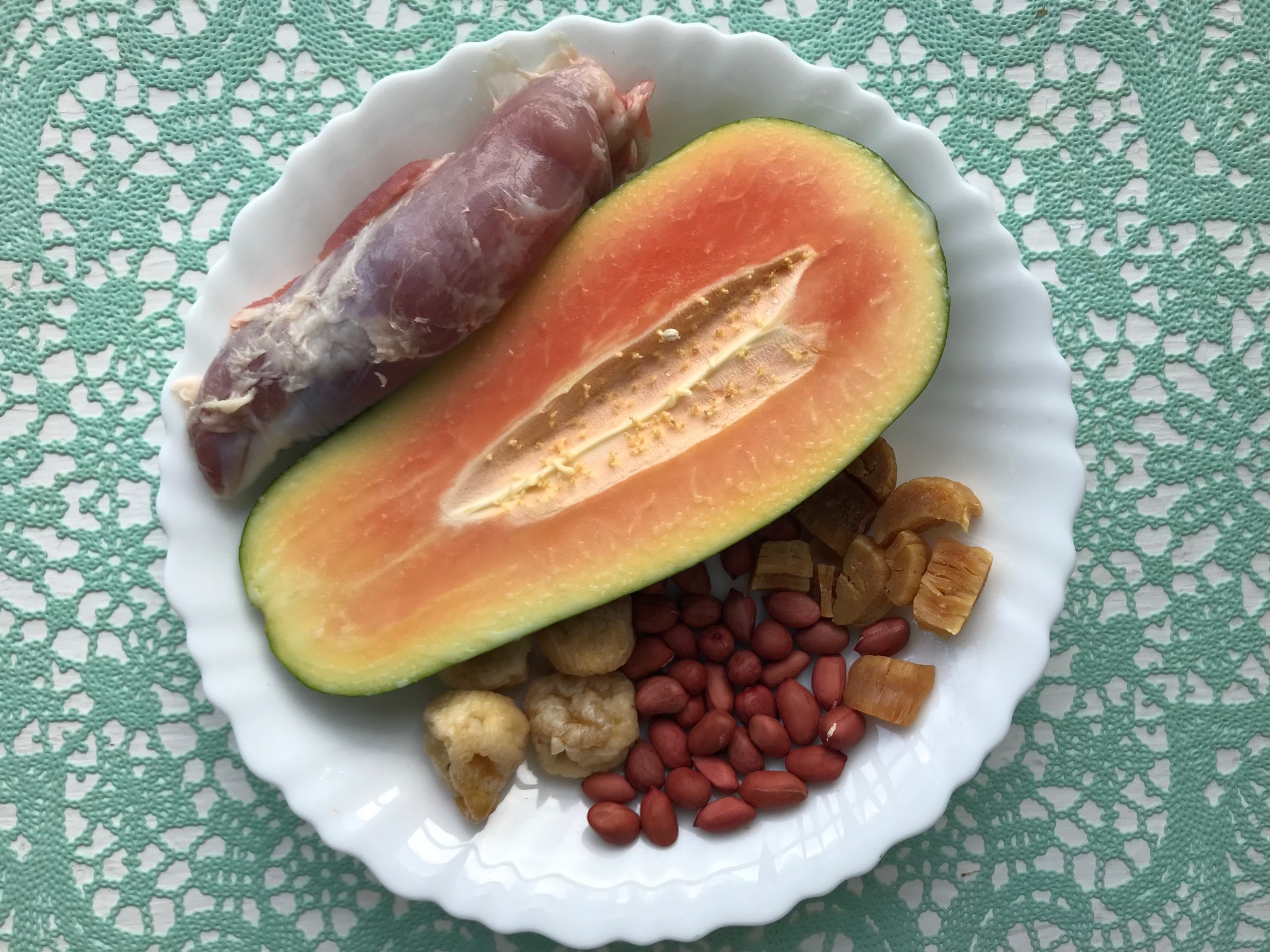
Green Papaya, Red-Skin Peanut, Dried Fig, Pork Shin & Dried Scallop Soup
Traditionally associated with supporting breast milk production and nourishing new mothers
Why people make this soup
Papaya comes in two distinct forms: the firm, pale-green unripe fruit used in savoury cooking, and the golden-orange ripe fruit enjoyed fresh or in dessert soups. They look like the same fruit, but in the kitchen they do very different things. Ripe papaya is sweet and gentle — wonderful to eat fresh or to use in a dessert soup. Green papaya is firmer, less sweet, and packed with natural enzymes that ripe papaya does not have in the same concentration. It is these enzymes that have made green papaya one of the best-known ingredients in Chinese (and indeed Southeast Asian) lactation cooking. Combined with red-skin peanuts and dried figs — both traditionally associated with milk production — and given body by pork shin and dried scallop, this soup is a warm, nourishing, and genuinely practical choice for a new mother who wants to build her milk supply.
Who it suits / who should be cautious
- Specifically suited to nursing mothers experiencing low milk supply in the postpartum period
- Red-skin peanuts are traditionally associated with blood nourishment, making this soup doubly useful after the physical demands of childbirth
- May also be enjoyed by the whole family as a naturally sweet everyday soup
- Pregnant women must not eat papaya — green or ripe — as compounds in the fruit can stimulate uterine contractions. This soup is strictly for postpartum use.
- If no meat is preferred, cashews, black beans, or chestnuts can be used instead of pork shin
Why these ingredients (the food-therapy logic)
- Green papaya (qing mu gua / 青木瓜): Contains papain and related enzymes at higher concentrations than ripe papaya; traditionally believed to stimulate female hormone production, support breast tissue, and encourage lactation. In Cantonese food therapy, green or half-ripe papaya is the standard choice for nursing-support soups.
- Red-skin peanuts (hong yi hua sheng / 红衣花生): The red skin (testa) of the peanut is considered particularly beneficial in Chinese dietary medicine for supporting blood nourishment; peanuts in general are traditionally associated with supporting milk production and providing healthy fats and protein for a nursing mother
- Dried figs (wu hua guo / 无花果): As in the five-color vegetable soup, figs are an important lactation-supporting ingredient in Cantonese tradition, adding both fibre and a gently sweet depth
- Pork shin (zhu zhan / 猪展): Provides clean protein and collagen; a lean cut that nourishes without being too heavy
- Dried scallop (yao zhu / 瑶柱): Adds a rich umami foundation to the broth and is traditionally regarded as tonifying the kidneys and stomach
Ingredients (4 bowls)
| Ingredient | Amount | Notes |
|---|---|---|
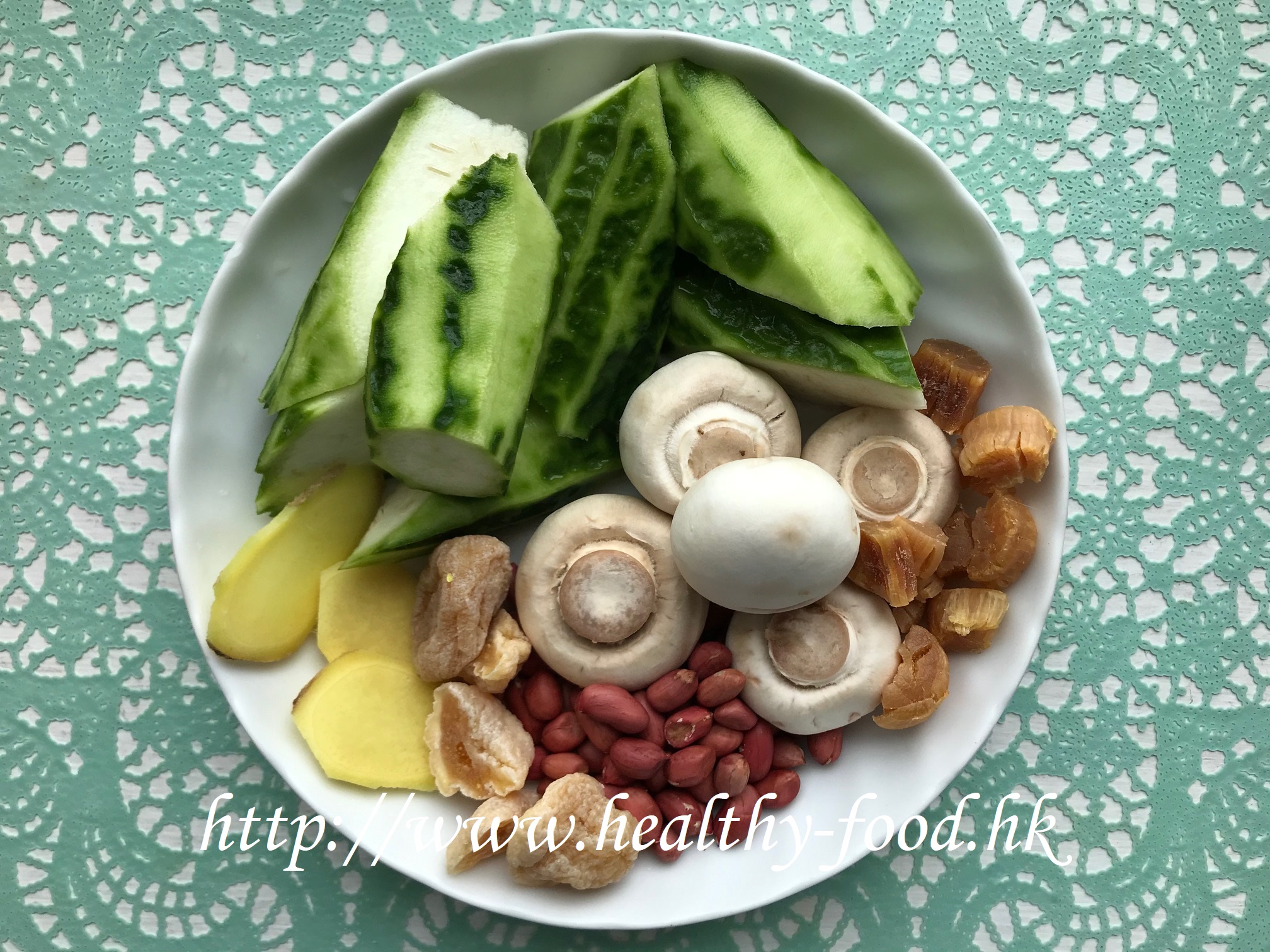
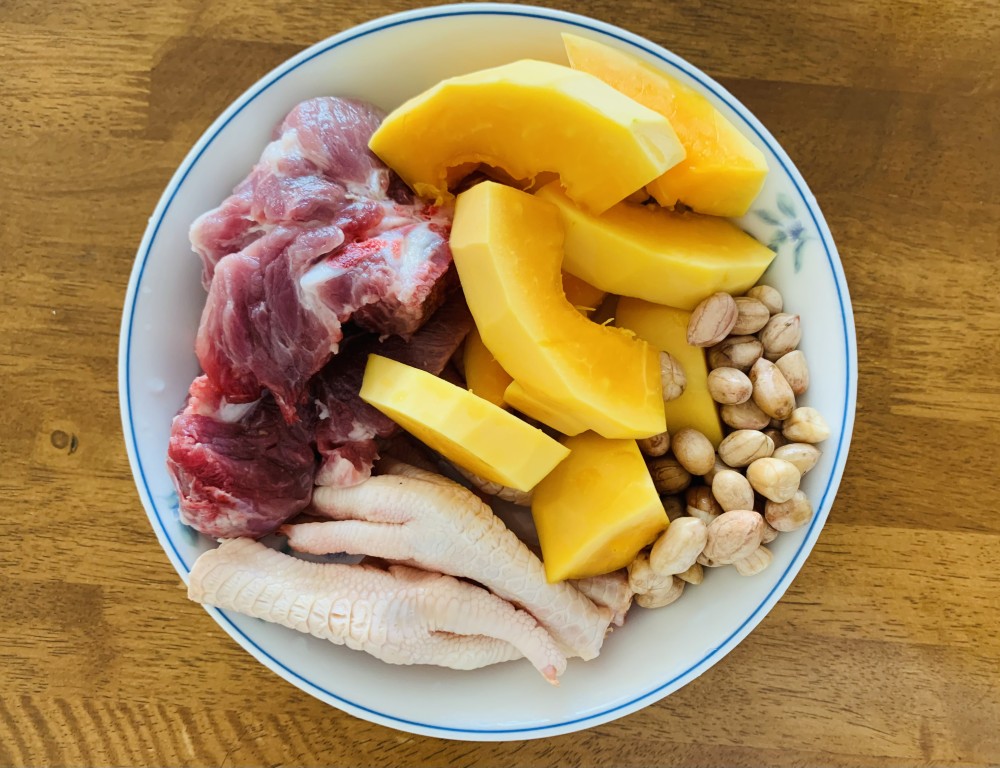
| Green papaya (unripe) | 1 whole | Peel, remove seeds, and cut into chunks |
| Red-skin peanuts | ~75 g (2 liang) | Rinse; keep the red skin on |
| Dried figs (wu hua guo) | 4 pieces | Halve each fig |
| Pork shin (zhu zhan) | 1 piece (~300–400 g) | Cut into chunks; blanch briefly in boiling water |
| Dried scallop (yao zhu) | 3 pieces | Rinse briefly; soak for 10–15 minutes |
| Water | 8 bowls |
Method
- Peel the green papaya, cut it in half, scoop out all the seeds, and cut the flesh into large chunks.
- Rinse the red-skin peanuts; keep the red skin on as it holds the blood-nourishing properties.
- Halve the dried figs.
- Cut the pork shin into large pieces, then blanch in boiling water for 1–2 minutes. Drain and rinse.
- Rinse the dried scallops and soak briefly.
- Place all ingredients into a large pot. Add 8 bowls of cold water.
- Bring to a boil, then reduce heat and simmer gently for 1 hour until liquid reduces to 4 bowls.
- Serve hot; eat the soup together with the ingredients.
Bro Niu’s tips
When choosing green papaya, look for the firmer, deeper-green fruits with little to no yellow — these have the highest enzyme content and the best lactation-supporting effect. Available at Chinese or Asian grocers, or online. For soup-making, “male” papayas (those with fewer seeds when cut open) are generally preferred as they have cleaner flesh and a neater appearance in the bowl. Ripe papaya is wonderful in dessert soups (such as the snow fungus and almond sweet soup in another recipe), but for lactation support, always reach for the unripe green version.
Community questions answered (selected)
- Q (Maggie): Papayas are said to come in male and female varieties. Which is sweeter for soup? Bro Niu: I prefer the male papaya (公) for soup — it has fewer seeds, which means cleaner flesh and a neater look in the bowl. Either works, but that’s my preference.
Published October 14, 2021 · Adapted and translated for Nourilo from a traditional home-kitchen recipe. Approx. 4 min read.