Home-Style Dishes
Goji Berry Steamed Pigeon
traditionally associated with nourishing the kidneys, supporting heart health, and tonifying middle qi — suitable for cardiovascular wellness and post-illness recovery
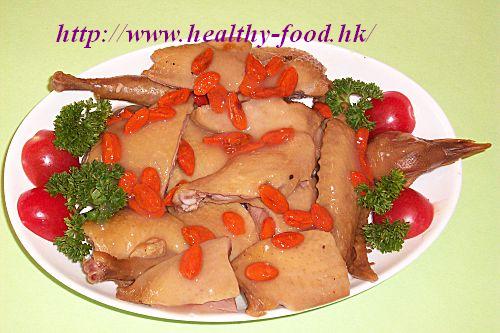
Why people make this dish
Pigeon (squab) has been a prized food in Cantonese cuisine for centuries — it is lean, rich in protein, and surprisingly low in fat compared to other poultry. In traditional food therapy it is considered an excellent tonic for the kidneys and the middle qi (spleen and stomach function), making it a popular choice for people recovering from illness, those with heart or cardiovascular concerns, and those with diabetes. Combined with goji berries — arguably the most versatile tonic ingredient in Chinese dietary practice — this steamed dish is a gentle, flavourful tonic that is easy on the digestion.
Who it suits / who should be cautious
- Suitable for those with weakened digestion, post-illness recovery, cardiovascular health concerns, or diabetes
- The low fat content of pigeon makes it a good protein choice for heart-conscious eaters
- Those with gout should consume pigeon in moderation as poultry contains moderate purine levels; goji berries themselves are fine
- Those with uric acid issues should check with their doctor about appropriate pigeon consumption
Why these ingredients (the food-therapy logic)
- Squab pigeon (ru ge): Regarded in food therapy as nourishing to the kidney essence (jing) and the middle qi; its low fat content is beneficial for cardiovascular health. Rich in protein, iron, and B vitamins.
- Goji berries (gou qi zi): The most widely used tonifying ingredient in Chinese food therapy; associated with nourishing the liver and kidneys, improving vision, boosting immune function, lowering blood sugar, and supporting healthy aging.
- Ginger (sheng jiang): Warms the stomach and aids digestion; reduces any gamey undertone in the pigeon.
- Spring onion white (cong bai): Promotes circulation of qi and warms the channels; also helps with any strong poultry aroma.
- Rose wine (mei gui lu jiu): A fragrant Cantonese cooking wine used to marinate and flavour; adds a floral note to the finished dish.
Ingredients (2 servings)
| Ingredient | Amount | Notes |
|---|---|---|
| Squab pigeon | 1 whole | Cleaned and gutted |
| Goji berries | 19 g (5 qian) | Soak in water briefly, drain |
| Ginger slices | 2 pieces | |
| Spring onion, white part | 2 stalks | |
| Light soy sauce | to taste | For marinating |
| Dark soy sauce | a little | For colour in the marinade |
| Rose wine (mei gui lu jiu) | a splash | Cantonese cooking wine; or use Shaoxing wine |
| Cornstarch + water | a little | For thickening the glaze at the end |
Method
- Rinse the goji berries and soak briefly in water; drain and set aside.
- Clean the pigeon thoroughly. Marinate with light soy sauce, a little dark soy sauce, and rose wine, ensuring all surfaces are coated. Leave to marinate for about 15 minutes.
- Place the marinated pigeon on a steaming plate. Scatter the goji berries, ginger slices, and spring onion white pieces over and around it.
- Steam over medium-low heat (gentle steam, not fierce boil) for approximately 20 minutes, until the pigeon is cooked through.
- Remove from the steamer and allow to cool slightly. Chop into serving pieces and arrange on a plate.
- Pour the steaming juices from the plate into a small saucepan. Add the goji berries from the plate. Adjust seasoning to taste, bring to the boil, and stir in a thin cornstarch slurry to make a light glaze.
- Pour the glaze over the pigeon and serve.
Bro Niu’s tips
- Steaming over medium-low (not fierce) heat keeps the pigeon juicy and the goji berries intact — fierce boiling steam can make the flesh dry and the berries disintegrate.
- This dish is particularly recommended for those with weakened spleen and stomach function; the gentle steaming method makes it very easy to digest.
- Those with high uric acid or gout can still eat pigeon occasionally, but should avoid internal organs and pair it with plenty of vegetables.
Community questions answered (selected)
- Q (kkeung): Can this dish be eaten by someone with high uric acid who gets gout attacks 3–4 times a year? Bro Niu: Foods high in purines — such as organ meats, beans, and mushrooms — should be avoided with high uric acid. Pigeon and goji berries should be acceptable to eat, though moderation is wise if gout is frequent.
Published March 5, 2010 · Adapted and translated for Nourilo from a traditional home-kitchen recipe. Approx. 3 min read.