Herbal & Flower Teas
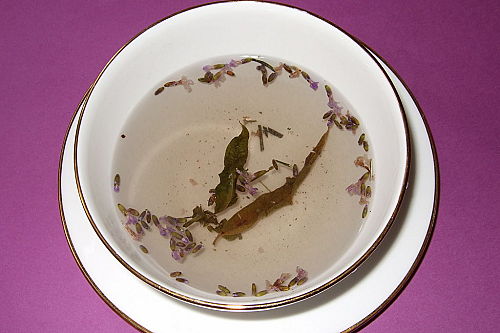
Globe Amaranth and Verbena Flower Tea
traditionally used to calm wind-heat headaches and relieve tension
Why people make this tea
Globe amaranth (qian ri hong) is one of those flowers that refuses to fade — it holds its vivid color for a remarkably long time after cutting, which is how it earned the name “thousand-day red.” In traditional Chinese food therapy, it is associated with clearing liver heat, calming coughs, and dispersing nodules. Paired with verbena (ma bian cao), which in European herbal traditions has long been used for nervous tension and fatigue, the two together make a pleasantly floral tea that many people reach for when they feel a headache coming on alongside a sense of heat or tension — the kind that feels like pressure behind the eyes rather than a dull, cold ache.
Who it suits / who should be cautious
- Suited to those experiencing wind-heat headaches — headaches associated with a feeling of heat, eye discomfort, or pressure, often triggered by stress, late nights, or hot weather
- Also useful for people prone to recurring headaches, or those with eye strain from prolonged computer use
- This tea is cooling in nature; for cold-type headaches — located at the back of the head, associated with chills — this formula is not appropriate; see Bro Niu’s note below for an alternative
- Suitable for adults; add honey to taste for a pleasanter flavor
Why these ingredients (the food-therapy logic)
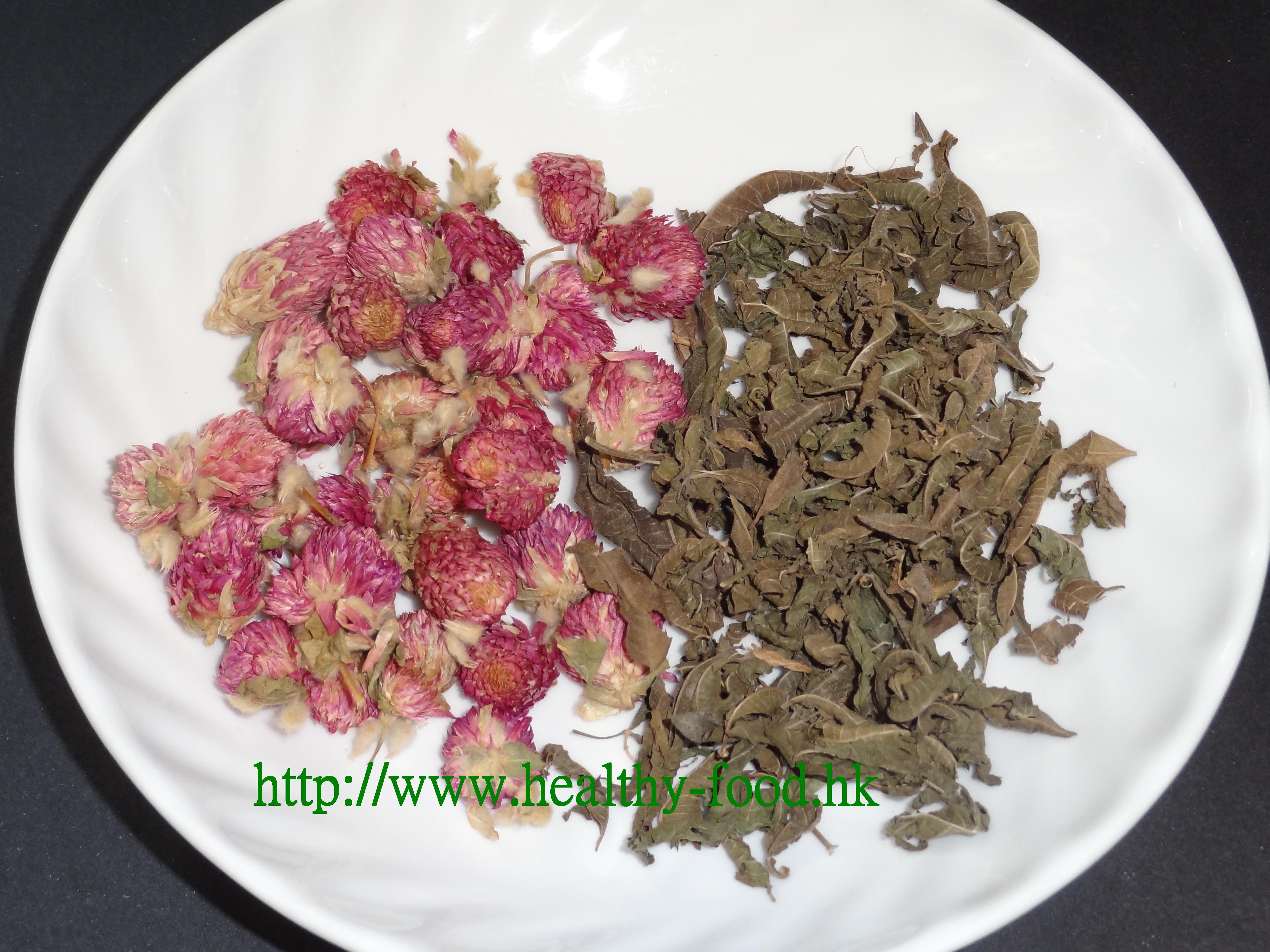
- Globe amaranth flowers (qian ri hong, Gomphrena globosa): Traditionally used in Chinese food therapy to clear liver heat, resolve phlegm-heat nodules, stop coughs, and calm wheezing; also associated with relief of headaches due to wind and heat, eye discomfort, and childhood pertussis; the bright flowers make for a visually appealing tea
- Vervain / verbena (ma bian cao, Verbena officinalis): In both European and East Asian traditions, verbena has been associated with calming the nervous system, relieving mental fatigue, and easing tension; in Chinese medicine it is also used to support circulation and clear wind-heat
Ingredients (1 pot)
| Ingredient | Amount | Notes |
|---|---|---|
| Dried globe amaranth flowers | ~9 g (3 qian) | |
| Dried verbena (ma bian cao) | ~15 g (5 qian) | |
| Honey | to taste | Add after steeping |
| Water | enough to fill the teapot | Boiling |
Method
- Place the globe amaranth and verbena in a teapot or steeping vessel.
- First rinse the herbs briefly with boiling water (pour over and discard immediately) to clean them.
- Pour fresh boiling water over the herbs and steep for about 7 minutes.
- Strain and drink. Add honey to taste if desired.
- The herbs can be re-steeped 1–2 more times.
Bro Niu’s tips
- This tea is particularly well suited for those who often experience a “heavy head” feeling, or a recurring sensation of pressure or heat around the temples and eyes.
- Both globe amaranth flowers and dried verbena are available at herbal flower tea shops (hua cao cha dian).
- This tea addresses wind-heat headaches. For cold-type headaches (located at the back of the head, with sensitivity to cold), the approach is different: try Sichuan lovage root (chuan xiong) 3 qian, ginger 3 slices, and a fish-head broth, which is warmer and more appropriate.
Community questions answered (selected)
-
Q (man ling): Is this tea suitable for wind-cold headaches too? Bro Niu: For wind-cold headaches, this tea is not the right choice. Instead, use chuan xiong (Sichuan lovage, Ligusticum chuanxiong) 3 qian, bai zhi (Angelica dahurica) 3 qian, and fresh ginger 3 slices — cook these with a fish head. That formula is warming and better suited to cold-type head pain.
-
Q (PING): I often have pain on the left side or back of my head — what kind of headache is that? Bro Niu: This could be a migraine or tension-type headache. I would recommend seeing a Traditional Chinese Medicine practitioner for a proper assessment. In the meantime, you can try this flower tea, or make a broth with tian ma (gastrodia root, Gastrodia elata) and huang jing (Solomon’s seal, Polygonatum sibiricum) and walnut. However, if the pain is persistent, please see a doctor.
Published February 5, 2013 · Adapted and translated for Nourilo from a traditional home-kitchen recipe. Approx. 3 min read.