Soups
Fresh Chinese Yam and Guava Pork Soup
Traditionally associated with supporting healthy blood sugar and blood pressure levels
Why people make this soup
Guava has always been a common tropical fruit, and the larger varieties available at Asian grocers are particularly well suited to soups. Unlike the intensely fragrant pink-fleshed variety, these have a subtler sweetness and a firm, crisp texture that holds up beautifully in the pot. What makes guava particularly interesting from a food-therapy perspective is its potassium content: a single guava contains roughly 60% more potassium than a banana, making it notably beneficial for people with low potassium levels. Combined with fresh Chinese yam — a classic ingredient in recipes aimed at moderating blood sugar and supporting the spleen and lungs — this simple soup creates a genuinely nutritious combination that is also light enough to enjoy regularly.
Who it suits / who should be cautious
- Suitable for most adults and older children; particularly helpful for those looking to support healthy blood sugar and blood pressure levels
- Good for low potassium, cardiovascular support, and spleen strengthening
- Those with constipation should drink the soup but eat fewer of the solid ingredients, as guava and yam can slow bowel movement
- Mild and pleasant enough for everyday family use
Why these ingredients (the food-therapy logic)
- Fresh Chinese yam (xian huai shan): One of the most frequently used food-therapy ingredients for metabolic health; classically associated with strengthening the spleen, supporting lung function, and helping moderate blood sugar; contains mucilaginous compounds (mucin) that are protective of the gut lining
- Guava (ba le / fan shi liu): Exceptionally high in potassium and vitamin C; traditionally associated with supporting healthy blood sugar and blood pressure; also supports cardiovascular health through its antioxidant-rich flesh
- Lean pork: Provides a light, clean protein base; low in fat compared to other meat choices
- Ginger: Supports digestion and adds gentle warmth to balance the mild, neutral nature of the other ingredients
Ingredients (4 bowls)
| Ingredient | Amount | Notes |
|---|---|---|
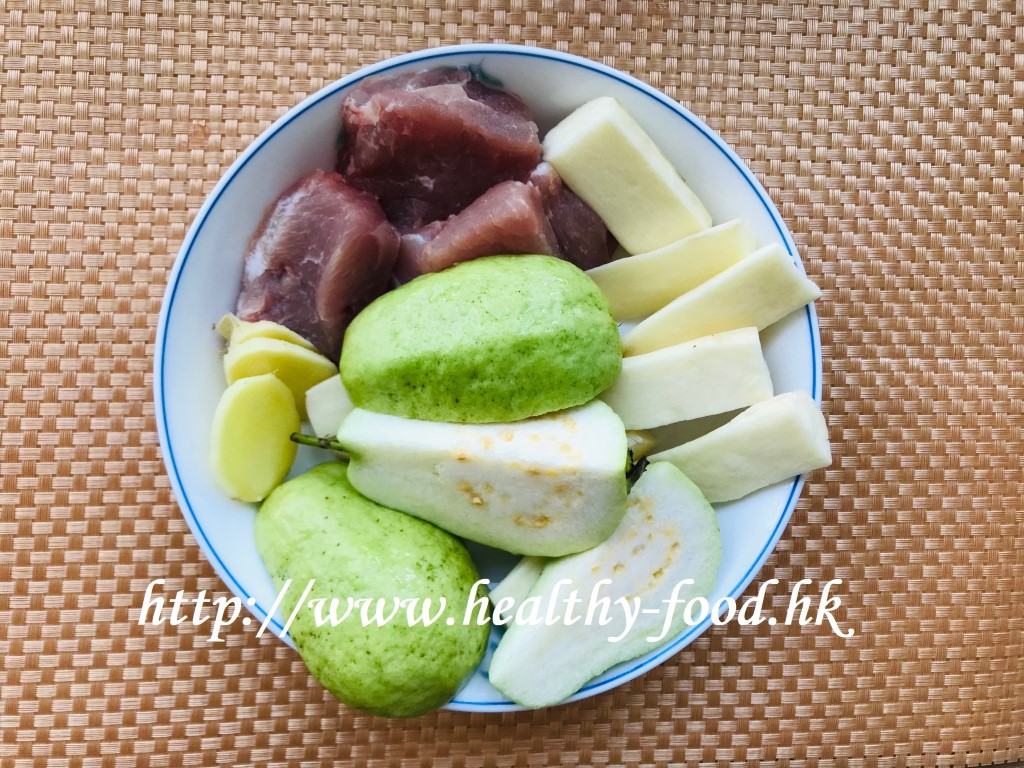
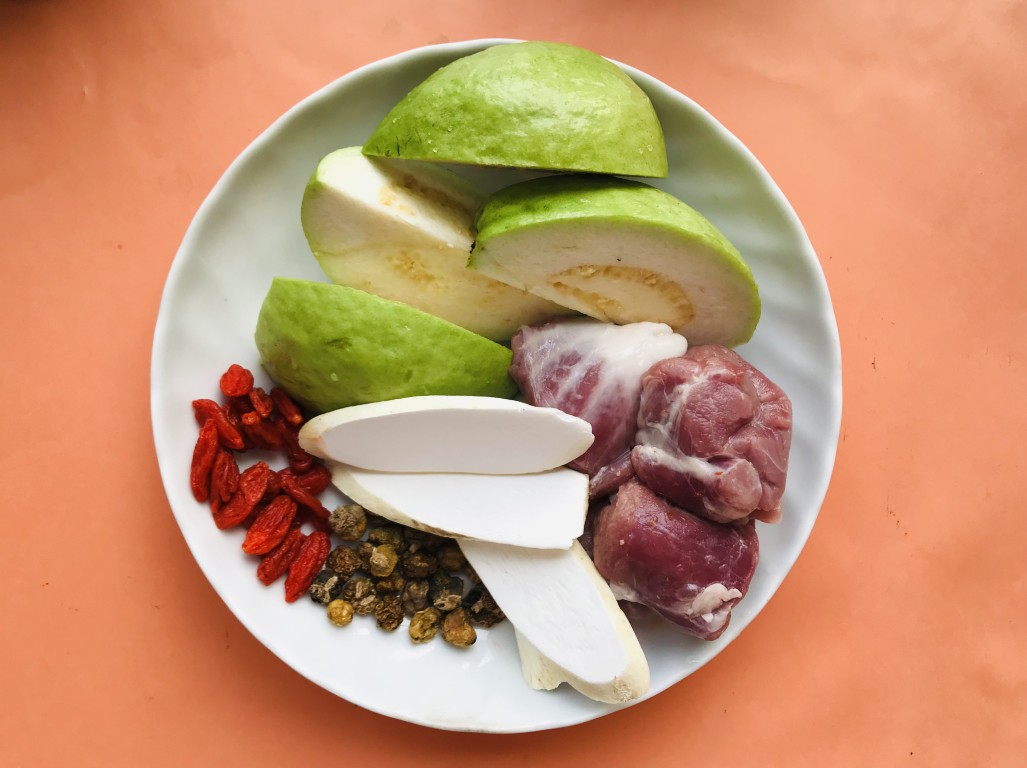
| Fresh Chinese yam (xian huai shan) | ~300 g | Peel and cut into chunks; handle with gloves if your skin is sensitive to yam mucus |
| Guava | 2 medium | Wash and cut into quarters or large chunks |
| Fresh ginger | 3 slices | |
| Lean pork | ~300 g (half jin) | Slice thinly; blanch briefly in boiling water to remove impurities |
Method
- Peel the fresh yam and cut into large chunks.
- Wash the guava and cut into large pieces — no need to peel.
- Slice the lean pork thinly and blanch briefly in boiling water; discard the water and rinse.
- Combine all ingredients in a pot with 8 bowls of water.
- Bring to a full boil, then reduce to a gentle simmer.
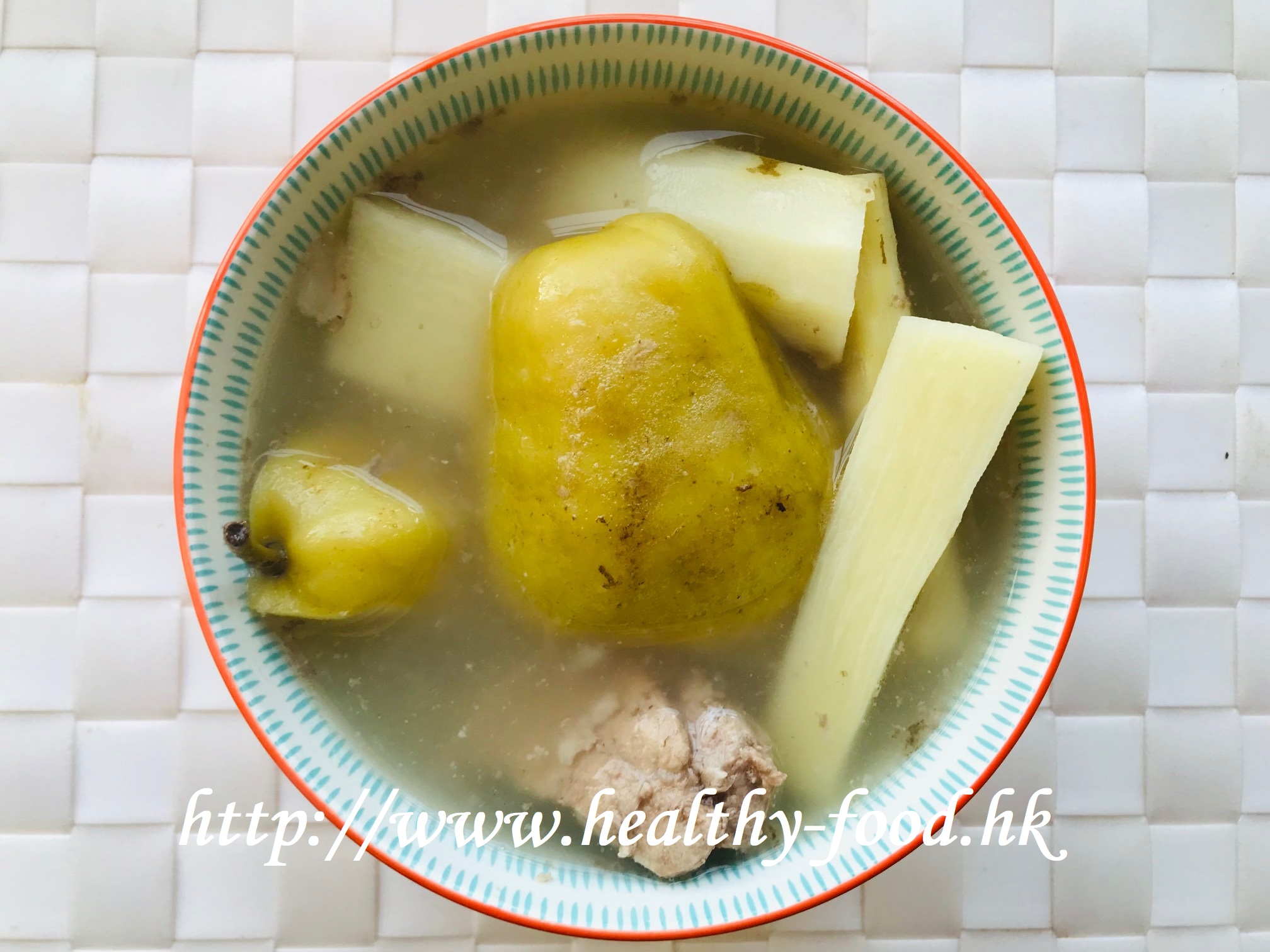
- Cook for 1.5 hours until the yam is soft and the broth is lightly fragrant.
- Serve warm; drink the broth and eat the yam and pork. (Those with constipation may prefer to drink mainly the broth and eat less of the guava and yam.)
Bro Niu’s tips
This soup has a clean, delicate fragrance and is mild enough for the whole family. It also supports general cardiovascular health, not just blood sugar and blood pressure. One practical note: those who tend toward constipation should enjoy the soup without eating too much of the solid ingredients, as both yam and guava have some binding effect on the bowels.
Community questions answered (selected)
-
Q (Rosita): My friend has diabetes and was told her blood sugar spiked after eating yam. Is this soup suitable for her, or should the yam be replaced? Bro Niu: (No direct reply was recorded to this specific question in the source. General guidance from Bro Niu: fresh yam used in soups typically has a gentler effect on blood sugar than eating yam directly as food, as the concentration in soup is lower. Those with tightly managed blood sugar should check their response individually or consult their doctor.)
-
Q (an): Four years after giving birth I still feel exhausted every day. Tests show nothing abnormal. What would help? Bro Niu: Persistent fatigue after childbirth often points to spleen deficiency. Try a soup with fresh yam, lotus seeds, poria mushroom (fu ling), and Gordon Euryale seeds (qian shi), plus some lily bulb and red dates cooked with lean pork. Take 2–3 times a week to gradually rebuild digestive energy and reduce fatigue.
Published December 11, 2021 · Adapted and translated for Nourilo from a traditional home-kitchen recipe. Approx. 3 min read.