Soups
Fresh Smilax Root, Kudzu and Green Mint Soup
traditionally used to dispel wind-heat, clear dampness, and support the body's response to skin-related heat toxins

Why people make this soup
Shingles — known colloquially as “living snake” (sheng she) in Cantonese — is caused by the varicella-zoster virus reactivating in the body, typically during periods of low immunity, chronic stress, or physical exhaustion. While it was once mainly seen in older adults with weakened constitutions, Bro Niu notes that it has become increasingly common in younger and middle-aged people in recent years, likely due to long work hours, high stress, and dietary habits that tend to create what Chinese food-therapy calls a “damp-heat” imbalance.
In traditional Chinese medicine, the underlying pattern associated with shingles is excess heat-toxins combined with dampness in the body. This three-ingredient soup — fresh smilax root, kudzu, and spearmint — has long been used in Cantonese households as a supportive herbal drink to help the body clear heat and dampness. The flavour is light and refreshing. Those who cannot find fresh smilax can add a handful of mung beans (green beans) as an alternative.
Who it suits / who should be cautious
- Suited to people who are prone to heat-related skin conditions, or as a supportive drink during and after a shingles episode (alongside medical treatment).
- People with G6PD deficiency can drink this version using spearmint (fragrant herb / xiang hua cai). If substituting true peppermint leaves (bo he ye), G6PD patients should avoid the concentrated essential oil form but the fresh leaf in soup is generally considered acceptable — check with your doctor.
- This soup is cooling in nature; those with a clearly cold constitution or digestive weakness should drink it in moderation (1–2 times per week) rather than daily.
- Dietary advice during a shingles episode: avoid spicy, fried, and highly stimulating foods; reduce sweets and fatty foods. Avoid “stimulating foods” (fa wu) such as bamboo shoots, shrimp, crab, goose, rooster meat, pineapple, and mango.
Why these ingredients (the food-therapy logic)
- Fresh smilax rhizome (tu fu ling, Smilax glabra): A key herb in Cantonese herbal cooking, traditionally associated with clearing damp-heat toxins from the skin and joints. Often used in soups targeting skin conditions and inflammation.
- Kudzu root (fen ge, Pueraria lobata): A root vegetable and medicinal herb; in traditional use it is associated with dispersing wind-heat, promoting fluid production, and helping to relax tense muscles. Adds natural sweetness to the broth.
- Green spearmint / fragrant herb (xiang hua cai / lu bo he): Also known as spearmint or garden mint. Traditionally considered to have a light dispersing quality that helps relieve wind-heat from the surface of the body. Fresh mint leaves are considered even more effective if available.
Ingredients (3–4 bowls)
| Ingredient | Amount | Notes |
|---|---|---|
| Fresh smilax rhizome (tu fu ling) | 75 g (2 liang) | Peeled, sliced |
| Fresh kudzu root (fen ge) | 150 g (4 liang) | Peeled, sliced |
| Green spearmint / xiang hua cai | 75 g (2 liang) | Rinsed; use fresh mint leaves if available for stronger effect |
| Water | 7 bowls | Reduces to 3–4 bowls |
| Lean pork (optional) | To taste | Add if making for the whole family |
Method
- Peel the fresh smilax and kudzu root; slice both into pieces of similar thickness.
- Rinse the spearmint (xiang hua cai) thoroughly.
- Place the smilax and kudzu into a pot with 7 bowls of water. Bring to a boil, then reduce to a medium-low simmer and cook for 2 hours.
- Add the spearmint and bring back to a boil. Let it roll for 5 minutes.
- The soup should now measure 3–4 bowls. Serve and drink while warm.
Bro Niu’s tips
Green spearmint (xiang hua cai) has a liver-soothing and wind-dispersing quality. If you can find fresh mint leaves (bo he ye), using those instead will give an even stronger heat-clearing effect. If you cannot find spearmint, substitute with 38 g (1 liang) of mung beans and cook them in from the beginning — mung beans also help clear heat and toxins. Spearmint (xiang hua cai) is available at Chinese or Asian grocers and online. For a family-sized pot, add lean pork to the soup and double all quantities. This soup can be drunk both as prevention for people who are prone to heat-related skin flare-ups, and as a supportive measure during active illness alongside medical care — allow at least two hours between this soup and any prescribed medication.
Community questions answered (selected)
-
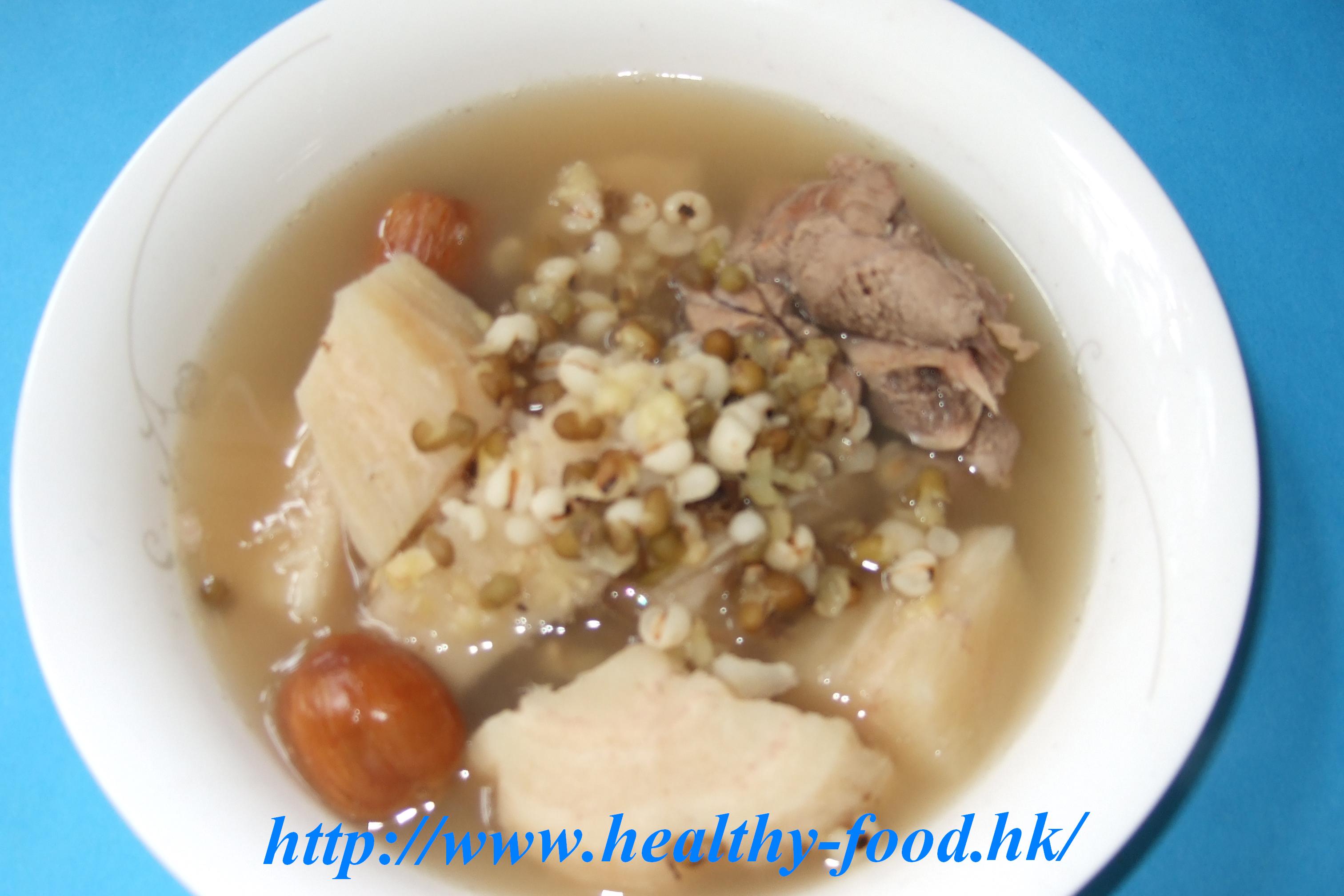
Q (Candy, reader): I found three food-therapy soups for shingles including this one. Can they all be drunk while actively having shingles, or are they just for prevention? Bro Niu: You can drink this soup during an active shingles episode. If you are taking medication, wait 2 hours after the medication before drinking. A soup made with fresh purslane (ma chi xian), mung beans and Job’s tears (yi mi) is also helpful for reducing pain — aim for 2–3 servings per week.
-
Q (Kathy, reader): My husband had shingles and has finished treatment; the blisters have crusted but the marks remain and he still feels itching and pain. Any food therapy? Bro Niu: Try fresh purslane (2 liang), mung beans and raw Job’s tears (each 1 liang), 2 honey dates — cook the beans and dates in 5 bowls of water for 40 minutes first, then add the purslane and cook a further 20 minutes. Drink for 4–5 consecutive days. It helps with heat-clearing, inflammation and the itching. He can eat mushroom-steamed chicken; lightly steamed fish (scaled varieties only) is fine, but avoid scaleless fish like catfish, ribbonfish or eel, and avoid triggering foods such as bamboo shoots, shrimp, crab, goose, and rooster.
-
Q (Hannah, reader): How many times a week should this soup be drunk? Can it be drunk during menstruation? Bro Niu: (No direct reply found in the record for this question — for general guidance on a cooling herbal soup like this, 2–3 times per week during a flare-up is typical; during menstruation, check with a TCM practitioner as some cooling herbs may not be ideal.)
Published April 22, 2016 · Adapted and translated for Nourilo from a traditional home-kitchen recipe. Approx. 5 min read.