Soups
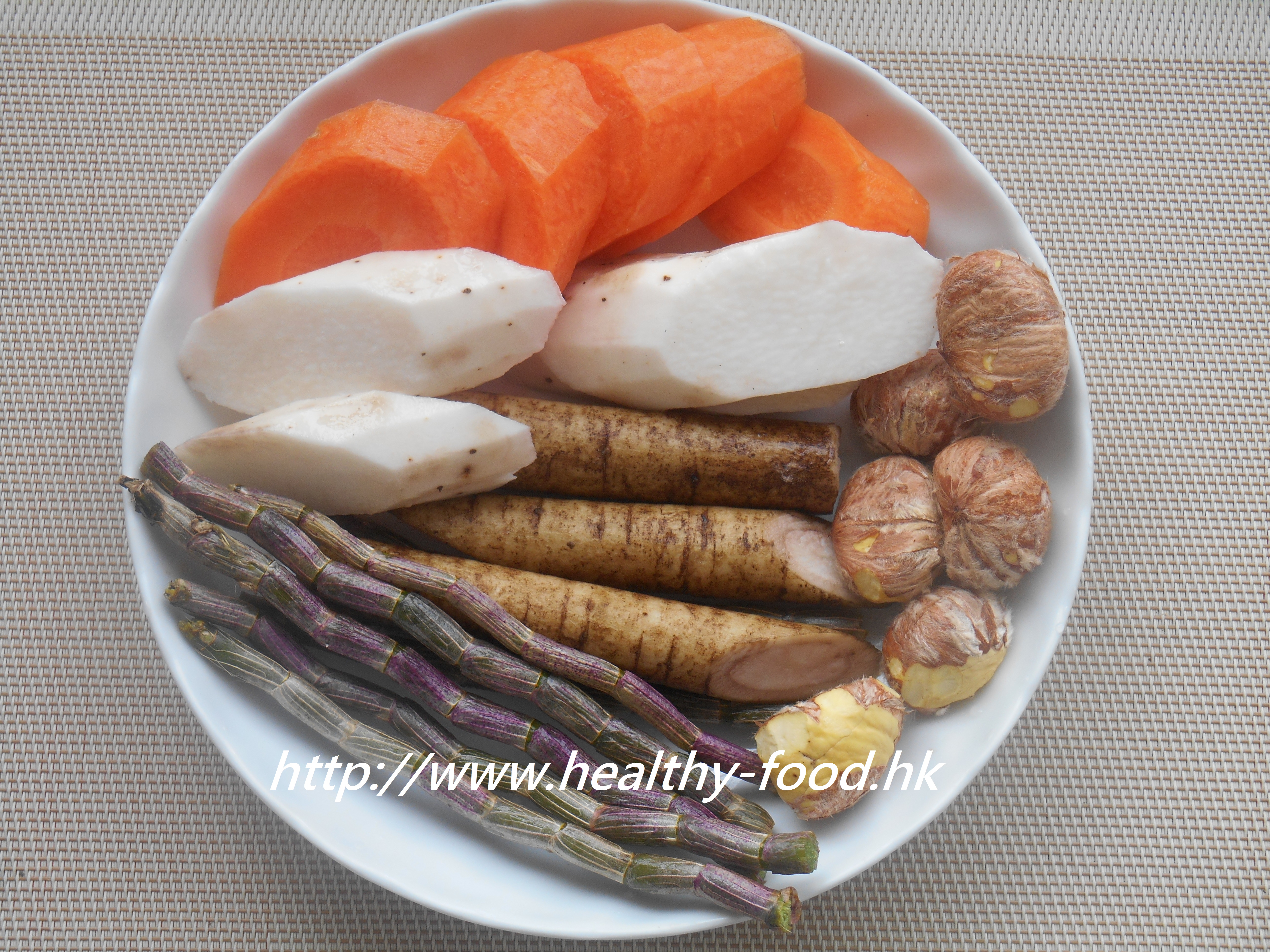
Fresh Dendrobium, Huai Shan, Burdock and Chestnut Soup
Traditionally used to nourish the spleen and kidney, support blood sugar balance, and promote joint and cardiovascular health
Why people make this soup
Bro Niu picked up a bunch of fresh tie pi shi hu (iron skin dendrobium) at a local herb market — sturdy, deep purple-green stems that looked full of vitality. He was struck by how different it tasted from the dried and processed forms: subtly fragrant, with a pleasant green flavour. This particular variety, Dendrobium officinale, is prized for its high content of polysaccharides and is traditionally regarded as one of the most potent yin-nourishing herbs available as fresh food. Paired with fresh huai shan, burdock, carrot, and chestnuts — all of which have long histories in Chinese food therapy for specific wellness benefits — the result is an unusually complete everyday tonic soup. Everything in this pot earns its place.
Who it suits / who should be cautious
- Suitable for those with a weak spleen or stomach, diabetes, joint stiffness, osteoporosis, or concerns about healthy ageing
- Suitable for pregnant women, new mothers, the elderly, and children with a weaker constitution
- Not recommended during active colds, fever, or any acute illness
- Those with blood pressure on the lower side can add ginger and red dates to warm the brew
Why these ingredients (the food-therapy logic)
- Fresh dendrobium (xian shi hu / tie pi shi hu, Dendrobium officinale): One of the most prized yin-nourishing herbs in Chinese medicine when used fresh. Contains high levels of active polysaccharides (particularly from tie pi variety) associated with antioxidant activity and supporting gastric and immune function. Also traditionally used for eye health. Dried alternative: regular chuan shi hu (3 qian) or huoshan shi hu (3 qian)
- Fresh Chinese yam (xian huai shan): The sticky mucilaginous quality of fresh huai shan is particularly associated with supporting vascular health and blood sugar balance; it also nourishes the lungs and spleen
- Burdock root (niu bang): One of Bro Niu’s favourite undersung ingredients — traditionally associated with blood sugar support, mild blood pressure support, kidney and bowel wellness, and gentle detoxification. Burdock is thought to bind and help remove certain heavy metals from the body
- Carrot (hong luo bo): Rich in beta-carotene; supports eye health, immune function, and digestion; adds natural sweetness to the broth
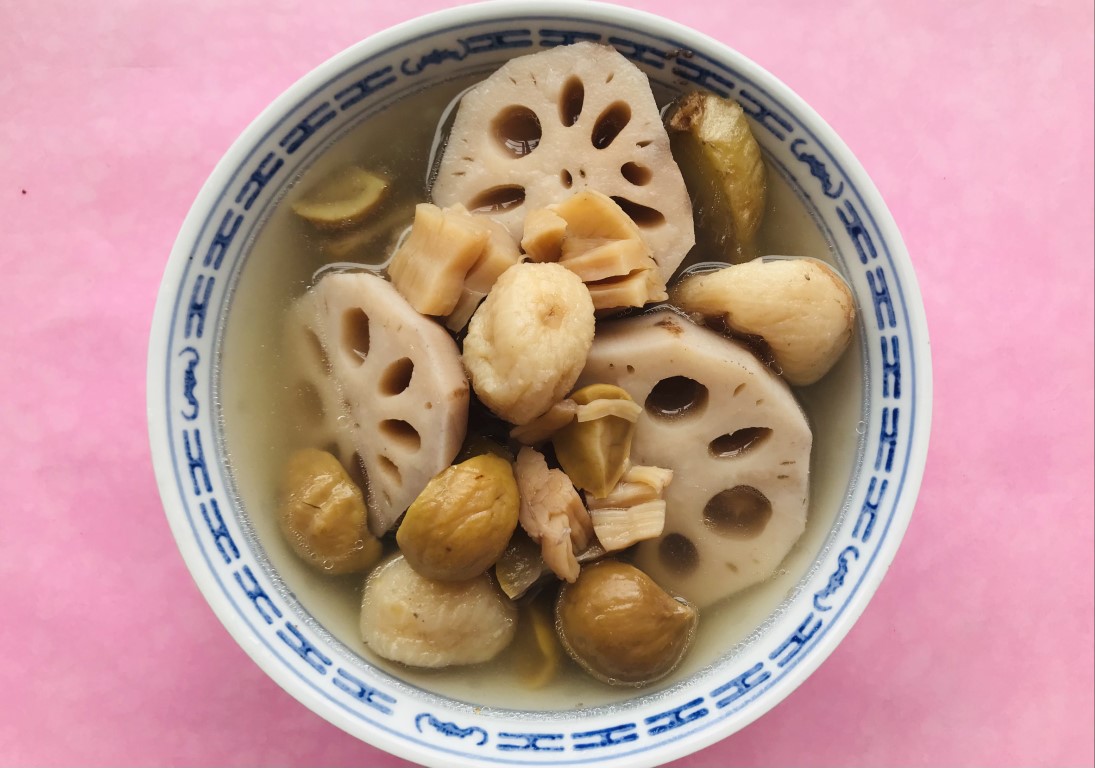
- Chestnuts (li zi): Support the kidneys and spleen; traditionally used to strengthen bones and support cardiovascular health; add a pleasant earthy sweetness
Ingredients (4–5 bowls / 3–4 servings)
| Ingredient | Amount | Notes |
|---|---|---|
| Fresh dendrobium stem (xian shi hu) | ~37 g (1 liang) | Rinse and cut into sections; substitute with 3 qian dried if unavailable |
| Fresh Chinese yam (xian huai shan) | ~112 g (3 liang) | Peel and cut into chunks |
| Burdock root (niu bang) | ~112 g (3 liang) | Scrub skin; do not need to peel; cut into chunks |
| Carrot (hong luo bo) | 1 medium | Peel and cut into chunks |
| Chestnuts (li zi) | ~112 g (3 liang) | Blanch briefly in boiling water to loosen skins; peel |
Method
- Rinse the fresh dendrobium and cut into 4–5 cm sections.
- Peel the fresh huai shan and carrot; cut into chunks.
- Scrub the burdock root with a brush but leave the skin on; cut into chunks.
- Drop chestnuts into boiling water for a moment, then peel off the outer shell and inner skin.
- Combine all ingredients in a pot with 8 bowls (about 2 litres) of cold water.
- Bring to a boil, skim any foam, then simmer for 1 hour and 30 minutes.
- Serve warm, drinking the broth and eating the ingredients.
Bro Niu’s tips
This is a naturally sweet, deeply nourishing soup that suits almost everyone. Pregnant women, new mothers, the elderly, and children with a weaker constitution are all welcome at the table. If fresh dendrobium is not available, a regular dried variety works too — try chuan shi hu or jin hua shi hu. Burdock does not need to be peeled — a good scrub with a brush is all it needs. If you want to add a protein base, pork shin works well. Avoid during colds and fever.
Community questions answered (selected)
-
Q (匿名访客): Can I use dried dendrobium instead of fresh? Bro Niu: Yes, you can use 3 qian of dried dendrobium.
-
Q (Susanna): Can I leave out the burdock? What else can I substitute with? Bro Niu: You can leave the burdock out. Adding some snow fungus (xue er) would make it more moistening and good for the skin.
-
Q (匿名访客): I have mouth sores constantly, tooth-gum swelling, and have been diagnosed with both liver and pancreas inflammation. What soup would help? Bro Niu: Fresh dendrobium can be paired with sha shen (adenophora), yu zhu (Solomon’s seal), and mai dong (ophiopogon) — 3 qian each — to make a soup with lean pork. This nourishes yin and clears heat effectively. You can also juice bitter melon with apple — this is beneficial for liver inflammation and pancreatitis.
Published April 7, 2018 · Adapted and translated for Nourilo from a traditional home-kitchen recipe. Approx. 4 min read.