Herbal & Flower Teas
Black Mulberry, Wolfberry and Toasted Wheat Tea
traditionally associated with nourishing the liver, supporting eye health, calming the mind and promoting healthy sleep
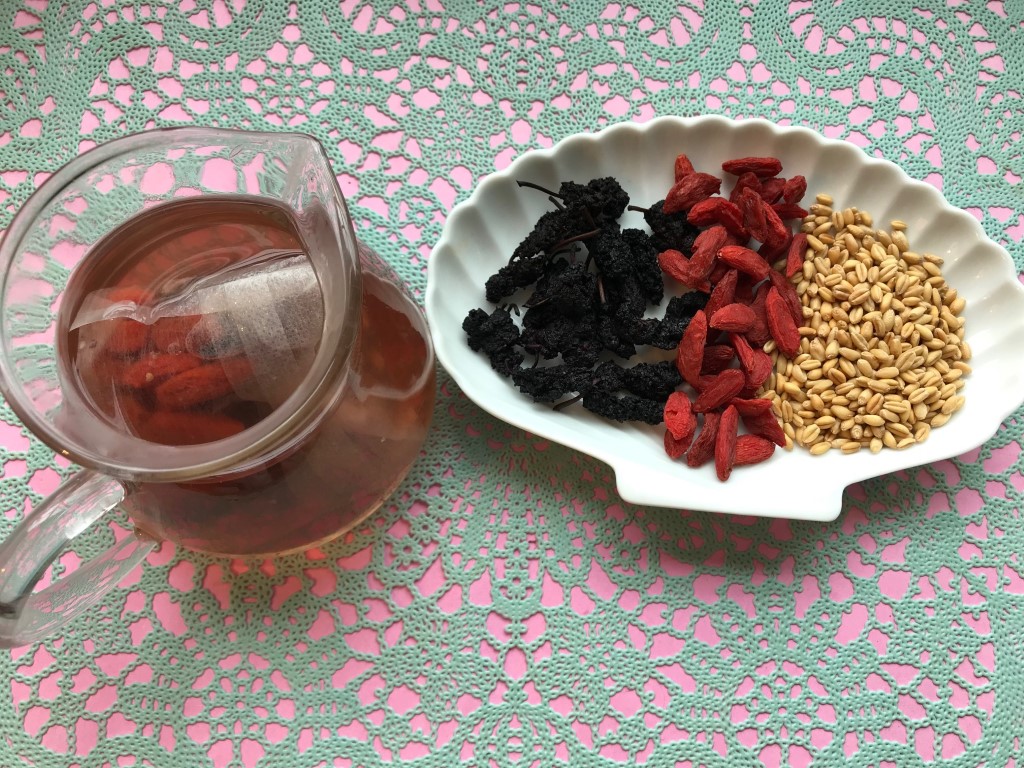
Why people make this tea
Dried black mulberries — sometimes labelled as hei sang zao (black mulberry dates) at Chinese herb shops — are a remarkably versatile ingredient: they store easily, can be eaten as a snack, steeped as a tea or added to soups, and concentrate the berry’s notable nutritional profile. Black mulberries are exceptionally rich in anthocyanins and the trace element selenium, both associated with antioxidant protection and the inhibition of cellular damage. In traditional food therapy, they nourish yin, enrich the blood, support the liver and kidneys, and are thought to be particularly beneficial for the eyes and the skin. Paired with wolfberries (arguably the most well-known eye-supporting food-therapy ingredient) and toasted wheat grains (which have a calming, heart-nourishing quality), this tea is a gentle daily ritual for screen workers, those with restless nights or anyone wanting to tend to their eyes and nerves with something pleasant to drink.
Who it suits / who should be cautious
- Suitable for most adults and children; pleasant natural sweetness makes it easy to drink daily
- Particularly suitable for those spending long hours on computers or devices, or experiencing eye redness, irritation, restlessness or disturbed sleep
- People with diabetes should be cautious — dried mulberries are high in natural sugars; drink only small amounts and monitor blood sugar response
- Suitable during menstruation
Why these ingredients (the food-therapy logic)
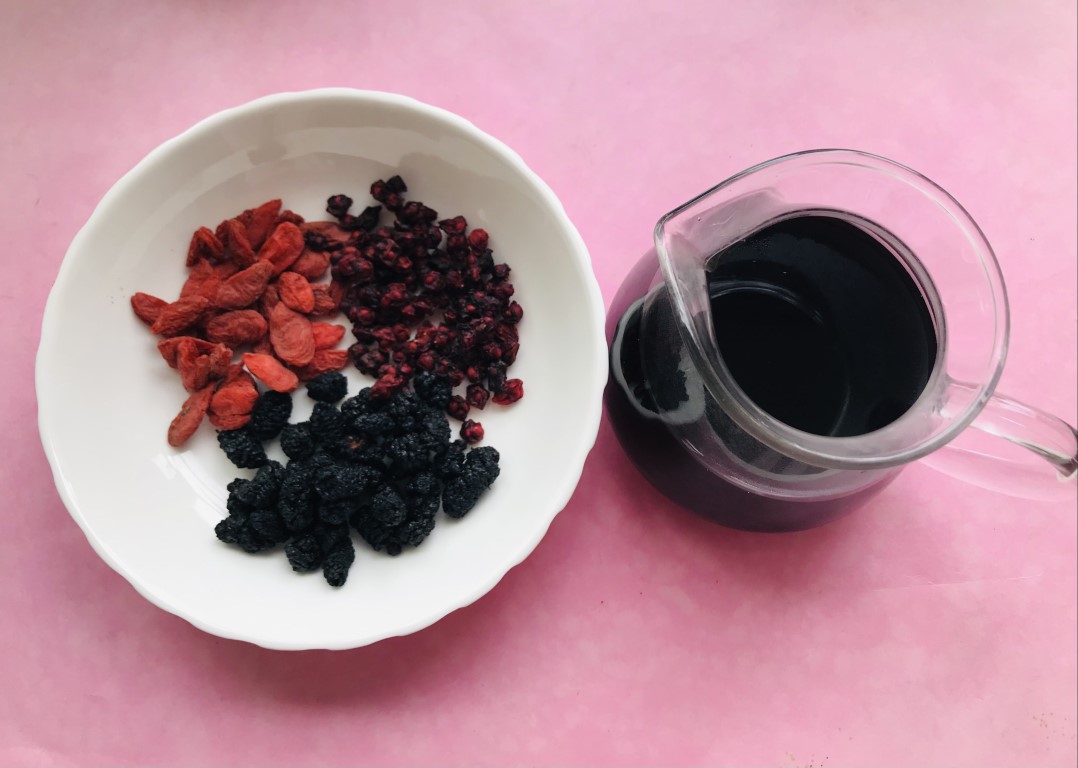
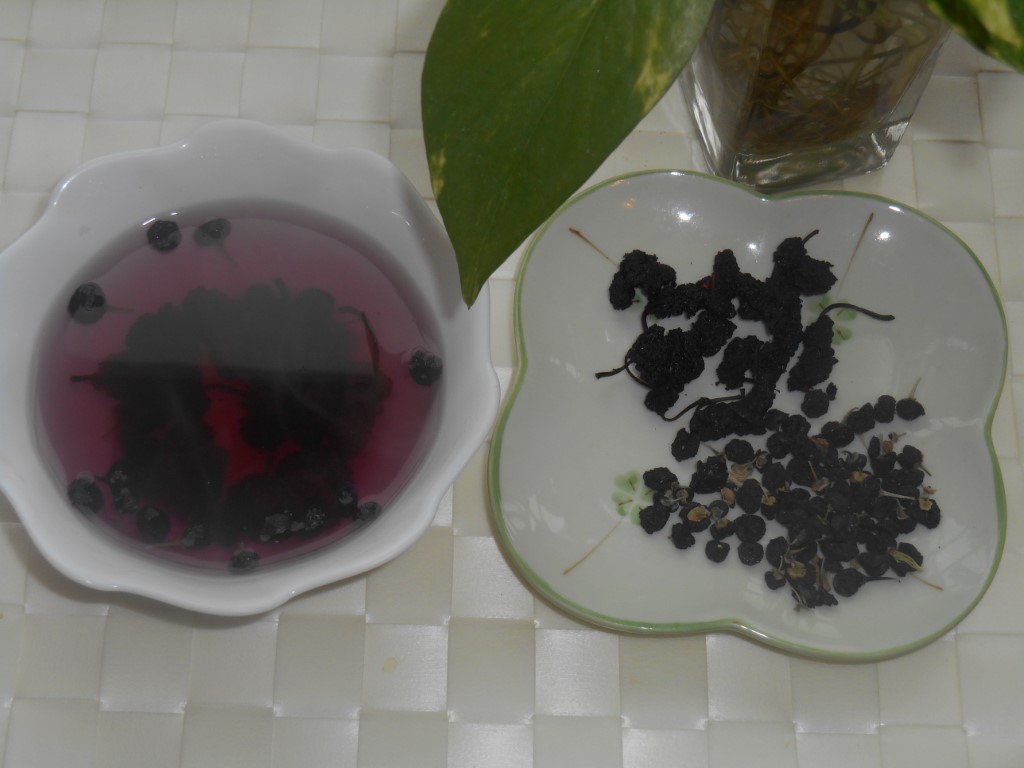
- Dried black mulberries (hei sang shen): Rich in anthocyanins (the same compounds that give blueberries their reputation) and selenium; in traditional food therapy, associated with nourishing liver and kidney yin, enriching blood, supporting eye health, moistening the skin and promoting healthy hair; considered slightly sweet and cooling
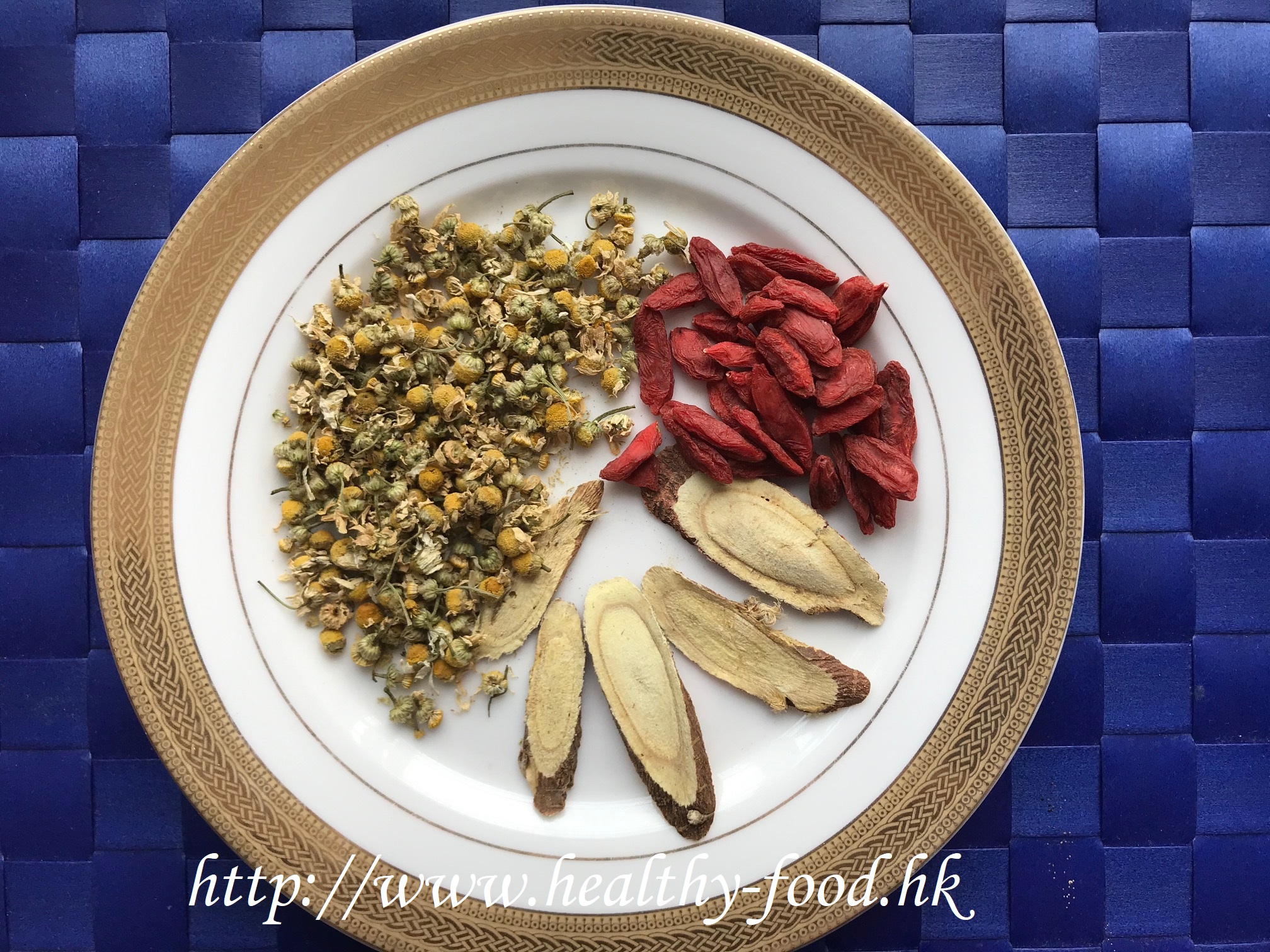
- Wolfberries / goji berries (gou qi zi): One of the most widely-used liver and kidney tonics in Cantonese food therapy; strongly associated with supporting vision and brightening the eyes; rich in zeaxanthin and beta-carotene in nutritional terms
- Toasted wheat grains (chao xiang mai mi): In Chinese food therapy, wheat is associated with calming the mind, nourishing the heart and relieving restlessness and anxiety; toasting it first enhances the flavour and the warming quality
Ingredients (~3 cups)
| Ingredient | Amount | Notes |
|---|---|---|
| Dried black mulberries (hei sang shen) | ~38 g (1 liang) | Rinse briefly; available at Chinese herb shops as “hei sang zao” |
| Goji berries (gou qi zi) | 1 tablespoon | Rinse briefly |
| Toasted wheat grains (chao xiang mai mi) | ~38 g (1 liang) | Rinse briefly; pre-toasted variety from herb shops works well |
| Water | 5–6 bowls (~1.25–1.5 L) |
Method
- Rinse all three ingredients briefly under cold water.
- Place everything in a pot with 5–6 bowls of water.
- Bring to a boil, then reduce heat and simmer for 30 minutes until reduced to about 3 bowls.
- Serve warm. The mulberries and wolfberries are pleasant to eat directly from the cup.
Bro Niu’s tips
This tea is naturally sweet and easy to enjoy every day — old and young alike will find it agreeable. Dried black mulberries are high in natural sugar, so people with diabetes should keep their intake moderate and pay attention to how their body responds. The berries can also be eaten as a standalone snack or added to other soups and congees. If making an “eight treasure tea” (ba bao cha) blend at home, dried mulberries make an excellent component alongside hawthorn, longan, wolfberry, rose buds, chrysanthemum and red dates — use roughly equal small amounts of each.
Community questions answered (selected)
-
Q (B Team Leader): I would like to make an eight-treasure tea (ba bao cha) after meals using hawthorn, black mulberries, goji berries, longan, chrysanthemum, rose buds and red dates. What amounts should I use? I am 52, female, with anaemia, heavy periods, thyroid cysts, uterine fibroids, late nights, weak liver and spleen, and constipation. Bro Niu: For a daily wellness tea, the amounts do not need to be precise — use a small amount of each ingredient, for example: 3 dried roselle flowers, 1 teaspoon each of hawthorn, mulberries, wolfberries and longan, 1 teaspoon chrysanthemum, 1 teaspoon rose buds and 3–4 sliced red dates. Drink for two weeks and see how your body feels.
-
Q (英姐): My grandmother (76) just had a corneal transplant. What soups or foods can help her eyes recover? Bro Niu: You can go to a Chinese herb shop and ask for golden cicada flowers (jin chan hua), rui ren rou and wolfberries — cook these with carrot and pork liver soup. That combination is traditionally associated with supporting eye recovery. Give her 2–3 servings a week: use golden cicada flowers (a small amount), rui ren rou (3 qian), wolfberries (3 qian) and other ingredients to taste, with 7 bowls of water cooked to 4 bowls. Give the patient 2 bowls a day.
-
Q (Sum): My middle-aged husband has bilateral knee pain diagnosed as degenerative arthritis. Any food therapy suggestions? Bro Niu: Lemongrass (xiang mao, 6 stalks), green apple (2, de-seeded, with skin on), fresh ginger (5–6 slices) and a little rock sugar — use 5 bowls of water and cook to 2 bowls, serve the patient over one day. Continue for 4 servings. This is traditionally associated with helping cartilage and relieving wind in the channels. Very tasty too.
Published May 12, 2022 · Adapted and translated for Nourilo from a traditional home-kitchen recipe. Approx. 4 min read.