Soups
Dried Ginger, Licorice and Poria Soup
Traditionally used to warm the spleen, dispel cold-damp, and ease lower body heaviness and joint discomfort
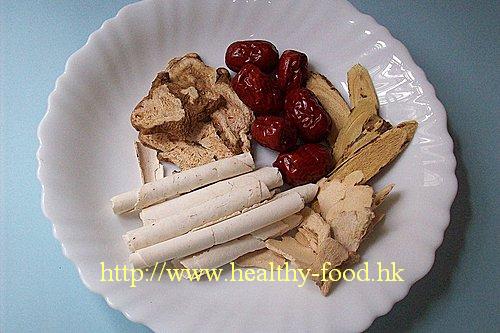
Why people make this soup
When the weather turns damp and chilly, people with a tendency toward achy joints, heavy lower limbs, or a sore lower back often notice their symptoms worsen. In Chinese food therapy, this pattern is described as cold-damp settling in the lower body, and the classic response is to warm and move — using ingredients that are thought to gently drive out the cold and drain excess damp. Bro Niu recommends this soup, based on a well-known traditional formula, for people who feel a persistent heaviness in the lower back and legs, mild swelling of the extremities, and general cold sensitivity in the joints. The formula is warming rather than stimulating, and can be simmered with a piece of lean pork to make it more of a proper meal.
Who it suits / who should be cautious
- Suits middle-aged and older adults with lower back or lower limb heaviness, cold-damp-type joint aches, or mild leg swelling
- Also appropriate for those whose joint discomfort worsens in rainy or cold weather
- Bro Niu notes this formula is most suited to pain centred on the lower body (waist and below), and to cases rooted in a weakened spleen that allows damp to accumulate
- Those with joint pain due to liver-blood deficiency rather than cold-damp will benefit more from a different formula: Bro Niu suggests morinda root (ba ji), eucommia bark (du zhong), stir-fried black beans, and red dates in a pork bone broth
- This soup is warming — those with an active hot constitution or who are running a fever should not use it
Why these ingredients (the food-therapy logic)
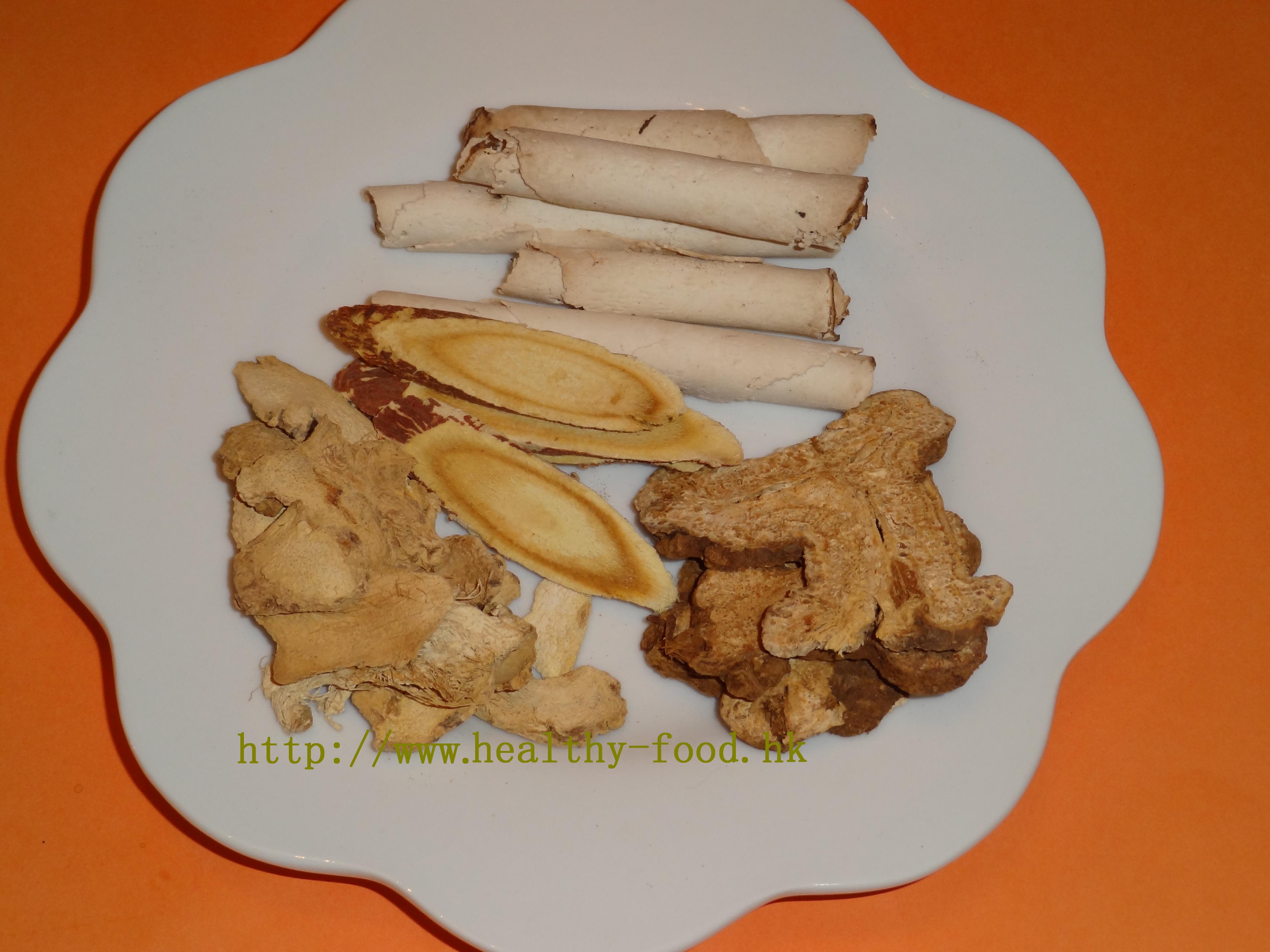
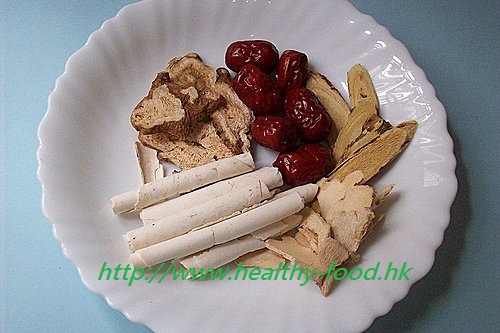
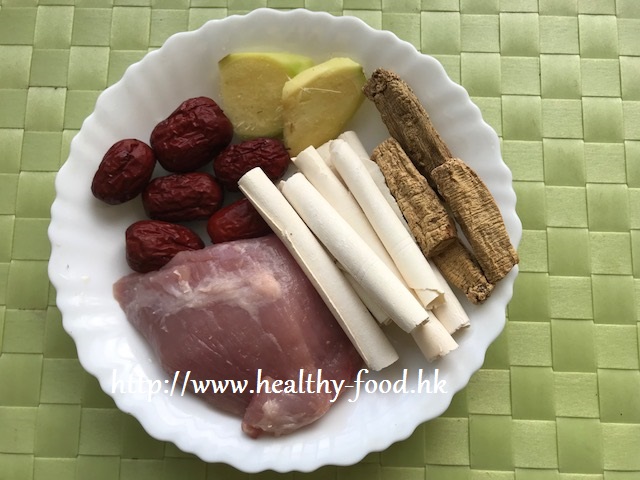
- Dried ginger (gan jiang): Distinctly stronger than fresh ginger at interior warming; in classical Chinese medicine texts, dried ginger is the primary herb for internal cold conditions, particularly those affecting the digestive and lower body functions
- Poria (fu ling): A prized mushroom in classical herbalism, associated with calming the mind, supporting the spleen, and draining damp without being harsh
- White atractylodes (bai zhu): Traditionally used to strengthen the spleen and dry damp; paired with poria, the two are thought to work synergistically
- Licorice root (gan cao): Harmonises the formula, moderates the warming action, and supports the overall digestive function
- Red dates (hong zao): Add gentle sweetness and nourish; soften the formula’s overall character
Ingredients (2 bowls / 1 serving)
| Ingredient | Amount | Notes |
|---|---|---|
| Poria (fu ling) | 19 g (5 qian) | Rinse |
| Licorice root (gan cao) | 8 g (2 qian) | — |
| Dried ginger (gan jiang) | 11 g (3 qian) | Do not substitute fresh ginger |
| White atractylodes (bai zhu) | 19 g (5 qian) | Rinse |
| Red dates | 6 pieces | — |
| Lean pork (optional) | To taste | Makes it heartier |
| Water | 4 bowls (~800 ml) | Reduce to 2 bowls |
Method
- Rinse all dried ingredients.
- Place everything (including lean pork if using) into a pot with 4 bowls of water.
- Bring to a boil, then reduce to a low simmer for about 40 minutes until the liquid reduces to 2 bowls.
- Divide into two portions and drink throughout the day.
- For a course of treatment, Bro Niu suggests drinking 3 times per week for about 2 weeks, then assessing.
Bro Niu’s tips
Dried ginger (gan jiang) is not the same as fresh ginger in terms of its warming power. Bro Niu is emphatic: for this formula, use dried ginger — it has a penetrating interior-warming quality that makes it far more effective for deep cold conditions than fresh ginger. Do not double the amounts of dried ginger and licorice if cooking for more people; Bro Niu advises that just adding one extra measure (not multiplying by 4 for four servings) is enough, as over-dosing dried ginger and licorice can cause dryness and internal heat.
Community questions answered (selected)
-
Q (reader, 2019): Can fresh ginger be used instead of dried ginger? Bro Niu: Dried ginger can treat all kinds of interior cold conditions, and its power is considerably higher than fresh ginger for this purpose. So please use dried ginger for this soup.
-
Q (lanlan, 2015): I am in my thirties. After recovering from a cold, I have had knee and heel pain for over a week. Is this soup suitable for me, and how often should I take it? Bro Niu: If you are experiencing wind-cold and damp-heaviness, this soup can help. Three times a week for two weeks to start — then see how you feel.
-
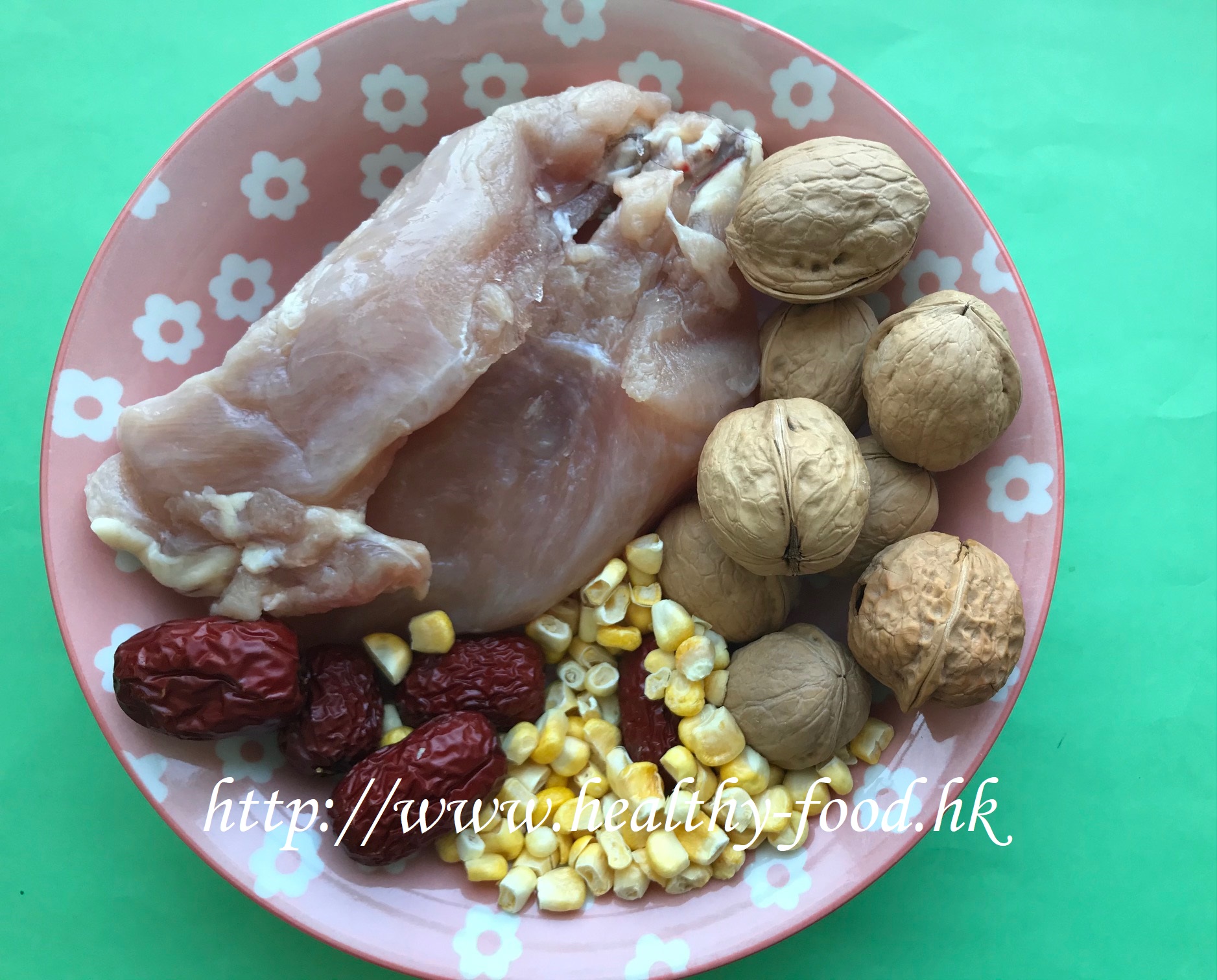
Q (Fun, 2013): After a fall injury to my lower back, I now get pain before rainy weather. I have a cold constitution and sensitive airways. Can I use this soup, and can I use silkie chicken instead of pork? Bro Niu: Yes, silkie chicken is fine. Even if you have white phlegm and sensitive airways, you can use this soup — as long as there is no active fever.
Published October 19, 2012 · Adapted and translated for Nourilo from a traditional home-kitchen recipe. Approx. 4 min read.