Soups
Burdock Root, Phyllanthus (Oil Gan Zi) and Water Chestnut Soup
traditionally associated with supporting healthy blood sugar levels and weight management
Why people make this soup
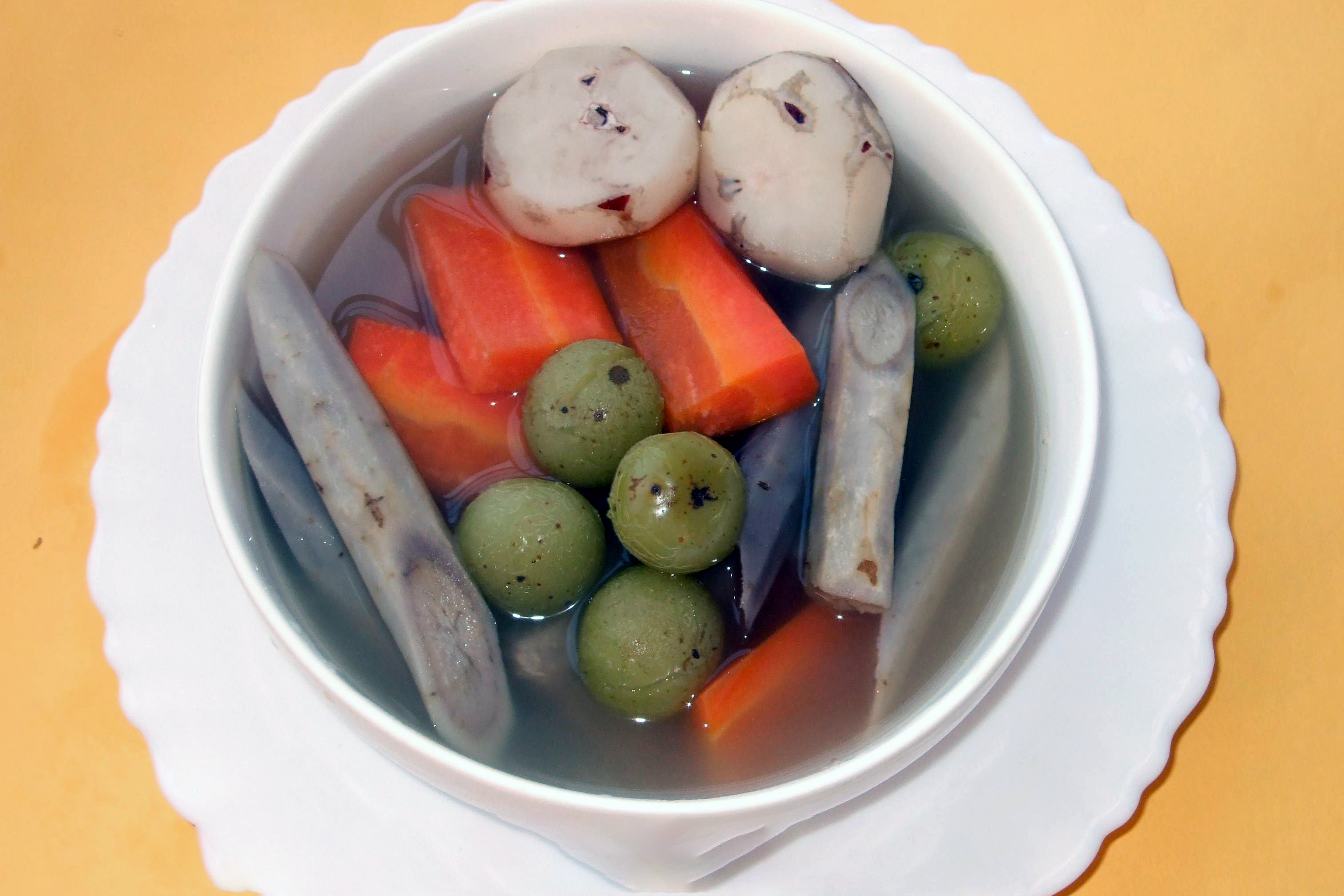
People with diabetes are often told to be careful with sweet fruit — and that is sound advice for high-sugar varieties. But Bro Niu points out that tart, astringent fruits are a different story: sour and astringent-tasting fruits like guava, fresh hawthorn, phyllanthus (Indian gooseberry), and kiwi are actually associated in Chinese dietary tradition with helping to regulate blood sugar. The day this soup came together, Bro Niu had spotted both fresh phyllanthus and newly arrived slender burdock root at a herbal produce stall — the slender variety having a stronger flavour and better therapeutic quality than the thick ones. Water chestnut and carrot were added to balance out the tartness of the phyllanthus and add a natural sweetness. The result is a satisfying, lightly sweet-sour soup that is equally good as a general health soup for the whole family, and particularly suitable for weight management and cardiovascular support.
Who it suits / who should be cautious
- Well-suited for adults with diabetes who want additional dietary support alongside their medical treatment.
- Also suitable as a general health soup for those who are overweight, have cardiovascular conditions, or have had a stroke.
- Phyllanthus is acidic: cook only in clay, ceramic, glass, or stainless steel pots — do not use aluminium or reactive metal cookware.
- If phyllanthus (you gan zi) is unavailable, Bro Niu suggests substituting fresh Chinese yam (huai shan) — dried form, about 1 liang — which also supports blood sugar management.
- If blood pressure is low, add 3 qian of astragalus (bei qi) and 3 qian of adenophora (sha shen) to help balance the blood-pressure-lowering tendency of burdock.
Why these ingredients (the food-therapy logic)
- Burdock root (niu bang / Arctium lappa): Contains inulin (a prebiotic fibre) and various phytochemicals. In Chinese dietary tradition, burdock is associated with clearing heat, supporting detoxification, and benefiting the lungs and stomach. It is also considered helpful for weight management and cardiovascular health. Slender roots have better fragrance and effect than thick ones.
- Phyllanthus fruit (you gan zi): As described in recipe 6948, rich in vitamin C and selenium; traditionally associated with supporting liver and kidney function, managing blood sugar and blood pressure, and having antioxidant properties.
- Water chestnuts (ma ti): Cooling and sweet-flavoured; in Chinese dietary medicine they are associated with clearing heat, generating fluids, and supporting digestive health. They balance the astringency of the phyllanthus.
- Carrot: Adds natural sweetness and a pleasant colour; provides beta-carotene and general nutritional support.
- Lean pork: Provides balanced protein and a savoury broth base.
Ingredients (4 bowls)
| Ingredient | Amount | Notes |
|---|---|---|
| Fresh burdock root | 113 g (3 liang) | Slender roots preferred; peel and cut into chunks; leave skin on and scrub if preferred |
| Phyllanthus fruit (you gan zi) | 75 g (2 liang) | Wash; gently crack open with the flat of a knife |
| Water chestnuts (ma ti) | 6 pieces | Peel |
| Carrot | 1 medium | Peel and cut into chunks |
| Lean pork | 225 g (6 liang) | Slice and blanch briefly in boiling water |
| Water | 8 bowls (~1.6 L) |
Method
- Peel the burdock root and carrot; cut both into chunks. (Burdock skin is edible — just scrub it thoroughly if you prefer to leave it on.)
- Peel the water chestnuts.
- Wash phyllanthus fruit and crack each one gently with the flat of a knife.
- Slice the pork and blanch briefly in boiling water. Drain.
- Add all ingredients to a clay, ceramic, or stainless steel pot with 8 bowls of cold water.
- Bring to a boil over high heat, then reduce to a medium-low simmer.
- Cook for approximately 2 hours until you have about 4 bowls of soup. Drink the soup and eat the solid ingredients.
Bro Niu’s tips
Choose slender burdock roots over thick ones — they are more fragrant and considered more therapeutically effective. If you live somewhere where phyllanthus is not available (such as overseas), guava or kiwi fruit are reasonable substitutes: both are tart, low-sugar fruits that carry a similar association in Chinese dietary wisdom. This soup is also suitable for cooking in a steamer (zheng dun), but allow 2–3 hours of steaming time. Adding a little walnut, chestnut, or black wood-ear fungus is fine for variety.
Community questions answered (selected)
-
Q (安舅父, USA): I live in the United States and cannot find phyllanthus — can I use guava or kiwi instead? Bro Niu: Yes, you can use either. In general, tart and astringent fruits are all beneficial for diabetes support.
-
Q (Elaine Sit): I have heard burdock lowers blood pressure, but mine tends to be low. Can I balance this? Bro Niu: Add 3 qian of astragalus (bei qi) and 3 qian of adenophora (sha shen) to the soup — they can balance the blood-pressure-lowering tendency and work well alongside burdock.
-
Q (海藻): My elderly mother has had diabetes for over ten years and is now feeling very weak and fatigued. Can she drink this burdock soup? What about commercially available burdock tea? Bro Niu: Your mother can drink burdock tea. For her weakness and fatigue, try also a soup with adenophora and Solomon’s seal (sha shen, yu zhu, each 5 qian) plus Chinese yam, lotus seeds, and gordon euryale seeds (each 1 liang) with a whole chicken — this can help build strength and improve absorption.
Published April 12, 2010 · Adapted and translated for Nourilo from a traditional home-kitchen recipe. Approx. 4 min read.