Soups
Cordyceps Flower, Sand Ginseng, Snow Ear and Muscovy Duck Soup
traditionally used to nourish yin, support lung function, and ease dry cough in those prone to internal heat
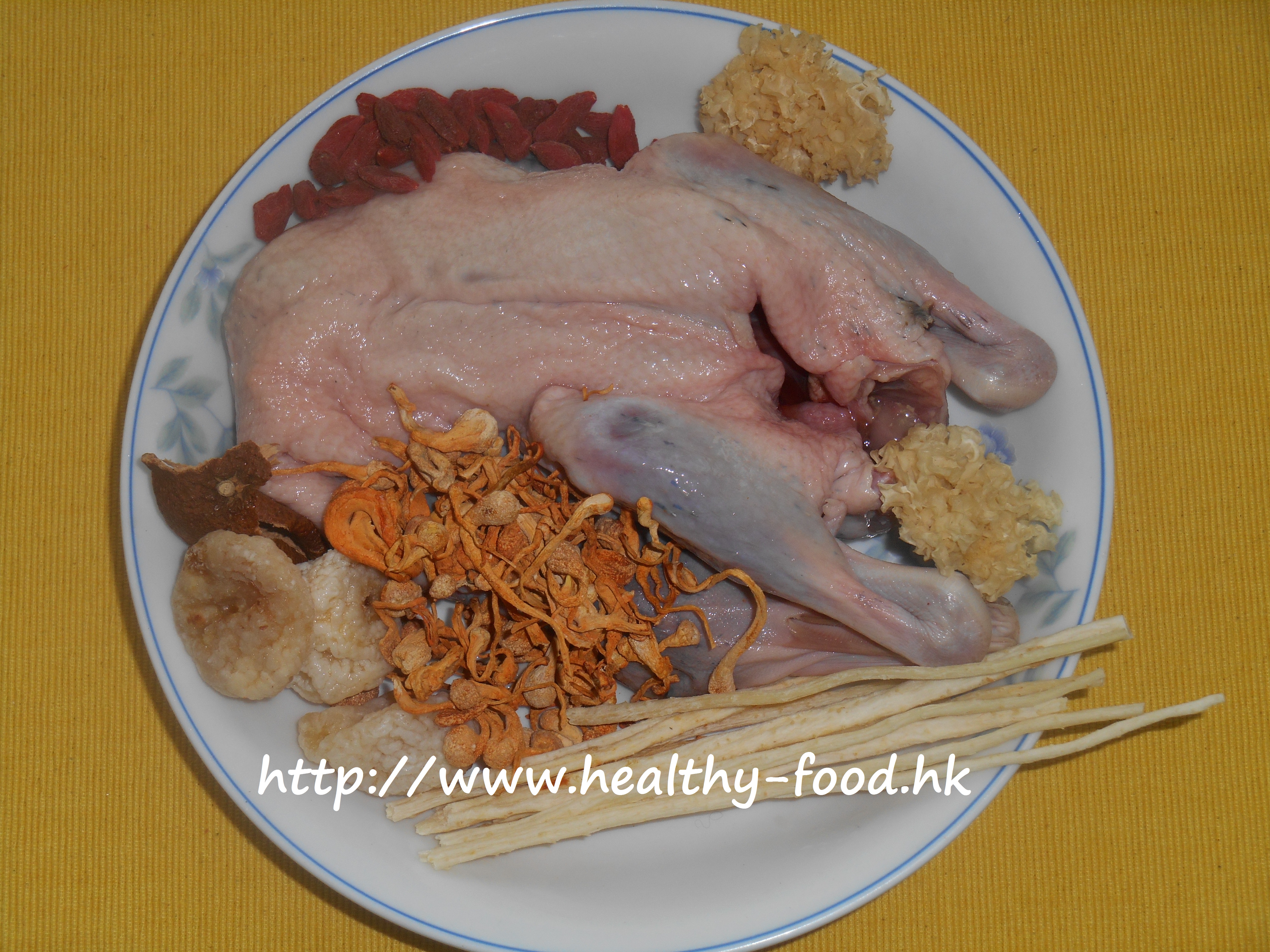
Why people make this soup
There is a particular type of fatigue that is hard to pin down: the person is not exactly unwell, but they are chronically tired, their throat or skin feels persistently dry, they get overheated easily, and if they try to eat warming tonic foods like red ginseng or chicken, they end up with a sore throat or insomnia. In Cantonese food therapy this pattern is described as “xu bu shou bu” — someone who needs nourishment but whose system is too depleted or too hot to absorb a warming tonic without side effects. Muscovy duck (shui ya) is the perfect meat for this situation: unlike chicken, it is neutral to cool in nature, lean, and deeply nourishing. Paired with cordyceps flower, sand ginseng, snow ear, and goji berries — all moistening, yin-supporting ingredients — this soup gently replenishes from the inside without adding heat. Regular drinkers often find it helps with both dry cough and nasal sensitivity over time.
Method
- Blanch the duck pieces in boiling water for 2–3 minutes to remove impurities. Drain and rinse under cold water.
- Soak the cordyceps flower, sand ginseng, snow ear fungus, goji berries, and figs separately until softened. Remove the hard base of the snow ear and tear into smaller pieces.
- Place all ingredients in a large pot with 2.4 L of water.
- Bring to a boil over high heat, then reduce to a slow simmer.
- Cook for 2 hours until the broth is richly flavoured and the duck is very tender.
- Serve hot and eat both the soup and the solid ingredients.
Nourilo’s Tips
Cordyceps flower (chong cao hua) is the spore body form — it is larger, more fragrant, and somewhat more effective for lung support than the standard thin variety. When selecting, look for pieces that are dry, golden-orange, and fragrant. When you soak them, the water should remain relatively clear: turbid or intensely coloured soaking water may indicate artificial dyes and that batch should not be used. If muscovy duck is difficult to find, lean pork or pork shin can be substituted — the duck’s cooling, yin-nourishing quality will be reduced but the soup is still beneficial.

Comments
Join the conversation — sign in or create a free account to comment.
Continue with GoogleLoading comments…