Soups
Peppercorn, Pickled Mustard Greens, and Pork Tripe Soup
traditionally used to warm the stomach, ease cold-type nausea, and support digestive comfort
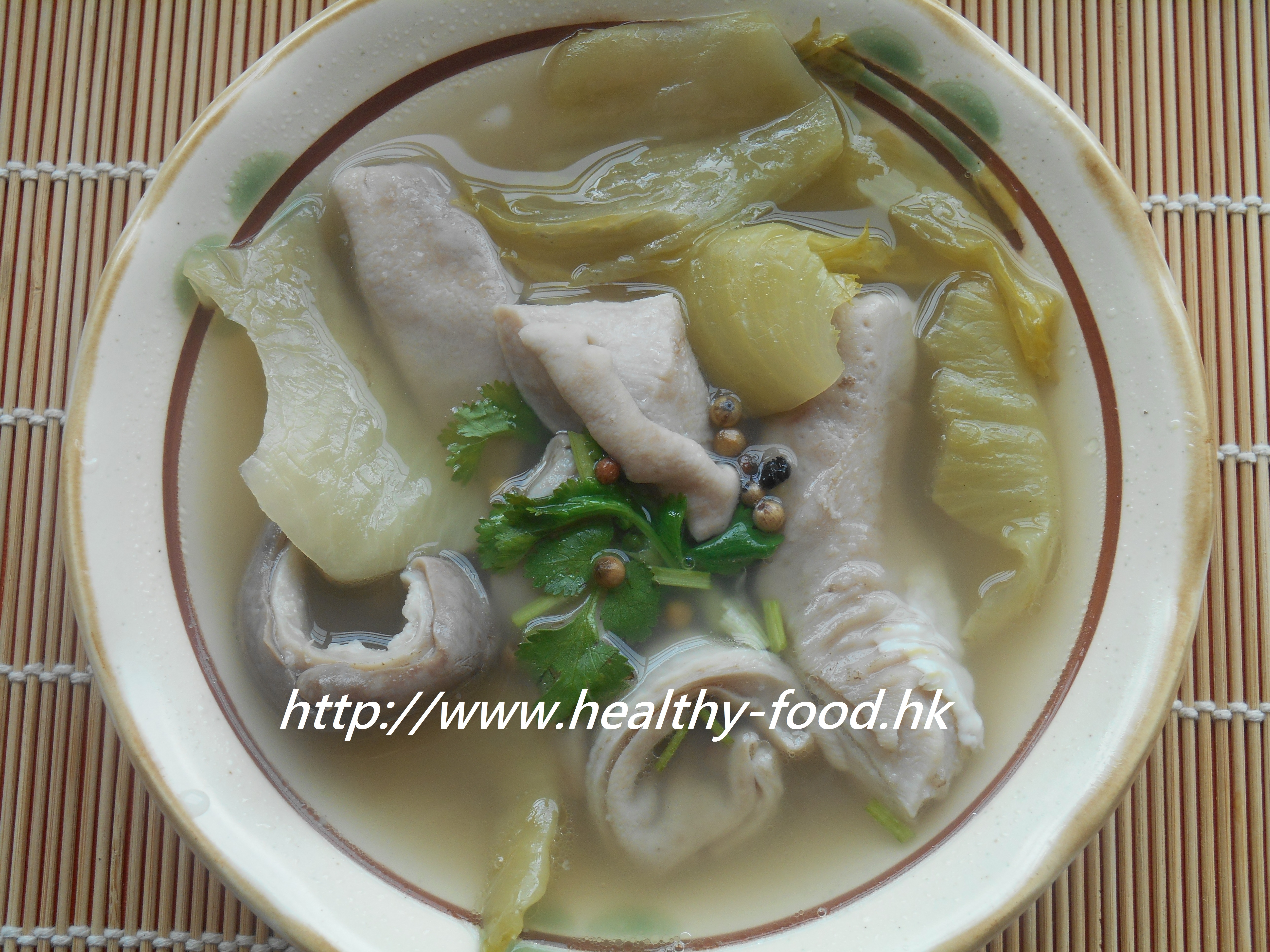
Why people make this soup
Bro Niu first tasted this dish at a Cantonese restaurant — a large-format clay pot with pork tripe, whole peppercorns, and pickled vegetables. He found the restaurant version just serviceable, so he went home, bought the real ingredients, and made it properly. The result was, by his own account, exceptional. The logic behind this soup is simple and very practical: when hot weather leads people to overindulge in cold drinks and iced food, the stomach gradually accumulates “cold” internally. A bowl of this richly warming broth — made deeply fragrant with whole white peppercorns and brightened by the tang of pickled mustard greens — is exactly the kind of thing that settles a cold, unhappy stomach and makes you feel like yourself again.
Who it suits / who should be cautious
- Suits: those with a stomach that feels cold, heavy, or nauseous, especially after eating too much cold or raw food; people prone to feeling cold in the abdomen; those with a traditional diagnosis of “stomach-cold” pattern
- Also considered helpful for stomach fullness and a sensation of tightness in the chest
- Suits all ages including children (old and young alike, per the tips below)
- Caution: NOT suitable for those with excess stomach fire — strong bad breath, swollen or bleeding gums, or a burning sensation after eating
- Caution: those with a gastric ulcer should take individual advice; this is a rich, warming soup
Why these ingredients (the food-therapy logic)
- Pork tripe (zhu du): In Chinese food-therapy, animal organ meats are often paired with the corresponding organ they are meant to support. Pork tripe is traditionally associated with warming and strengthening the stomach and spleen — it is a staple ingredient in cold-stomach soups.
- Whole white peppercorns (bai hu jiao li): The warming star of this dish. In Chinese dietary tradition, pepper is strongly associated with warming the middle, dispersing cold, and settling nausea. The whole peppercorns release their oil gradually into the broth, creating a deeply warming effect without being harshly spicy.
- Pickled mustard greens (xian suan cai): Adds a pleasant sour tang that balances the richness of the tripe and the heat of the pepper. Traditionally considered to have a qi-circulating, digestive-stimulating effect.
- Pork ribs (pai gu): Add body and depth to the broth, complementing the tripe.
- Fresh coriander (yuan sui): Scattered at the end for fragrance and to brighten the overall flavour.
Ingredients (4–5 bowls / 3–4 servings)
| Ingredient | Amount | Notes |
|---|---|---|
| Pork tripe (zhu du) | 1 whole | Cleaned thoroughly (see method) |
| Pork ribs (pai gu) | ~300 g (half jin) | Blanched |
| Whole white peppercorns (bai hu jiao li) | 2 tbsp | |
| Pickled mustard greens (xian suan cai) | ~75 g (2 liang) | Soaked briefly and cut into pieces |
| Fresh coriander / cilantro | A small handful | Chopped, added at the end |
| Water | 10 bowls (~2 litres) |
Method
- To clean the pork tripe: cut away any visible fat. Rub the inside and outside thoroughly with coarse salt and cornstarch (raw flour), then rinse well. Repeat until the tripe smells clean. Blanch in boiling water briefly, then drain and cut into large chunks.
- Blanch the pork ribs in boiling water briefly; drain and discard the blanching water.
- Soak the pickled mustard greens briefly in water to reduce saltiness, then cut into pieces.
- Dry-fry the pork tripe pieces in a clean wok (without oil) until lightly fragrant — this deepens the flavour.
- Place all ingredients except the coriander in a large pot with 10 bowls of water. Bring to a boil, then reduce heat and simmer for 2 hours.
- Scatter the chopped coriander over the soup before serving.
Bro Niu’s tips
- This soup suits young and old alike — it is warming and flavourful without being harsh.
- It is NOT suitable for those with stomach fire: if you have strong bad breath, swollen gums, or a burning sensation in the stomach, avoid this soup.
- If pickled mustard greens are unavailable, you can simply omit them — the soup will still be warming and delicious.
- For those who also suffer from loose stools or diarrhoea, add 1 liang of qian shi (Gordon euryale seeds / fox nuts) while cooking for extra digestive support.
- Fresh pork tripe is far superior in flavour to frozen; if you can source fresh, it is well worth the effort.
Community questions answered (selected)
-
Q (anonymous): I cannot find pickled mustard greens, but I have preserved daikon (cai pu). Can I use that instead? Bro Niu: You can simply leave out the pickled mustard greens — the soup is still fine without it.
-
Q (Fanny): Is fresh or frozen pork tripe better? I have a sensitive stomach that often feels tight after eating, and then I get loose stools. Is this soup suitable for me? Bro Niu: Fresh pork tripe is much better in flavour, but frozen will do if that is all that is available. You can certainly use this soup for your situation. If you also get loose stools, add 1 liang of qian shi (fox nuts) while cooking — this will help.
Published June 22, 2016 · Adapted and translated for Nourilo from a traditional home-kitchen recipe. Approx. 4 min read.