Congee & Porridge
Cogongrass Root and Adzuki Bean Congee
traditionally associated with reducing water retention, supporting urinary flow, and nourishing the organs
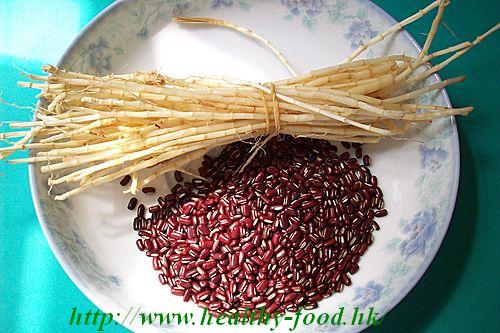
Why people make this congee
Women, in particular, are often more susceptible to water retention than men — hormonal fluctuations, postpartum changes, and constitutional factors can all play a role. In traditional Chinese medicine thinking, two main patterns are often at work: a weakened spleen and stomach that cannot properly move fluids through the body, or a weakened kidney qi that cannot transform and circulate water. Adzuki beans have long been celebrated as a food-therapy ingredient for water retention — they are gentle, tasty, and easy to incorporate into daily eating. Cogongrass root (mao gen) adds a natural diuretic quality, helping the body move excess fluid and supporting urinary clarity. Together with brown rice, this congee is a simple, nourishing way to address puffiness associated with kidney or functional fluid retention, scanty or dark urine, or vaginal discharge caused by damp-heat.
Who it suits / who should be cautious
- Well suited for those with mild water retention, including postpartum women, people with kidney-related puffiness, or those experiencing frequent dark or scanty urine
- Healthy individuals can eat it regularly as a nourishing congee
- Those with a cold stomach, loose stools, or chronic diarrhea should be cautious — the cooling nature of the ingredients may aggravate these conditions
- Persistent or unexplained swelling should be assessed by a doctor; do not rely on food therapy alone
Why these ingredients (the food-therapy logic)
- Adzuki beans (chi xiao dou): One of the most respected food-therapy ingredients for water retention; traditionally considered sweet and slightly sour, they help the body drain dampness, support the spleen, and are notably the only bean variety traditionally considered safe for gout
- Cogongrass root (mao gen): A cooling, diuretic herb-food traditionally used to clear heat, promote urinary flow, and cool blood; its mild flavour blends well in congee
- Brown rice (cao mi): Provides a wholesome, fibre-rich base that is gentler on blood sugar than white rice and adds its own traditional benefit of strengthening the middle jiao (digestive system)
Ingredients (2–3 bowls)
| Ingredient | Amount | Notes |
|---|---|---|
| Fresh cogongrass root (xian mao gen) | ~75 g (2 liang) | Available at Chinese or Asian grocers, or online; dried can substitute |
| Adzuki beans (chi xiao dou) | ~95 g (2.5 liang) | Soak for 1–2 hours beforehand for faster cooking |
| Brown rice (cao mi) | ~75 g (2 liang) | Rinsed |
Method
- Rinse the cogongrass root thoroughly.
- Place the cogongrass root in a pot with sufficient water and simmer for 20–30 minutes to extract the liquid. Strain and discard the solids, keeping the liquid.
- Add the soaked adzuki beans and brown rice to the cogongrass liquid, along with additional water as needed to ensure there is enough to make a congee.
- Bring to a boil, then simmer gently for about 40–50 minutes, stirring occasionally, until the beans and rice are tender and the congee is creamy.
- Serve warm in portions throughout the day.
Bro Niu’s tips
This congee supports healthy fluid balance and nourishes the organs — people without any particular health concerns can enjoy it too. That said, if your digestion tends toward cold and loose, use it sparingly. For best results, warm foods and drinks are advisable; avoid chilled or raw foods which can worsen fluid retention by weakening spleen function.
Community questions answered (selected)
-
Q (Milk): Can both men and women drink this congee every day? Bro Niu: Both men and women can drink this. You do not need to have it every day — 2 to 3 times a week is enough to get the food-therapy benefit.
-
Q (mamah): My mother’s legs have been very swollen for the past few days and she is always tired and gets sick easily. Can you suggest a food therapy for her? Bro Niu: Your mother’s situation warrants a doctor’s check — in older adults, leg swelling can sometimes be related to the heart or kidneys. As a food measure, try a soup of winter melon (1 jin), black beans (1 liang), and garlic (2 liang), which traditionally supports water drainage. However, if the swelling returns quickly after improving, please see a doctor immediately.
-
Q (Lis): I have tried this recipe before and it helped a lot — no burning sensation in the morning, less bloating. What can I eat long-term? Can I drink this soup for a long time? Bro Niu: You can take this soup for up to 2 months if it is helping; reduce as symptoms improve. Keep meals warm, eat less raw or cold food, and avoid wind-producing foods like taro, sweet potato, and peanuts. Light exercise helps too.
Published March 6, 2010 · Adapted and translated for Nourilo from a traditional home-kitchen recipe. Approx. 4 min read.