Soups
Cogongrass Root, Snow Pear & Lotus Node Soup
Traditionally used to cool the blood and support the nose during dry-weather nosebleed episodes
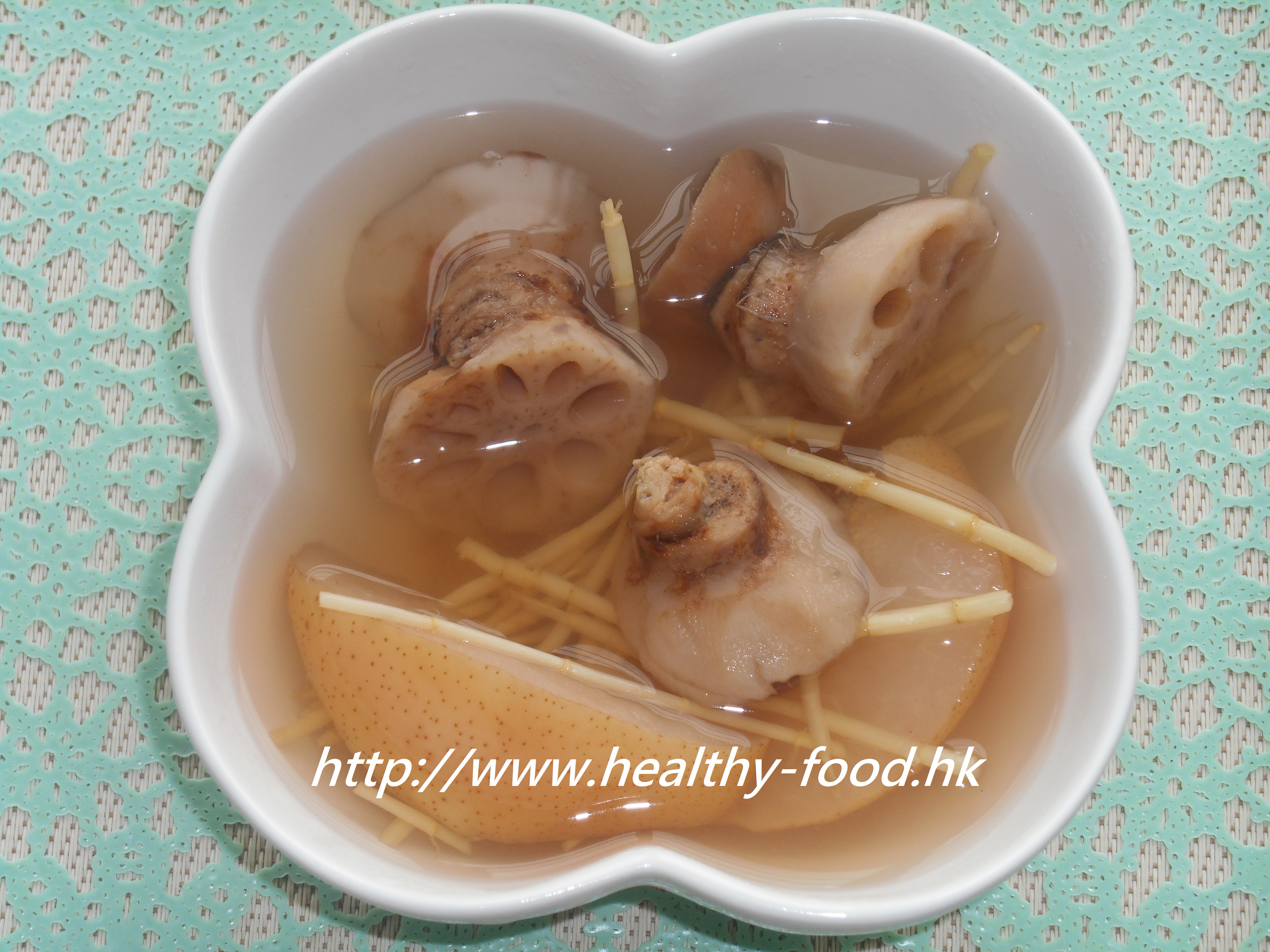
Why people make this soup
Autumn and winter bring dry air, and for many children that means nosebleeds — sometimes frustratingly often. A child’s nasal mucosa is thinner and more delicate than an adult’s, and the lining can be easily damaged by blowing hard, rubbing, or even vigorous sneezing. In traditional Cantonese food therapy, parents have long turned to this simple three-ingredient soup as a gentle way to help “cool the blood” and keep the nasal passages moist during the dry season. Bro Niu recommends it for children who are prone to repeated small bleeds — not as a substitute for first aid, but as an ongoing, calming support.
Who it suits / who should be cautious
- Suitable for children and adults of any age who experience recurrent dry-weather nosebleeds; even toddlers (including infants from around 19 months) can take it
- Safe to use 1–2 times per week as a maintenance drink once the acute episode has resolved
- No significant cautions for a generally healthy person; this soup is considered mild and without notable side effects
- If fever is present alongside nosebleeds, try this soup for support, but do not delay seeing a doctor if fever does not resolve
Why these ingredients (the food-therapy logic)
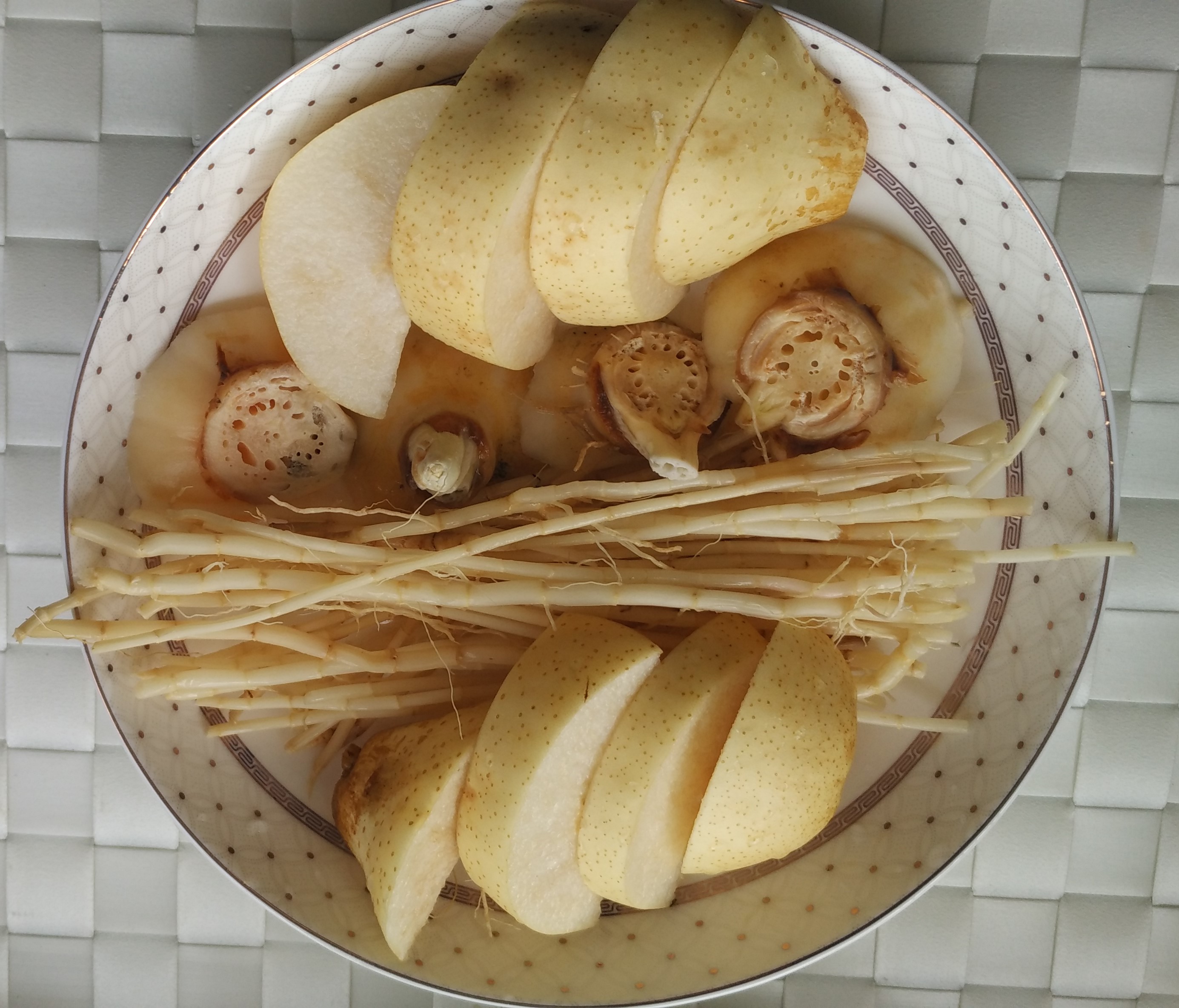
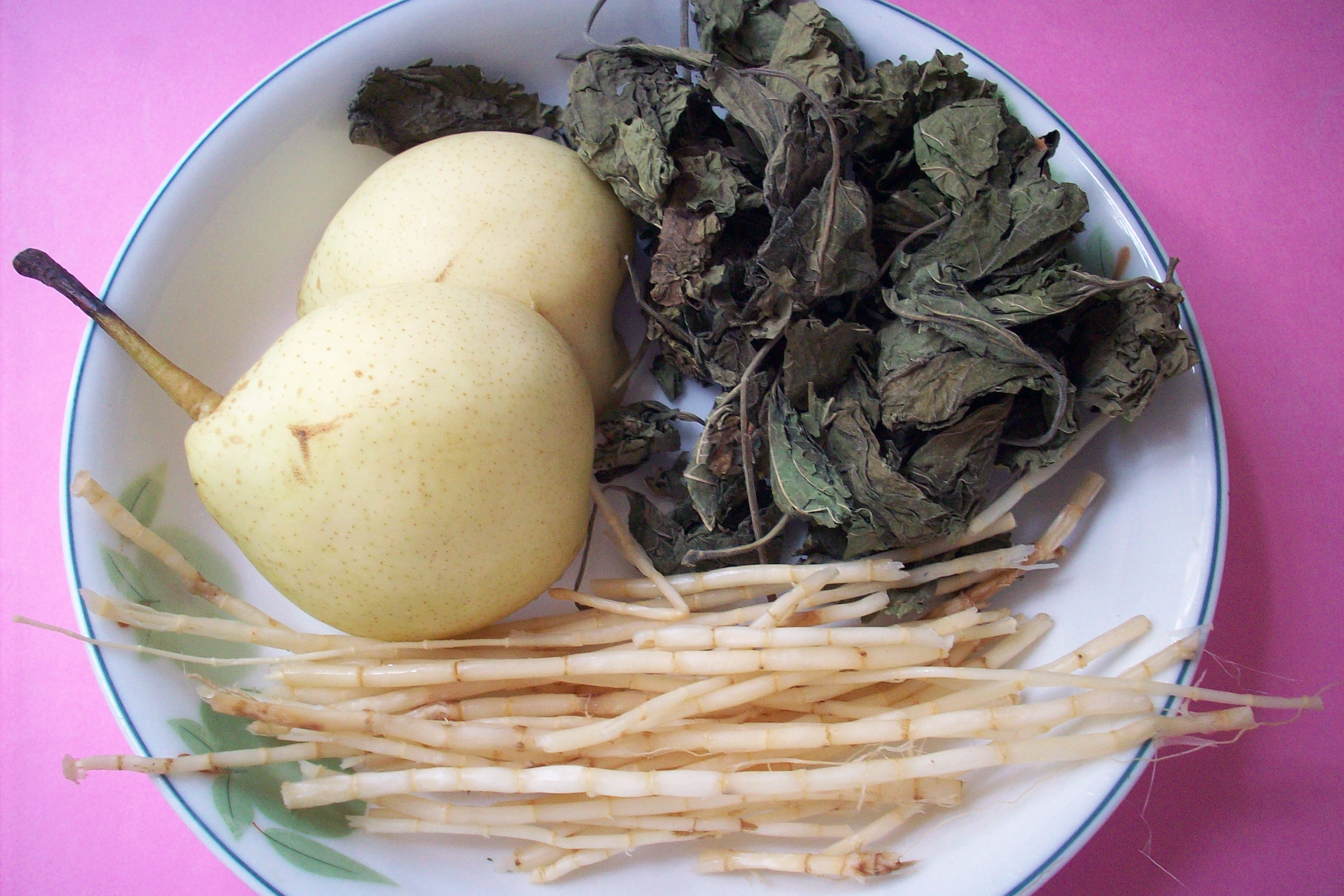
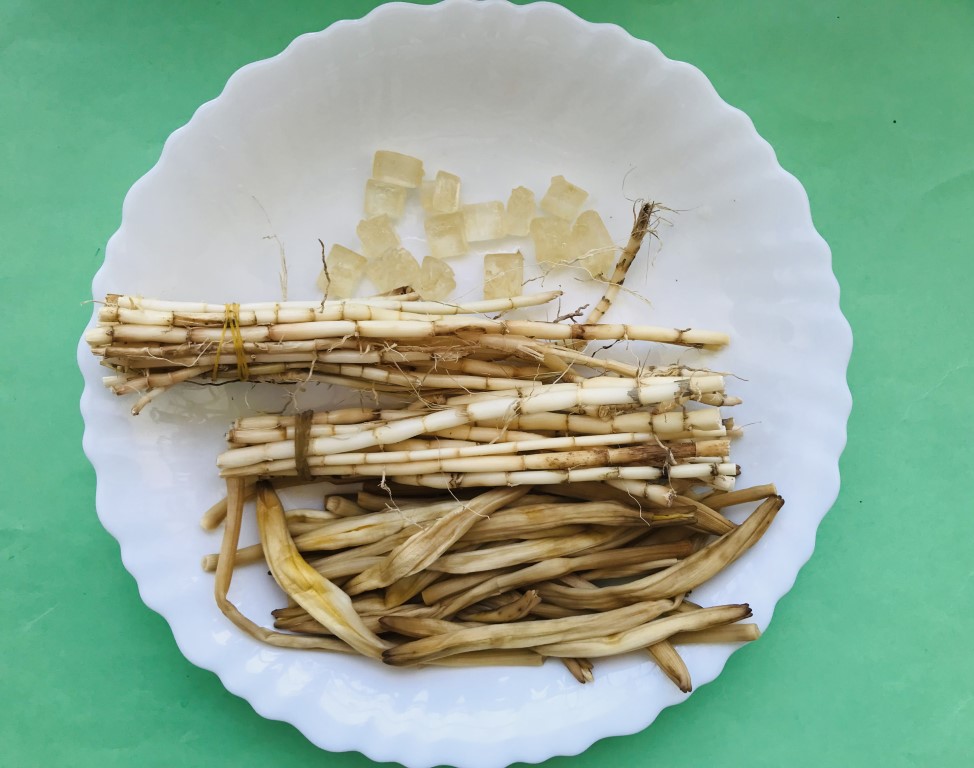
- Cogongrass root (mao gen / Imperata cylindrica): In traditional Chinese food therapy, fresh cogongrass root is considered one of the premier herbs for “cooling blood and stopping bleeding,” particularly from the nose; it also supports clearing heat from the lungs
- Snow pear (xue li): Prized in Cantonese cooking for moistening the lungs and throat during dry weather; contributes natural sweetness
- Lotus node (lian ou jie): The knobbly joint sections of the lotus rhizome have a longstanding reputation in Chinese medicine for their astringent, blood-staunching properties; the rest of the rhizome can be used in stir-fries or other soups
Ingredients (3–4 bowls)
| Ingredient | Amount | Notes |
|---|---|---|
| Fresh cogongrass root (mao gen) | ~38 g (1 liang) | Rinse well, cut into sections |
| Snow pear (xue li) | 1 medium | Halved and cored; leave skin on or peel |
| Fresh lotus nodes (ou jie) | 3 pieces | Rinse; only the knobbly nodes, not the main rhizome body |
| Rock sugar (bing tang) | to taste | Optional; add near the end |
| Water | 5 bowls (~1.25 L) |
Method
- Rinse the cogongrass root thoroughly and cut into short sections.
- Wash the snow pear, halve it, and remove the core.
- Rinse the lotus nodes.
- Combine all ingredients with 5 bowls of water in a pot. Bring to a boil, then reduce to a gentle simmer and cook for 1 hour.
- If using rock sugar, stir it in and let it dissolve for the last few minutes.
- Serve warm; aim for about 1 bowl per serving.
Bro Niu’s tips
This soup is suitable for anyone experiencing nosebleeds, young or old. A small amount of rock sugar makes it more palatable for children. For a course of treatment, Bro Niu typically suggests 3 consecutive days to help calm recurring bleeds; afterward, once or twice a week makes a good seasonal maintenance habit. Remember that a child’s nasal lining genuinely thickens as they grow older, so the tendency to bleed easily often improves naturally with age.
If you cannot find fresh cogongrass root (common in markets in Hong Kong and parts of Southeast Asia), you can use dried snow pear slices (4–5 pieces) and lotus nodes together and still get a beneficial soup. Alternatively, for a simple emergency version, just simmer snow pear and lotus nodes alone, or even steam the pear with the lotus nodes.
Community questions answered (selected)
-
Q (Celine): My 7-year-old had a large nosebleed in the middle of the night after blowing her nose hard. Can she drink this soup? Can the whole family drink it together? Bro Niu: Children’s nasal linings are thin, and hard nose-blowing easily causes a tear. Yes, she can have this soup. Drink 1–2 servings and the situation should improve.
-
Q (Sa): My child has severe nasal sensitivity and has been runny for many days — and now also nosebleeds. Is this soup right for her? Bro Niu: Children with nasal sensitivity easily damage their lining from frequent nose-blowing, leading to bleeds. This soup can help. That said, I’d also suggest seeing a Traditional Chinese Medicine practitioner for the underlying sensitivity — TCM has quite good results with that kind of allergic pattern.
-
Q (Erica Lau): I’m in the United States and the heating indoors is very dry. My son bleeds often but I can’t find cogongrass root here. What can I use instead? Bro Niu: You can simmer just snow pear and lotus nodes together — as a soup or as a thin congee — for 3 consecutive days and it can still help stop the bleeds. There is also a simple external remedy: crush a few garlic cloves, flatten them into a tea-bag pouch, and tape it to the sole of the foot (left foot for left nostril, right for right). Remove it when you feel a mild stinging sensation at the foot. It sounds unusual but many families find it helpful.
Published September 1, 2015 · Adapted and translated for Nourilo from a traditional home-kitchen recipe. Approx. 4 min read.