Congee & Porridge
Codonopsis and Millet Congee
traditionally used to nourish qi and blood, support the spleen and stomach, and brighten a pale or yellowish complexion
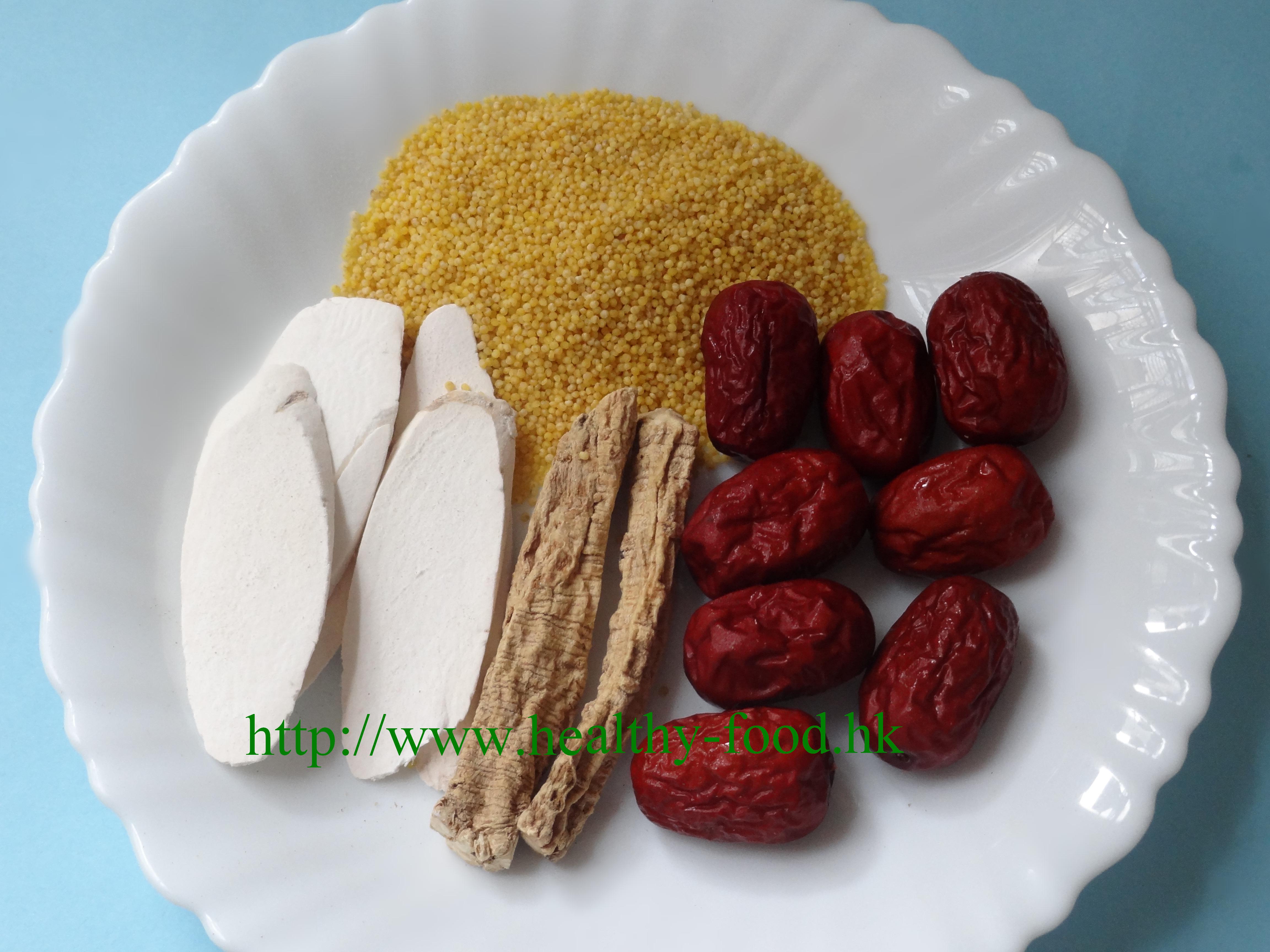
Why people make this congee
If you have ever noticed that your complexion looks a bit washed out — pale, slightly yellowish, without a natural flush — it often reflects what traditional food therapy describes as a weakness in the spleen and stomach combined with insufficient qi and blood. These are not medical diagnoses, but they point to a real pattern: when the digestive system is under-performing and the blood is not as nourishing as it could be, it tends to show on the face first. Bro Niu recommends this simple millet congee as a regular part of the diet for anyone who sees this in themselves. Millet (xiao mi) is an ancient grain that is particularly gentle on the stomach and has been used for centuries to support digestion and nourishment. Combined with codonopsis — a milder, more accessible alternative to ginseng — and Chinese yam, this congee works gradually and without forcing the body. The result, with consistent use, is traditionally described as a healthier color returning to the face.
Who it suits / who should be cautious
- Suited for adults of most constitutions; particularly helpful for those with a pale, sallow, or dull complexion linked to weak digestion or blood deficiency
- Suitable for menopausal individuals experiencing a dull complexion; Bro Niu suggests adding glutinous rice or regular rice to make it smoother
- Children: those aged 10 and under should substitute codonopsis with prince’s ginseng (tai zi shen, 3 qian); children aged 6 and above with significant qi deficiency can use a reduced amount of codonopsis (no more than 3 qian)
- NOT suitable while recovering from a cold or flu (external pathogen not yet cleared); wait until fully recovered before using
Why these ingredients (the food-therapy logic)
- Codonopsis root (dang shen): A gentle qi tonic in the same category as ginseng but milder and more affordable; traditionally used to strengthen the middle burner (spleen and stomach) and support blood production
- Chinese yam (huai shan): Tonifies the spleen, lung, and kidney; one of the most versatile and gentle food-herbs available; supports digestion and helps the body assimilate nutrients
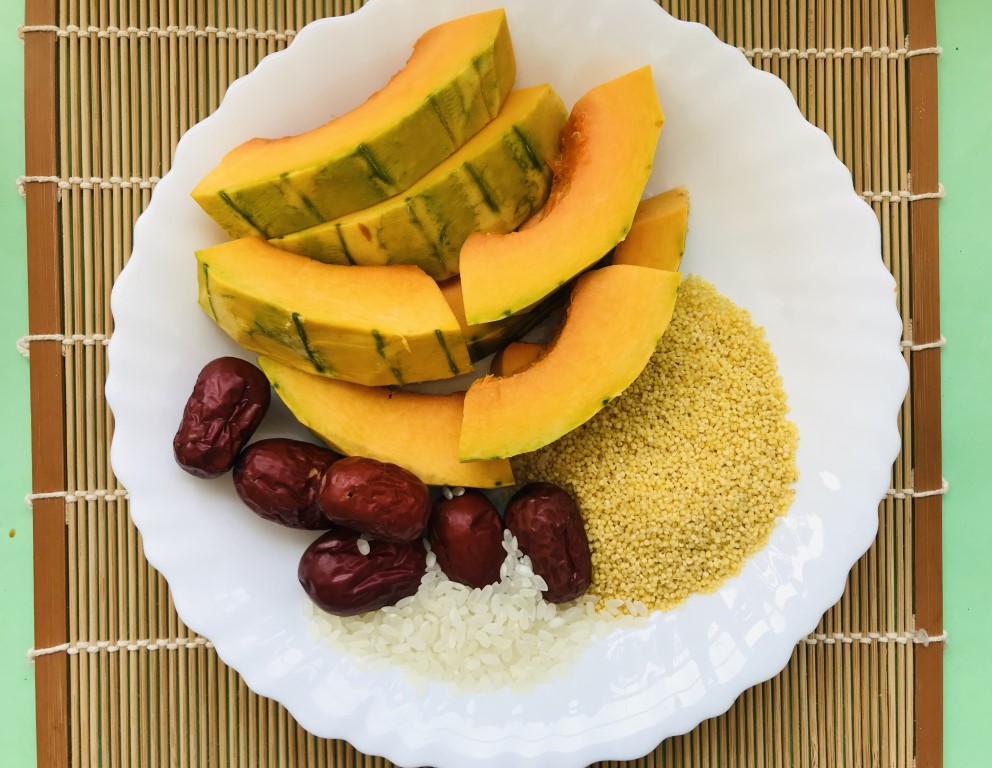
- Red dates (hong zao): Nourish the blood and calm the mind; add natural sweetness to the congee; pitting them before cooking is recommended
- Millet (xiao mi): A warming, easily digestible grain that specifically nourishes the spleen and stomach; high in B vitamins and iron
Ingredients (2–3 bowls)
| Ingredient | Amount | Notes |
|---|---|---|
| Codonopsis root (dang shen) | ~18 g (5 qian) | Slice thinly; soak with the yam for 30 minutes, then discard soaking water |
| Dried Chinese yam (huai shan) | ~38 g (1 liang) | Soak 30 minutes, discard water |
| Red dates, pitted | 8 pieces | Rinse |
| Millet (xiao mi) | ~112 g (3 liang) | Rinse; do not confuse with sweet corn — this is the small yellow grain |
Method
- Slice the codonopsis root thinly. Soak the codonopsis slices and dried yam in water for 30 minutes, then drain and discard the soaking water.
- Rinse the red dates and millet.
- Place all ingredients in a pot with enough water to make a thin, soupy congee (start with about 8 bowls of water).
- Bring to a boil, then reduce heat and simmer for about 1 hour, stirring occasionally, until the congee is smooth and the ingredients are very soft.
- Serve warm. Minced lean pork can be added for additional protein and flavor.
Bro Niu’s tips
- Adding minced lean pork to the congee while it cooks makes it more substantial and suitable as a full meal for the whole family
- If fresh Chinese yam is available, use about 3 liang (~112 g) instead — it gives a better flavor and texture
- Codonopsis can be substituted with ginseng (3 qian) if you want a stronger tonic effect; this is said to enhance metabolic function
- This congee is best eaten 3 to 4 times per week for those with qi and blood deficiency; for general wellness, once a week is sufficient
- For those with excess phlegm in the throat, reduce codonopsis slightly and add a piece of dried tangerine peel
Community questions answered (selected)
-
Q (Gin / wing): How long does this congee need to cook? Bro Niu: About 1 hour. Soak the codonopsis and yam in water for 30 minutes first and discard that soaking water before cooking.
-
Q (Bobo): Is this congee suitable for a 10-year-old girl? Should she use prince’s ginseng (tai zi shen) or codonopsis (dang shen)? Bro Niu: For a child of around 10, it is better to use prince’s ginseng (tai zi shen) instead of codonopsis. She can drink this congee.
-
Q (tea enthusiast): What is the codonopsis and red date tea you mentioned before? Bro Niu: Slice 3 qian of codonopsis, add 6 south jujubes (nan zao), half a tablespoon of toasted rice, and cook in 5 bowls of water down to 2 bowls. Take two to three times a week. The toasted rice helps warm the stomach and aids absorption.
Published July 11, 2012 · Adapted and translated for Nourilo from a traditional home-kitchen recipe. Approx. 4 min read.