Soups
Codonopsis, Polygonatum and White Atractylodes Soup
Traditionally used to tonify the spleen, support energy levels, and nourish the blood
Why people make this soup
Some people managing hyperthyroidism experience a paradox: despite the condition’s association with a fast metabolism, they feel persistently exhausted. Muscle weakness, poor appetite, and loose stools can all be signs that the spleen and digestive system need support — an angle that Chinese food therapy is particularly well suited to address as a complement to medical care. This modest, fragrant broth combines three classic qi-building herbs: codonopsis (a gentle alternative to ginseng for everyday use), polygonatum (which additionally nourishes the blood and supports immune function), and white atractylodes (which helps the spleen run more efficiently). The addition of tangerine peel prevents the tonic herbs from causing any sense of digestive sluggishness.
Who it suits / who should be cautious
- Suitable for people with qi deficiency symptoms: persistent fatigue, muscle weakness, poor appetite, loose stools, or a wan complexion
- Can be drunk by the whole family, with children under three taking only half a bowl
- Not suitable during active colds, fever, or any acute illness
- Always continue prescribed medical treatment for hyperthyroidism; this soup is a dietary complement, not a replacement for thyroid medication
Why these ingredients (the food-therapy logic)
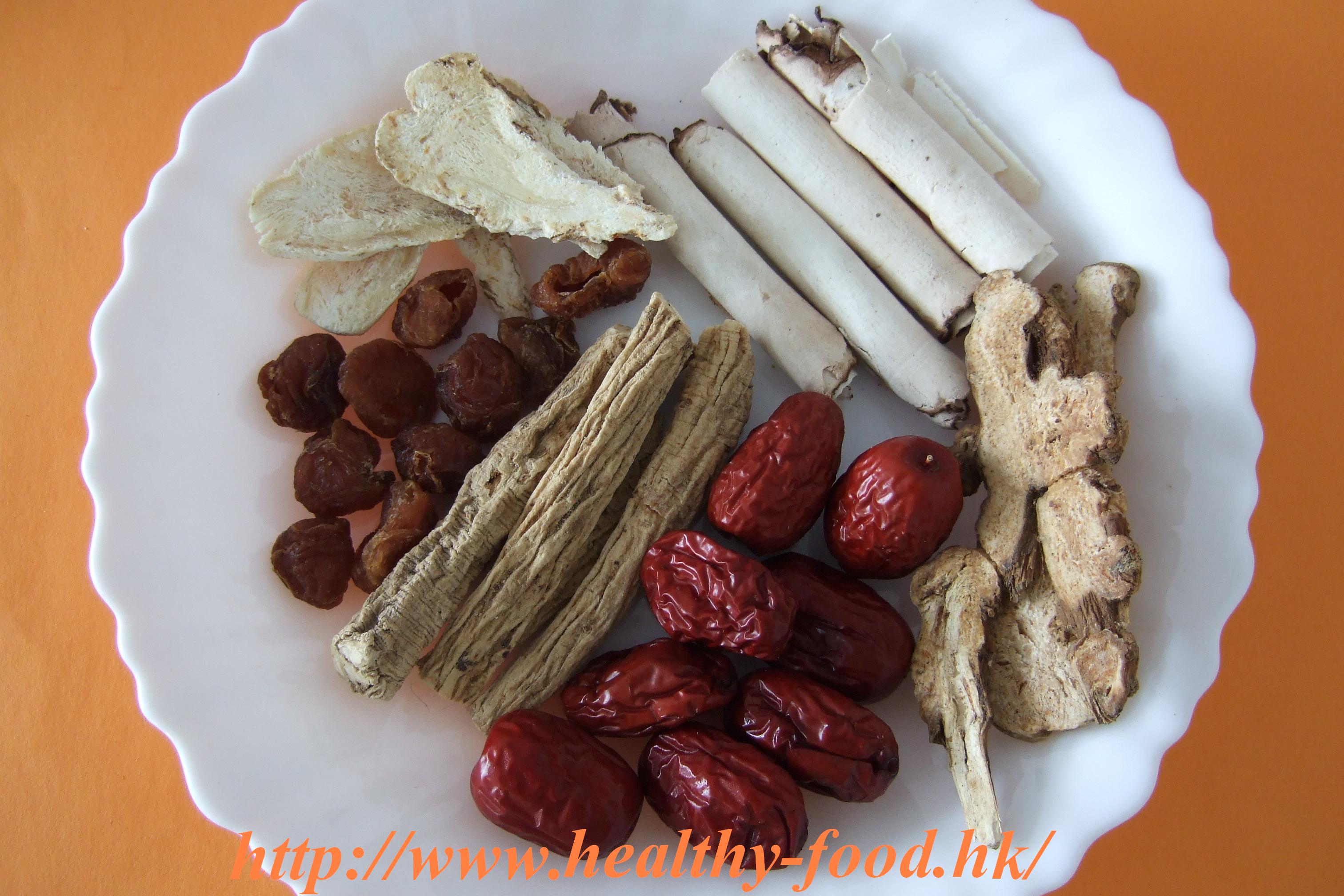
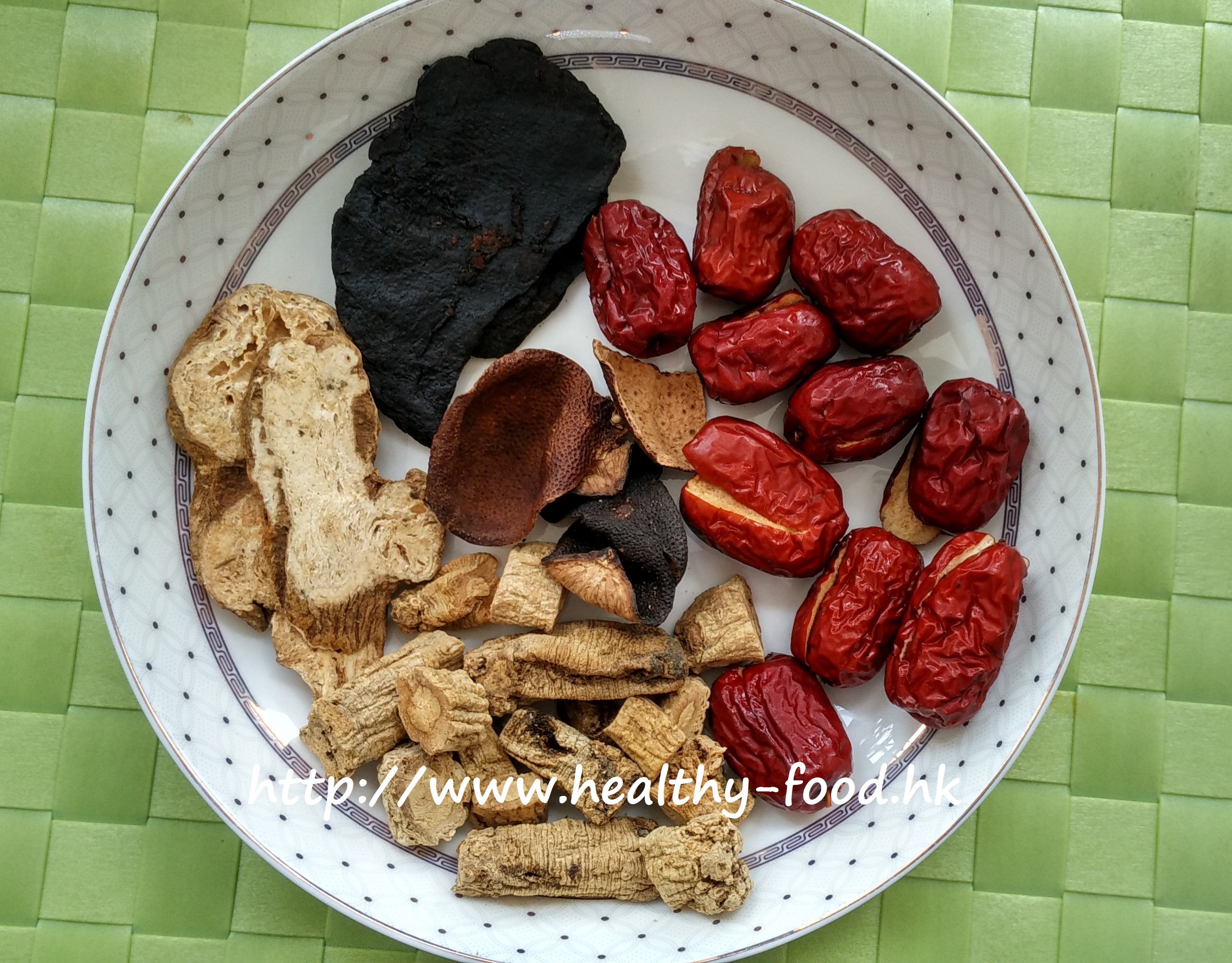
- Codonopsis root (dang shen): One of the most widely used spleen-tonifying herbs in daily Chinese food therapy; gentler and more affordable than true ginseng, and suitable for regular use. Belongs to the Campanulaceae (bellflower) family
- Polygonatum (huang jing): Supplements the middle jiao (digestive centre), replenishes essence, and nourishes the blood; combined with codonopsis it strengthens the overall qi-building effect and supports haematopoiesis (blood cell formation) and immune function
- White atractylodes (bai zhu): A classic spleen-strengthening herb that also helps prevent tonic herbs from causing bloating or stagnation
- Dried tangerine peel (chen pi): Moves qi, aids digestion, and counteracts any heaviness from the tonics
- Red dates (hong zao): Nourish the spleen and blood; add natural sweetness and palatability
Ingredients (2 bowls / 1–2 servings)
| Ingredient | Amount | Notes |
|---|---|---|
| Codonopsis root (dang shen) | ~37 g (1 liang) | Rinse; slice thinly if in whole pieces |
| Polygonatum rhizome (huang jing) | ~18 g (5 qian) | Rinse |
| White atractylodes (bai zhu) | ~15 g (4 qian) | Rinse |
| Dried tangerine peel (chen pi) | 1 piece | Rinse |
| Red dates, pitted | 8 pieces | Remove stones |
Method
- Rinse all ingredients under cold water and soak briefly.
- Combine all ingredients in a pot with 5 bowls (about 1.25 litres) of cold water.
- Bring to a boil, then reduce heat and simmer gently for 1 hour until reduced to about 2 bowls.
- Serve warm. Drink as a tea or alongside a meal.
Bro Niu’s tips
This soup is well-suited to those with general qi and blood deficiency, persistent fatigue, low energy, and poor appetite. It is mild enough for the whole family. Children under three should have only half a bowl — young children do not need large amounts of tonics. Avoid drinking it during a cold, flu, or fever.
Community questions answered (selected)
-
Q (Lias): I have hyperthyroidism and am currently taking medication to manage it. Can I drink your soup at the same time? Bro Niu: Yes, you can drink this soup alongside your thyroid medication. Aim for 2 to 3 doses per week.
-
Q (May May): Can I just steep codonopsis root in hot water to drink? Is it still effective that way? How much should I use? Bro Niu: You can steep codonopsis in hot water — slice it thinly first so it releases its properties. For a single serving use about 5 qian. It still has a good spleen-strengthening and energy-supporting effect.
-
Q (Susanna): Can the whole family drink this soup? Bro Niu: Yes, the whole family can have it. Children under three should have only half a bowl — small children should not have too much tonic soup.
Published March 24, 2018 · Adapted and translated for Nourilo from a traditional home-kitchen recipe. Approx. 3 min read.