Soups
Glehnia, Polygonatum, Lotus Seed & Barley Soup
traditionally associated with gently nourishing the spleen and stomach, supporting appetite and firmer stools in children

Why people make this soup
Some young children are grazers by nature — always snacking, fond of cold drinks and icy treats, but never hungry when a proper meal arrives. Over time, this pattern can show up as poor appetite, loose stools, a slightly puffy look, and that characteristic low energy by midday. Chinese food therapy describes this as a “spleen-deficient, damp-heavy” pattern in children. The spleen — in Chinese medicine’s functional sense — governs digestion and the transformation of food into usable energy. When it is underperforming, dampness accumulates and appetite suffers. This soup uses a carefully chosen group of gentle, sweet, and nourishing ingredients to quietly strengthen that digestive centre without putting any strain on a small body.
Who it suits / who should be cautious
- Well suited for children with poor appetite, loose or pasty stools, low energy, or a tendency to look a bit puffy
- Also excellent as a year-round wellness soup for the whole family, including adults recovering from illness
- Do not serve during fever or acute illness; resume once the child has recovered
- The salt-processed euryale seeds (zhi qian shi) have an enhanced astringent and dampness-draining effect compared to regular euryale — both can be used, but the salt-processed variety is preferred for loose-stool patterns
Why these ingredients (the food-therapy logic)
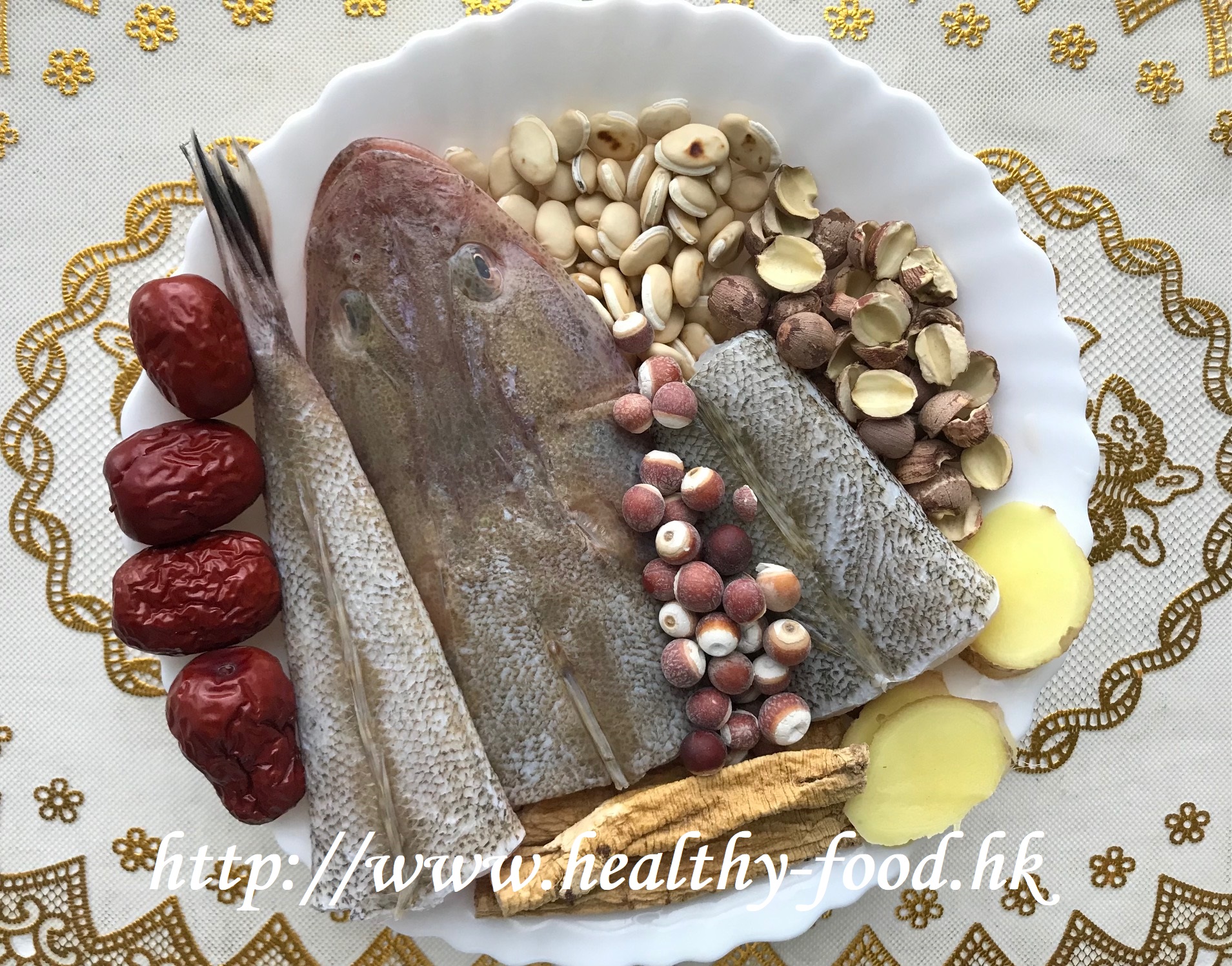
- Northern glehnia (bei sha shen): A gentle yin-nourishing root that supports the lungs and stomach; mildly moistening without being greasy — suitable for children who run dry as well as damp
- Polygonatum (yu zhu): Nourishes the stomach yin and body fluids; helps improve appetite; traditionally pairs well with sha shen as a mild, non-heating tonic
- Lotus seeds (lian zi): Strengthen the spleen and calm the mind; mildly astringent, which helps reduce loose stools; cook until soft so children can eat them
- Euryale seeds (qian shi): A starchy, mildly astringent seed from the water lily family; paired with lotus seeds as a classic combination to firm stools and support the spleen and kidneys
- Job’s tears / barley (yi mi): Drains dampness, supports the spleen, and gently reduces swelling; very easy to digest and mild in flavour
- Red dates (hong zao): Nourish the blood, harmonise the spleen, and add pleasant natural sweetness
- Lean pork: Adds protein and makes the soup more satisfying; can be eaten alongside
Ingredients (4 bowls)
| Ingredient | Amount | Notes |
|---|---|---|
| Northern glehnia root (bei sha shen) | 15 g | Rinse and soak briefly |
| Polygonatum rhizome (yu zhu) | 15 g | Rinse briefly |
| Lotus seeds (lian zi) | 37 g | Rinse; remove bitter green germ if desired |
| Salt-processed euryale (zhi qian shi) | 15 g | Regular qian shi also fine |
| Job’s tears / barley (yi mi) | 15 g | Rinse and soak briefly |
| Red dates, pitted (hong zao) | 6 pieces | Remove pits |
| Lean pork | 300 g | Rinse; blanch briefly if preferred |
| Water | 8 cups | Simmered down to 4 cups |
Method
- Rinse all herbs and soak briefly in cold water. Drain.
- Rinse the lean pork; blanch briefly in boiling water if you prefer a cleaner stock. Drain.
- Place all ingredients in a pot with 8 cups of water.
- Bring to a boil, then reduce heat to a gentle simmer.
- Cook for about 2 hours until the liquid reduces to roughly 4 cups.
- Serve warm. Encourage children to eat the lotus seeds, barley, and soft pork alongside the soup.
Bro Niu’s tips
This soup is mild in flavour and balanced in nature — not warming, not cooling — which makes it genuinely suitable across all four seasons and for most members of the family. It is one of those recipes worth coming back to regularly. The salt-processed euryale seeds have a slightly stronger effect at reducing dampness and firming stools than regular euryale — worth asking for specifically at a Chinese herbal shop if your child has ongoing loose-stool problems. If you are making this for the whole family, simply double the quantities and use around 14–16 cups of water.
Community questions answered (selected)
-
Q (Wing Chan): The recipe mentions lotus seeds — should I buy fresh lotus seeds or dried ones from a herbal shop? And should I remove the bitter green centre? Bro Niu: Fresh lotus seeds are ideal if you can find them — use about 75 g (2 liang). Dried ones from a herbal shop or grocery store work perfectly well too. Leaving the green germ in helps clear heart fire, but it adds a slight bitterness that children may not enjoy — for everyday soups it is fine to remove it.
-
Q (芊芊): Can the whole family drink this, including a 4-year-old? Should I add more for 4 people? Can I add corn or winter melon? Bro Niu: This soup is suitable for all ages, including young children. For 4 people, simply double the amounts. You can absolutely add corn or winter melon — both are pleasant additions.
-
Q (aki): Can this soup be given to a child with a fever? Bro Niu: No — do not give any nourishing or tonifying soup during a fever. Wait until the fever has passed, then resume.
Published November 16, 2013 · Adapted and translated for Nourilo from a traditional home-kitchen recipe. Approx. 4 min read.