Herbal & Flower Teas
Prince's Ginseng, Sour Plum and Licorice Tea
traditionally used to replenish qi, generate fluids, and ease symptoms of a cough that has worn the body down
Why people make this tea
When a cough lingers for weeks — especially in young children who have been taking Western medicine — it can leave the whole system feeling run down: poor appetite, low energy, a dry mouth, and that general sense that the body just has not fully recovered. In traditional Chinese dietary thinking, a prolonged cough is said to “injure the lung yin” — drawing on the body’s fluids and quieter restorative energy. Repeated courses of medicine can also weaken the spleen and stomach, reducing appetite and absorption.
Prince’s ginseng (tai zi shen) is sometimes called “children’s ginseng” because it offers a gentle, clear qi-supporting effect without the warming intensity of regular ginseng — making it ideal for children and for summer use. Paired with sour plum to astringently gather lost fluids, and licorice root to harmonise the formula, this tea is a simple, pleasant-tasting way to help the body rebuild after illness. Bro Niu notes it is suitable for all ages and all constitution types.
Who it suits / who should be cautious
- Suits children and adults who are recovering from a long cough with lingering fatigue, dry mouth, low energy, or reduced appetite
- Excellent as a summer wellness tea for the whole family — the sweet-sour flavour is appealing to children
- Suitable for all constitutions (neither warming nor cooling)
- If sour plum (wu mei) is unavailable, five-flavour berry (wu wei zi, 9 g) makes a good substitute — it additionally helps the lungs gather qi and reduces excessive sweating
- This tea supports recovery from illness; it does not address an active cough with phlegm — for that, consult a doctor or use a different food-therapy approach
Why these ingredients (the food-therapy logic)
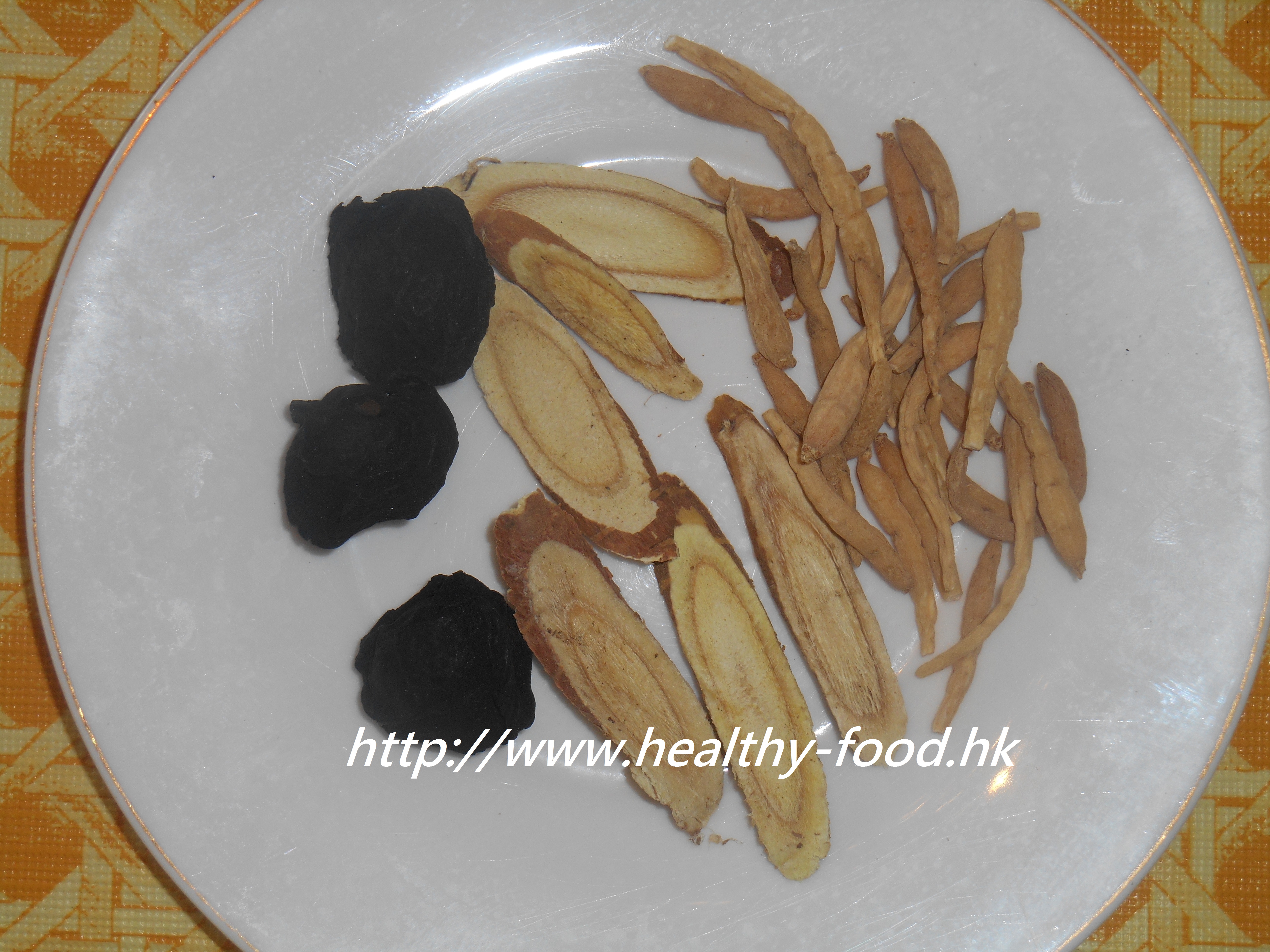
- Prince’s ginseng (tai zi shen): Despite its name, this is not a true ginseng — it belongs to the pink family (Caryophyllaceae). Its flavour is gently sweet and slightly bitter. Traditionally used to tonify qi, nourish the stomach, and generate body fluids; it is milder than regular ginseng, making it well-suited to children, the elderly, and those with a tendency toward internal heat. Its cooling, clear quality makes it especially useful in warm weather.
- Sour plum (wu mei): The smoked, dried plum widely used in Chinese cooking. Its sour astringency is traditionally used to help the lungs gather loose qi, generate fluids to relieve thirst, and ease coughing. The sourness signals its ability to “hold things in” — counteracting the constant outward drain of a persistent cough.
- Licorice root (gan cao): Sweet, neutral, and harmonising. It is traditionally used to soothe the throat, support the spleen and stomach, and balance the other ingredients in any formula. A small amount goes a long way.
Ingredients (2 cups)
| Ingredient | Amount | Notes |
|---|---|---|
| Prince’s ginseng (tai zi shen) | 9 g (3 qian) | Available at Chinese herb shops |
| Sour plum (wu mei) | 3 pieces | Rinse before use |
| Licorice root (gan cao) | 3 g (1 qian) | A few slices |
| Rock sugar (bing tang) | to taste | Add at the end, after cooking |
| Water | 4 bowls (~900 mL) |
Method
- Rinse all ingredients briefly.
- Place prince’s ginseng, sour plum, and licorice root in a pot with 4 bowls of water.
- Bring to a boil, then reduce to a simmer and cook for 20 minutes.
- Add rock sugar to taste and stir until dissolved.
- Pour and drink warm. This makes about 2 cups — suitable for one child’s daily serving, or half a portion for younger children.
Bro Niu’s tips
- The flavour is naturally sweet and pleasantly sour — most children enjoy it, making it a good way to encourage wellness drinks without fuss.
- For babies 9 months and older: half a bowl is sufficient.
- This tea is well-suited to hot summer months when children sweat a lot and lose fluids easily. It can be made in a slightly larger batch and kept in the fridge for the day.
- If wu mei is not available, five-flavour berry (wu wei zi) at 9 g is a fine alternative and may work even better for children prone to night sweats or excessive perspiration.
- Do not use this tea as a substitute for medical attention if a child has a fever, active infection, or a cough with thick coloured phlegm — these require a doctor’s assessment.
Community questions answered (selected)
-
Q (Kelly, reader): If I do not have sour plum (wu mei), can I leave it out or substitute something? Bro Niu: You can leave it out, but if you can find five-flavour berry (wu wei zi), that would actually work even better. Use about 9 g of wu wei zi in its place — it is excellent for gathering lung qi and reducing excessive sweating.
-
Q (Twinnie, reader): My 4-year-old has had an external cough that has not fully cleared. Can she drink this tea in winter too? Bro Niu: A 4-year-old can drink this tea, and it is fine in winter. Please try not to worry too much — illness does not form overnight, and it cannot resolve in one or two doses either. If she has seen a doctor four times this month without improvement, focus on building her constitution steadily rather than looking for a quick fix. Food therapy is a slow but steady approach.
-
Q (yuki, reader): My 9-month-old baby often has phlegm and a slight wheeze. Can she drink this tea? Bro Niu: Yes — for a 9-month-old, half a bowl is enough.
Published April 5, 2016 · Adapted and translated for Nourilo from a traditional home-kitchen recipe. Approx. 4 min read.