Soups
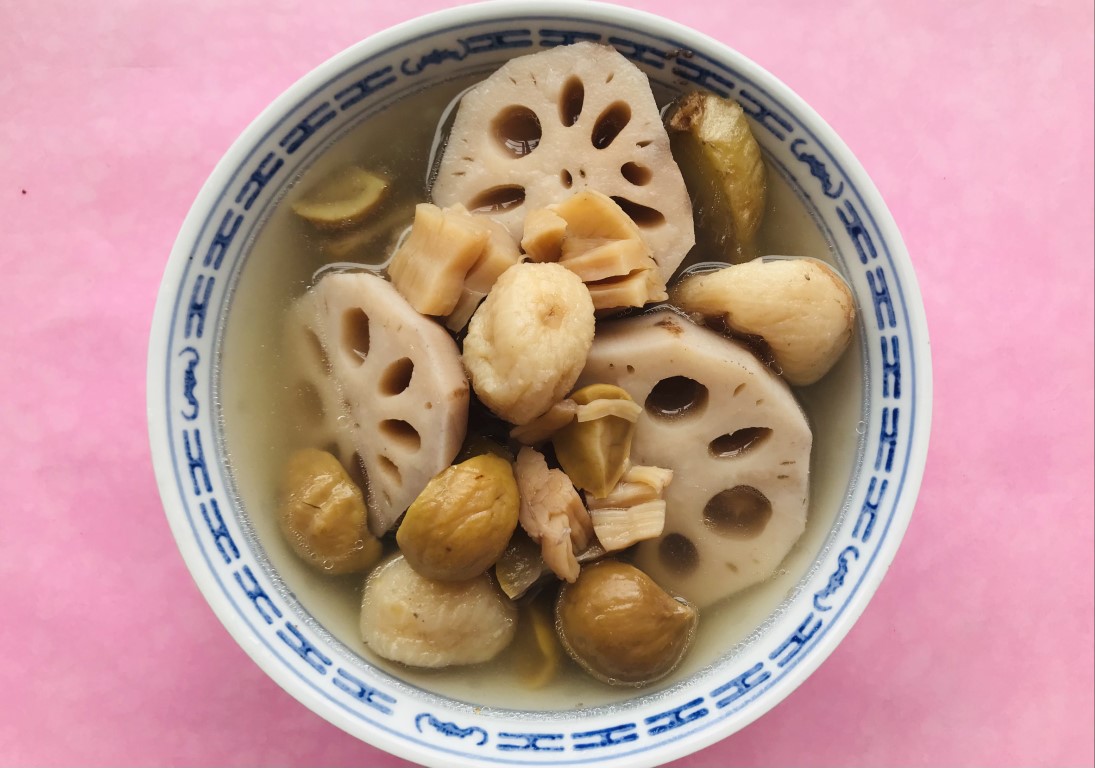
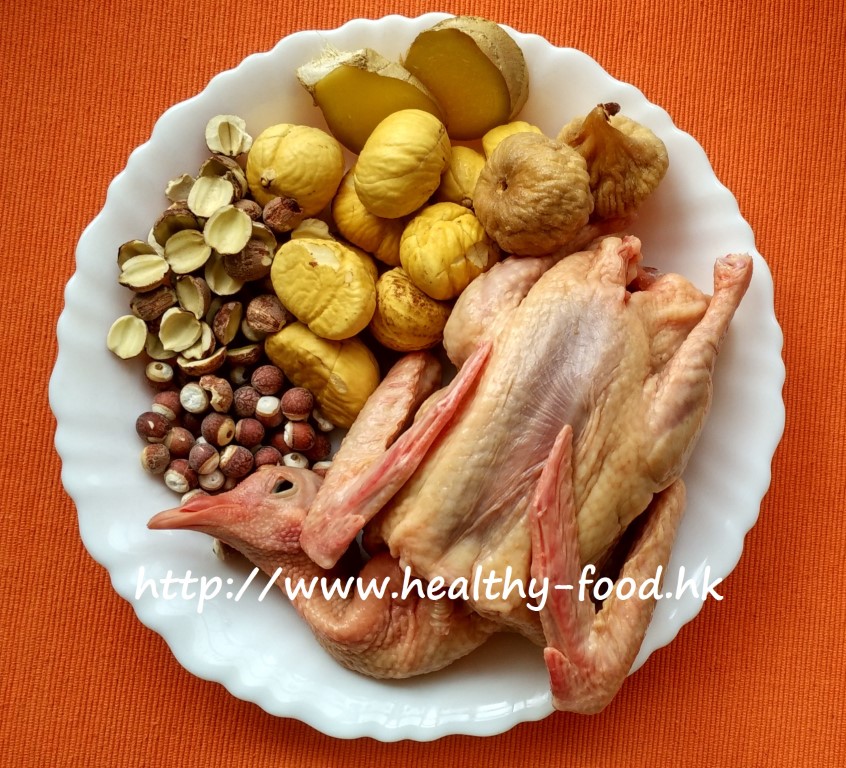
Chestnut, Lotus Seed, and Squab Soup
traditionally used to strengthen the sinews and bones, nourish blood, and support reproductive and general vitality
Why people make this soup
Chestnuts come into their peak season in autumn — and in Chinese food therapy, this is the ideal time to make the most of their bone-supporting properties. Chestnuts are traditionally considered to tonify the kidneys and strengthen the sinews, and they are particularly valued for supporting children’s skeletal development and for helping adults maintain strong bones and joints. Squab (young pigeon) is one of the most prized meats in Cantonese cooking for its tender, flavourful flesh. Traditional food therapy considers pigeon meat to be nourishing to qi and blood, supportive of reproductive health, and beneficial for memory and recovery from weakness. Combined with lotus seeds and fox nut to tonify the spleen and kidneys, and dried figs for natural sweetness, this is a soup that is both genuinely delicious and deeply nourishing.
Who it suits / who should be cautious
- Suited to adults and children alike; particularly beneficial for those with signs of qi and blood deficiency — fatigue, dizziness, pale complexion.
- Good for women with pale complexion, irregular periods, or difficulty conceiving.
- Supports bone health, making it a good regular soup for the elderly and for those at risk of osteoporosis.
- Those with constipation are welcome to drink the broth but should eat less of the lotus seeds and fox nut (qian shi), as these have an astringent quality.
Why these ingredients (the food-therapy logic)
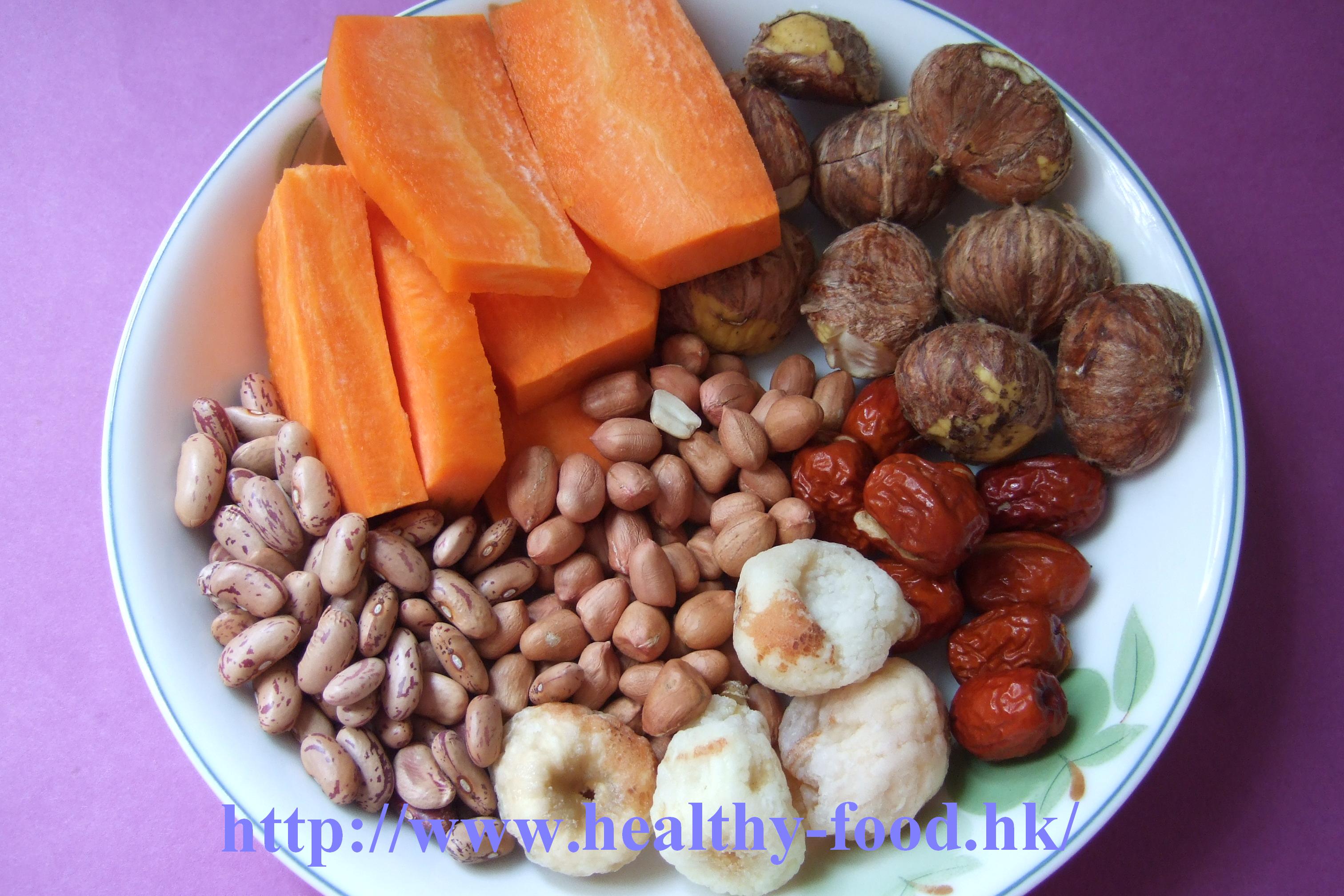
- Chestnuts (li zi): Traditionally associated with strengthening the kidneys, sinews, and bones; particularly valued for supporting skeletal development in children and bone density in adults.
- Lotus seeds (lian zi): Tonify the spleen, calm the heart-mind, and stabilise kidney qi; add a pleasantly creamy texture to the soup.
- Fox nut / Euryale seed (qian shi): Traditionally associated with tonifying the spleen and kidneys and stabilising vital essence.
- Squab (ru ge): A highly valued food-therapy ingredient; traditionally associated with tonifying qi and blood, supporting reproductive function and fertility, and aiding memory and recovery from illness.
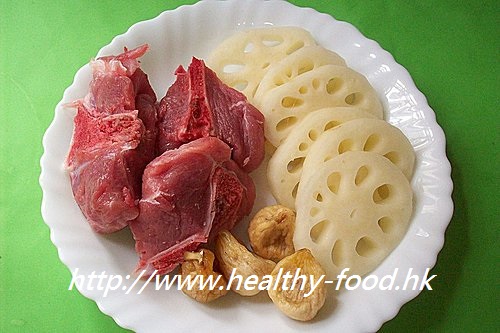
- Dried figs (wu hua guo): Provide natural sweetness and are traditionally associated with supporting lung and digestive health.
Ingredients (4 bowls / 3–4 servings)
| Ingredient | Amount | Notes |
|---|---|---|
| Lotus seeds (lian zi) | 1 liang (~38 g) | Rinse and soak |
| Fox nut (qian shi) | 1 liang (~38 g) | Rinse and soak |
| Chestnuts | 3 liang (~113 g) | Blanch briefly in boiling water to make peeling easier; remove both outer shell and inner skin |
| Fresh ginger | 3 slices | — |
| Dried figs | 3 pieces | Rinse and soak |
| Squab (young pigeon) | 1 whole (~400–500 g) | Cleaned, cut into large pieces, blanched briefly in boiling water and drained |
| Water | 8–9 bowls (~1.6–1.8 L) | — |
Method
- Soak and rinse lotus seeds, fox nut, and dried figs.
- To peel chestnuts: place in a dry pan and dry-toast for about 1 minute, or briefly boil in water — this makes the shell and inner skin much easier to remove.
- Clean the squab, cut into large pieces, blanch briefly in boiling water, and drain.
- Combine all ingredients in a pot with 8–9 bowls of water.
- Bring to a boil, then reduce to a low simmer for 2 hours until the liquid reduces to about 4 bowls.
- Serve warm; eat the solid ingredients along with the broth.
Bro Niu’s tips
This soup has a wonderful natural sweetness and a rich, clean flavour. Old and young alike can enjoy it. For women with pale complexion, irregular periods, or difficulty conceiving, this soup is particularly worthwhile making regularly. The one caveat: those with constipation should drink the broth but go easy on eating the lotus seeds and fox nut, as both have a binding, astringent effect on the bowels. For the chestnuts, a quick dry-toast in a wok before peeling saves a lot of effort.
Community questions answered (selected)
- Q (Mei Mei): Chestnuts are very difficult to peel — is there an easy method? Bro Niu: Try dry-frying them in a wok without oil for about 1 minute. They become much easier to peel after that.
Published September 18, 2022 · Adapted and translated for Nourilo from a traditional home-kitchen recipe. Approx. 3 min read.