Tonic Drinks & Waters
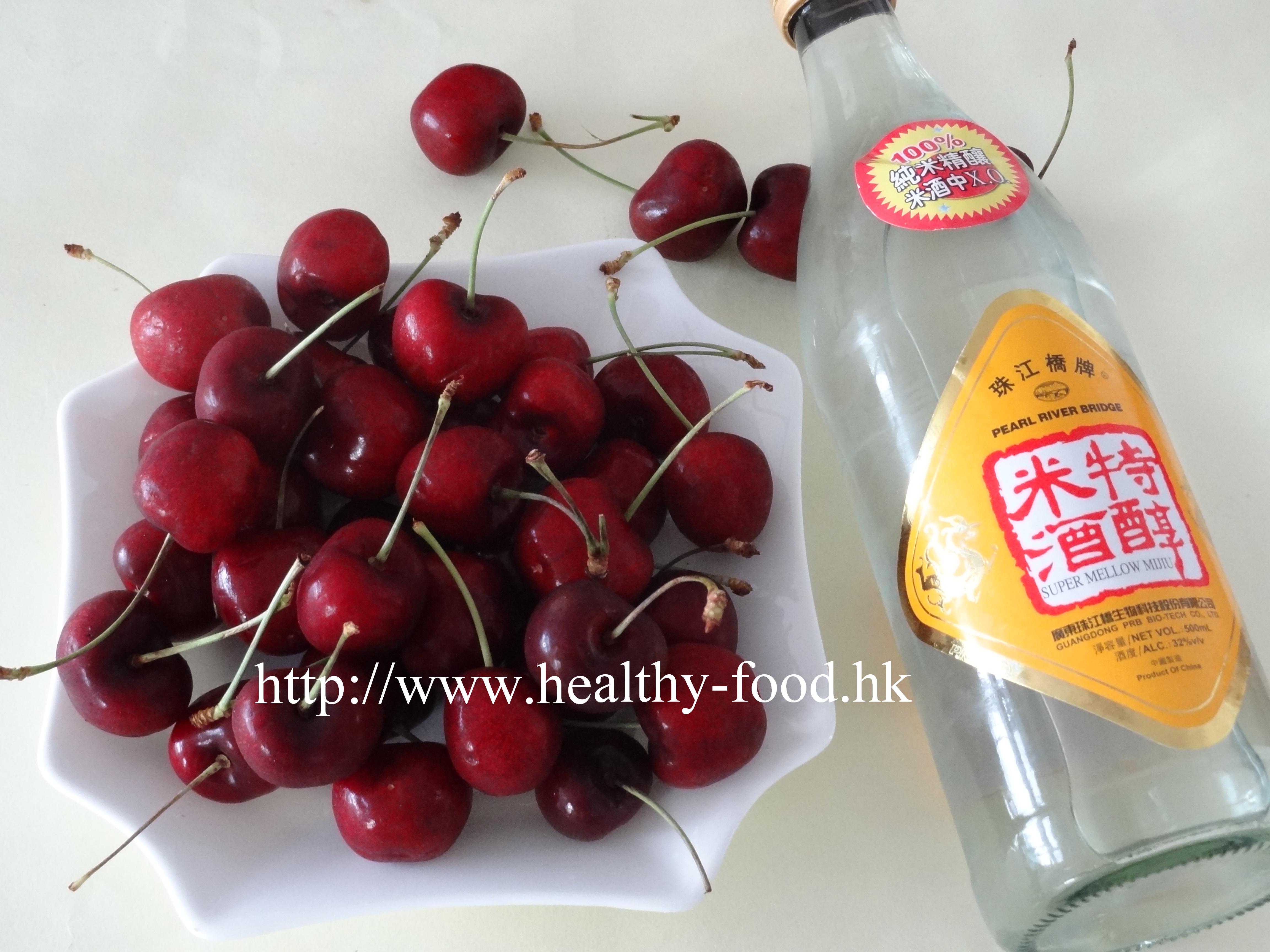
Cherry Infused Wine
Traditionally used to support joint health and ease wind-damp pain
Why people make this wine
Cherry season is brief, and when Bro Niu sees the stalls piled with bright, plump fruit, he does not just eat them fresh — he sets a bottle aside to steep. Cherries are one of the few fruits classified as warming in Chinese food therapy, and they carry a remarkable nutritional profile: high in iron, rich in antioxidants, and traditionally associated with nourishing the blood, easing wind-damp conditions, and smoothing the skin. In folk medicine, cherry wine is a time-honored remedy for the aching joints and stiff limbs that come with rheumatism, cold-damp arthritis, and gout — particularly the kind of joint pain that worsens in cold, rainy weather. The wine amplifies the fruit’s warming and circulating properties, and the beautiful deep-red color that develops after ten days of steeping is reason enough to make a bottle.
Who it suits / who should be cautious
- Traditionally suited to people with joint pain, rheumatic discomfort, cold-damp arthritis, or gout; particularly effective for pain that worsens in cold or damp weather
- Cherry wine is also associated with nourishing skin and building blood
- Not suitable for children
- Not for use during fever, active cough, or any respiratory illness — cherries and their wine may exacerbate internal heat and worsen coughing
- People who cannot drink alcohol can use the wine as a cooking ingredient (e.g., add to braised dishes or soups) — the alcohol cooks off while the beneficial compounds remain
- People with high blood pressure or diabetes should drink only very small amounts and consult their doctor
- Even healthy adults should consume in moderation: two tablespoons (approximately 30 ml) twice daily is the traditional serving
Why these ingredients (the food-therapy logic)
- Cherries (ying tao): One of the relatively few fruits considered warming rather than cooling in Chinese food therapy. Rich in iron and traditionally associated with supplementing the blood, expelling wind-dampness, lubricating the skin, and supporting the sinews. Cherry season is short, making preservation in wine a practical way to extend access to these benefits year-round.
- Rice wine (mi jiu): Acts as a natural solvent and preservative, drawing out the beneficial compounds from the cherries while adding its own gentle warming and blood-circulating properties. The alcohol level varies depending on the type chosen: glutinous rice wine is the mildest (~5% alcohol), Shaoxing wine is around 16%, and standard rice spirits can reach 32%. All are suitable; the result will simply vary slightly in strength and flavor.
- Rock sugar (optional): Adds sweetness and rounds out the flavor, making the wine more pleasant to drink.
Ingredients (approximately 1 litre)
| Ingredient | Amount | Notes |
|---|---|---|
| Fresh cherries | 500 g | Wash with cold boiled water (not tap water), drain completely, and dry before bottling |
| Rice wine (mi jiu) | 1000 ml | Choose based on personal preference and alcohol tolerance |
| Crushed rock sugar | to taste (optional) | Add at the beginning if desired; makes the wine sweeter and more palatable |
Method
- Wash the cherries with cold boiled water (not tap water — this reduces the risk of bacterial contamination). Drain thoroughly; pat dry or air-dry until no surface moisture remains.
- Remove the stems if desired (optional).
- Place the cherries into a clean, dry glass jar with a tight-fitting lid.
- Pour in the rice wine. Add crushed rock sugar if using.
- Seal the jar tightly and store in a cool, dark place for at least 10 days before drinking.
- After 3 months, it is best to remove the cherries from the wine (the soaked cherries can be eaten as-is, or added to cakes and desserts — they are delicious).
- Serve 2 tablespoons (~30 ml) in the morning and 2 tablespoons in the evening.
Bro Niu’s tips
- The infused cherries that have soaked in the wine are absolutely edible — they are wonderful in baking, folded into cakes, or eaten as a small treat.
- If you prefer not to drink alcohol, this wine can be used as a cooking ingredient — add a splash to braised meat or soup. The alcohol evaporates during cooking while the flavor and beneficial compounds remain.
- The wine stores well for up to a year; once the cherries are removed after 3 months, it keeps even longer.
- Different rice wines give different results: glutinous rice wine (nuo mi jiu) produces the mildest, most fragrant result with the most vibrant red color; Shaoxing wine gives a richer, more complex flavor; aged rice spirits produce the most potent preparation.
- For gout specifically: cherries have strong traditional and some modern research support for gout management. If your husband is concerned about alcohol, Bro Niu suggests trying a cherry-and-rice-vinegar infusion instead (same ratio, 1:2 cherry to vinegar, with crushed rock sugar to taste) — this also supports gout and is non-alcoholic.
Community questions answered (selected)
-
Q (Elmas88): My husband has gout and avoids alcohol. Can we use rice vinegar instead of rice wine for the same effect? Bro Niu: I have not personally tried it with vinegar, but it should work. The ratio would be about 1 part cherries to 2 parts rice vinegar, with some crushed rock sugar to balance the tartness. This is traditionally considered beneficial for gout as well.
-
Q (annie): I have a 10-year-old Shaoxing wine at home — can I use that? How long can the finished wine be stored? Bro Niu: Aged Shaoxing wine is excellent and will produce a richer, more mellow cherry wine. The finished wine can be stored for a year; after 3 months, remove the cherries, and the wine alone keeps even longer.
-
Q (zs0760): Can I add more fresh cherries into the bottle after the first batch has already been infusing? Bro Niu: I have not tried this myself. Adding more cherries later would make the wine increasingly concentrated — you would need to drink even smaller amounts. I would not recommend it for simplicity.
Published July 31, 2012 · Adapted and translated for Nourilo from a traditional home-kitchen recipe. Approx. 5 min read.