Sweet Soups & Desserts
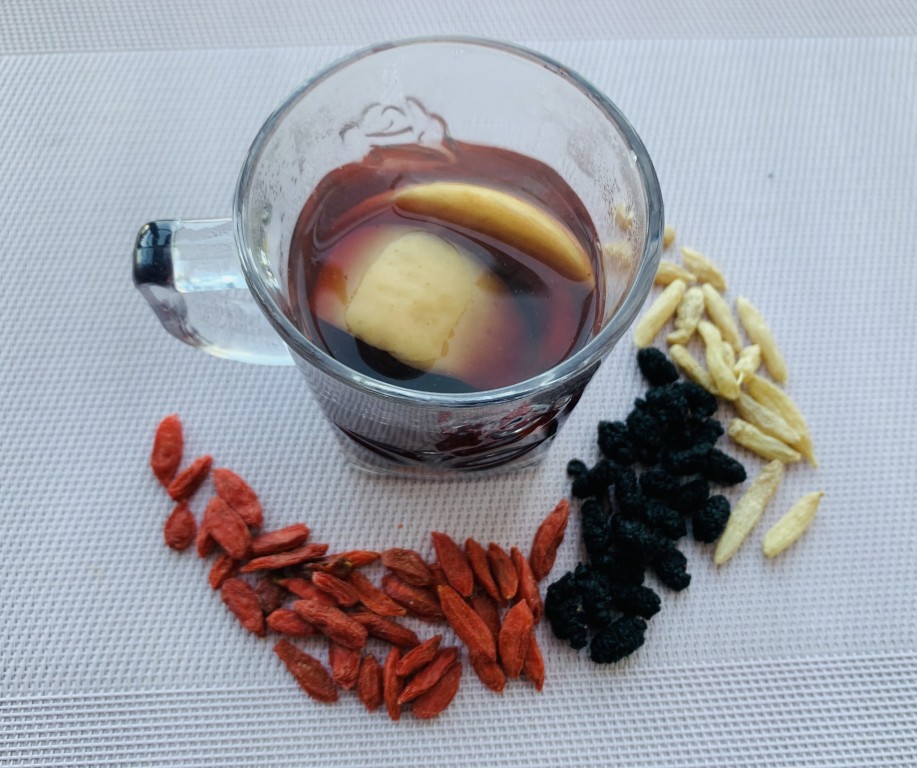
Candied Winter Melon Dampness-Relief Tea
Traditionally used to clear summer heat and support fluid balance
Why people make this tea
The Great Heat solar term (Da Shu) marks the hottest point of the year in southern China, and it is precisely at this time that the body is most susceptible to summer dampness — that heavy, sluggish feeling that settles in and leaves people fatigued and unfocused. In Chinese food therapy, summer heat is seen as carrying a “damp” quality that accumulates in the body. This tea combines a ready-made dampness-relief herb packet with candied winter melon for a comforting, seasonal drink that is traditionally understood to help the body release that dampness and feel lighter and more energetic.
Who it suits / who should be cautious
- Well-suited to most people during hot, humid summer weather, especially around the hottest weeks of the year
- Particularly helpful for those feeling heavy, sluggish, or prone to afternoon fatigue
- Those with a cold constitution or who tend to feel chilled should use this sparingly — winter melon has a slightly cooling nature
- G6PD (favism) patients: check the herb packet carefully — if it contains honeysuckle (jin yin hua), choose a different blend; the candied winter melon itself is fine
Why these ingredients (the food-therapy logic)
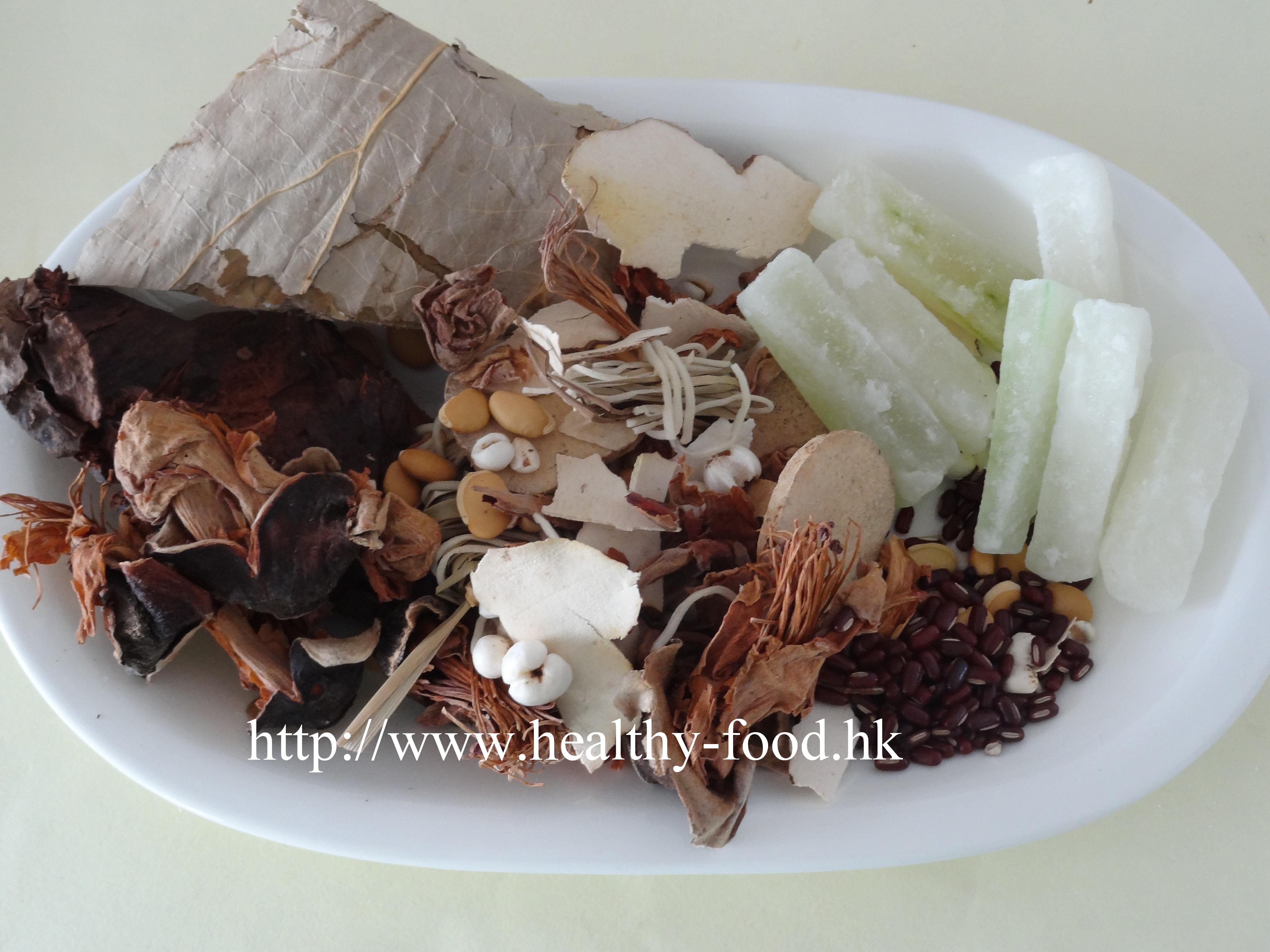
- Pre-packaged dampness-relief herb mix (qu shi liao bao): These ready-made packets are commonly sold in Chinese herbal medicine shops. They typically contain a combination of ingredients such as coix seed (yi mi), hyacinth bean (bian dou), poria (fu ling), lotus leaf (he ye), and other heat-clearing herbs. The exact mix varies by shop, but the overall aim is to support the body’s water metabolism and help release accumulated summer heat.
- Candied winter melon (tang dong gua): Sweetened winter melon strips have a mild, pleasant sweetness and are traditionally associated with cooling the body and clearing heat. Winter melon itself is considered helpful for fluid balance. The sweet preparation also makes this tea more palatable.
Ingredients (4 bowls)
| Ingredient | Amount | Notes |
|---|---|---|
| Dampness-relief herb packet | 1 packet | Available at Chinese herb shops; contents vary but are typically a mix of coix seed, hyacinth bean, poria, and similar herbs |
| Candied winter melon strips | ~75 g (2 liang) | Found at Chinese herb shops or specialty grocery stores |
| Water | 8 bowls | Starting water for cooking |
Method
- Rinse both the herb packet contents and the candied winter melon strips under cold water.
- Place everything into a pot with 8 bowls of water.
- Bring to a boil over high heat, then reduce to a gentle simmer.
- Cook for about 2 hours until reduced to approximately 4 bowls of liquid.
- Drink warm or at room temperature. The tea has a mildly sweet, herbal taste.
Variation: You can substitute the candied winter melon with 300–500 g of fresh winter melon. Add 2–3 honey dates (mi zao) to restore a little sweetness.
Bro Niu’s tips
- This tea is most appropriate around the Great Heat and Minor Heat solar terms (mid-July), but it is suitable to drink on any very hot, humid summer day — up to 2–3 times per week during the season.
- When dampness clears from the body, energy levels typically improve and that feeling of afternoon drowsiness lessens.
- If you prefer to use fresh winter melon instead of the candied strips, use about half to one jin (250–500 g); add honey dates for sweetness.
- Chinese herb materials are best started in cold water — putting them in already-boiling water can seal the surface and reduce how much their beneficial compounds release into the broth.
Community questions answered (selected)
-
Q (reader): Does this dampness-relief tea have wood cotton flower (mu mian hua) in it? Is it suitable for people with a cold constitution? Bro Niu: Wood cotton flower is cooling; in fact most five-flower teas are on the cool side. If your constitution tends cold, use less. The candied winter melon version is milder overall.
-
Q (reader): Can I replace candied winter melon with fresh winter melon? How much? Do I need to add sugar? Bro Niu: Yes, use half a jin to one jin of fresh winter melon. For sweetness, add two or three honey dates (mi zao) — no additional sugar needed.
-
Q (reader): Why does the herb shop owner say to start with cold water rather than boiling water? Bro Niu: Chinese medicinal ingredients are best placed in cold water to start. Some contain oils or starches that, if dropped into already-boiling water, can have their surface sealed immediately, preventing their beneficial components from being fully released into the soup. Meat is the same — cold water start makes the broth more flavorful.
Published July 22, 2012 · Adapted and translated for Nourilo from a traditional home-kitchen recipe. Approx. 4 min read.