Congee & Porridge
Dried Mussel, Century Egg and Lean Pork Congee
traditionally taken to clear heat, ease restlessness and support healthy blood pressure
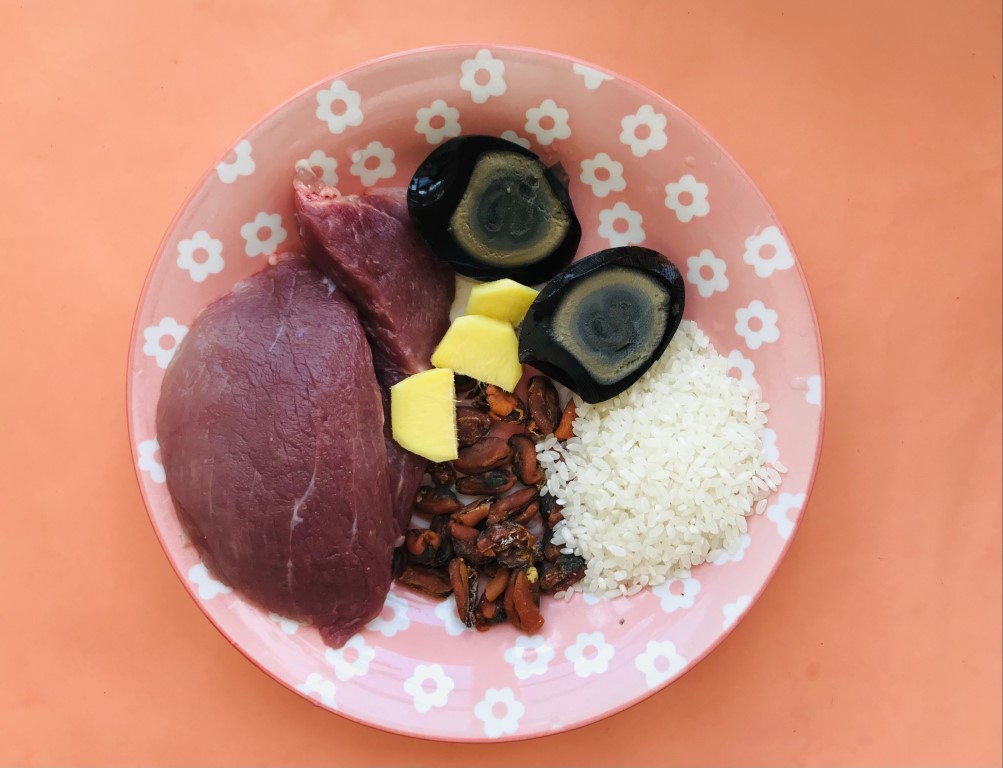
Why people make this congee
High blood pressure is common — stress, tension and a salty diet all add to the heart’s load, and drinking and smoking don’t help. In Chinese-medicine thinking, midlife people often have the “liver-yang rising” pattern: dizziness, tinnitus, irritability, a flushed face, sleeplessness, constipation and an achy lower back. Bro Niu offers this simple, smooth congee, traditionally used to clear heat, ease restlessness and bring down “empty-fire” — a gentle, everyday dish for the whole family.
Who it suits / who should be cautious
- Suits all ages; smooth and savory. Dried mussel is especially valued for older or run-down people with qi-and-blood deficiency, high blood pressure, tinnitus, dizziness or a weak lower back.
- This is a wellness congee, not a treatment — continue your doctor’s care.
Why these ingredients (the food-therapy logic)
- Dried mussel (dan cai): Nicknamed the “sea hen’s egg” and very nutritious; traditionally nourishes the liver and kidneys, nourishes yin and blood, and supports those with deficiency.
- Century egg (pi dan): Adds savor and is traditionally considered cooling, helping clear heat.
- Lean pork (shou rou): Nourishes and adds body to the congee.
- Ginger (sheng jiang): Balances the seafood and rounds out the flavor.
Ingredients (3–4 bowls)
| Ingredient | Amount | Notes |
|---|---|---|
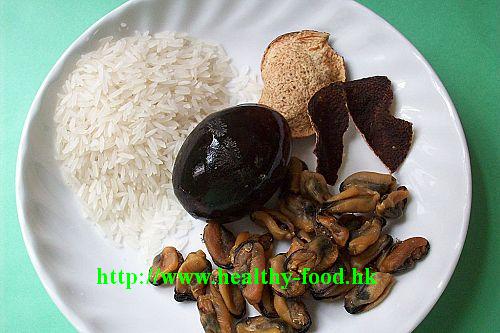
| Dried mussels | ~38 g (1 liang) | Soaked and rinsed |
| Century egg | 1 | Cut into pieces |
| Lean pork | ~113 g (3 liang) | Sliced |
| Fresh ginger | a little | For blanching |
| Congee rice | ~75 g (2 liang) | Rinsed, seasoned with a little oil and salt |
Method
- Soak and rinse the dried mussels. Slice the pork; in a pan with ginger and water, blanch the pork and mussels together. Cut the century egg into pieces. Rinse the rice and season with a little oil and salt.
- Put all the ingredients with enough water into a rice cooker, set the congee program, and serve once cooked.
Bro Niu’s tips
This congee is smooth and good for young and old. For a fresher taste, use 6–8 fresh mussels instead. Dried mussel (also called wang cai) is known as the “sea hen’s egg” — very nutritious, and especially suited to middle-aged and older people who are run-down, with qi-and-blood deficiency, high blood pressure, arteriosclerosis, tinnitus, dizziness or a weak lower back.
Community questions answered (selected)
- Q (步印/reader): How do I clean dried mussels? I see threads on the outside. Bro Niu: Blanch them with ginger water — soak and rinse first. Those threads are the mussel’s “beard”; you don’t need to remove them. It’s a curious thing, but it isn’t dirt.
- Q (reader, WING): Dried mussels are smaller than dried oysters and a bit gritty, harder to clean, so I rarely buy them. Do mussel and oyster have the same benefits? Can I eat oyster soup when I have a cold? Bro Niu: You can use dried oyster instead, or fresh mussels for a fresher taste. Both are rich in nutrients: both nourish yin and blood; dried oyster supplements and harmonizes deficiency and is high in zinc (good for children’s brain development); dried mussel nourishes the liver and kidneys, and helps regulate heavy periods and discharge in women.
- Q (KK): I’ve heard astragalus and notoginseng (tian qi) help with high blood pressure — what’s a good pairing? Bro Niu: Astragalus and notoginseng can be simmered with salvia (dan shen) and goji to help support blood pressure.
Published October 14, 2023 · Adapted and translated for Nourilo from a traditional home-kitchen recipe. Approx. 3 min read.