Soups
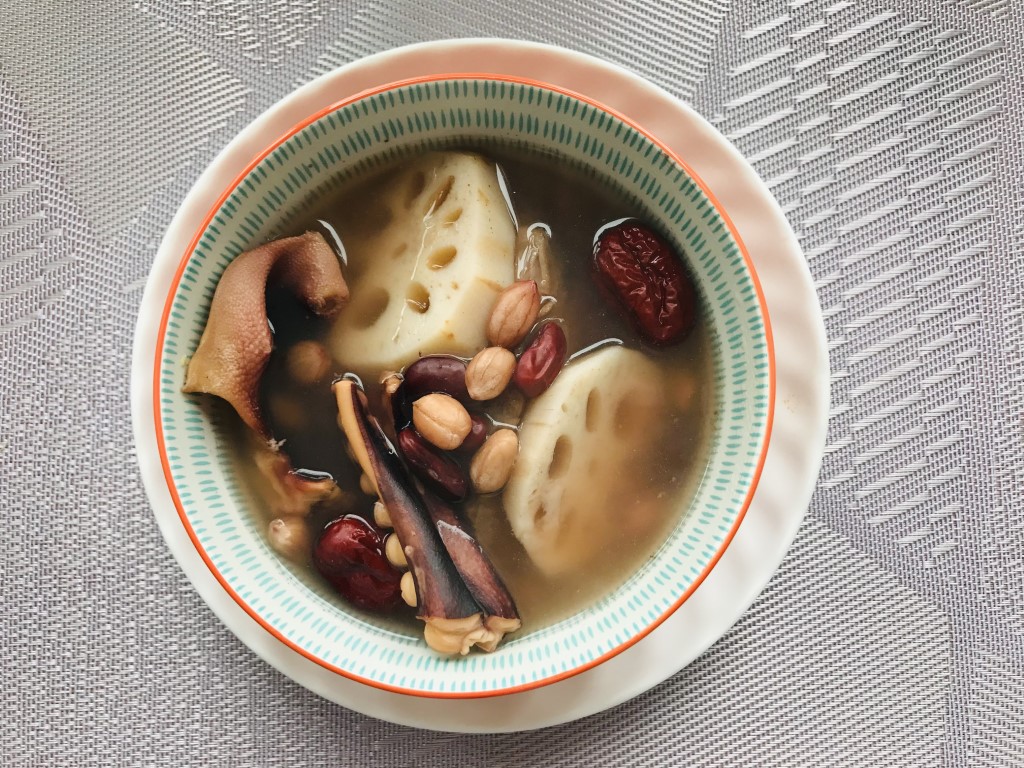
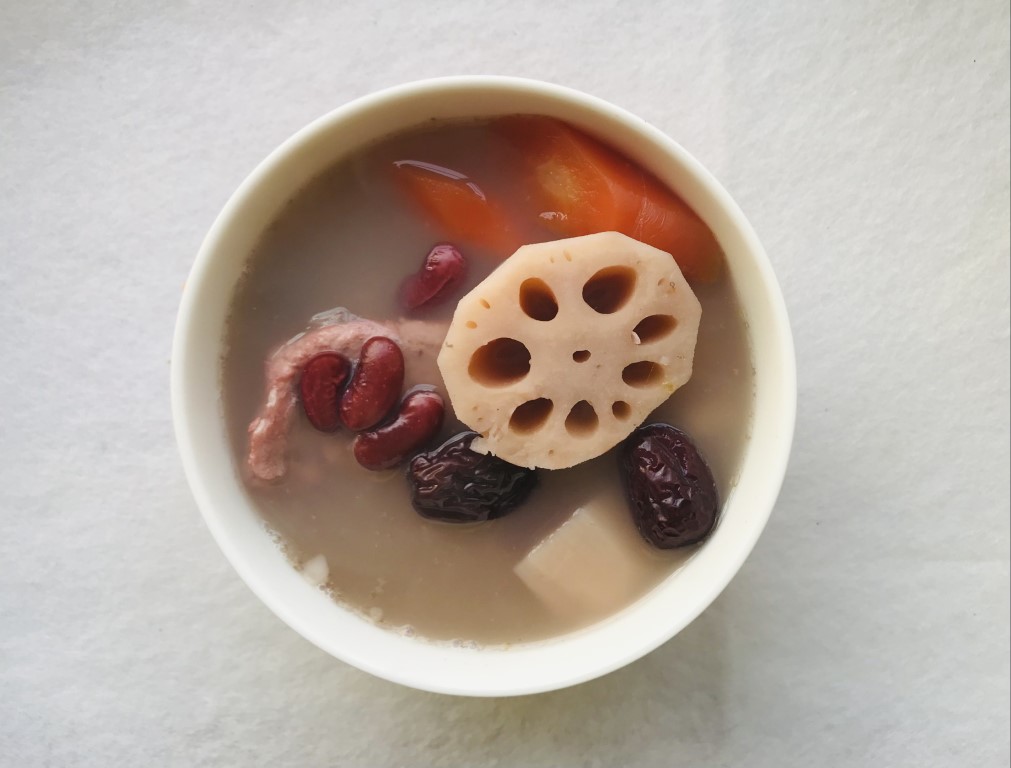
Lotus Root, Carrot, Red Kidney Bean and Pork Soup
Traditionally nourishes blood, brightens the complexion, and supports healthy bowel function
Why people make this soup
Bro Niu keeps coming back to lotus root and carrot as a pairing because they represent something he truly values about Cantonese food therapy: ingredients that are available all year long, that carry no risk, that suit everyone from pregnant women to the elderly, and that actually taste good. Lotus root transforms completely when cooked — its raw cooling and blood-moving quality gives way to a gently warming, blood-building nourishment. Combined with red kidney beans and a few jujubes, the soup turns a beautiful amber, sweet and comforting, and it does the kind of quiet internal work that shows up over time in clearer skin and better energy. Long-term drinkers often find it supports healthy bowel movement and cholesterol levels as a bonus.
Who it suits / who should be cautious
- Excellent for people with pale complexion, anaemia, or generally low blood; suitable for women who want skin-brightening dietary support
- Safe for pregnant women — lotus root and carrot are considered broadly safe during pregnancy; cooked lotus root is nourishing rather than cooling
- Safe for anyone with an illness or convalescing; no contraindications for most conditions
- Those who dislike red dates (finding them “heating”) can substitute south dates (nan zao) or dried figs; this soup is suitable during menstruation
Why these ingredients (the food-therapy logic)
- Lotus root (lian ou): Raw lotus root clears heat and moves blood; cooked, it shifts to building blood, nourishing the spleen, and opening the appetite. The nodes of the lotus root are traditionally considered the strongest part for stopping bleeding — nosebleeds, haemoptysis, blood in stool.
- Carrot (hong luo bo): Sweet and neutral; complements the lotus root and provides beta-carotene and natural sweetness
- Red kidney beans (hong yao dou): Rich in protein and iron; associated with nourishing blood and supporting cardiovascular health; also help move the bowels
- Red dates (hong zao): Warm, sweet, qi- and blood-building; a steady partner in virtually all Cantonese nourishing soups
- Lean pork: Provides protein and depth of flavour without heaviness
Ingredients (4–5 bowls)
| Ingredient | Amount | Notes |
|---|---|---|
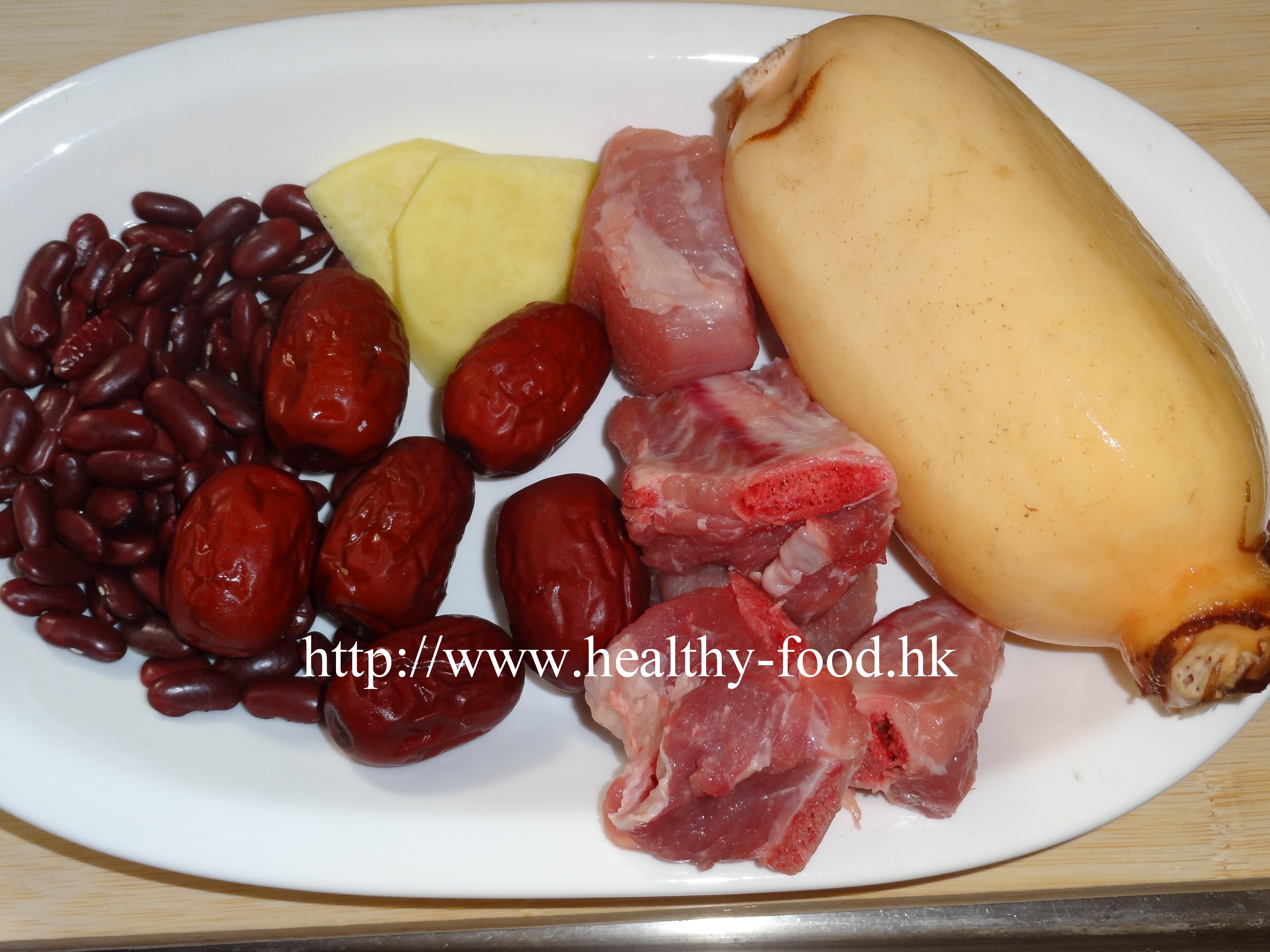
| Lotus root (lian ou) | 600 g (1 jin) | Peeled, cubed; use clay or ceramic pot if possible |
| Carrot | 1 medium | Peeled, cubed |
| Red kidney beans | 75 g (2 liang) | Rinsed and soaked in cold water for a few hours |
| Red dates (hong zao) | 6 | Pitted |
| Lean pork | 300 g (half jin) | Cut into pieces; blanched briefly |
Method
- Peel the lotus root and carrot; cut both into chunky pieces.
- Rinse the kidney beans and soak in cold water for a few hours (or overnight); drain.
- Pit the red dates.
- Cut the pork into pieces and blanch in boiling water for 1–2 minutes; drain and rinse.
- Place all ingredients in a pot (clay or ceramic preferred) with 8–9 bowls of water.
- Bring to a boil, then reduce to low heat and simmer for 2 hours until the soup is rich and reduced to 4–5 bowls.
- Serve the soup and eat the ingredients together.
Bro Niu’s tips
Traditionally, lotus root should be cooked in a clay or ceramic pot rather than a metal one, as the tannins in lotus root may react with iron or stainless steel and make the soup slightly grey or murky. In practice, Bro Niu has tested it with a metal pot and found only a slight colour change with no meaningful effect on flavour — but if you have a clay pot, it is worth using. This soup is also naturally good for easing constipation and supporting healthy cholesterol levels with regular use.
Community questions answered (selected)
-
Q (chan): What does “lotus root avoids iron cookware” mean — does it harm nutrition, or is it just colour? Bro Niu: Traditional texts do say this. From my own experience, cooking lotus root in a metal pot just makes the soup a little more grey in colour; it did not noticeably affect the flavour. So it is more of an aesthetic preference than a safety issue.
-
Q (Maylai): Can I use a stainless steel pot? Bro Niu: Stainless steel pots often contain trace mixed metals, and the soup may turn slightly cloudy. It is best to use a clay pot or a Corning-type glass pot if you have one.
-
Q (Wu lao tai): If I leave out the red dates (worried about getting too heaty), what can I substitute? Can I drink this during menstruation? Bro Niu: Substitute with south dates (nan zao) or dried figs. You can drink this soup during your period.
Published April 4, 2022 · Adapted and translated for Nourilo from a traditional home-kitchen recipe. Approx. 4 min read.