Soups
Four Red Soup (Si Hong Tang)
traditionally used to nourish blood, support blood cell production, and benefit women's health
Why people make this soup
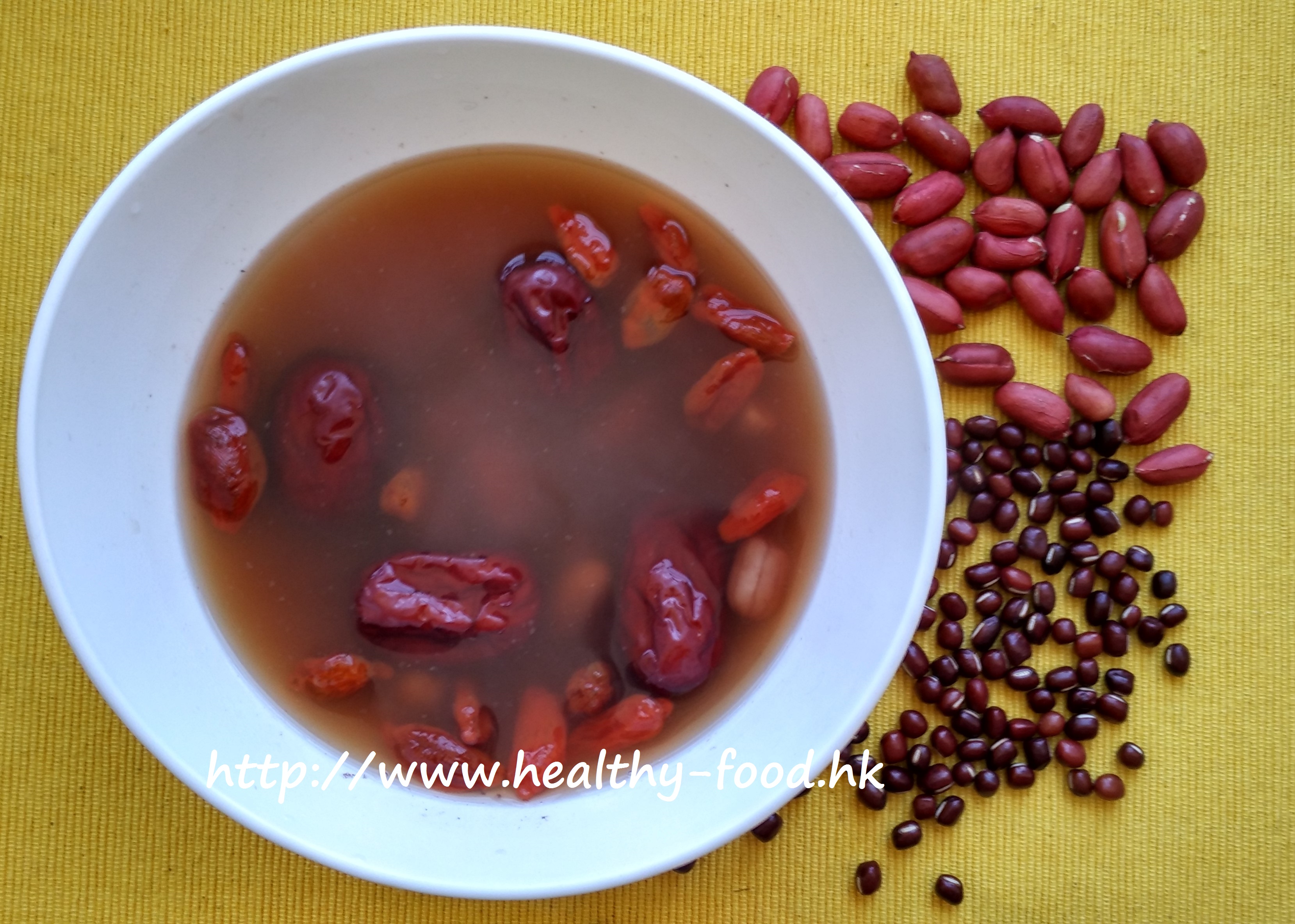
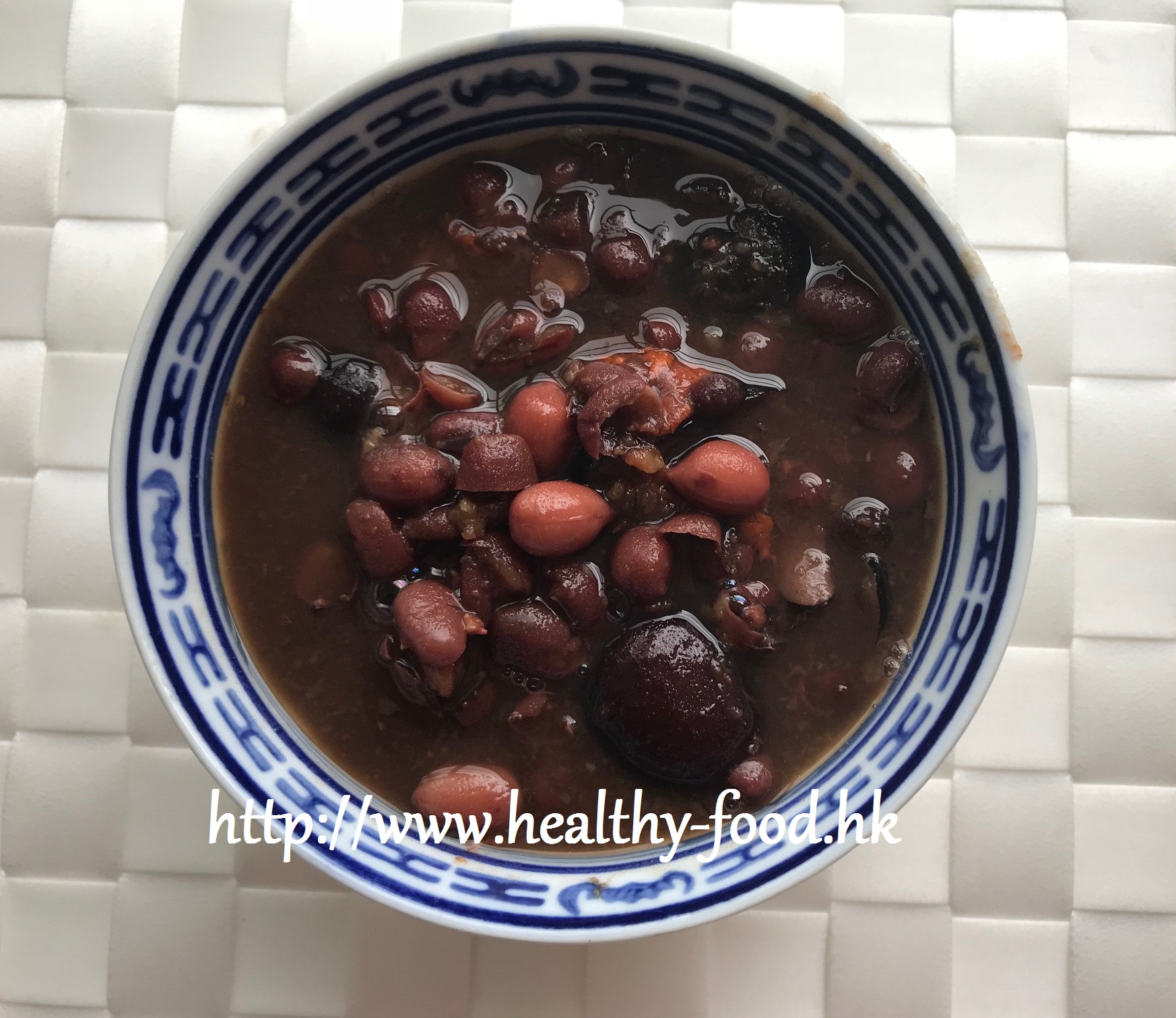
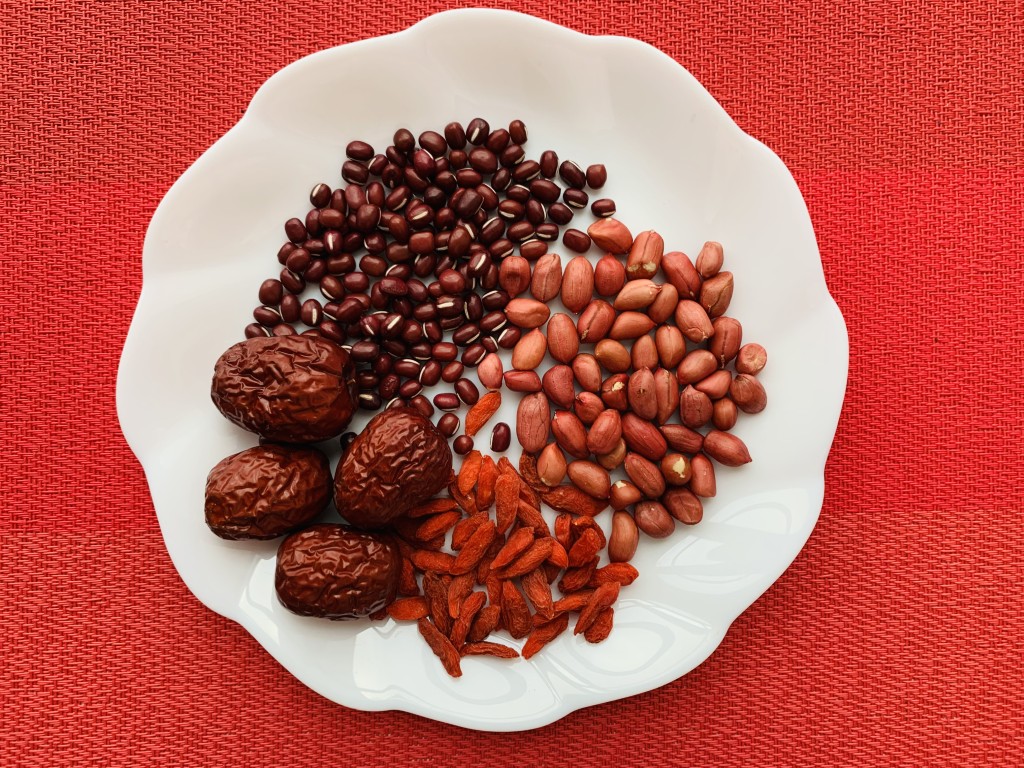
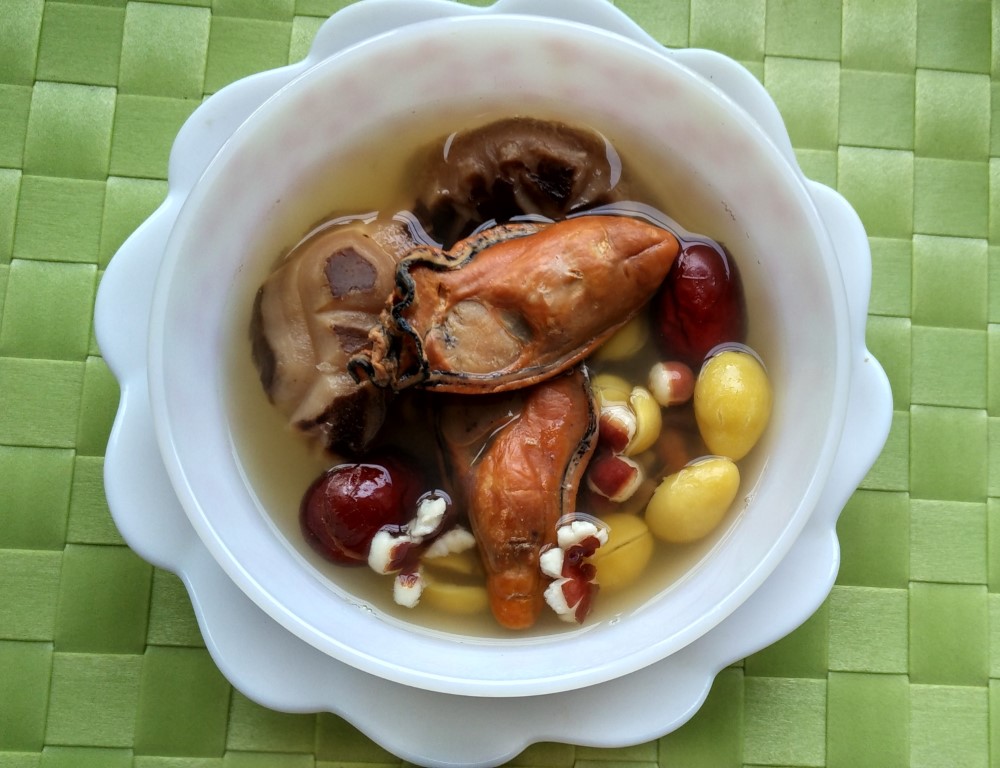
Cancer treatments — especially chemotherapy and radiation — save lives, but they also suppress bone marrow function and reduce red and white blood cell counts. This leaves patients feeling profoundly weak and vulnerable to infection. Traditional food therapy cannot replace medical treatment, but it can offer gentle nutritional support alongside it. This soup uses four red-coloured foods — all associated in Chinese dietary tradition with nourishing blood and supporting haematopoiesis (the body’s blood-making process): red-skinned peanuts, small adzuki beans, goji berries, and red dates. The redness is more than aesthetic; in Chinese dietary theory, red foods are associated with the heart and blood. The peanut skin in particular is specifically associated with supporting platelet production and blood coagulation. This soup is also widely recommended for anaemia, irregular or scanty menstruation, and the nutritional demands of pregnancy and the postpartum period.
Method
- Pit the red dates. Soak the red-skinned peanuts and adzuki beans in cold water for 30 minutes; drain.
- Place the peanuts, adzuki beans, and red dates in a pot with 1.8 L of water.
- Bring to a boil, then reduce to a gentle simmer.
- Cook for 1 hour.
- Add the goji berries and continue cooking for a further 10 minutes.
- Serve warm. Eat the peanuts, beans, and dates as well — they are nutritious and help maximise the effect.
Nourilo’s Tips
- Eating the soup ingredients (not just drinking the liquid) significantly boosts the blood-nourishing effect — especially important for those with anaemia.
- Red-skinned peanuts are available at Chinese or Asian grocers, or online. If unavailable, smaller regular peanuts (with more skin surface area) work reasonably well, but the effect is somewhat reduced.
- For peanut allergy: substitute the peanuts with an additional 38 g of adzuki beans.
- Frequency: 2–3 times per week; reduce once symptoms improve.
Comments
Join the conversation — sign in or create a free account to comment.
Continue with GoogleLoading comments…