Soups
Red Bean, Black Rice and Red Date Sweet Soup
traditionally associated with warming the body, nourishing blood and brightening the complexion
Why people make this sweet soup
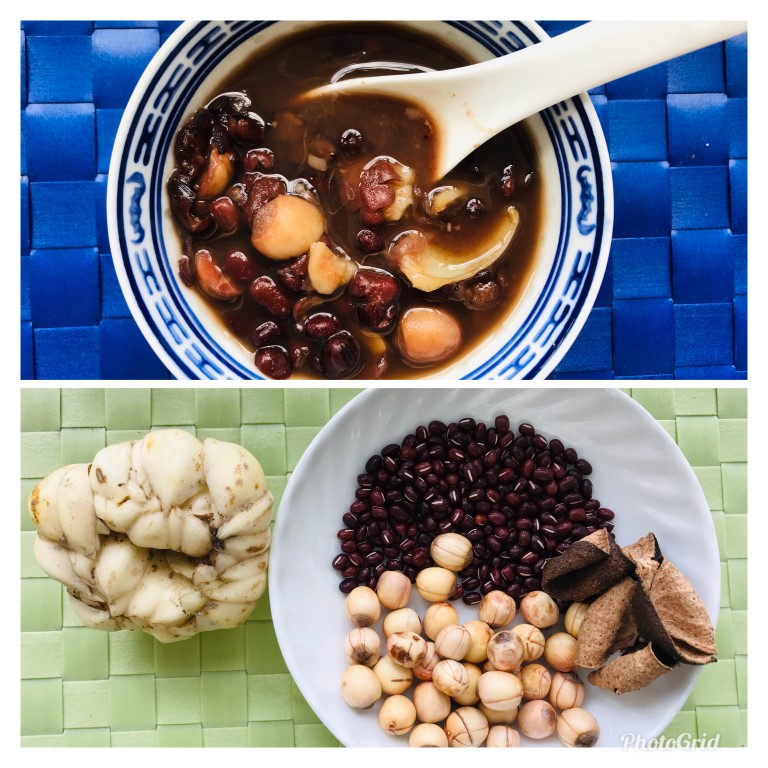
As the days shorten and temperatures drop through autumn and winter, Cantonese households reach for warming, blood-nourishing foods. This sweet soup came about when Bro Niu bought a packet of black rice at the supermarket and discovered it was far better suited to a slow-cooked sweet soup than mixed into plain rice. The result is a deeply coloured, naturally sweet bowl that warms from the inside out — and the combination of red beans, black rice and red dates makes it as nutritious as it is satisfying.
Who it suits / who should be cautious
- Suitable for most people in autumn and winter as a warming tonic
- Particularly associated with supporting those who feel cold, have pale complexions, or experience mild fluid retention
- Black rice has a relatively low glycaemic index compared to white rice, making it more suitable for people monitoring blood sugar — though the added brown sugar should be reduced or omitted accordingly
- Those with a weak or cold spleen-stomach should prefer black brown rice over black glutinous rice, which is stickier and harder to digest
Why these ingredients (the food-therapy logic)
- Red beans (chi xiao dou): Associated with nourishing the blood, supporting the heart, promoting urination and resolving fluid retention. A staple of warming Cantonese sweet soups.
- Black rice: Richer in fibre, antioxidants (particularly anthocyanins in the dark outer bran), vitamin E, protein and iron compared to white rice. Traditionally associated with supporting the liver and kidneys.
- Red dates (hong zao): Among the most cherished tonic ingredients in Chinese food therapy — associated with nourishing the blood, calming the spirit, and supporting the spleen and stomach.
- Dried tangerine peel (chen pi): Added to warm the stomach, aid digestion, and balance the sweetness of the soup without heaviness.
- Brown sugar (hong tang): Warming in nature — in traditional food therapy, brown sugar is preferred over white sugar in cold-season recipes for its warming properties.
Ingredients (3 bowls)
| Ingredient | Amount | Notes |
|---|---|---|
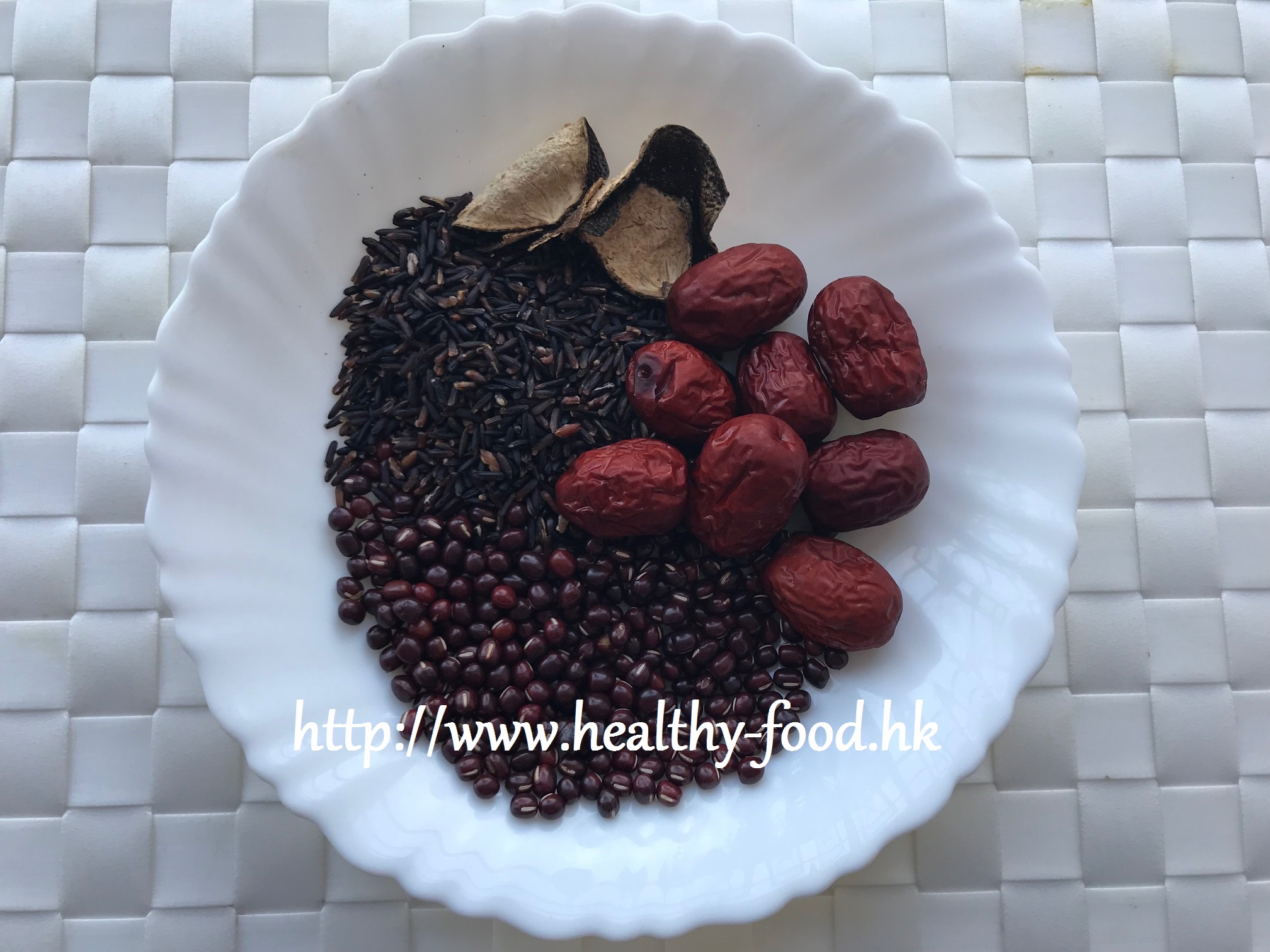
| Red beans | 1 liang (~37 g) | Rinse |
| Black brown rice | 2 liang (~75 g) | Rinse |
| Red dates | 6–8 pieces | Pit and rinse |
| Dried tangerine peel | 1 piece | Rinse |
| Brown sugar | to taste | Add at the end |
| Water | 6–7 bowls (~1.5–1.75 L) |
Method
- Rinse all ingredients. Pit the red dates.
- Combine all ingredients except the brown sugar in a pot with 6–7 bowls of water.
- Bring to a boil over high heat, then reduce to a gentle simmer.
- Cook for about 1 hour, until the beans and rice are soft and the liquid has reduced to about 3 bowls.
- Stir in brown sugar to taste, cook until dissolved, then serve warm.
Bro Niu’s tips
Black glutinous rice can be used in place of black brown rice — the resulting soup will be richer and stickier. However, for people with diabetes or weaker digestion, black brown rice is the better choice as it is less starchy and lighter on the stomach. A handy way to tell the two apart: snap a grain in half — if the inside is transparent, it is black rice; if the inside looks white and cloudy, it is black glutinous rice.
Community questions answered (selected)
-
Q (Sandy): Where can I buy black brown rice? And is this soup suitable for all body types? Bro Niu: Black brown rice is available at most Wellcome or ParknShop supermarkets, and at many grocery stores. It is generally suitable for most body types.
-
Q (Shum): How many times per week should I drink the red date and black wood ear tonic from your book? Bro Niu: The red date and black wood ear tonic can be taken 2–3 times per week.
Published October 7, 2020 · Adapted and translated for Nourilo from a traditional home-kitchen recipe. Approx. 3 min read.