Herbal & Flower Teas
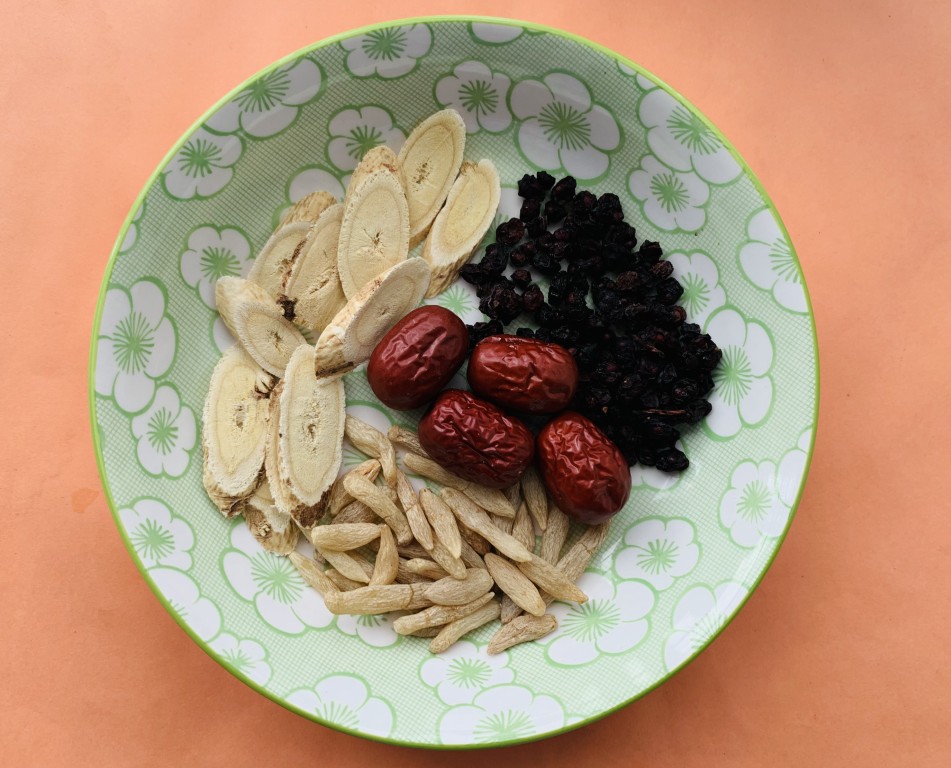
Astragalus, Mai Dong and Schisandra Tea
Traditionally taken to support against excess day or night sweating
Why people make this tea
In hot weather the body sweats to cool down, and it’s also normal to sweat from heavy clothing, strong emotion, exertion or hot soup. But if you sweat heavily and persistently when it isn’t hot, or after only mild activity, that’s worth paying attention to. For ordinary excess sweating, Bro Niu brews this gentle tea, which traditionally supports those who sweat a lot and who sleep restlessly from unsettled liver qi.
Who it suits / who should be cautious
- People with daytime spontaneous sweating or night sweats.
- Those who feel restless at night with unsettled liver qi.
- If sweating is heavy and persistent, please see a doctor for a check-up rather than relying on tea.
Why these ingredients (the food-therapy logic)
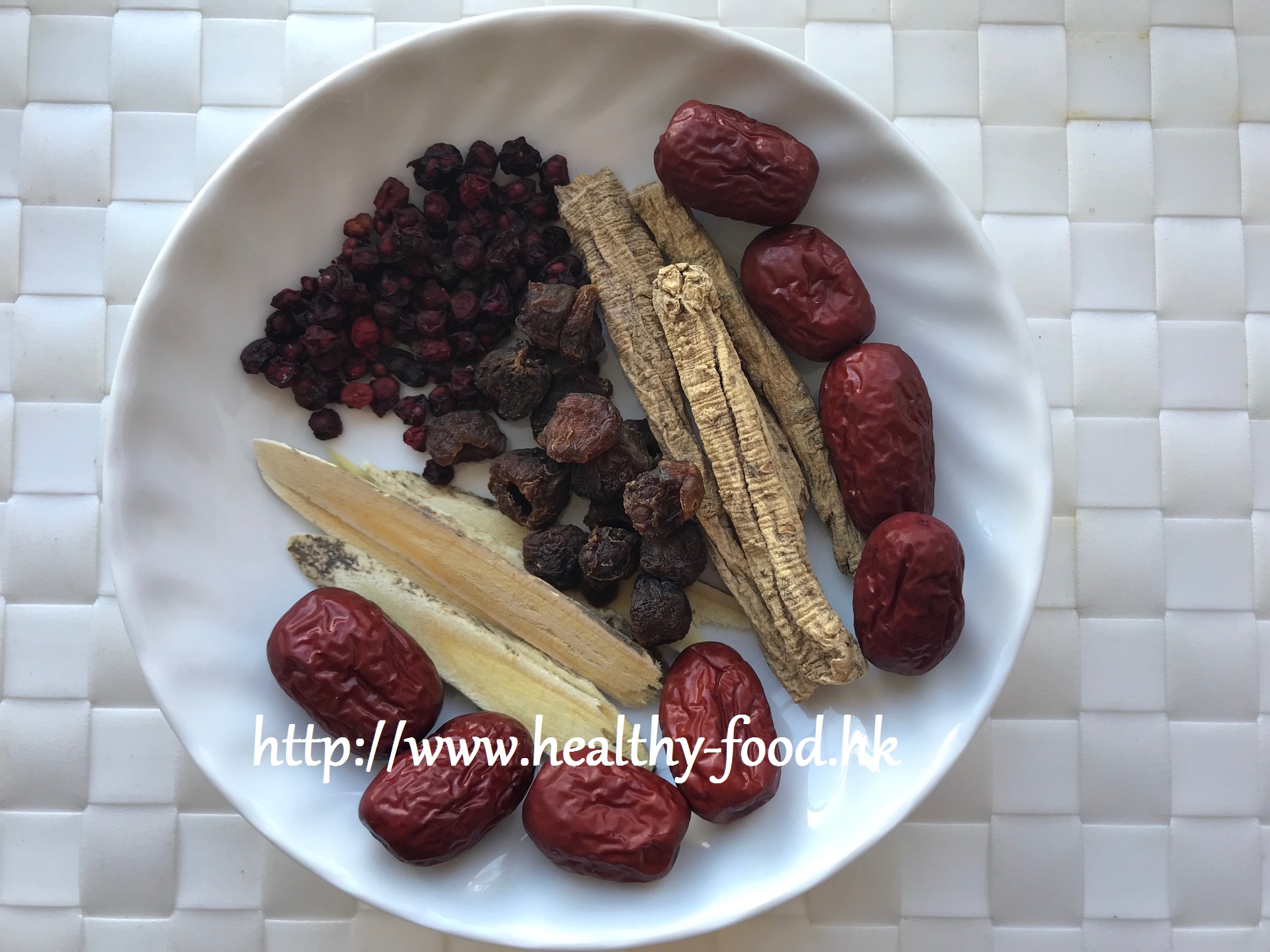
- Astragalus (bei qi / huang qi): Traditionally used to support qi and help firm the body’s surface against excess sweating.
- Ophiopogon (mai dong): Nourishes yin and fluids and is associated with calming and moistening.
- Schisandra (wu wei zi): Traditionally used to gather and hold, supporting against excess sweating and helping settle the mind.
- Red dates (hong zao): Nourish the blood and support qi, rounding out the flavour.
Ingredients (2 bowls)
| Ingredient | Amount | Notes |
|---|---|---|
| Astragalus (bei qi) | ~3 qian (about 11 g) | Soaked and rinsed |
| Ophiopogon (mai dong) | ~3 qian (about 11 g) | Soaked and rinsed |
| Schisandra (wu wei zi) | ~3 qian (about 11 g) | Soaked and rinsed |
| Red dates (hong zao) | 4 | Pitted |
Method
- Soak and rinse the ingredients; pit the red dates.
- Add everything to a pot with 5 cups of water and simmer for half an hour until reduced to about 2 bowls.
- Take in portions over the day.
Bro Niu’s tips
This tea is good for both daytime spontaneous sweating and night sweats. But if you keep sweating without stop, it is safest to see a doctor for a physical check-up.
Community questions answered (selected)
- Q (Lan): What’s the difference between huang qi and bei qi? Bro Niu: Huang qi is in fact the same as bei qi — because it is produced in the north, Hong Kong people are used to calling it bei qi.
- Q (Wing): I heard cancer patients shouldn’t take tonics, as they only feed the cancer cells — is that true? Bro Niu: Cancer cells favour sugar, high fat and dairy, and “triggering” foods such as bamboo shoots, goose, prawns and crab, scaleless fish and mango can promote inflammation, so eat little of those. Tonics can be used in moderation, because you need strong immunity to deal with cancer cells.
- Q (Wing): What food therapy helps a prostate cancer patient? Can he eat sea cucumber, fish maw, dendrobium? What should he avoid? Bro Niu: Lycopene, selenium, zinc, isoflavones and Omega-3 foods are good for the prostate — tomatoes must be cooked for the lycopene to be released. Pumpkin seeds are good as an everyday snack. A tofu, minced-meat and seaweed soup is also helpful. Sea cucumber, fish maw and dendrobium can be used in moderation; eat little sugar, high fat and dairy, since those are the cancer cells’ favourite foods.
Published May 22, 2026 · Adapted and translated for Nourilo from a traditional home-kitchen recipe. Approx. 3 min read.